 EN
EN
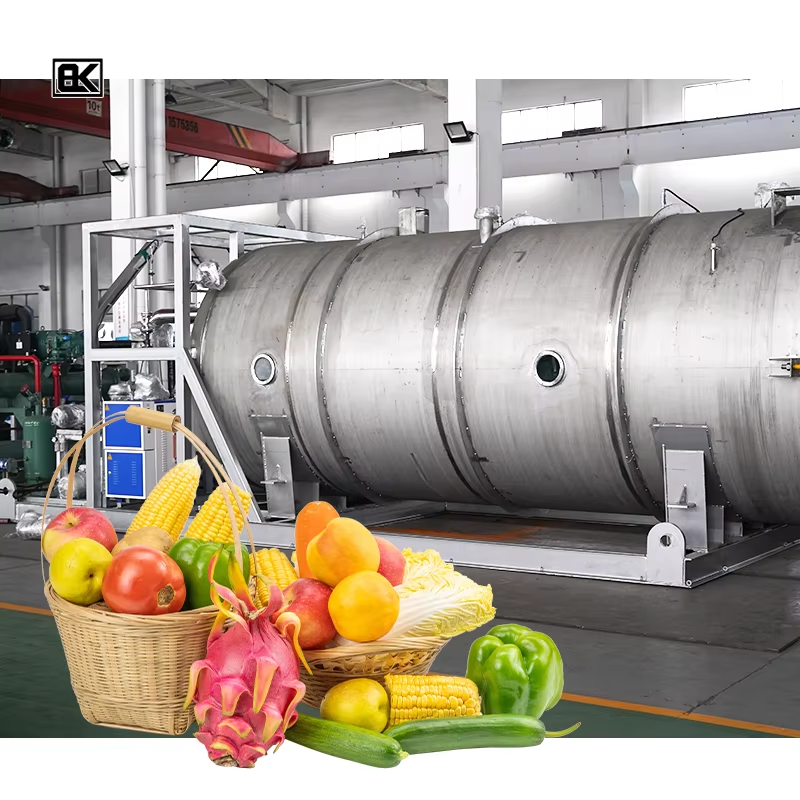
One of the most advanced preservation methods is lyophilization also referred to as freeze drying. Lyophilization, in contrast to the conventional drying method which involves the use of heat to evaporate the water, first freezes the product and then sublimates the ice, i.e. changing frozen water directly into vapor without going through a liquid state. This mild treatment maintains the original structure, color, nutritional value, and taste of the product without refrigeration over the years. At Jiangsu Bolaike Refrigeration Science and Technology Development Co., Ltd we have developed the lyophilization equipment more than 20 years. The following is a stepwise description of the functionality of lyophilization.
1. The Freezing Stage: Turning Moisture into Solid Ice
Freezing is the initial step of the lyophilization process. The refrigeration system cools the product by quickly bringing the vacuum chamber temperature to a temperature lower than the eutectic temperature of the product, usually to a temperature of -40oC or below. All moisture in the product will be in solid ice crystals at this temperature. Freezing speed and uniformity are important. Slow freezing forms large ice crystals which may destroy cell walls leaving a rough, spongy texture. Fast, freezing with uniform freezing creates small ice crystals that maintain the original cellular structure of products. The lyophilizers at Jiangsu Bolaike have the advantage of having high-end refrigeration systems that allow a freezing consistency in all shelves to produce high quality outcomes with each batch. The duration spent in this step is usually 1-4 hours depending on the water content of the product and the batch size.
2. Primary Drying (Sublimation): Removing Ice Under Vacuum
When the product is completely frozen the vacuum pump is turned on, and the pressure is lowered to almost vacuum (close to 100 Pa). The shelves are then heated. The frozen water (ice) sublimates under these low pressure conditions, that is, it is changed directly to water vapor, it does not melt. The vacuum system pulls the vapor out of the chamber and condenses it on the cold condenser coils (even colder than the product, usually -50oC to -85oC). Most of the moisture, usually 90-95% of the total water content is removed in this primary drying step. The product does not shrink, harden or lose its structure because there is no liquid water. The temperature and pressure of the systems of Jiangsu Bolaike are strictly controlled to get the best speed of sublimation without melting the product. Primary drying is the longest process which may take up to 12-24 hours.
3. Secondary Drying (Desorption): Removing Bound Water
Following the initial drying, the final product still has a number of attached water molecules which have not turned into an ice. These are retained through the attraction of the solids of the product by the molecules. Secondary drying increases the shelf temperature (usually +20oC to +50oC) and keeps the vacuum. This extra energy breaks the bonds in the molecules, and the rest of the water can be evaporated (desorb) off the product. The secondary drying process minimizes the overall residual moisture to 1-4% based on the product. It is this ultra low moisture content that makes lyophilized products have a spectacular 20-30 year shelf life, preservatives free. The normal duration of drying in the secondary stage is 4-8 hours. The programmable logic controllers (PLCs) of Jiangsu Bolaike have an automatic switch of primary to secondary drying depending on temperature and pressure indicators of products to maintain the same output without operator intervention.
4. The Condenser and Vacuum Systems: Supporting Sublimation
Lyophilization is possible with the help of two supporting systems. The condenser, a series of cold coils within a secondary chamber, is also operated by the refrigeration system. The temperature in the condenser is kept down to -40oC to -85oC even lower than the product. When the water vapor exits the product chamber, it immediately becomes ice on the condenser coils. The condenser does not allow the water vapor to get to the vacuum pump and destroy it. The vacuum system (roughing pump and/or high vacuum pump) is used to remove non condensable gases (air, nitrogen) in the chamber to maintain the low pressure required by sublimation. When the cycle completes, the ice is melted and the condenser is warmed in order to drain the ice. Jiangsu Bolaike develops energy efficient vacuum and condenser systems that shorten the cycle time and electricity use. Hot gas defrost is also introduced to our industrial lyophilizers to enable quicker condenser recovery between batches.
Conclusion
Lyophilization occurs in three steps: freezing (changing moisture to ice), primary drying (evaporation of ice to a vacuum), and secondary drying (removal of bound water). Water vapor is trapped by the condenser and low pressure is ensured by the system of vacuum. This natural and non-invasive procedure keeps color, nutrients and flavor over decades without refrigeration. Jiangsu Bolaike has more than 20 years of experience, is ISO9001 and CE certified, and has 56+ national patents and produces lyophilizers in the household, laboratory, pharmaceutical, and food sectors. Call us to find out more or take a factory tour in Changzhou, China.