 EN
EN
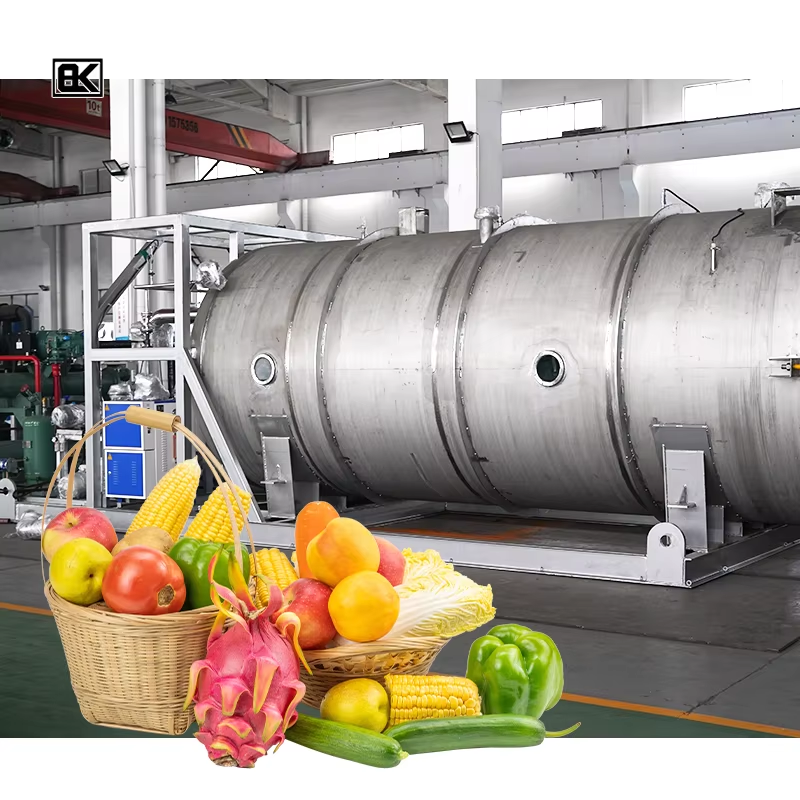
The most frequent inquiries on lyophilized (freeze dried) powder are whether or not it needs refrigeration. The answer to this is no, as long as the lyophilized powder is still in its original airtight, unopened, and unopened packaging, it does not have to be refrigerated. After opened, storage needs will depend on the type of product and the speed at which you consume it. The whole idea behind the process of lyophilization is to produce a shelf stable product, which can be stored at room temperature and still last years without deterioration. In Jiangsu Bolaike Refrigeration Science and Technology Development Co., Ltd. we are the producers of freeze drying equipment which is used in the production of lyophilated powder in the food, pharmaceutical and nutraceutical industries. Storage requirements of lyophilized powder will be explained in detail below.
1. Why Lyophilized Powder Does Not Need Refrigeration
Lyophilization eliminates 95-99% of water content in a product leaving behind 1-4% moisture. The majority of microorganisms (bacteria, mold, yeast) cannot grow and reproduce without water. In the absence of adequate moisture, they will not be able to survive or reproduce. Also, the chemical processes leading to spoilage such as oxidation, enzyme browning, hydrolysis need water too. Lyophilization prevents microbial growth and chemical degradation by eliminating virtually all water. The outcome is a product that remains as stable at room temperature over 20-30 years in airtight, moisture-proof packaging. To illustrate, it is possible to ship lyophilized vaccines without keeping refrigeration to remote clinics. Shelves in the stores have freeze dried camping meals that are years old. The instant coffee crystals do not go bad in your pantry. This stability at room temperature is the best attribute of lyophilization compared to frozen or refrigerated products. The freeze dryers at Jiangsu Bolaike are designed to produce low residual moisture levels in order to allow long term ambient storage.
2. The Important Role of Packaging and Moisture Protection
Although the refrigeration is not required when the powder is in the lyophilized form, it is highly hygroscopic- it quickly absorbs moisture in the air. The powder will clump, dissolve or degrade if in the presence of humidity. As such, it is important to ensure that it is well packaged. Lyophilized powder to be stored must be in its original airtight container (glass vial with rubber stopper, Mylar bag with oxygen absorber or vacuum sealed pouch). Keep these containers in cool dark place without direct sunlight, heat and humidity. An ideal place would be a kitchen pantry shelf, closet, or a basement shelf. Should not be kept in a bathroom (high humidity) or near a stove (heat). When opened, it is important to use the powder within the shortest time possible and the container should be tightly sealed after each use. To store in the long run after it has been opened, it is advisable to move the powder to a smaller airtight container to reduce the air exposure. The pharmaceutical freeze dryers that are produced by Jiangsu Bolaike are created to manufacture powders that can be combined with normal systems of vials and pouches.
3. When Lyophilized Powder Might Require Refrigeration
Refrigeration is required in certain circumstances. First, following reconstitution: Once you add water (or any other liquid) to lyophilized powder, it turns into a liquid solution. This reconstituted product normally needs refrigeration and should be consumed in hours or days (read label on the product). Refreezing of reconstituted lyophilized powder should not occur without special permission. Second, in some sensitive biological products: some complex proteins, live viruses or labile enzymes can degrade even when lyophilized even at room temperature. These products typically contain special storage guidelines on the label- most of them need refrigeration at 2 8°C or freezing at -20°C. Third, in humid, hot weather, without air conditioning: ambient temperatures always above 30°C (86°F) and high humidity, even well packaged lyophilated powder can decay more quickly. Refrigeration may be used to increase shelf life in these conditions. Always keep in mind to store your particular product according to manufacturer.
4. How to Tell If Lyophilized Powder Has Degraded
Lyophilized powder even without refrigeration may degrade later when the packaging is damaged or when stored in unfavorable conditions. Know how to detect degradation beforehand. In the case of pharmaceutical products: the powder must be a free flowing cake or powder that dissolves easily in the liquid of choice. Degradation signs include: clumping or caking (absorption of moisture), yellowing or browning (oxidation), gummy or sticky texture or incomplete dissolution of the particles. In the case of food products: the powder must not have lost its original color and smell. Moisture damage or oxidation can be indicated by clumping, off odors or darkening. In case of mold (not very likely, but may occur in a highly moist environment), dispose of the product at once. In case of uncertainty, avoid degraded lyophilized powder more so in a pharmaceutical or medical application. The freeze dryers used in Jiangsu Bolaike are able to produce powders of uniform quality, although it is up to the customer to ensure that they are well preserved once delivered.
Conclusion
Lyophilized powder does not require refrigeration when put in airtight, unopened, in a cool and dry location. It has low moisture content (1-4%) which inhibits microbial growth and chemical degradation in 20-30 years. But after being reconstituted, refrigeration is necessary. Refrigeration might also be required on some of the sensitive biological products. Lyophilized powder should always be kept dry, hot and dark. Jiangsu Bolaike has a team of more than 20 years of experience, ISO9001 and CE certified and 56+ national patent freeze dryers of food, pharmaceutical and nutraceutical lyophilized powders. To chat about your freeze drying requirements or to tour the factory in Changzhou, China call us today.