 EN
EN

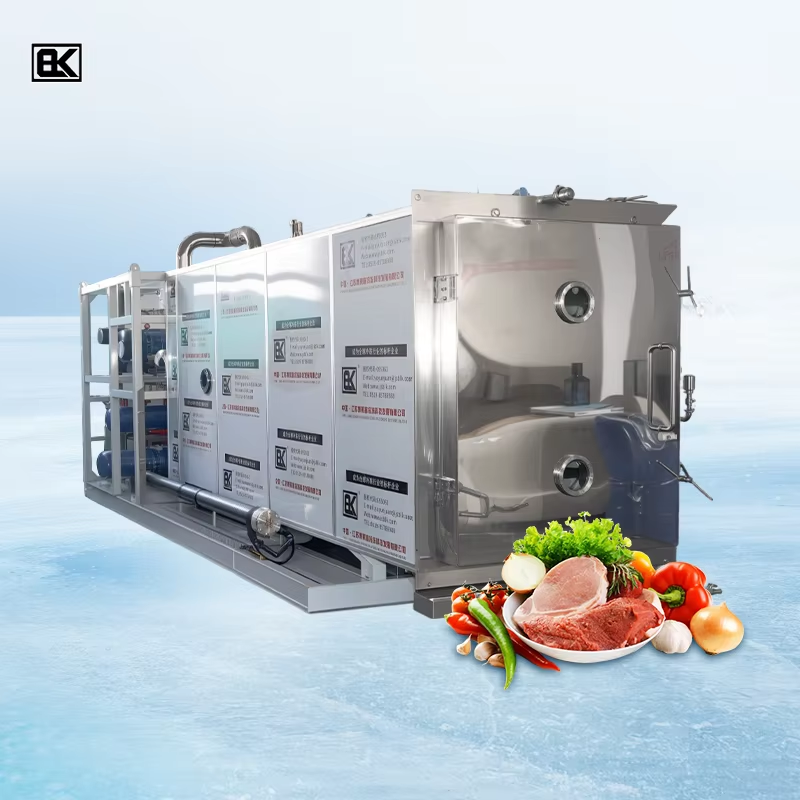
To achieve high quality and shelf-stable products, it is important to use the lyophilizer (freeze dryer) appropriately. Freeze drying food to store it long term, preserving a pharmaceutical compound or preparing a biological sample, it is always best to follow a consistent procedure to achieve the best results. This is done by preparing the product, loading the machine, conducting the freeze drying process and storing the completed product in the right way. Jiangsu Bolaike Refrigeration Science and Technology Development Co., Ltd. has produced lyophilizers for over 20 years. The following is a step by step process of using a lyophilizer.
1. Prepare the Product for Freeze Drying
Drying should be done properly the quality is maintained. Use fresh and good material-overripe fruits or rotten biological samples will not retain their quality with freeze drying. Clean all vegetables. In the case of fruits and vegetables, slice into homogenous (usually 6- 12 mm thick) pieces. Even size will make all shelves evenly dry. In liquid (coffee extract, pharmaceutical solutions) pre concentrate where possible to minimize the cycle time. Place the product in one layer on the trays with small gaps between the pieces to allow air to pass by. Avoid overcrowding and this may prolong the time required in drying and will also result in uneven outcomes. In the case of powders or pastes, evenly spread on the tray surface. In the case of vials holding pharmaceutical liquids, partially cover the vials with a stopper in order to release the vapor. The lyophilizers of Jiangsu Bolaike have stainless steel trays that are easy to load and clean.
2. Load the Lyophilizer and Start the Cycle
After preparing the product, put the trays in the shelves of the vacuum chamber. Make sure that trays are flat and are not touching the chamber walls or the other trays- this will provide adequate airflow. Shut the door of the chamber firmly. In case of household and laboratory lyophilizers, choose the correct cycle on the control panel (most machines have preset cycles of various products: fruits, vegetables, coffee, etc.). In the case of industrial pharmaceutical lyophilizers, the operator loads a pre-tested recipe that dictates the rate at which the product will be frozen, the shelf temperature, the level of vacuum and the duration of the drying process. Start Press to start the cycle. The machine will automatically freeze the product (usually to -40oC or below), turn on the vacuum pump and start primary drying (sublimation). The majority of the cycles are automatically running; you need not intervene. The control systems of Jiangsu Bolaike have touchscreens and data recording to enable traceability of complete cycles..
3. Monitor the Cycle and Determine Completion
Although the current lyophilisers are automated, knowledge of the steps aids in troubleshooting. The refrigeration system is on all through during the freezing (1-4 hours). The temperature of the product must evenly decrease on all shelves. In primary drying (12-24 hours in case of food, longer in the case of pharmaceuticals), the vacuum pump operates, and the temperature of the condenser is lowered (-50°C to -85°C). The chamber pressure ought to stabilize to less than 100 Pa. The majority of lyophilisers have a pressure rise test which automatically stops the cycle when no further water vapor is being emitted. To check manually, a basic test would be to turn off the vacuum and monitor the pressure. When the pressure increases gradually (slower than 5-10 Pa/minute), the drying process is finished. When it increases rapidly, it does not indicate that it is dry, and the process must go on. The industrial lyophilizers made by Jiangsu Bolaike have an inbuilt pressure rise checking and automatically terminate.
4. Unload, Package, and Store the Finished Product
As soon as the cycle is complete, take out the product. Lyophilized stuff is very hygroscopic--it will take up the moisture of the air in a few minutes, and spoil your work. In the case of food products: freeze dried fruits, vegetables or meals: put into airtight containers, Mylar bags with oxygen absorbers or vacuum sealed jars. Write the date and name of the product. Keep in dark, dry, cool place. In the case of pharmaceutical vials: the vials should be completely filled after the cycle (either by the built in lyophilizer stoppering mechanism or by hand, in a clean environment). Automatic stoppering is available on some pharmaceutical lyophilizers. In case of laboratory samples: transfer to airtight vials or bags. Wash the trays and chamber after use in order to avoid cross contamination. The lyophilizers of Jiangsu Bolaike are easily cleaned, and the surfaces are made of smooth stainless steel and have removable trays.
Conclusion
Working with a lyophilizer requires four steps: Preparation of the product (consistent size, single layer), loading the device and its launch into the cycle, observing its completion (pressure increase test), and packaging the final product at once to avoid its absorption by moisture. High quality, shelf stable results are achieved through proper technique. Jiangsu Bolaike is a producer of lyophilizers used in domestic, laboratory, pharmaceutical and food products with a record of over 20 years of experience, ISO9001 and CE certification, and 56+ national patents. Get in touch with us now to know more or to make an appointment to visit the factory in Changzhou, China.