/blog/
News
Products & Solutions
CONTACT US

+86-18068757376

blk@jsblk.com

No. 29 North Tongjiang Road, Xinbei District, Changzhou City, Jiangsu Province, China
Instant coffee manufacturing is entering a new stage in which product quality, production efficiency, energy consumption, automation, and environmental responsibility must be considered together. A modern freeze-drying production line is no longer simply a vacuum chamber combined with refrigeration equipment. It is an integrated processing system that connects coffee extraction, concentration, freezing, crushing, granulation, metering, conveying, vacuum sublimation, unloading, recovery, and packaging preparation.
The fully automatic instant coffee freeze-drying production line described in this article is designed for industrial coffee processors that require stable production, premium sensory quality, and large-scale output. The system was developed for an annual capacity of approximately 4,000 metric tons of freeze-dried coffee powder. It combines low-temperature coffee extraction with continuous freeze-drying technology and uses automated material handling to reduce manual intervention throughout the process.
By integrating the main processing stages into one coordinated production line, the system addresses several weaknesses commonly associated with conventional batch freeze-drying. These weaknesses include long processing cycles, high energy consumption, inconsistent product quality, labor-intensive pallet handling, limited production capacity, and difficulty maintaining stable operating conditions from batch to batch.
The production line is suitable for manufacturers that produce premium instant coffee, specialty coffee granules, soluble coffee ingredients, coffee products for foodservice, and other value-added coffee formulations. Its configuration can also be adapted to different raw materials, extraction strategies, production capacities, and factory layouts.
Instant coffee is produced by extracting soluble coffee compounds from roasted and ground beans, concentrating the extract, and removing water to create a stable, convenient product. The drying method has a major influence on the final aroma, flavor, appearance, solubility, density, and reconstitution performance.
Spray drying is widely used because it is fast and relatively economical for high-volume production. However, the high temperature used during spray drying can cause the loss or transformation of delicate volatile compounds. Some of the floral, fruity, roasted, and acidic notes that define premium coffee may be reduced during thermal processing.
Freeze-drying uses a different principle. The concentrated coffee extract is frozen and then dried under vacuum. Under low-pressure conditions, ice changes directly from a solid to a vapor through sublimation. Because the water is removed at low temperature, the process can better preserve aroma compounds and heat-sensitive flavor characteristics.
Freeze-dried coffee generally has a porous structure. This structure supports rapid dissolution when hot water is added and can provide a more natural appearance than many spray-dried powders. The method is therefore particularly valuable for premium instant coffee and products positioned around flavor authenticity.
The challenge is that freeze-drying traditionally requires considerable investment, refrigeration capacity, vacuum capacity, space, and process control. Conventional systems may also require long batch cycles and significant manual handling. A properly engineered automated production line must therefore improve not only drying quality but also overall plant productivity.
The production line is organized around eight principal process sections:
1. Coffee liquid concentrate
2. Quick-freezing tunnel
3. Crushing and granulation platform
4. Metering and weighing
5. Conveying platform
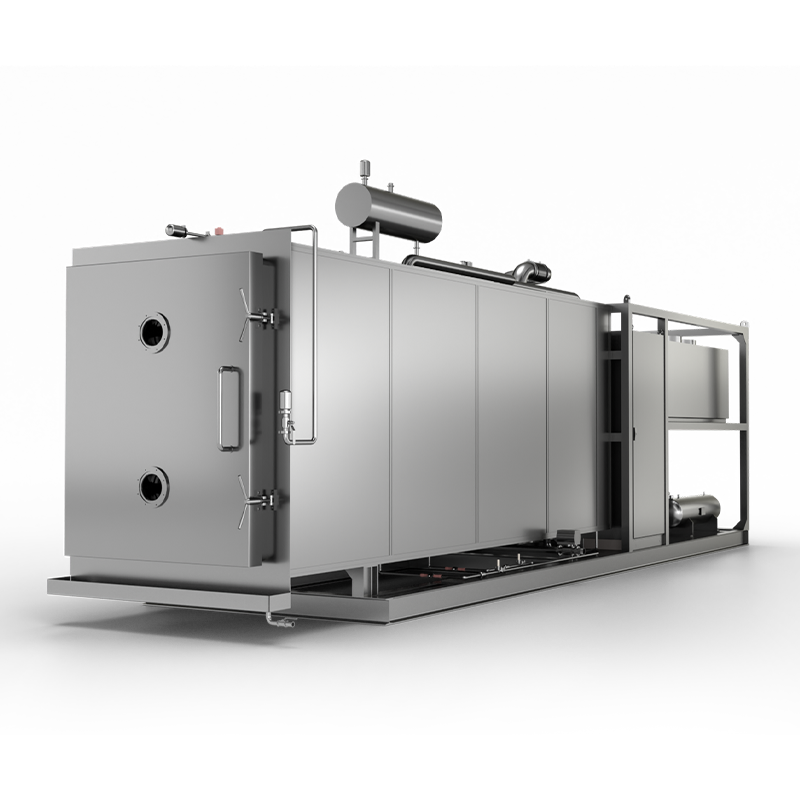
6. Vacuum freeze-drying chamber
7. Pallet emptying
8. Finished coffee granules and recovery conveying
Each section performs a specific function, but the performance of the complete system depends on the coordination between them. The control system manages material transfer, temperature conditions, vacuum operation, timing, weighing, and production status. This enables the line to operate as a continuous or highly coordinated automated process rather than as a series of disconnected machines.
The line is designed for an annual output of approximately 4,000 metric tons of freeze-dried coffee powder in the referenced project. Under the stated operating conditions, the system can produce approximately 550 kilograms of freeze-dried powder per hour. The actual output of any installation depends on coffee formulation, extract concentration, moisture specification, operating schedule, product density, chamber configuration, and other process parameters.
Because the line is intended for industrial deployment, engineering considerations extend beyond the equipment itself. Factory layout, cold utility capacity, steam and water supply, electrical distribution, cleanroom or hygienic zoning, drainage, ventilation, product transfer routes, operator access, maintenance space, and finished-product handling must all be considered during project design.
The first stage is the preparation of a concentrated coffee liquid suitable for freezing and sublimation. The quality of the liquid entering the freeze-drying process strongly influences the final product. Parameters such as soluble solids, viscosity, pH, extraction yield, temperature, suspended particles, and aroma retention must be controlled.
The production line is associated with a low-temperature cold extraction process. According to the supplied technical information, this process retains more than 90 percent of the coffee’s native aromatic compounds and achieves an extraction concentration of approximately 40% to 45%. This concentration is described as approximately 30% higher than that achieved by traditional processes.
Low-temperature extraction can help reduce thermal damage to important volatile compounds. Instead of exposing coffee extract to unnecessary heat, the process is designed to protect the flavor profile before the product enters the freezing and drying stages. This is especially relevant for coffee made from high-quality beans with distinct floral, fruity, chocolate, caramel, or acidic notes.
Concentration must be carefully controlled. If the extract is too dilute, the freezing and drying load increases, leading to higher energy demand and longer processing time. If the extract is too concentrated or too viscous, pumping, distribution, freezing, and granulation may become more difficult. A well-designed system therefore uses monitoring and recipe control to maintain the target operating window.
The extract preparation section can be configured with sanitary pumps, storage tanks, heat exchangers, filtration equipment, concentration equipment, and measurement instruments according to the customer’s process requirements. Product-contact components should be selected for compatibility with coffee extract and designed to support hygienic cleaning and inspection.
A stable liquid feed also supports consistency between production runs. When the concentration and temperature of the feed are controlled, the freezing stage can produce more uniform particles, and the vacuum drying stage can follow a more predictable sublimation profile.
After concentration, the coffee liquid is rapidly frozen in a quick-freezing tunnel. Freezing is a critical step because the size and distribution of ice crystals influence the internal pore structure of the dried coffee.
Rapid and controlled freezing helps form a suitable frozen matrix. During subsequent vacuum drying, the ice crystals become channels through which water vapor can move. If the frozen structure is uneven, drying may become inconsistent. Some regions may dry too quickly, while others may retain excess moisture or collapse during sublimation.
The quick-freezing tunnel is designed to provide controlled low-temperature conditions and stable product movement. Its configuration can be adapted to the required residence time, product thickness, production capacity, and factory arrangement. Insulation, air circulation, evaporator performance, conveyor speed, and temperature monitoring all contribute to freezing performance.
Efficient freezing also helps protect coffee aroma. A short and controlled transition from liquid concentrate to frozen material can reduce the time during which volatile components are exposed to unfavorable conditions. The frozen product must then be transferred promptly to the crushing and granulation section to maintain process stability.
In a large-scale installation, the freezing tunnel should be evaluated together with the refrigeration system. The refrigeration plant must provide sufficient cooling capacity during normal production, startup, cleaning, defrosting, and seasonal changes in ambient conditions. Proper heat-load calculations are essential for avoiding insufficient capacity or unnecessary oversizing.
Once the coffee concentrate has been frozen, it is processed into particles or granules with a controlled size distribution. The crushing and granulation platform prepares the frozen material for loading into the drying system.
Particle size affects the drying rate, bulk density, appearance, mechanical strength, and dissolution behavior of the finished product. Smaller particles generally provide a shorter path for vapor migration, but excessive fines may create handling problems or an undesirable appearance. Larger particles may have a more attractive appearance but can require longer drying or more careful control of the sublimation process.
The granulation section is therefore not merely a size-reduction machine. It is a product-shaping stage that helps determine the structure of the finished freeze-dried coffee. The equipment can be configured to achieve the desired granule size and uniformity according to the product specification.
Controlled granulation also supports more consistent filling of trays or pallets. Uniform loading reduces variations in product thickness and improves the efficiency of heat transfer during vacuum drying. This can help reduce the risk of wet spots, over-dried regions, or differences in residual moisture between product zones.
The platform should be designed with hygienic accessibility in mind. Coffee particles can accumulate in corners, transfer points, and enclosed moving components. Sanitary design, removable contact parts, smooth surfaces, and accessible inspection areas help support cleaning and maintenance requirements.
After granulation, the product is metered and weighed before entering the conveying and freeze-drying stages. Accurate dosing is important because the mass and thickness of material loaded onto each tray or pallet influence the drying cycle.
Excessive loading can slow sublimation and create a risk of residual moisture. Insufficient loading reduces equipment utilization and may cause uneven heat transfer. Automated weighing systems help maintain consistent loading conditions and reduce the variability associated with manual filling.
The conveying platform transfers product between the preparation sections and the vacuum freeze-drying chamber. Automated conveying reduces direct operator contact and improves the repeatability of the process. It also supports better production traceability because material movement can be linked to batch information, weighing data, and drying records.
Conveying systems must be matched to the physical characteristics of frozen coffee granules. Excessive impact or vibration can break particles and create fines. Poorly designed transfer points can cause blockages, segregation, or product loss. For this reason, conveyor speed, drop height, belt or tray design, and transfer geometry should be considered as part of the complete system rather than selected independently.
Automation is particularly valuable in large plants. When the annual output reaches several thousand metric tons, manual transfer would require substantial labor and could expose the product to additional handling risks. The reference production line has an automation rate of more than 85%, helping reduce labor costs by approximately 20% according to the supplied information.
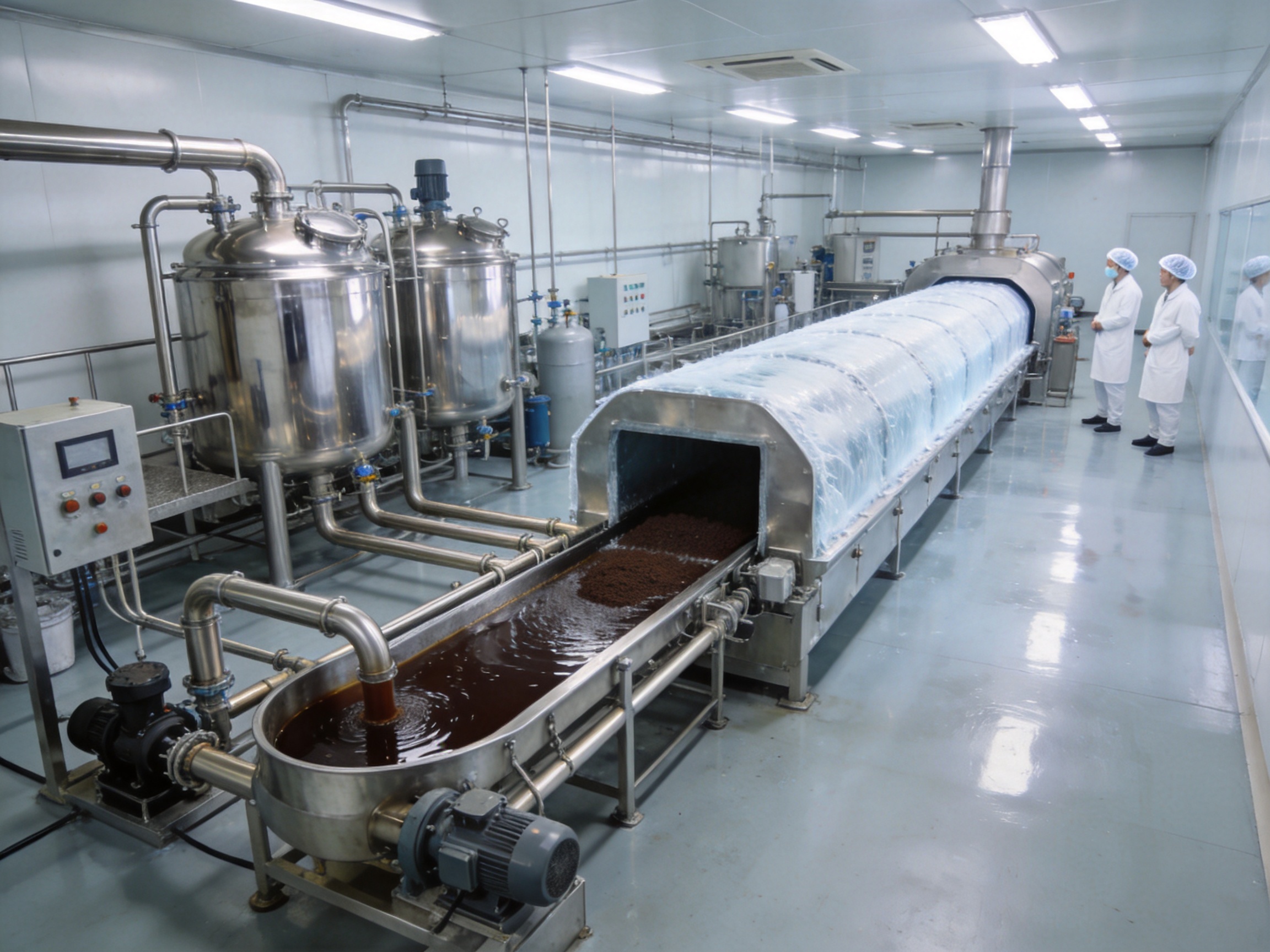
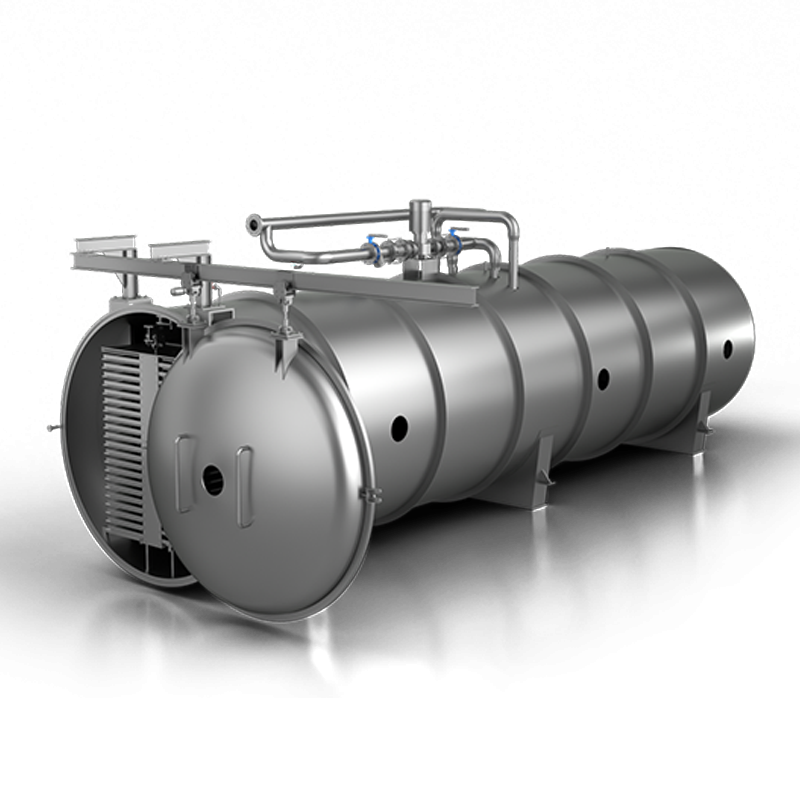
The vacuum freeze-drying chamber is the central processing unit of the line. In this chamber, frozen coffee granules are exposed to controlled vacuum and thermal conditions that remove ice through sublimation.
Freeze-drying normally includes three broad stages: freezing, primary drying, and secondary drying. In primary drying, the pressure is reduced and controlled heat is supplied to promote sublimation. In secondary drying, additional bound moisture may be removed to reach the required final moisture content and storage stability.
The drying cycle must balance several factors. If the product receives too much heat, the frozen structure may collapse, causing shrinkage, poor appearance, reduced porosity, or lower dissolution performance. If the heat input is too low, the cycle becomes unnecessarily long and energy consumption increases. If the vacuum is unstable, the drying front may become irregular and product quality may vary across the chamber.
The equipment therefore requires coordinated control of shelf or chamber temperature, product temperature, vacuum pressure, condenser performance, refrigeration conditions, and cycle time. Sensors and control logic help maintain the process within the selected recipe range.
The supplied project information states that continuous freeze-drying technology can reduce the processing cycle to approximately 6 to 8 hours. This is a significant improvement compared with conventional models described as producing approximately 450 kilograms over a 24 to 30 hour cycle. The exact cycle depends on product formulation, loading conditions, moisture targets, and equipment configuration, but the comparison illustrates the importance of process integration and throughput-oriented engineering.
The chamber must also be designed for efficient vapor capture. During sublimation, a large quantity of water vapor is released. The condenser must capture this vapor at a sufficiently low temperature to protect vacuum stability. If condenser capacity is inadequate, pressure may rise and drying performance may deteriorate.
Large-scale freeze-drying requires mechanical strength and reliable sealing. The chamber, doors, valves, shelves, pipelines, and vacuum connections must be designed to operate repeatedly under pressure differentials and low-temperature conditions. Door sealing, leak testing, cleaning access, and maintenance procedures are essential elements of long-term reliability.
After the drying cycle is complete, the dried coffee granules are removed from the pallets or trays. Automated pallet emptying helps reduce manual handling and supports a stable flow to the finished-product conveying system.
The emptying stage must protect the fragile porous structure created during freeze-drying. Excessive mechanical force can break granules, increase the percentage of fines, and change the bulk density of the product. Controlled discharge and carefully designed transfer surfaces help preserve the intended particle form.
Finished coffee granules may then be conveyed to screening, blending, intermediate storage, filling, or packaging preparation. The line can be connected with downstream equipment according to the customer’s product format. Possible downstream arrangements may include sachet packaging, jar filling, bulk container filling, blending, nitrogen flushing, or other packaging technologies.
Moisture protection is essential after drying. Freeze-dried coffee is porous and can absorb moisture from the surrounding air. Exposure to humid conditions may reduce crispness, cause agglomeration, affect dissolution, and shorten shelf life. The discharge and packaging areas should therefore be designed with suitable environmental control and rapid product transfer.
Recovery conveying refers to the controlled collection and transfer of product remaining in the system or recovered from designated processing points. A recovery system can reduce material loss, improve housekeeping, and support more efficient use of valuable coffee solids.
Recovered material must be managed according to product safety and quality procedures. The manufacturer should establish rules for segregation, inspection, rework, and disposal. The recovery system should not compromise traceability or introduce contamination risks into the main product stream.
Efficient recovery is especially relevant for large-scale plants because even small percentage losses can represent considerable economic value over a full year of production. Properly engineered conveying, discharge, and collection points can improve yield while reducing the need for manual sweeping or intervention.
The referenced system is designed for a large industrial output of approximately 4,000 metric tons of freeze-dried coffee powder per year. Its stated production rate is approximately 550 kilograms per hour. This capacity makes the line suitable for commercial coffee processors that require a dependable supply of freeze-dried product rather than laboratory or small pilot quantities.
High output is achieved through the coordination of extraction, freezing, granulation, loading, vacuum drying, unloading, and conveying. Increasing the capacity of only one section would not be sufficient if another section created a bottleneck. The line is therefore designed as a process chain in which each section supports the required production rhythm.
The stated continuous freeze-drying process can reduce the processing cycle to approximately 6 to 8 hours. By comparison, conventional equipment may require approximately 24 to 30 hours for a lower output level. A shorter cycle allows more production cycles within the same period, improves equipment utilization, and can reduce the amount of product held in intermediate storage.
Shorter cycle time also has operational advantages. The plant can respond more quickly to production schedules, customer orders, seasonal demand, and product changes. However, the selected cycle must always be validated against moisture, aroma, texture, bulk density, and dissolution requirements.
Energy efficiency is one of the most important economic factors in freeze-drying. The supplied technical information reports a reduction in energy consumption from approximately 11.1 kilowatt-hours per kilogram to 3.6 kilowatt-hours per kilogram under the stated comparison. Overall energy consumption is described as being reduced by approximately 30% to 40%.
Energy savings may result from several factors, including improved refrigeration design, more efficient vacuum operation, better heat transfer, higher extract concentration, optimized freezing, shorter drying cycles, improved vapor condensation, and reduced idle time.
Lower energy use can reduce operating costs and support corporate sustainability targets. It can also help improve the competitiveness of freeze-dried coffee compared with other premium instant coffee processing options.
The low-temperature extraction process is described as retaining more than 90% of the coffee’s native aromatic compounds. The final product is intended to preserve floral and fruity acidity profiles while maintaining the characteristic flavor of the selected coffee material.
Freeze-drying is particularly valuable when the product strategy depends on sensory differentiation. Consumers may recognize differences in aroma, acidity, mouthfeel, and aftertaste more clearly in premium instant coffee than in conventional mass-market products. A process that protects volatile compounds can therefore support higher-value product positioning.
Product quality must be confirmed through sensory testing, chemical analysis, moisture testing, solubility testing, bulk-density measurement, and storage studies. Equipment performance alone does not guarantee a specific flavor result because raw bean variety, roasting profile, extraction conditions, formulation, and packaging all influence the final product.
The supplied information states that the finished coffee achieves a dissolution rate of 99% and meets international Specialty Coffee Association standards. The porous structure created during freeze-drying supports rapid contact between hot water and the soluble coffee solids.
High dissolution is beneficial for consumer convenience and foodservice applications. It reduces undissolved residue in the cup and helps produce a consistent beverage when the recommended water volume and temperature are used.
With an automation rate of more than 85%, the production line reduces the need for manual transfer, weighing, pallet movement, and discharge operations. The supplied project data indicates a labor-cost reduction of approximately 20%.
Automation also improves process repeatability. Manual handling can introduce variations in loading thickness, residence time, product exposure, and transfer speed. Automated systems can perform these operations according to programmed parameters and production recipes.
The line is described as achieving approximately 70% process wastewater recycling. Water recovery can reduce freshwater demand and lower the volume of wastewater requiring treatment or discharge.
Combined with reduced energy consumption, improved material recovery, and lower labor requirements, wastewater recycling contributes to a more sustainable manufacturing model. These features are especially relevant to new food-processing projects that must satisfy increasingly strict environmental and resource-management requirements.
Conventional freeze-drying equipment can provide good product quality, but it may have limitations when used for high-volume industrial coffee production. Batch systems often require loading and unloading operations between cycles. If these activities are performed manually, labor demand increases and product exposure to the factory environment becomes more difficult to control.
Long cycles also reduce the number of batches that can be completed in a given period. Lower throughput may require a larger installed equipment area or multiple chambers to achieve the same annual capacity. This can increase capital expenditure, maintenance requirements, utility demand, and operating complexity.
The fully automatic production line addresses these limitations through coordinated process sections and automated material handling. The quick-freezing tunnel, granulation platform, weighing system, conveyors, drying chamber, pallet emptying system, and recovery conveying are designed to operate as one industrial solution.
The following table summarizes the principal comparison points described in the supplied project information. Actual values should be confirmed during technical design and acceptance testing because performance depends on raw materials, product specifications, local utility conditions, and operating schedules.
| Performance Item | Fully Automatic Production Line | Conventional Reference System | Industrial Significance |
|---|---|---|---|
| Processing cycle | Approximately 6–8 hours | Approximately 24–30 hours | More cycles and higher equipment utilization |
| Freeze-dried powder output | Approximately 550 kg per hour | Approximately 450 kg over a 24–30 hour cycle | Higher hourly productivity |
| Annual project capacity | Approximately 4,000 metric tons | Dependent on batch configuration | Suitable for large-scale commercial production |
| Energy consumption | Approximately 3.6 kWh per kg in the stated comparison | Approximately 11.1 kWh per kg in the stated comparison | Lower energy cost and reduced carbon intensity |
| Automation rate | More than 85% | Generally more manual in traditional layouts | Lower labor requirement and improved repeatability |
| Process wastewater recycling | Approximately 70% | Dependent on plant configuration | Improved water utilization |
| Product quality target | Floral and fruity acidity preservation, rapid dissolution | Dependent on extraction and drying technology | Supports premium instant coffee positioning |
Large imported freeze-drying systems can offer advanced engineering, established references, and strong international recognition. However, imported systems may also present challenges related to price, delivery time, spare parts, service response, communication, and project customization.
The supplied material compares the production line with imported systems such as equipment associated with Germany’s GEA. It states that imported systems may involve a delivery period of approximately 3 to 4 years and a project price of around RMB 380 million to RMB 500 million. By comparison, the described production line is expected to have a delivery period of approximately 1 to 1.5 years and a project cost of about RMB 180 million under the referenced project conditions.
These figures are project-specific estimates rather than universal quotations. Final investment depends on capacity, process configuration, building work, utilities, automation scope, installation conditions, local regulations, shipping, taxes, and packaging integration. Nevertheless, the comparison highlights a major advantage: a shorter project schedule and a lower initial investment can make advanced freeze-drying technology more accessible to coffee processors.
Local engineering and manufacturing can also simplify communication during design and commissioning. Equipment changes, layout adjustments, spare-parts supply, operator training, and technical support may be coordinated more efficiently when the engineering team is located within the same region or time zone as the manufacturing base.
For international projects, the buyer should compare suppliers using a complete technical and commercial evaluation. Important criteria include guaranteed capacity, energy consumption, drying uniformity, product moisture, vacuum stability, utility requirements, controls, documentation, installation support, validation procedures, spare-parts availability, and after-sales service.
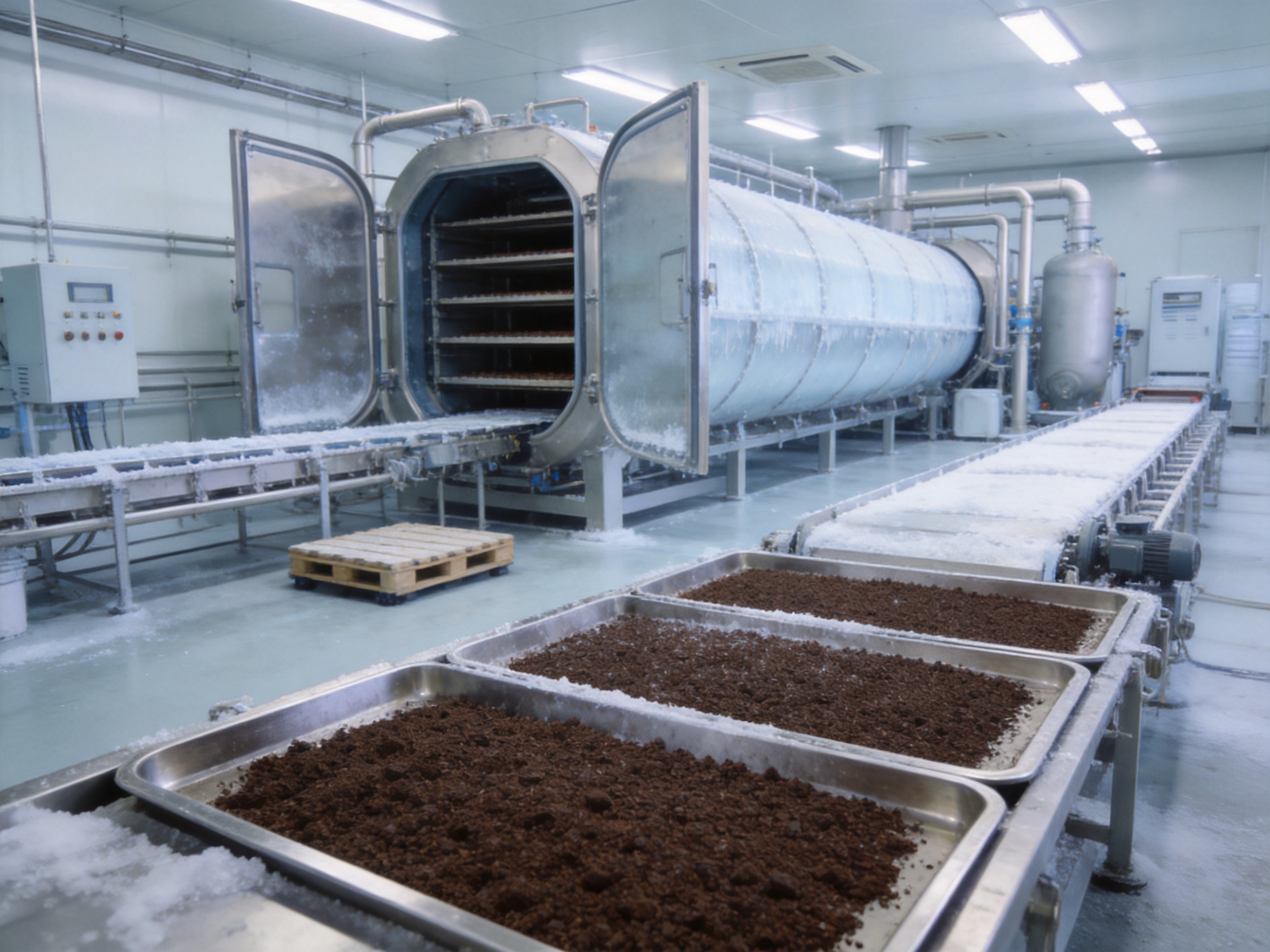
The manufacturer behind the line is Jiangsu Bolaike Freezing Technology Development Co., Ltd., a Chinese high-tech enterprise specializing in vacuum freeze-drying and refrigeration equipment. The company was established in 2014 in Changzhou, Jiangsu, and developed from Changzhou Zhongleng Refrigeration Equipment Co., Ltd., which entered the refrigeration industry in 2003.
This history combines experience in refrigeration equipment with specialized knowledge of vacuum freeze-drying. Such integration is important because the performance of a freeze dryer depends on the interaction of refrigeration, vacuum, heat transfer, pressure control, condensation, product formulation, and automation.
The company operates an integrated team covering research and development, engineering, sales, installation, commissioning, and after-sales service. This structure enables the supplier to participate in the entire project lifecycle rather than providing equipment without responsibility for system integration.
The company has established long-term partnerships with universities and research institutions, including the Chinese Academy of Agricultural Sciences, the Jiangsu Academy of Agricultural Sciences, and Jiangnan University. Collaboration with research organizations can support process development, material testing, product analysis, and the improvement of freeze-drying technology.
More than 100 national invention and utility model patents have been obtained by the company. Patents alone do not replace engineering validation, but they indicate sustained investment in technology development and equipment innovation.
The manufacturing base covers approximately 24,000 square meters. A modern manufacturing facility provides space for fabrication, assembly, electrical integration, testing, quality inspection, storage, and project preparation. Large industrial systems require more than individual machine production; they require coordinated assembly and verification of many subsystems.
Manufacturing quality should be controlled at each stage. This includes material selection, pressure-vessel fabrication, welding, surface treatment, refrigeration assembly, vacuum-pipeline installation, electrical wiring, sensor calibration, software configuration, and final inspection. Factory acceptance testing can verify key functions before shipment to the customer’s site.
Freeze-drying performance depends on the reliability of the refrigeration system. The refrigeration equipment must provide stable low-temperature operation for product freezing and condenser duty. Engineers must calculate heat loads, refrigerant conditions, defrost requirements, ambient effects, and operating redundancy.
Efficient refrigeration reduces power consumption and supports stable product quality. Poorly matched refrigeration can cause slow freezing, unstable condenser temperatures, excessive defrost time, or increased operating costs. Integrated design allows the refrigeration system to be selected according to the actual production line rather than as an isolated package.
The vacuum system must remove air and water vapor while maintaining the pressure conditions required for sublimation. Vacuum pumps, valves, pipelines, seals, condensers, and control instruments must be properly sized and coordinated.
Leak prevention is a major manufacturing priority. Even small leaks can affect vacuum stability, extend drying time, and reduce energy efficiency. Factory leak testing, pressure testing where applicable, inspection of welds, and verification of door seals are therefore essential.
The automation system coordinates product flow, weighing, freezing, vacuum drying, unloading, alarms, and operating records. A properly designed control platform allows operators to select recipes, monitor process trends, respond to alarms, and review production data.
Automated control can also support repeatable production. Coffee products may require different recipes for different bean origins, extract concentrations, granule sizes, or packaging formats. Recipe management enables the plant to adjust parameters while maintaining a clear record of approved operating conditions.
Human-machine interfaces should present important information clearly, including chamber pressure, shelf temperature, condenser temperature, product temperature, refrigeration status, pump status, door position, alarm conditions, and cycle progress. Remote diagnostic capability may also be included according to customer requirements and cybersecurity policies.
Food-processing equipment must be designed to minimize contamination risks and support effective cleaning. Product-contact surfaces should be compatible with food use, resistant to corrosion, and free from unnecessary crevices or dead zones.
The supplied material states that the equipment standards align with GMP principles. In a coffee production environment, GMP-oriented design may include hygienic zoning, controlled personnel access, cleanable surfaces, appropriate drainage, sanitary connections, inspection access, documented cleaning procedures, and material traceability.
Although coffee is not a pharmaceutical product, adopting disciplined hygienic principles can improve product safety, reduce contamination risk, and support customer audits. The final design should be adapted to applicable food regulations and the requirements of the destination market.
A freeze-dried coffee line should be evaluated using measurable quality indicators. These indicators may include residual moisture, water activity, bulk density, particle size distribution, dissolution rate, color, aroma retention, sensory profile, microbial status, and packaging stability.
Residual moisture affects shelf life and texture. Excessive moisture can cause agglomeration or loss of crispness, while over-drying may increase energy consumption without providing a meaningful quality advantage. Water activity is also important because it provides information about the availability of water for chemical and microbial reactions.
Particle size influences beverage preparation and consumer perception. A product with a narrow and controlled size range may dissolve more uniformly and present a more consistent appearance. Screening and controlled granulation can help manage this characteristic.
Dissolution testing should be conducted under defined conditions, including water temperature, water volume, stirring method, and sample mass. The stated dissolution rate of 99% should be interpreted together with the test method and product specification.
Sensory evaluation remains essential. Instrumental measurements can quantify certain compounds, but trained tasting panels are often needed to evaluate aroma intensity, acidity, bitterness, body, aftertaste, and overall balance. The line’s low-temperature extraction and freeze-drying process is intended to protect these characteristics, but validation must be performed using the customer’s own coffee materials.
Before purchasing a production line, the customer should review the complete utility schedule. Freeze-drying plants commonly require electrical power, refrigeration capacity, cooling water or chilled water, process water, compressed air, steam or hot-water systems, vacuum services, drainage, ventilation, and environmental control.
Utility requirements depend on the line capacity and process design. The factory should confirm available power supply, transformer capacity, emergency power strategy, cooling-tower or chiller capability, water quality, steam pressure, and wastewater treatment capacity.
Energy monitoring should be included in the plant design. Measuring electricity consumption by refrigeration, vacuum, heating, conveying, and auxiliary systems helps operators identify inefficiencies. It also allows the customer to compare actual performance with the design basis.
The reported energy consumption of approximately 3.6 kilowatt-hours per kilogram represents a stated comparison value. Buyers should request a clear definition of the measurement boundary. For example, the figure may include the freeze dryer only or may cover refrigeration, conveyors, pumps, controls, and associated systems. A transparent energy guarantee should identify test conditions and product assumptions.
A large freeze-dried coffee project requires careful planning before equipment fabrication begins. The layout must provide a logical product flow from raw coffee extract to final packaging while separating clean and potentially contaminated areas.
Important layout considerations include raw-material receiving, extraction, concentration, freezing, granulation, tray or pallet loading, freeze-drying, unloading, finished-product handling, packaging, utilities, maintenance, laboratories, staff facilities, and waste management.
Equipment access must be considered for installation and future maintenance. Large chambers, refrigeration units, condensers, vacuum pumps, electrical cabinets, and conveyors may require lifting equipment or removable wall sections during installation. Sufficient clearance should be reserved for inspection, component replacement, cleaning, and emergency access.
Temperature and humidity control are particularly important in the post-drying area. Freeze-dried coffee can absorb atmospheric moisture quickly. The transfer route from chamber discharge to packaging should therefore be as short and controlled as practical.
Project planning should include civil engineering, foundations, drainage, fire protection, ventilation, noise control, electrical installation, process piping, insulation, cleanroom requirements where applicable, and local regulatory approvals.
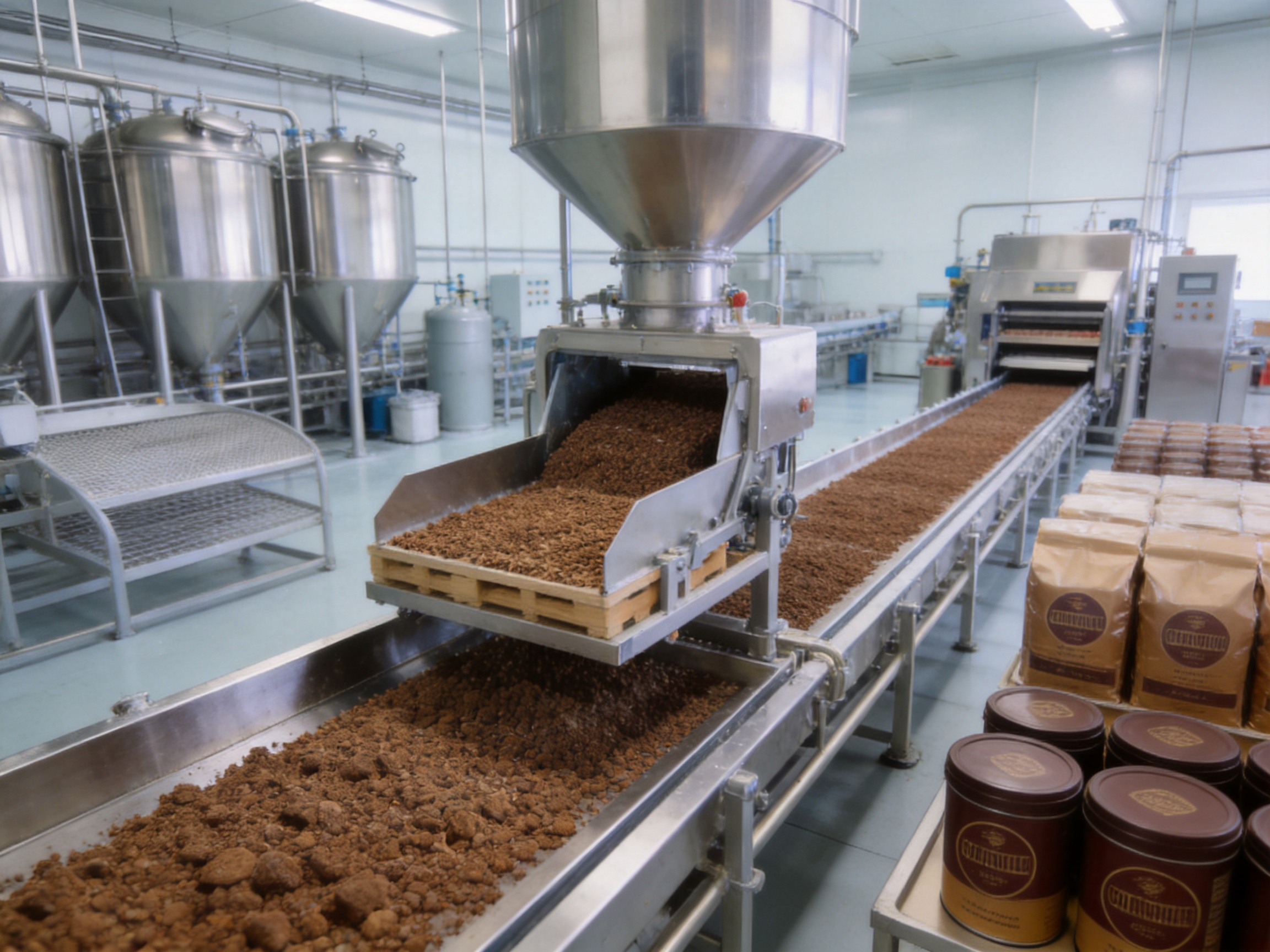
The performance of a complex production line depends on proper installation and commissioning. The supplier’s engineering team should support equipment positioning, piping connections, electrical integration, instrument checks, software configuration, vacuum testing, refrigeration startup, and trial production.
Commissioning normally proceeds in stages. First, individual components are inspected and tested without product. Next, subsystems such as refrigeration, vacuum, conveying, and controls are operated together. Finally, coffee extract is introduced for process trials, and the operating recipe is adjusted according to quality results.
Operator training should cover normal operation, recipe selection, alarm response, cleaning, sanitation, preventive maintenance, product changeover, emergency shutdown, and basic troubleshooting. Maintenance personnel should receive additional instruction on pumps, valves, refrigeration units, vacuum systems, electrical cabinets, sensors, and spare-parts replacement.
After-sales service is especially important for export projects. The supplier should provide operating manuals, electrical drawings, component lists, maintenance schedules, recommended spare-parts inventories, and troubleshooting instructions. Remote technical assistance can help resolve routine issues, while on-site service may be required for major repairs or process optimization.
Preventive maintenance reduces the risk of unexpected downtime. Common maintenance activities may include inspection of door seals, vacuum leaks, pump oil or pump condition, condenser performance, refrigeration pressure, sensor calibration, conveyor alignment, electrical connections, and safety devices.
The production line is particularly suitable for regions that produce specialty coffee or seek to increase the value of locally processed beans. The supplied information identifies Yunnan as an example of a premium coffee-producing region where deep-processing projects may benefit from this type of equipment.
Local freeze-dried coffee production can create value beyond the sale of green beans or roasted coffee. It can support product diversification, improve supply-chain flexibility, create industrial employment, and enable producers to develop branded or private-label instant coffee products.
For coffee-growing regions, a large-scale freeze-drying plant can also reduce dependence on imported soluble coffee ingredients. Local processing allows companies to control extraction, flavor development, granulation, packaging, and product positioning more directly.
However, a successful project requires more than equipment. The customer must secure a consistent supply of suitable coffee beans, develop an appropriate roasting profile, establish extraction recipes, validate product quality, and build an effective sales and packaging strategy.
Every coffee manufacturer has different requirements. A production line can be customized according to annual capacity, product types, factory dimensions, raw-material characteristics, automation objectives, utility conditions, and packaging plans.
Potential customization areas include extraction equipment, concentration method, quick-freezing capacity, granule size, tray or pallet dimensions, number and size of freeze-drying chambers, refrigeration configuration, condenser capacity, vacuum-pump selection, unloading equipment, conveying arrangement, control-system architecture, and packaging integration.
The line may also be designed for multiple coffee recipes. Different products may require different extract concentrations, granule sizes, drying curves, residual-moisture targets, or sensory profiles. A flexible recipe-management system helps the factory produce a broader portfolio without extensive manual adjustment.
Customization should be based on process data rather than only equipment dimensions. The supplier should review the customer’s coffee extract, target production rate, desired moisture, particle specification, operating schedule, local utilities, and quality standards before confirming the final design.
Buyers should evaluate freeze-drying suppliers using both technical and commercial criteria. A low purchase price may not represent the best overall value if the equipment consumes excessive energy, requires long maintenance downtime, or cannot achieve the required product quality.
Important questions include:
Does the supplier have experience with industrial coffee freeze-drying?
Can the supplier provide a complete process line rather than only an individual freeze dryer?
What production capacity has been demonstrated under comparable conditions?
How is energy consumption measured and guaranteed?
What level of automation and data recording is included?
How are vacuum leakage, refrigeration reliability, and condenser performance tested?
What materials are used for product-contact components?
How are cleaning, sanitation, inspection, and maintenance performed?
What installation and commissioning services are provided?
What spare parts and technical support are available after delivery?
How long is the manufacturing and delivery period?
Can the supplier adapt the system to local regulations and factory conditions?
A complete technical proposal should include a process flow diagram, equipment list, layout drawings, utility schedule, control-system description, performance assumptions, installation scope, commissioning plan, acceptance criteria, warranty terms, and after-sales service plan.
The economic value of a freeze-drying production line includes more than the initial equipment cost. Throughput, energy use, labor, yield, maintenance, product quality, packaging efficiency, and market positioning all influence the return on investment.
Higher capacity can increase revenue potential if the customer has sufficient coffee supply and market demand. Shorter drying cycles can improve asset utilization. Lower energy consumption can reduce the cost per kilogram. Automated material handling can lower labor requirements and improve production consistency.
Premium product quality may allow the manufacturer to serve higher-value markets. Freeze-dried coffee can be sold through retail, foodservice, hospitality, vending, e-commerce, export, and specialty-coffee channels. The ability to preserve recognizable aroma and rapid dissolution may differentiate the product from lower-cost instant coffee alternatives.
Investment analysis should include the complete project cost. This may cover equipment, civil construction, utilities, installation, commissioning, laboratory equipment, packaging, wastewater treatment, staff training, spare parts, logistics, and working capital. A realistic business model should also account for raw coffee prices, seasonal availability, packaging costs, market development, and production downtime.
Food safety should be incorporated into the line from the design stage. Product-contact materials, cleaning procedures, water quality, pest control, personnel hygiene, environmental monitoring, and traceability should be considered as part of the factory management system.
Operational reliability depends on the quality of components and the coordination of subsystems. Critical components may require redundancy or backup strategies, especially in refrigeration, vacuum, controls, and product transfer. The appropriate level of redundancy depends on the customer’s production schedule and the cost of downtime.
Safety systems should include emergency stops, door interlocks, pressure protection, electrical protection, temperature alarms, vacuum alarms, and safe access to moving equipment. Operators must be trained to understand both normal operation and abnormal conditions.
Reliable operation is also supported by documentation. Standard operating procedures, maintenance records, calibration certificates, cleaning records, production reports, and alarm histories help the plant identify trends and improve performance over time.
The line is designed primarily for freeze-dried instant coffee powder and granules. It is suitable for large-scale production of premium soluble coffee products in which aroma retention, rapid dissolution, and controlled particle structure are important.
The referenced project is designed for an annual output of approximately 4,000 metric tons of freeze-dried coffee powder. The final capacity depends on the operating schedule, product formulation, drying recipe, equipment configuration, and factory utilities.
The supplied material states an output of approximately 550 kilograms of freeze-dried powder per hour. This value should be confirmed during process design using the customer’s actual coffee extract and product specifications.
The continuous freeze-drying technology is described as reducing the processing cycle to approximately 6 to 8 hours. Actual cycle time may vary according to extract concentration, loading thickness, granule size, final moisture target, and drying conditions.
The system combines low-temperature cold extraction with vacuum freeze-drying. Low-temperature extraction is intended to retain more volatile aromatic compounds before drying, while freeze-drying removes water at low temperature and reduces exposure to intense heat.
The line is described as having an automation rate of more than 85%. Automated functions include material conveying, metering, weighing, coordinated drying control, pallet emptying, and recovery conveying. The precise automation scope can be customized for each project.
The principal advantages include a shorter stated processing cycle, higher hourly output, lower reported energy consumption, reduced manual handling, improved process coordination, and better suitability for large-scale continuous or highly integrated operation.
According to the supplied comparison, imported systems may require approximately 3 to 4 years for delivery and may cost around RMB 380 million to RMB 500 million, while the referenced project is estimated at approximately 1 to 1.5 years for delivery and about RMB 180 million in project cost. Actual values must be confirmed through project-specific quotations.
Yes. Customization may include capacity, chamber quantity, freezing capacity, granule size, refrigeration configuration, vacuum system, automation level, layout, utilities, product recipes, and packaging integration.
The manufacturer provides an integrated professional team covering research and development, engineering, installation, commissioning, and after-sales service. Project support may include layout planning, equipment installation, operator training, process testing, documentation, troubleshooting, and spare-parts guidance.
The company’s equipment has been exported to more than 30 countries and regions. Export projects should be reviewed according to local electrical standards, food regulations, pressure-vessel requirements, environmental rules, import procedures, and service arrangements.
The customer should provide target annual capacity, expected hourly output, coffee type, extract concentration, desired particle size, final moisture specification, operating hours, factory location, available utilities, building dimensions, packaging format, automation requirements, and any applicable regulatory standards.
The fully automatic instant coffee freeze-drying production line is an integrated industrial solution for manufacturers seeking to produce premium soluble coffee at commercial scale. It combines concentrated coffee liquid preparation, low-temperature extraction, rapid freezing, controlled granulation, automatic weighing, conveying, vacuum sublimation, pallet emptying, finished-product transfer, and product recovery.
Its principal reported advantages include an annual capacity of approximately 4,000 metric tons, an hourly output of approximately 550 kilograms, a processing cycle of approximately 6 to 8 hours, energy consumption of approximately 3.6 kilowatt-hours per kilogram under the stated comparison, automation above 85%, labor-cost reduction of approximately 20%, and wastewater recycling of approximately 70%.
Compared with conventional batch systems, the line is designed to improve throughput, process consistency, labor efficiency, and resource utilization. Compared with certain imported systems, the supplied project comparison indicates a shorter delivery period and a lower estimated investment while retaining advanced refrigeration, vacuum, automation, and freeze-drying functions.
The manufacturer strengthens the project through its background in refrigeration and freeze-drying technology, integrated engineering team, research partnerships, patented technologies, modern manufacturing base, international export experience, and full project support from design through after-sales service.
For coffee processors, the most important step is to verify the system against their own raw materials, quality targets, capacity requirements, utility conditions, and market strategy. With appropriate engineering validation and commissioning, an automated freeze-drying line can help transform coffee extract into a stable, highly soluble, aroma-rich product suitable for premium domestic and international markets.
1. Project technical information for a fully automatic instant coffee freeze-drying production line designed for an annual output of approximately 4,000 metric tons.
2. Supplied process description covering coffee liquid concentrate, quick-freezing, crushing and granulation, metering, conveying, vacuum freeze-drying, pallet emptying, finished granules, and recovery conveying.
3. Supplied performance comparison covering processing cycle, hourly output, energy consumption, automation rate, labor reduction, and wastewater recycling.
4. General principles of vacuum freeze-drying, including freezing, primary drying by sublimation, secondary drying, vapor condensation, and residual-moisture control.
5. General food-processing engineering principles for hygienic design, cleanable surfaces, product-contact materials, traceability, and process sanitation.
6. General industrial refrigeration and vacuum-system engineering principles for large-scale freeze-drying applications.
7. Company information supplied for Jiangsu Bolaike Freezing Technology Development Co., Ltd., including company history, research partnerships, patents, manufacturing facilities, export experience, and service capabilities.
 2026/05/28
 2026/05/28
2026/05/28
2026/05/28
2026/05/28
2026/05/28


 Custom Industrial Lyophilizer Freeze Dryer Manufacturers





 English
 русский
 Español
 Français
 Deutsch
 عربى
عربى