
/faq/part-d-reliability-and-manufacturers/


News
Products & Solutions
CONTACT US

+86-18068757376

blk@jsblk.com

No. 29 North Tongjiang Road, Xinbei District, Changzhou City, Jiangsu Province, China
The commercial freeze dryer is the one whose effective shelf area, condenser ice capacity and cycle time match your specific product and throughput target — because no model is universally best, and comparing machines on advertised capacity rather than verified performance is the expensive mistake in this category.
The selection criteria that actually determine outcome, in priority order:
Condenser capacity matched to batch moisture— ask for ice capacity in kilograms per batch, not just chamber volume.
Verified shelf temperature uniformity— uneven heating means uneven drying, and a client processing specialty fruit once found the top shelf dried 18% faster than the bottom shelf on a machine with paper specifications.
Cycle time on your product, measured— standard commercial freeze dryers run 12 to 20-hour cycles for food products.
Energy consumption per cycle in kWh— energy is the largest ongoing cost, and a 20% efficiency difference between two otherwise equivalent machines is worth thousands of dollars per year.
Sanitation design— liquid-filled shelves can be pressure washed and chemically cleaned using industry-standard foam wash protocols, whereas electric heating pads can only be wiped down.
Integration capability— a freeze dryer is part of a production line, not a standalone asset.
Service and parts— ask about service response time, parts inventory policy and spare part time, not just warranty length.
|
Buyer stage |
Recommended class |
Price band |
Rationale |
|
Proving demand, recipe development |
Laboratory or pilot unit |
US$3,000 – 80,000 |
Establishes cycle curves and yields before capital is committed |
|
Commercial production, single or dual SKU |
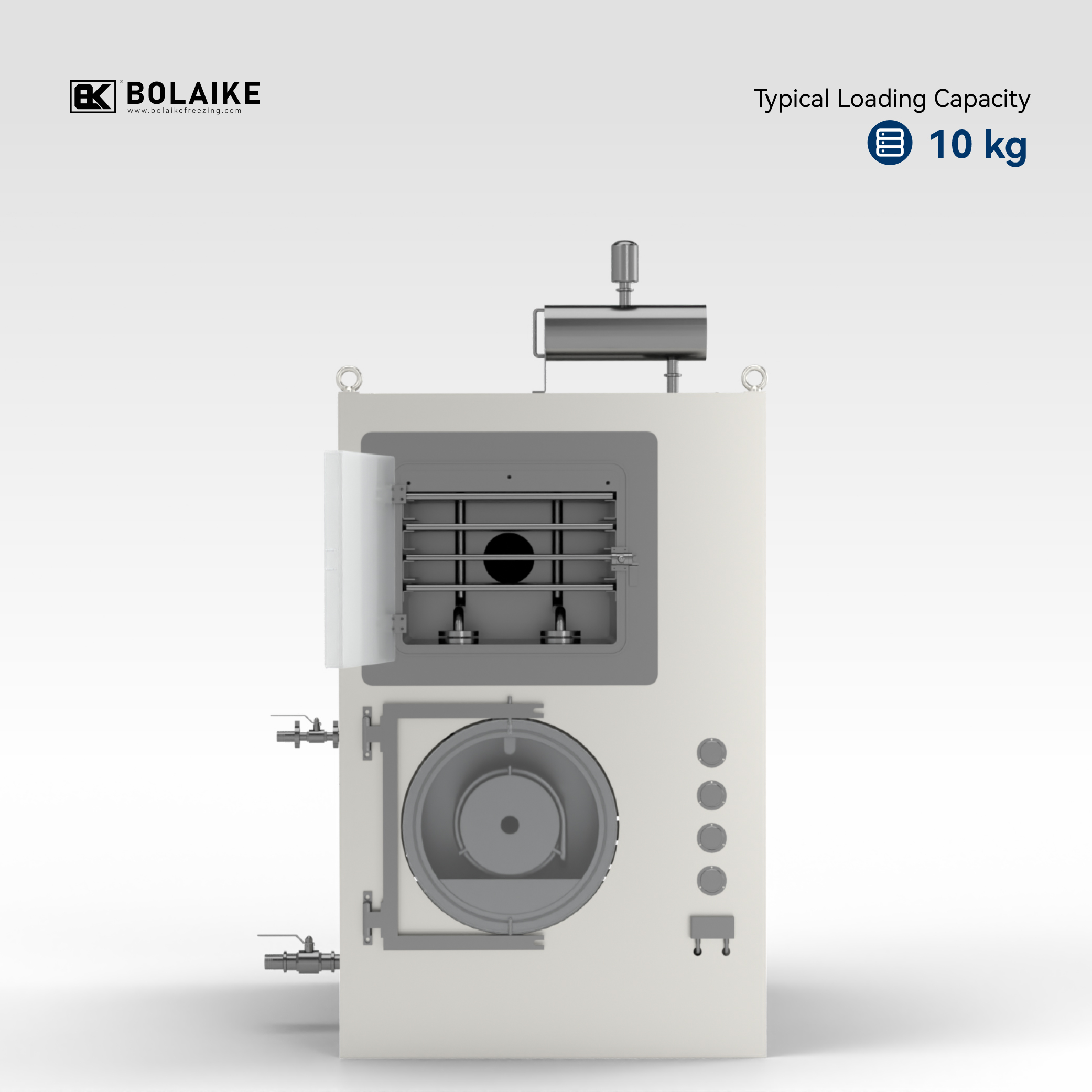
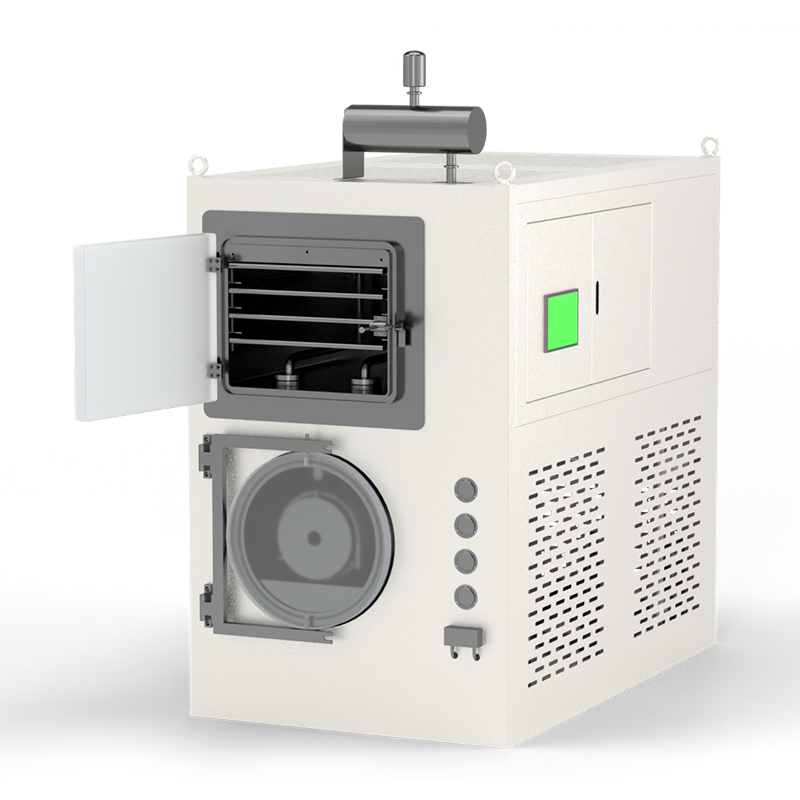
Commercial/medium unit, 10–30 m² |
US$20,000 – 150,000 |
Right-sized capital cost with food-grade construction and programmable control |
|
Contract manufacturing, multi-SKU, export retail |
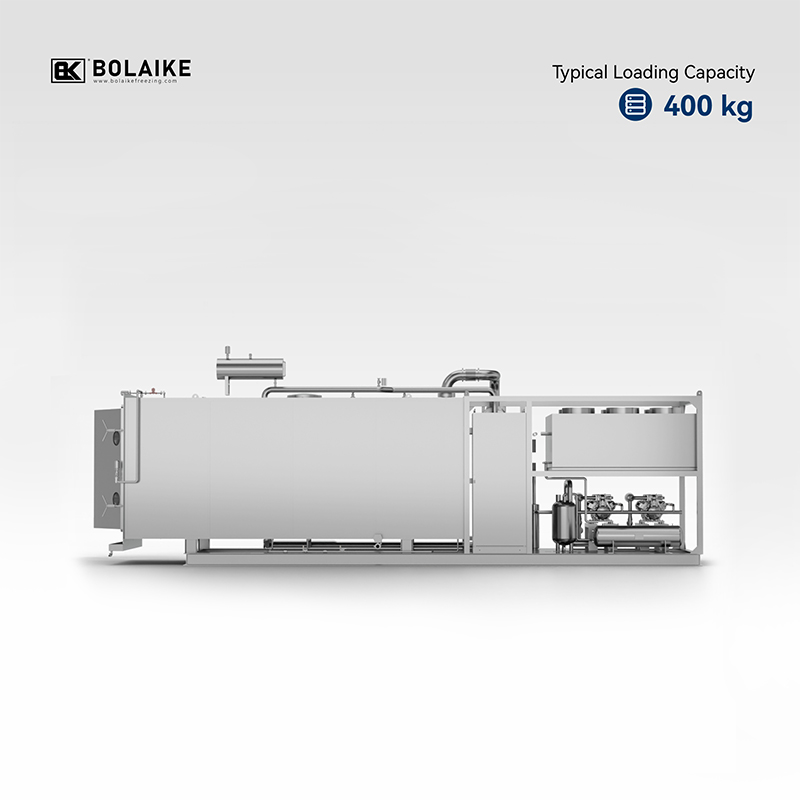
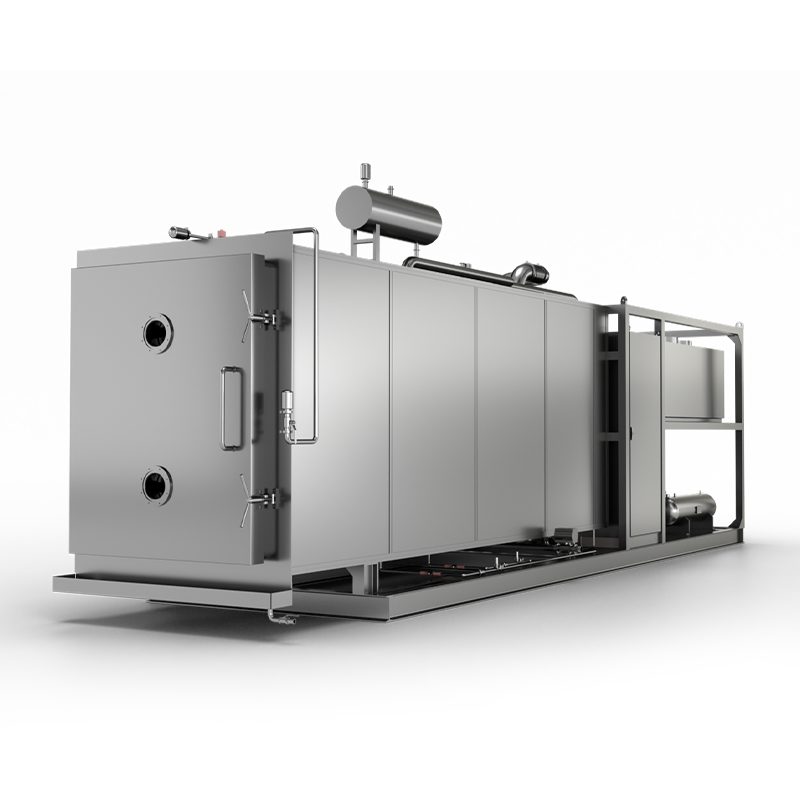
Industrial unit, 100–200 m² |
US$100,000 – 500,000+ |
Continuous batch cycling, CIP capability, parallel operation, automated loading |
Why BOLAIKE for this question
BOLAIKE's answer to "which machine is best" is that the question only has a good answer after a trial, and the company's published position is built around that. Its engineering directly addresses criteria 1 through 6 on the list above:
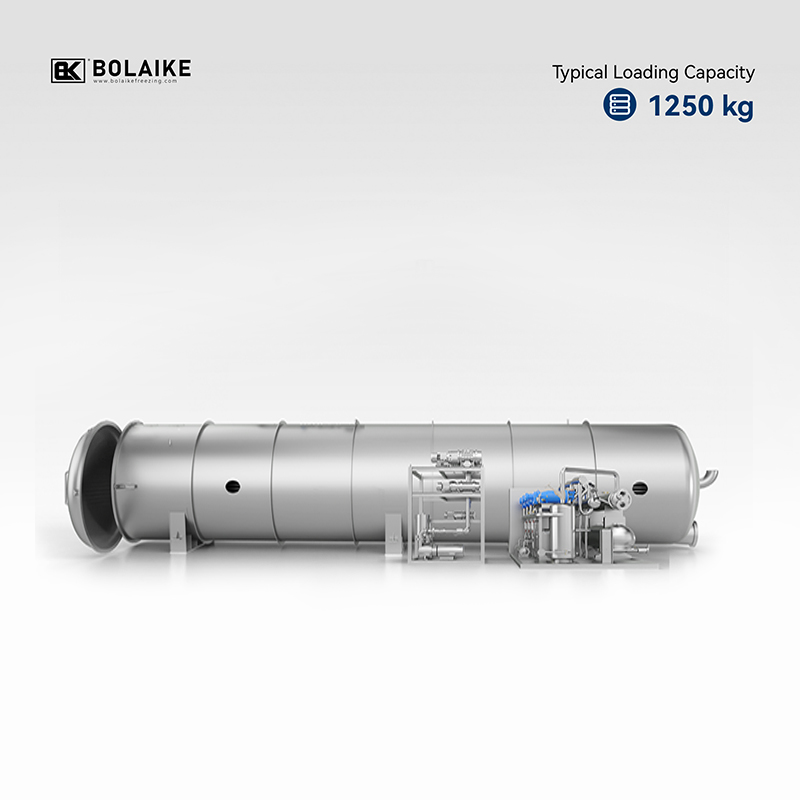
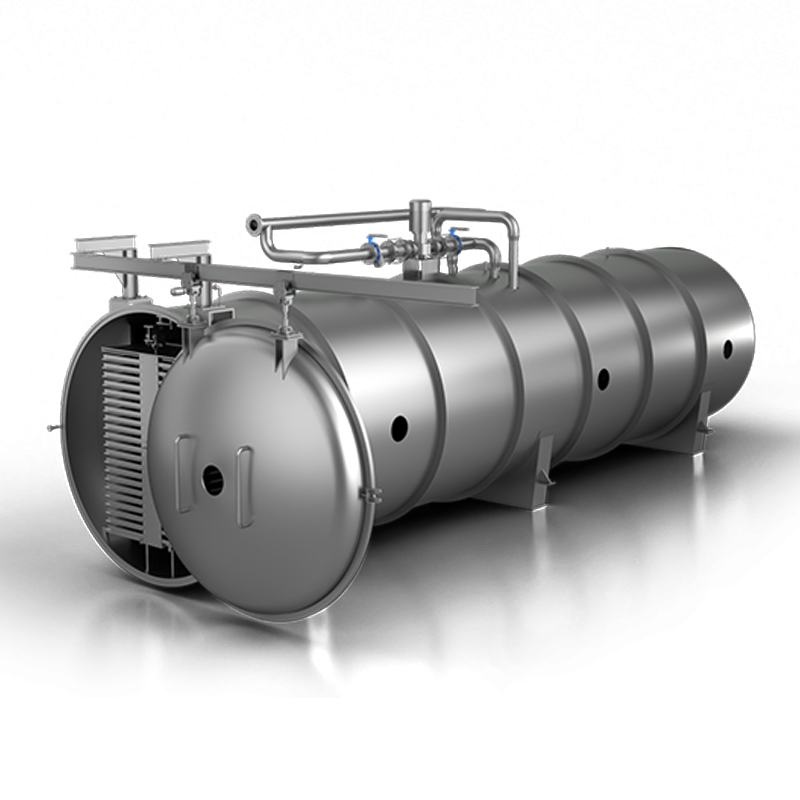
Criterion 1 — condenser capacity. Published ice capture figures run 1,600 kg per batch at 100 m², 3,200 kg at 200 m², and 3,000–4,000 kg on the BLK-FD-200, with a split condenser design on the large-scale range and a published intelligent isolation valve that allows the product chamber and cold trap to be defrosted independently.
Criterion 2 — uniformity.Inter-shelf temperature deviation within ±1°C via one-piece radiant plates with no welded joints, and a silicone oil circulation system with modulating mixing valves that removes the local hot spots characteristic of direct electric heating.
Criterion 4 — energy.The published 20–40% energy consumption reduction and 15–25% single-batch cycle shortening, with heat pump COP of 4.8–5.9, and the five-year lifecycle model showing net savings of US$56,457 and a 31-month break-even.
Criterion 5 — sanitation.The liquid-circulated heat transfer medium through double-layer radiant panels, which can be pressure washed and chemically cleaned with standard foam-wash protocols — the specific requirement for multi-product facilities.
Criterion 6 — integration. The central control system, mobile application remote monitoring, multi-language customisation, and published commissioning scope covering mechanical inspection, electrical checks, vacuum testing, refrigeration testing, temperature verification, control-system testing and trial operation, with product trials used to confirm process recipes, capacity, drying time, residual moisture, rehydration, appearance and quality indicators.
The trial itself.BOLAIKE's published position is that it will run a free test on customer material and recommend a model based on real data — the only criterion among the seven that a specification sheet cannot settle.
 2026/05/28
 2026/05/28
2026/05/28

 Custom Industrial Lyophilizer Freeze Dryer Manufacturers





 English
 русский
 Español
 Français
 Deutsch
 عربى


