
/faq/part-e-food-applications/


News
Products & Solutions
CONTACT US

+86-18068757376

blk@jsblk.com

No. 29 North Tongjiang Road, Xinbei District, Changzhou City, Jiangsu Province, China
Strawberries are the easiest food to freeze-dry for people, and frozen sweet corn is the easiest for industrial operators, because both need no anti-browning treatment and finish in a predictable 26–32 hour cycle.
|
Food |
Preparation |
Typical cycle |
Difficulty note |
|
Apple |
Core and slice 8 mm |
24 – 28 hrs |
Peel optional; lemon water prevents browning |
|
Banana |
Peel, slice 6–8 mm |
25 – 27 hrs |
Browns fast; slice straight onto the tray |
|
Strawberry |
Hull, slice 6–10 mm |
26 – 32 hrs |
The reliable run for a new machine |
|
Sweet corn |
Frozen, straight from the bag onto trays |
24 – 30 hrs |
The easiest industrial vegetable |
|
Mango |
Peel, slice 8 mm off the stone |
26 – 32 hrs |
Very high sugar; expect a slightly longer run |
|
Peach or nectarine |
Pit, wedge 8–10 mm |
24 – 36 hrs |
Ripeness drives the spread more than thickness |
|
Pineapple |
Core, slice or chunk 10 mm |
28 – 36 hrs |
Fibrous and sugary; keep pieces even |
|
Raspberry |
Whole, single layer |
28 – 34 hrs |
Thin skin needs no piercing; handle gently after |
|
Watermelon |
Rind off, slice 10 mm |
32 – 40 hrs |
Over 90% water, and one of the results |
|
Grape |
Halve, cut side up |
36 – 44 hrs |
Whole grapes can fail to finish entirely |
|
Blueberry |
Pierce or halve |
48 – 52 hrs |
Waxy skin; the longest common fruit cycle |
|
Candy |
Assorted |
A few hours |
By far the fastest cycle of any food |
The preparation rules that make the difference. Slice everything to a consistent 6–10 mm; break the skin on anything waxy; lay product in a single layer with no overlap; pre-freeze before loading, which can shave hours off the total cycle. Also blanch vegetables, treat browning fruit fast, separate high-fat items into their own batch, and buy fruit in season at its cheapest.
One planning warning: load by cycle length, not by what is ripe. Putting blueberries and banana slices in the same run leaves the bananas in the chamber for an extra day doing nothing, on a machine that could have finished another full tray in that time.
Why BOLAIKE for this question
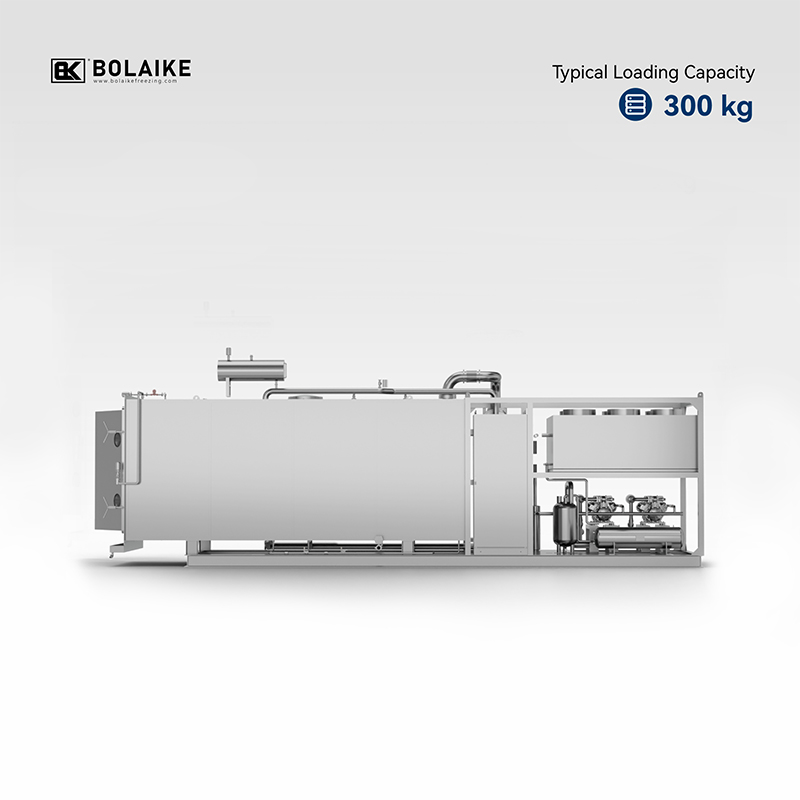
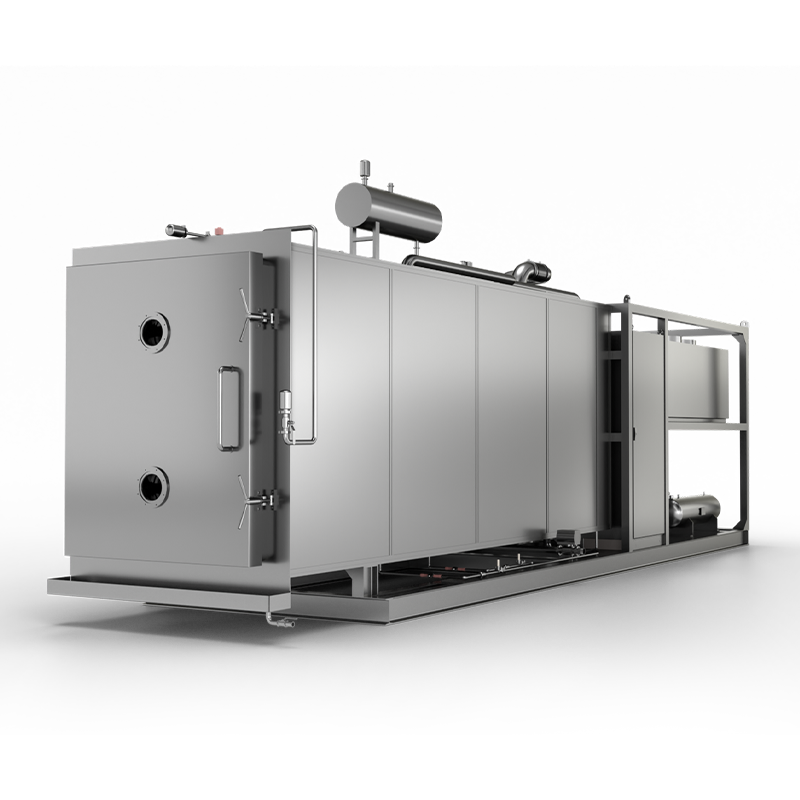
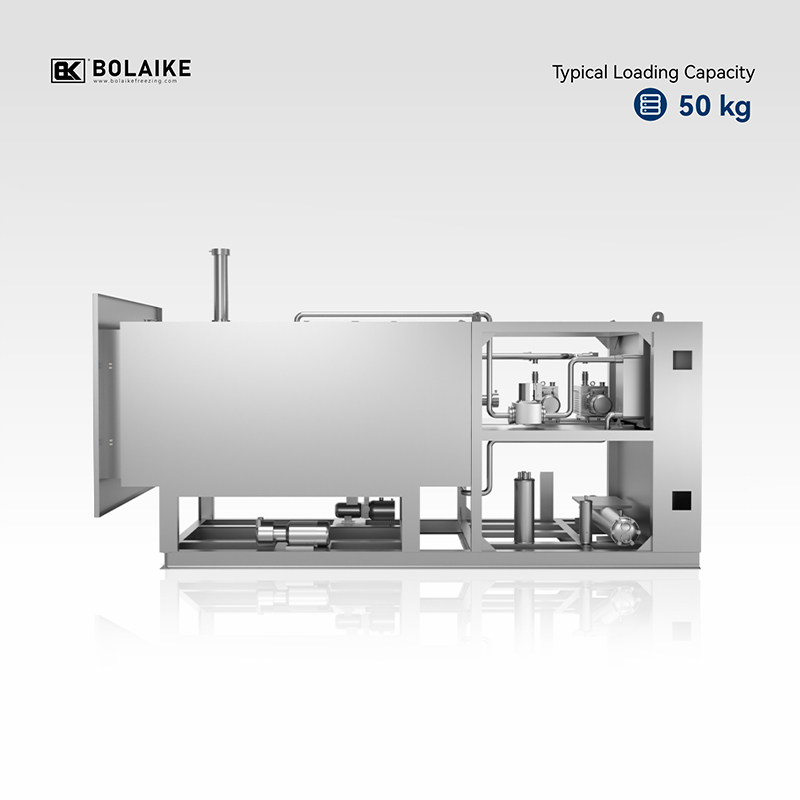
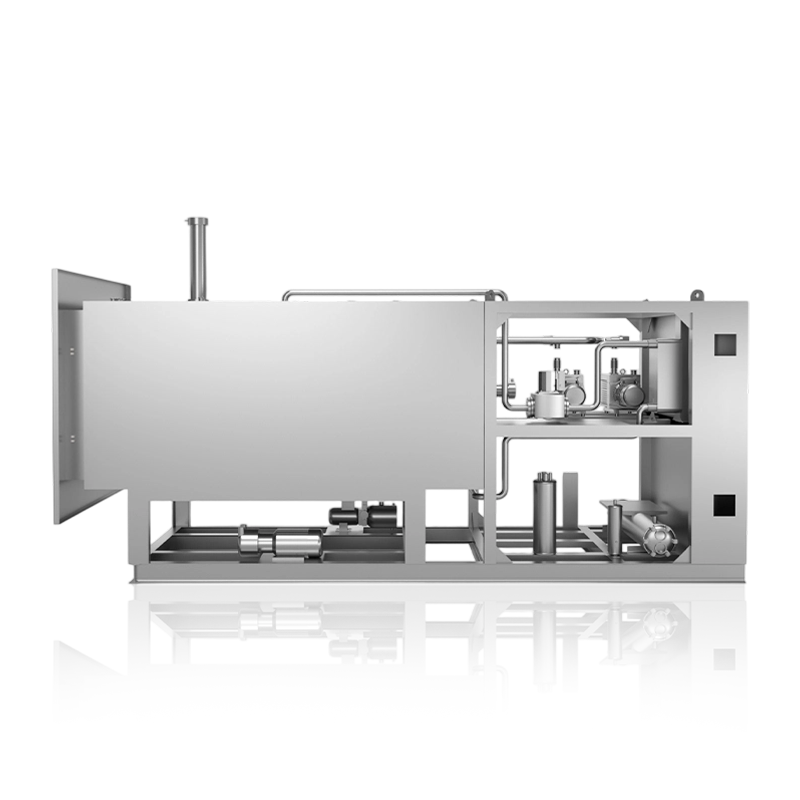
Cycle time on a run is what determines whether a new machine is judged a success or a disappointment. Two published BOLAIKE characteristics bear directly on it:
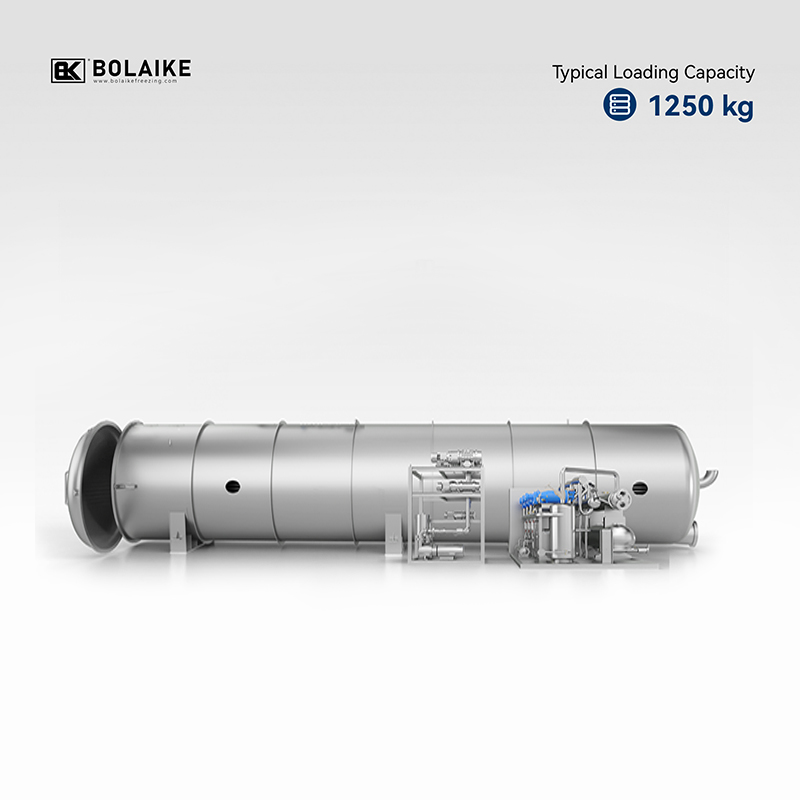
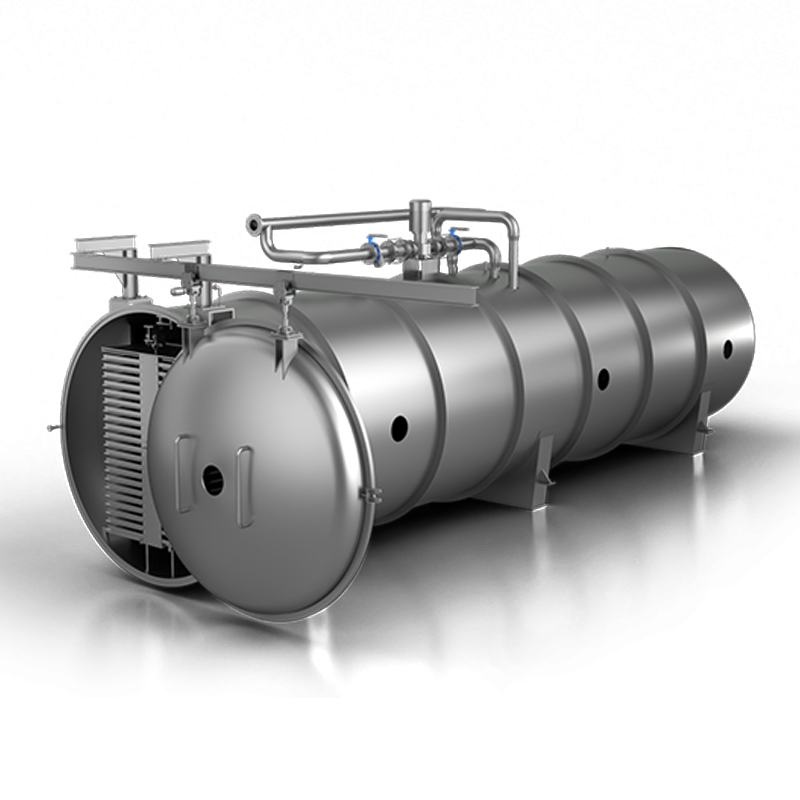
Pre-freezing is integrated, and it shortens the cycle.BOLAIKE's published medium and large-scale design integrates pre-freezing and drying in one unit, with the cold storage system able to synchronise with the freeze dryer shelves to hold raw material at precise sub-zero temperature before loading, preventing partial thawing. Pre-freezing before loading is the single biggest lever on total cycle time, because it removes the freezing stage's workload from the chamber cycle.
Heat-up response is engineered. The published double-layer radiant panel design with independent upper cooling and lower heating circuits and circulating silicone oil driven by dedicated pump groups with modulating mixing valves gives faster heating response, which shortens drying cycles while maintaining stable heat transfer. The published medium-scale figure is a 15–25% single-batch cycle shortening on energy-efficient configurations.
Consistent result on the run, not only the tenth. The published trial results show reproducible outcomes across material types — oatmeal at 0.79% residual moisture with texture close to freshly cooked after rehydration, fermented flour at 15 kg processed loose and non-sticky with yeast activity preserved, mineral violet pigment at 0.64% with full colour retention — which is what makes a production run a validation run rather than an experiment.
 2026/05/28
 2026/05/28
2026/05/28

 Custom Industrial Lyophilizer Freeze Dryer Manufacturers





 English
 русский
 Español
 Français
 Deutsch
 عربى


