/author/wen-yuhan-regional-sales-representative/


News
Products & Solutions
CONTACT US

+86-18068757376

blk@jsblk.com

No. 29 North Tongjiang Road, Xinbei District, Changzhou City, Jiangsu Province, China
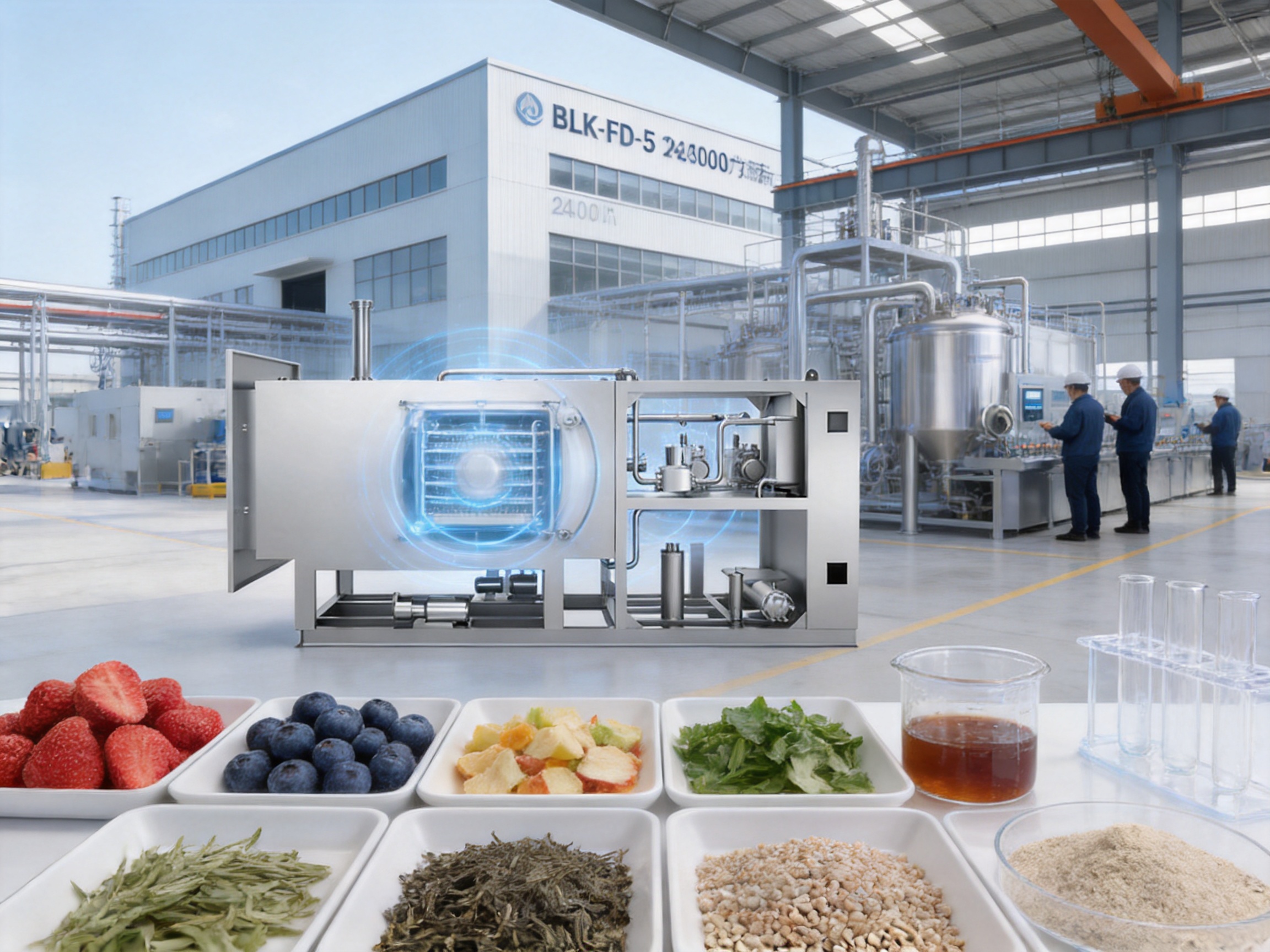
Freeze-drying is one of the most effective methods for preserving products that are sensitive to heat, oxidation, moisture, and structural damage. By removing water under vacuum after deep freezing, the process can retain much of a product’s original shape, color, aroma, flavor, nutritional value, and functional properties. However, achieving consistent results requires much more than simply combining a refrigeration system with a vacuum pump. A modern freeze dryer must coordinate freezing, vacuum control, sublimation, heat transfer, condensation, product loading, cleaning, energy management, and process monitoring.
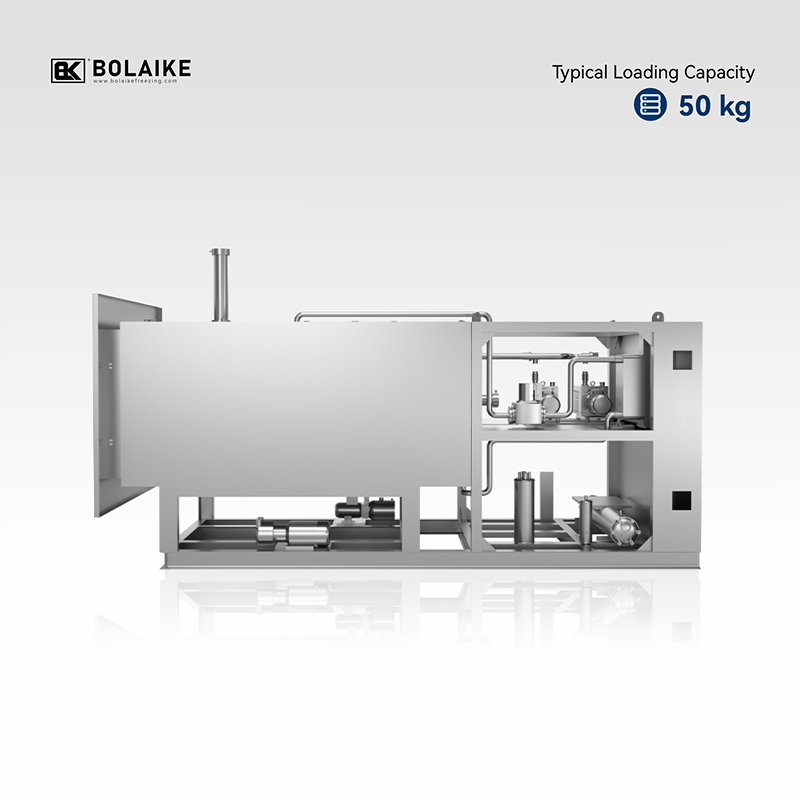
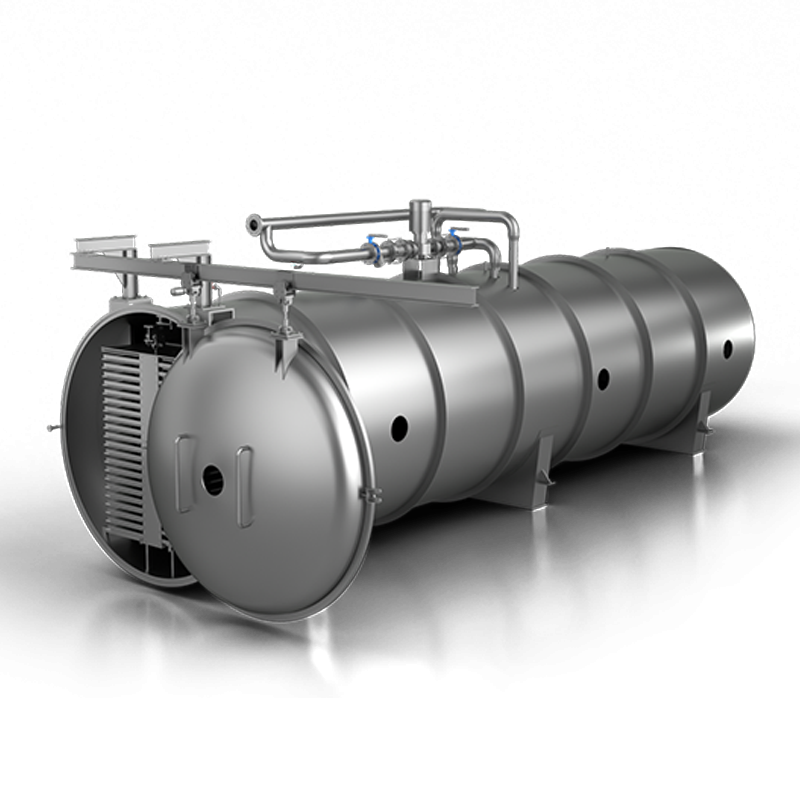
The BLK-FD-5 is a medium-sized freeze-drying system designed to bridge the gap between laboratory experimentation and industrial production. With a 5-square-meter freeze-drying area, a standard loading capacity of 50 kilograms, and a liquid loading capacity of 100 liters, it provides a practical production platform for companies that need more capacity than an experimental freeze dryer but do not yet require a large-scale production unit. Its integrated pre-freezing and drying design, rectangular chamber configuration, residual cold recovery system, and patented double-layer radiation plates are intended to improve workflow efficiency, temperature uniformity, and operating economy.
This equipment is suitable for a wide range of applications, including food ingredients, fruits and vegetables, medicinal herbs, health supplements, bioproducts, and selected chemical materials. It can support pilot production, commercial batch processing, product development, contract manufacturing, and capacity expansion. Its design also allows manufacturers to evaluate new recipes and process conditions on a meaningful scale before investing in a larger production line.
Many businesses begin their freeze-drying journey with small laboratory equipment. Laboratory units are useful for formulation trials, research, and sample preparation, but they often have limited shelf area, restricted loading capacity, and a large difference between experimental conditions and commercial production conditions. Results achieved in a small chamber may not translate directly to a larger machine because product thickness, shelf loading, vapor movement, condenser demand, and heat distribution change as scale increases.
At the other end of the market, large-scale freeze-drying equipment can provide high throughput but may require substantial capital investment, a larger building footprint, higher utility capacity, and more extensive installation work. For companies developing new products or gradually increasing output, immediately purchasing a large production system can create unnecessary financial and operational pressure.
A medium-sized unit offers a more balanced path. It gives manufacturers enough space to process meaningful commercial batches while retaining the flexibility required for product development. It can be used to validate drying cycles, establish quality standards, train operators, and generate production data. Once a product demonstrates stable demand, the information collected on a medium-sized machine can assist with the design and commissioning of additional equipment.
The BLK-FD-5 is positioned for this intermediate stage. It is described as a bench-to-industrial freeze dryer because it supports the transition from research and pilot work toward routine production. Its capacity is large enough for commercial evaluation and small-batch manufacturing, while its integrated structure is intended to simplify the movement from freezing to drying.
The principal specifications of the BLK-FD-5 establish its position as a compact but capable production-oriented freeze dryer. The freeze-drying area is 5 square meters, providing the shelf space required for medium-volume batch processing. The standard loading capacity is 50 kilograms, while the liquid loading capacity is 100 liters. These figures allow operators to select an appropriate loading method according to the physical characteristics of the material and the desired final product.
Specification |
BLK-FD-5 Performance |
Practical Significance |
Freeze-drying area |
5 m² |
Provides useful shelf space for pilot and medium-sized production batches |
Standard loading capacity |
50 kg |
Supports substantial batch processing for food, botanical, supplement, and other products |
Liquid loading capacity |
100 L |
Suitable for liquid formulations, extracts, solutions, and prepared slurries |
Overall dimensions |
4,500 × 2,200 × 2,700 mm |
Offers a rectangular footprint that can be planned into a workshop layout |
Overall weight |
5.7 T |
Indicates the need for suitable floor loading, transport planning, and installation preparation |
Ultimate vacuum level |
≤10 Pa |
Creates the low-pressure environment required for sublimation-based drying |
The overall dimensions are 4,500 millimeters in length, 2,200 millimeters in width, and 2,700 millimeters in height. This rectangular arrangement can make the equipment easier to position in a processing workshop than a less compact or irregular configuration. Since freeze-drying facilities often contain preparation rooms, freezing areas, packaging zones, cold storage, utilities, and cleaning spaces, efficient use of floor area is important.
With an overall weight of approximately 5.7 tons, the system is a substantial industrial machine. Installation planning should therefore include floor strength, lifting access, transport routes, utility connections, operator access, maintenance clearance, and local safety requirements. The weight also reflects the robust construction and the thermal and vacuum components required for a production-capable freeze dryer.
The stated ultimate vacuum level is no more than 10 pascals. A stable low-pressure environment is essential because it allows frozen water to pass from ice directly into vapor through sublimation. The actual drying cycle will depend on product formulation, fill depth, tray arrangement, freezing temperature, shelf temperature, chamber pressure, condenser performance, and endpoint criteria. Nevertheless, the specified vacuum capability provides an important foundation for controlled freeze-drying processes.
One of the main features of the BLK-FD-5 is its integrated pre-freezing and drying design. In a conventional workflow, product freezing may be performed in a separate freezer before trays or containers are transferred to the freeze dryer. This arrangement can be effective, but it may also introduce additional handling steps, temperature fluctuations, transfer time, and space requirements.
When partially or fully frozen products are moved between separate machines, the material may experience warming during loading. Even a short temperature increase can affect ice crystal structure, especially in sensitive formulations. Larger ice crystals may create different pore structures after sublimation, while uneven freezing can influence drying time, rehydration behavior, texture, and appearance.
An integrated design can simplify the transition between freezing and drying by reducing the need for external product transfers. The product can be prepared, loaded, frozen, and dried within a coordinated equipment system. This approach can contribute to more consistent handling and can reduce the number of process stages that operators must manage manually.
The integrated arrangement is also valuable for facilities with limited floor space. Instead of allocating separate areas for a pre-freezer and a drying chamber, a combined system can consolidate essential operations. This can simplify plant planning, reduce unnecessary movement, and support a more organized material flow.
For product developers, integrated pre-freezing and drying can make process trials easier to repeat. A development team can record freezing conditions, shelf temperature changes, vacuum behavior, product appearance, and drying endpoint results as part of one coordinated cycle. This information can help establish standard operating procedures before larger equipment is introduced.
It is important to recognize that the best freezing profile depends on the product. Foods with high sugar concentrations, viscous liquids, emulsions, cellular materials, and pharmaceutical or biological formulations may require different freezing rates and temperature profiles. The integrated design provides the platform for this control, while the final cycle must be developed according to the product’s thermal and physical characteristics.
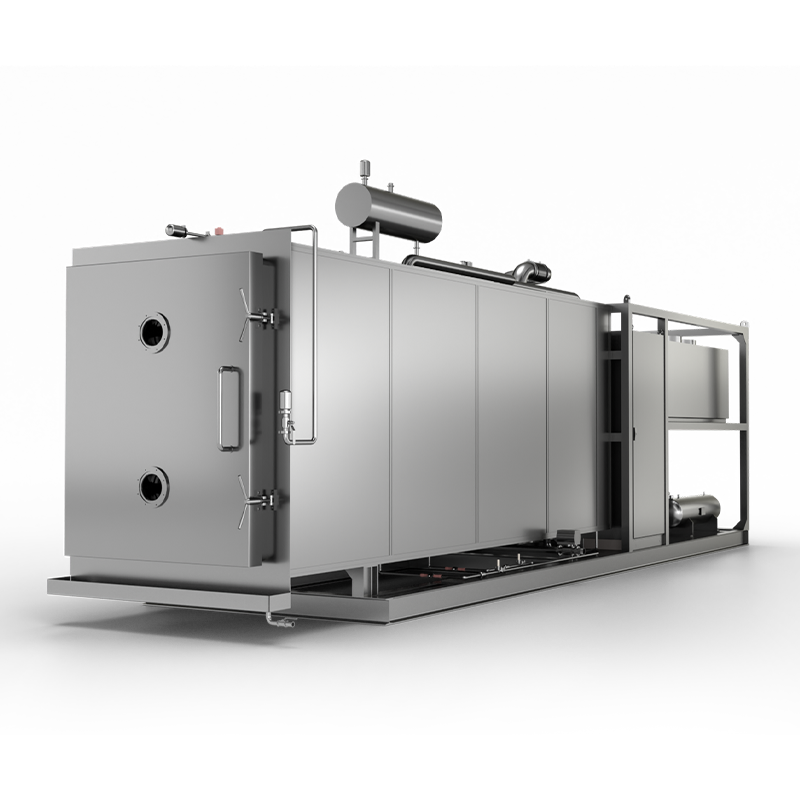
The BLK-FD-5 uses a rectangular chamber structure. This configuration is designed to support convenient workshop layout and improved space utilization. In a production facility, the shape of a machine can affect much more than appearance. It influences how operators approach the equipment, how trays and carts move through the room, how maintenance access is arranged, and how the machine is positioned relative to preparation and packaging zones.
A rectangular machine can be aligned with walls, process corridors, and other equipment in a relatively straightforward manner. This may reduce unused gaps and make it easier to design a logical sequence from raw material preparation to loading, drying, unloading, inspection, and packaging. A well-planned arrangement can help reduce unnecessary movement and improve operator productivity.
Space utilization is especially important for medium-sized manufacturers. A company may be expanding from a small workshop, adding freeze-drying to an existing food facility, or creating a dedicated production room within a larger plant. In these situations, the equipment must fit into a defined footprint while leaving enough room for safe operation and maintenance.
The published dimensions of 4,500 × 2,200 × 2,700 millimeters provide a clear starting point for layout planning. However, an installation plan should also account for access doors, electrical cabinets, piping, vacuum components, refrigeration connections, drainage, ventilation, cleaning activities, and service access. Adequate clearance around the unit is necessary for inspection, component replacement, and safe operator movement.
The rectangular chamber structure may also support more orderly shelf arrangement. Product trays can be loaded in a predictable pattern, helping operators maintain consistent spacing and avoid obstructing vapor movement. Correct tray loading remains essential because overloaded shelves, uneven product thickness, or blocked passages can cause variations in drying time.
Freeze-drying is an energy-intensive process because it requires refrigeration for freezing and condensation, vacuum generation, controlled heating for sublimation, and extended operating time. Energy consumption is therefore an important consideration for both operating cost and environmental performance.
The BLK-FD-5 is standard-equipped with a residual cold recovery system. According to the provided product information, this system can reduce energy consumption by approximately 10% to 15% compared with traditional equipment. The basic principle is to recover and reuse available low-temperature energy rather than allowing it to dissipate without further benefit.
Residual cold recovery can improve system efficiency by coordinating the refrigeration and thermal management stages. In a freeze-drying cycle, cold energy may remain available in components or process circuits after one stage has completed. A recovery system can use this remaining cooling potential to reduce the demand placed on the refrigeration system during subsequent operations.
The value of energy recovery extends beyond electricity savings. Lower energy demand can reduce operating costs, support more predictable production budgeting, and contribute to a lower environmental footprint per batch. For businesses producing frozen fruits, vegetable powders, instant foods, botanical extracts, health supplements, or other high-value products, improvements in energy efficiency can become increasingly significant as production volume grows.
Energy performance is influenced by many factors, including ambient temperature, product load, batch thickness, cycle duration, condenser condition, vacuum leakage, refrigeration settings, and maintenance quality. The stated 10% to 15% reduction should therefore be understood as an equipment design advantage rather than a guaranteed result under every operating condition. Actual savings should be evaluated through site-specific monitoring and comparison with the facility’s existing equipment.
The residual cold recovery system is particularly relevant to companies seeking more sustainable production. Energy efficiency is becoming an important purchasing criterion in food, pharmaceutical, biotechnology, and chemical processing. A machine that reduces avoidable energy demand can help manufacturers move toward resource-efficient production without compromising the core requirements of freeze-drying.
BLK-FD-5
Uniform shelf temperature is one of the most important conditions for reliable freeze-drying. If one portion of a shelf is warmer or colder than another, products may dry at different rates. Some trays may reach the desired endpoint while others still contain residual moisture. In sensitive products, uneven heat transfer can also affect color, texture, rehydration, active ingredients, and overall appearance.
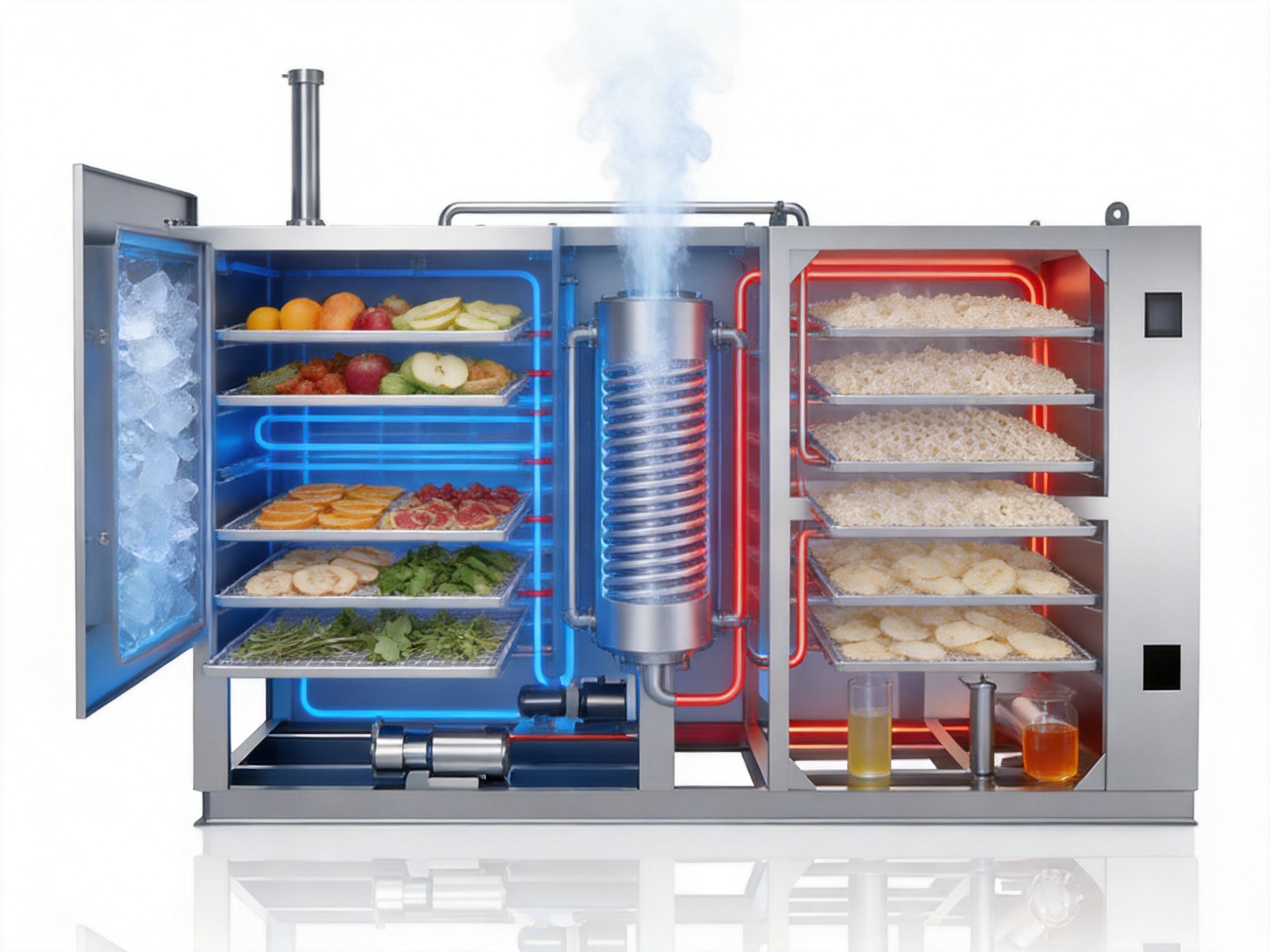
The BLK-FD-5 is equipped with patented double-layer radiation plates. These plates use independent hot and cold circuits to improve shelf temperature uniformity. The separation of the circuits allows the system to manage freezing and drying functions with greater thermal independence.
During freezing, the cold circuit supports the reduction of product temperature and the formation of the frozen structure. During primary and secondary drying, the hot circuit delivers controlled thermal energy to the shelves. By using dedicated paths for hot and cold media, the equipment can reduce interference between these two operating requirements.
The double-layer construction also contributes to more controlled heat distribution across the shelf surface. Radiation and conduction both influence product heating in a freeze dryer. When the shelf temperature is more uniform, the process engineer can establish a more predictable relationship between shelf temperature, chamber pressure, product temperature, and sublimation rate.
Temperature uniformity does not eliminate the need for process validation. Product characteristics, tray materials, fill height, chamber loading pattern, and formulation still influence drying behavior. However, a well-designed shelf system provides a stronger foundation for repeatable cycles than a system with significant thermal variation.
Independent circuits may also provide greater flexibility during recipe development. Operators can adjust freezing and drying stages according to the product’s requirements instead of relying on one shared thermal pathway. This is useful when a facility processes different product categories, each with a distinct eutectic or collapse temperature and a different sensitivity to heat.
For manufacturers, the practical advantage is consistency. Consistent shelf conditions can support more uniform batch quality, easier cycle development, lower risk of under-drying, and better control of production time. These benefits are especially important when the finished product has a high unit value or when moisture specifications are strict.
The BLK-FD-5 can be applied to many product categories, provided that the product is compatible with vacuum freeze-drying and that the process is developed correctly. Its 5-square-meter area and 50-kilogram standard loading capacity make it suitable for products that require commercial-scale testing or regular medium-volume batches.
Fruits and vegetables are common freeze-drying materials because the process can preserve much of their original color, shape, flavor, and nutritional profile. Products may include berries, tropical fruits, apple pieces, mushrooms, corn, peas, vegetable slices, herbs, and blended ingredients.
Product preparation is essential. Raw materials should be sorted, cleaned, cut to consistent dimensions, and distributed evenly on trays. Differences in piece size or thickness can cause different drying rates. The BLK-FD-5 can provide a controlled shelf environment for these products, while the integrated freezing function can reduce the need for separate freezing equipment during batch preparation.
Freeze-dried fruit and vegetable products are often used in snack foods, breakfast products, confectionery, instant meals, soup mixes, ingredient systems, and emergency food supplies. After drying, the material should be protected from moisture through suitable packaging because freeze-dried products are highly hygroscopic.
Medicinal herbs and botanical materials may contain volatile compounds, pigments, aromatic components, and heat-sensitive constituents. Freeze-drying can be used to reduce thermal exposure compared with conventional hot-air drying, although the appropriate process depends on the specific material and the required quality standard.
Leaves, flowers, roots, extracts, and prepared botanical formulations may have very different structures. The product development team should evaluate freezing behavior, solids content, loading thickness, drying endpoint, and packaging requirements. The BLK-FD-5 provides a medium-capacity platform for developing and repeating such processes.
Health supplements may be prepared as liquids, slurries, extracts, or formulated blends. The stated 100-liter liquid loading capacity can support processing of liquid feed materials before they are frozen and dried. This can be useful for ingredient developers producing small commercial batches or testing new formulations.
Freeze-drying may improve the storage stability and handling convenience of certain sensitive materials. Nevertheless, quality depends on formulation design, excipient selection, residual moisture control, packaging, and storage conditions. Process records should include the material’s initial solids content, loading amount, freezing profile, vacuum behavior, shelf temperature, and endpoint data.
Biological materials can be highly sensitive to temperature, moisture, and mechanical stress. Freeze-drying is widely associated with the stabilization of selected biological products, although each application requires specialized formulation and validation. The equipment’s ability to provide controlled freezing, low pressure, and regulated shelf heating can support the development of suitable cycles.
For biological applications, the machine should be assessed against the facility’s regulatory, cleaning, documentation, and validation requirements. Product-contact materials, control systems, sterilization methods, environmental classification, and data integrity expectations may vary according to the application.
Some chemical materials are processed by freeze-drying when the objective is to produce a porous solid, improve handling, remove solvent or water under gentle conditions, or preserve a particular structure. The material’s freezing behavior and solvent characteristics must be carefully evaluated before processing.
The BLK-FD-5 offers a suitable platform for medium-scale chemical process development, but compatibility studies should always be completed. Vacuum levels, condenser temperature, material compatibility, explosion protection, solvent recovery, and ventilation requirements must be considered where non-water solvents or volatile compounds are involved.
The BLK-FD-5 offers several advantages over less integrated or less thermally coordinated freeze-drying approaches. Its competitive value is not based only on capacity. It comes from the combination of production scale, integrated freezing, chamber geometry, energy recovery, and shelf design.
First, the integrated pre-freezing and drying arrangement can reduce product transfer between separate machines. This may lower handling requirements, reduce exposure to ambient conditions, and simplify the production sequence. For facilities with limited space or limited labor, this integrated workflow can be a significant operational benefit.
Second, the rectangular chamber structure is designed for practical workshop integration. Rather than using a configuration that may create inefficient gaps or complicated movement routes, the machine can be positioned within a defined production layout. This can be valuable for facilities that are upgrading an existing room instead of building a new plant.
Third, the residual cold recovery system addresses a major concern in freeze-drying: energy use. A reported 10% to 15% reduction compared with traditional equipment can contribute to lower utility costs and improved sustainability, especially when the machine runs frequent batches.
Fourth, the double-layer radiation plates with independent hot and cold circuits are intended to improve temperature uniformity. This can help reduce variability across shelves and support more predictable drying cycles. Uniform thermal conditions are particularly important when multiple trays must meet the same moisture and quality specifications.
Fifth, the equipment is sized for the important transition between research and full industrial production. It is more representative of commercial conditions than a laboratory machine, while requiring less investment and space than a large-scale production line. This allows manufacturers to collect practical data before making larger capital commitments.
These advantages should be assessed in relation to the customer’s product, batch size, utility conditions, process requirements, and quality system. A freeze dryer is most effective when it is correctly matched to the application and supported by appropriate preparation, loading, monitoring, maintenance, and packaging procedures.
The performance of a freeze dryer depends on the quality of its design and manufacturing process. Vacuum chambers must maintain tightness, refrigeration systems must provide reliable low temperatures, shelf circuits must distribute thermal energy consistently, and control systems must coordinate complex process stages. Manufacturing experience is therefore a major factor when selecting a supplier.
Jiangsu Bolaike Freezing Technology Development Co., Ltd. was established in 2014 in Changzhou, Jiangsu, China. The company originated from Changzhou Zhongleng Refrigeration Equipment Co., Ltd., which entered the refrigeration industry in 2003. This background provides a longer technical connection to refrigeration engineering and vacuum freeze-drying development than the company’s establishment date alone might suggest.
The company operates as a national high-tech enterprise specializing in the research, development, manufacturing, and sales of vacuum freeze-drying and refrigeration equipment. Its business covers equipment for food, fruits and vegetables, medicinal herbs, health supplements, bioproducts, chemical materials, and other industries.
This industry coverage is important because freeze-drying systems must be adapted to different process conditions. A food manufacturer may prioritize throughput, cleaning convenience, texture retention, and energy consumption. A botanical processor may focus on aroma and color preservation. A bioproduct customer may require tighter documentation and validation support. Experience across multiple sectors can help an equipment supplier understand these different priorities.
The company has established an integrated professional team covering research and development, engineering, sales, installation, commissioning, and after-sales service. An integrated team can improve communication between the equipment design stage and the installation stage. It can also help customers move from initial technical discussions to site commissioning and operator training with fewer gaps.
According to the provided company information, the company has obtained more than 100 national invention and utility model patents. Patents do not by themselves guarantee that every application will produce the same result, but they indicate an ongoing focus on engineering development and the protection of technical innovations. The patented double-layer radiation plate used in the BLK-FD-5 is an example of this development orientation.
The company has also developed long-term partnerships with universities and research institutions, including the Chinese Academy of Agricultural Sciences, the Jiangsu Academy of Agricultural Sciences, and Jiangnan University. Cooperation with research organizations can support product testing, material studies, process development, and the transfer of scientific knowledge into industrial equipment.
The company reports energy savings of approximately 20% to 30% for its freeze-drying equipment in general. The specific BLK-FD-5 information identifies a residual cold recovery system that reduces energy consumption by 10% to 15% compared with traditional equipment. These figures relate to different levels of description and should be verified according to the application, reference machine, operating cycle, and measurement method.
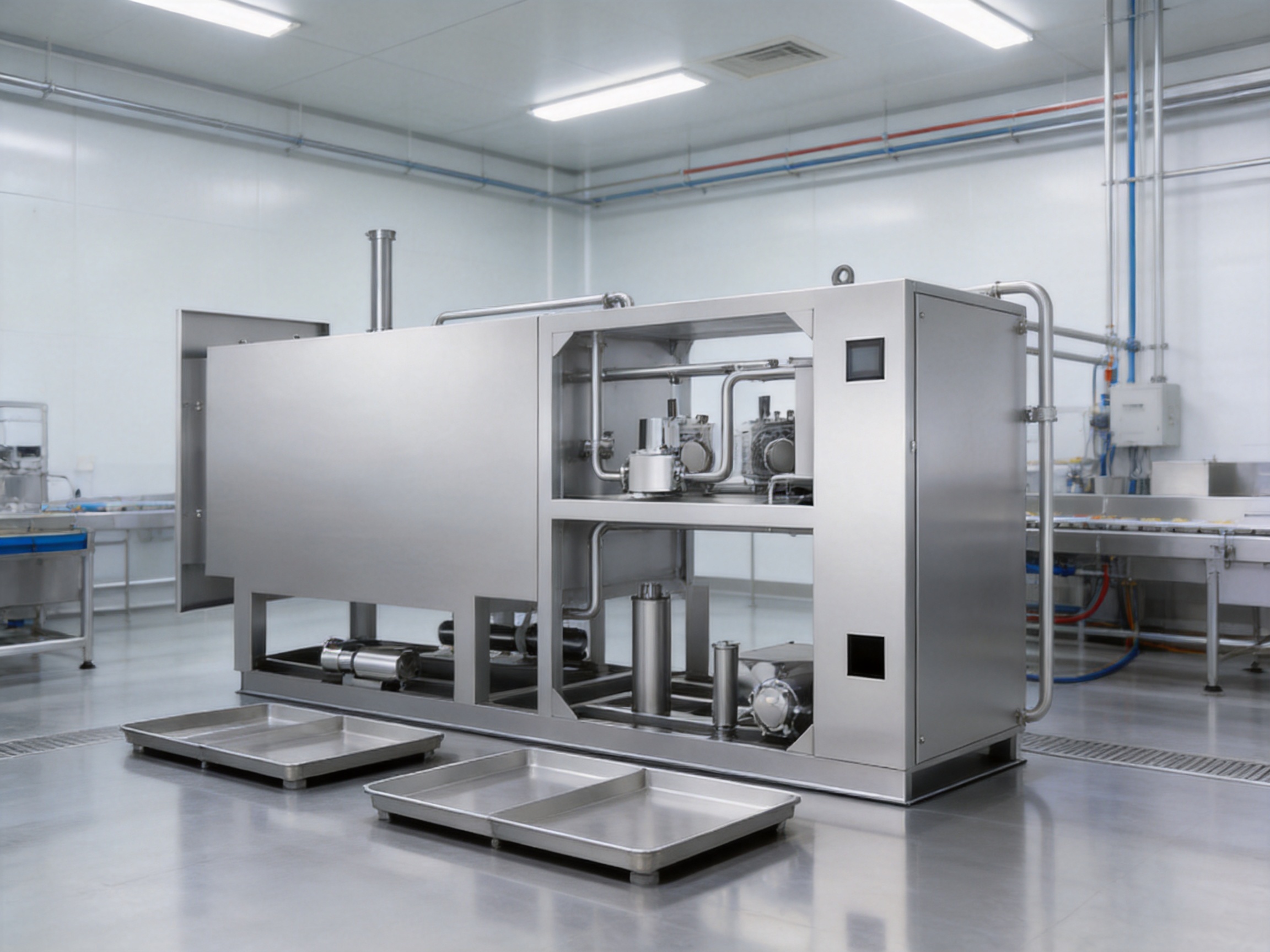
The company has moved into a modern 24,000-square-meter manufacturing base. A dedicated manufacturing base can provide the space needed for equipment fabrication, assembly, testing, warehousing, engineering coordination, and service preparation. Freeze dryers are large and technically complex, so a suitable production environment is essential for maintaining orderly assembly and inspection procedures.
A complete manufacturing process for freeze-drying equipment typically involves engineering design, material selection, chamber fabrication, shelf and circuit assembly, refrigeration integration, vacuum system installation, electrical control integration, insulation work, testing, and final inspection. Each stage can influence the final reliability of the equipment.
Chamber fabrication must prioritize structural strength and vacuum tightness. Any leakage can increase pump load, extend drying time, and interfere with pressure control. Shelf manufacturing must support consistent thermal transfer and proper alignment. Refrigeration components must be selected and installed to meet the required freezing and condensing conditions. Control panels must coordinate sensors, valves, pumps, refrigeration, heating, and safety functions.
Assembly quality is particularly important in an integrated system because several subsystems operate together. The freezing stage, vacuum stage, heating stage, and condensation stage must transition smoothly. Poor coordination can result in unstable pressure, excessive cycle times, incomplete drying, or unnecessary energy consumption.
Factory testing can help identify installation problems before shipment. Testing may include vacuum holding, refrigeration performance, shelf temperature mapping, control response, valve operation, alarm functions, and system communication. The exact testing scope depends on the equipment configuration and customer requirements, but a structured inspection process helps reduce commissioning risk.
The company’s combination of engineering, manufacturing, installation, commissioning, and after-sales functions allows it to support the equipment beyond the point of sale. This is important because the successful operation of a freeze dryer depends on both machine performance and the customer’s ability to operate and maintain it correctly.
A freeze dryer is a major investment, and correct installation is essential. Before delivery, the customer should prepare the foundation, access route, electrical supply, refrigeration-related utilities, water or drainage connections where applicable, ventilation, and production-room layout. The machine’s 5.7-ton weight should be included in structural and lifting calculations.
Installation planning should also consider the movement of raw materials and finished products. The equipment should be positioned so that operators can load trays safely, unload dried material efficiently, and transfer product to packaging without unnecessary exposure to humid air.
Commissioning typically includes equipment inspection, utility connection verification, control-system checks, vacuum testing, refrigeration testing, shelf temperature evaluation, and trial operation. A commissioning program can also confirm that the machine reaches the intended vacuum level and that the integrated freezing and drying sequence operates correctly.
Operator training should cover loading patterns, product preparation, recipe selection, alarm response, cleaning, routine inspections, vacuum leak checks, and safe shutdown procedures. Operators should understand that a freeze dryer cannot compensate for inconsistent raw materials or poor loading practices. Product thickness, tray distribution, initial temperature, and batch size should remain within the validated operating range.
After-sales service is also important because freeze-drying cycles can be long and production interruptions can be costly. A supplier with engineering and service capabilities can assist with troubleshooting, spare parts, maintenance planning, process adjustments, and future capacity expansion.
Freeze-drying generally consists of three interconnected stages: freezing, primary drying, and secondary drying. During freezing, water in the product is converted into ice. During primary drying, pressure is reduced and heat is supplied so that ice sublimates. During secondary drying, additional bound moisture is removed to achieve the desired final moisture level.
Each stage requires appropriate control. Freezing must create a stable and suitable ice structure. Primary drying must stay within the product’s allowable temperature range to avoid collapse or melt-back. Secondary drying must remove residual moisture without damaging active ingredients, flavor compounds, color, or texture.
The BLK-FD-5’s low vacuum capability, integrated pre-freezing function, and independent hot and cold shelf circuits support these process requirements. However, the cycle should be developed through product testing. A process engineer may need to evaluate product temperature, chamber pressure, shelf temperature, endpoint behavior, appearance, residual moisture, rehydration, and storage stability.
Loading uniformity is one of the most practical factors affecting results. Trays should contain consistent fill depths, and excessive stacking or uneven distribution should be avoided. If a product is loaded in different thicknesses, the thicker areas will generally require more time to dry. The 5-square-meter shelf area should be used in a way that supports consistent vapor movement and thermal exposure.
Vacuum performance should be checked regularly. A leak can prolong the time required to reach the target pressure and may reduce process stability. Door seals, valves, fittings, pipes, and instrument connections should be inspected according to a preventive maintenance plan.
Condenser and refrigeration performance should also be monitored. A condenser that cannot maintain adequate low temperature may allow water vapor to travel toward the vacuum pump or reduce drying efficiency. Regular cleaning, defrosting, inspection, and service help protect the system’s performance.
Maintenance is central to the long-term value of any freeze dryer. The equipment contains refrigeration, vacuum, heating, control, and mechanical systems that must work together. Preventive maintenance can reduce unexpected downtime and help preserve energy efficiency.
Routine inspections may include checking door seals, vacuum connections, valves, pumps, refrigeration components, electrical connections, temperature sensors, pressure sensors, and control-system alarms. The inspection frequency should be based on operating hours, product type, environmental conditions, and the supplier’s recommendations.
Cleaning requirements vary according to the product. Food and supplement applications may require frequent cleaning to control residues and cross-contamination. Botanical or chemical materials may require special cleaning agents or procedures. The cleaning method must be compatible with chamber materials, shelf surfaces, seals, sensors, and other components.
Residual cold recovery systems should be maintained properly because fouling, poor insulation, or malfunctioning controls can reduce the expected energy benefit. Likewise, the double-layer radiation plates should be protected from physical damage and contamination that might interfere with heat transfer.
Maintenance records are useful for identifying gradual changes in performance. A trend toward longer evacuation times, slower freezing, inconsistent shelf temperatures, or increased cycle duration may indicate a developing problem. Early detection allows the issue to be addressed before it causes a major production loss.
The BLK-FD-5 can serve as a product development platform as well as a production machine. Companies can use it to compare raw materials, test formulations, optimize cut sizes, study loading thickness, and evaluate packaging options. Because the machine operates at a meaningful scale, the results may be more representative of commercial conditions than tests performed only in a small laboratory chamber.
When a new product is developed, the manufacturer can establish a series of controlled trials. The first trials may determine a suitable freezing profile. Later trials can evaluate primary drying pressure and shelf temperature. Additional trials can optimize secondary drying and confirm final moisture. Product quality testing can include appearance, aroma, texture, rehydration, nutrient retention, active-component stability, and shelf life.
Once a cycle is established, the machine can support pilot sales, customer sampling, and small commercial orders. This reduces the need to outsource every batch and gives the manufacturer greater control over production scheduling and quality.
The equipment can also function as a bridge to larger capacity. Data generated on the BLK-FD-5 can inform future equipment selection, including required shelf area, condenser capacity, refrigeration output, vacuum capacity, cycle time, and loading configuration. A company can use this information to make a more informed expansion decision rather than relying only on theoretical production estimates.
For contract manufacturers, flexibility is especially valuable. A medium-sized freeze dryer can process different product categories and batch sizes, allowing the company to serve several customers without committing immediately to a very large production line. Proper cleaning and process segregation procedures are necessary when handling multiple products.
Production planning should consider more than the nominal loading capacity. The actual output per day depends on product type, freezing time, primary drying time, secondary drying time, unloading, cleaning, and packaging. Some materials may complete the cycle quickly, while others require extended drying because of high solids content, thick loading, or difficult moisture migration.
The 5-square-meter freeze-drying area provides a measurable basis for scheduling. Manufacturers can calculate the amount of product loaded per square meter, estimate the number of trays required, and establish a repeatable batch configuration. The 50-kilogram standard capacity can be used as a planning reference, while the 100-liter liquid capacity may be more relevant for liquid or semi-liquid products.
Batch records should document raw material quantity, pre-treatment, loading distribution, freezing conditions, shelf temperatures, pressure profile, cycle duration, endpoint determination, final moisture, and packaging time. These records help compare batches and identify opportunities for improvement.
The integrated configuration may reduce transfer time between freezing and drying. The rectangular arrangement may simplify movement in the workshop. The energy recovery system may reduce utility demand. More uniform shelves may reduce variation across trays. Together, these features can improve the predictability of production planning, although final performance depends on the application and operating discipline.
Organizations evaluating the BLK-FD-5 should begin with the product. The first questions should concern the raw material, formulation, target moisture, desired texture, production quantity, shelf life, packaging method, and regulatory environment. Equipment selection should follow the process requirements rather than capacity alone.
The available floor area and building conditions should then be reviewed. The stated dimensions and weight should be compared with door openings, floor capacity, ceiling height, lifting access, utility locations, and operator pathways. Service clearance should be included in the layout rather than added later.
Utility demand should be discussed with the supplier. This includes electrical power, refrigeration requirements, vacuum system conditions, cooling or water connections, drainage, ventilation, and environmental conditions. Energy recovery benefits should be evaluated using the customer’s expected batch frequency and local utility costs.
Technical documentation should be requested for the chamber, shelf system, vacuum performance, refrigeration system, controls, safety functions, materials, cleaning procedures, and maintenance requirements. For regulated applications, customers should also confirm the available documentation and validation support.
Testing should be based on the customer’s actual product where possible. A product trial can provide valuable information about drying time, appearance, final moisture, rehydration, energy consumption, and batch uniformity. It can also reveal whether the proposed loading capacity matches the product’s real behavior.
The company reports that its products have been exported to more than 30 countries and regions. International experience can help an equipment supplier understand different installation environments, electrical standards, documentation expectations, shipping requirements, and customer service needs.
Reliability in freeze-drying is built through design, component selection, manufacturing control, testing, installation, and maintenance. A supplier that manages these functions as an integrated operation can provide more consistent technical support throughout the equipment life cycle.
The company’s focus on green, environmentally friendly, intelligent, and reliable high-end freeze-drying solutions is aligned with current market expectations. Customers increasingly require equipment that not only produces high-quality material but also uses energy responsibly, supports traceable operation, and can be integrated into modern production systems.
The reported patent portfolio, research partnerships, manufacturing base, and international project experience provide a foundation for this positioning. For customers, the most important consideration is how these capabilities are applied to their specific project. Equipment performance should be confirmed through technical specifications, factory testing, product trials, installation verification, and documented operating procedures.
The BLK-FD-5 is a medium-sized freeze-drying system described as a bench-to-industrial freeze dryer. It is designed to support the transition from experimental and pilot work to medium-volume commercial production.
The freeze-drying area is 5 square meters. This provides the shelf space needed for meaningful pilot batches and regular medium-sized production cycles.
The standard loading capacity is 50 kilograms. The liquid loading capacity is 100 liters. Actual usable capacity depends on product density, fill depth, tray arrangement, formulation, and the selected process cycle.
Yes. The equipment uses an integrated pre-freezing and drying design. This can reduce product transfer between separate freezing and drying machines and may simplify workflow management.
The specified ultimate vacuum level is no more than 10 pascals. This low-pressure environment supports the sublimation of frozen water during freeze-drying.
The rectangular chamber structure is intended to support convenient workshop layout and better use of available space. It can help align the machine with walls, corridors, preparation areas, and other processing equipment.
The residual cold recovery system is designed to reuse available low-temperature energy and reduce unnecessary refrigeration demand. The provided information states that energy consumption can be reduced by approximately 10% to 15% compared with traditional equipment.
The patented double-layer radiation plates use independent hot and cold circuits. This arrangement is intended to improve shelf temperature uniformity and provide more controlled thermal conditions during freezing and drying.
Potential applications include food, fruits and vegetables, medicinal herbs, health supplements, bioproducts, chemical materials, and other products that are suitable for vacuum freeze-drying.
Yes. Its medium-sized capacity makes it suitable for process development, pilot production, formulation testing, customer sampling, and the preparation of data for future large-scale expansion.
Customers should review floor loading, equipment access, lifting arrangements, electrical supply, utility connections, drainage, ventilation, operator access, maintenance clearance, and the movement of raw and finished products.
Operator training is essential. Personnel should understand product loading, freezing, vacuum operation, shelf temperature control, alarms, cleaning, maintenance, endpoint evaluation, and safe shutdown procedures.
Yes. Freeze-drying conditions vary according to formulation, solids content, thickness, structure, sensitivity to temperature, target moisture, and packaging requirements. A suitable cycle should be developed and verified for each product or product family.
The manufacturer has experience in research and development, engineering, manufacturing, installation, commissioning, and after-sales service. It operates a 24,000-square-meter manufacturing base and reports more than 100 national invention and utility model patents.
The company reports that its products have been exported to more than 30 countries and regions. International customers should confirm the specific installation, documentation, commissioning, training, and service arrangements for their project.
The BLK-FD-5 is designed for manufacturers that need a practical step between laboratory freeze-drying and large industrial production. Its 5-square-meter freeze-drying area, 50-kilogram standard loading capacity, and 100-liter liquid loading capacity make it suitable for pilot manufacturing, product development, and medium-sized commercial batches.
Its integrated pre-freezing and drying design can simplify material handling and reduce the need for separate freezing equipment. The rectangular chamber structure can help manufacturers organize their workshops efficiently. The residual cold recovery system addresses the energy demands of freeze-drying, while the patented double-layer radiation plates with independent hot and cold circuits are designed to improve shelf temperature uniformity.
Beyond the equipment itself, the manufacturer offers experience in refrigeration and vacuum freeze-drying, an integrated engineering and service organization, research partnerships, a substantial patent portfolio, a modern manufacturing base, and international market experience. These strengths support the development of reliable and energy-conscious freeze-drying solutions for food, botanical, supplement, biological, and chemical applications.
As with any process system, final performance depends on correct product preparation, suitable cycle development, proper installation, disciplined operation, and preventive maintenance. When these factors are addressed together, the BLK-FD-5 can provide a flexible platform for moving from experimentation to dependable medium-scale production while creating a technical foundation for future expansion.
1. Product specification sheet for the BLK-FD-5 medium-sized freeze-drying equipment.
2. Manufacturer-provided technical information on integrated pre-freezing and drying systems.
3. Manufacturer-provided information on residual cold recovery and energy-saving performance.
4. Manufacturer-provided information on patented double-layer radiation plates and independent hot and cold circuits.
5. Company profile of Jiangsu BoLaiKe refrigeration science and technology development Co., Ltd.
6. General principles of vacuum freeze-drying, including freezing, primary drying, secondary drying, sublimation, and moisture control.
7. General equipment engineering principles for refrigeration systems, vacuum chambers, shelf temperature control, and process commissioning.
 2026/05/28
 2026/05/28
2026/05/28
2026/05/28
2026/05/28
2026/05/28


 Custom Industrial Lyophilizer Freeze Dryer Manufacturers





 English
 русский
 Español
 Français
 Deutsch
 عربى
عربى