/blog/
News
Products & Solutions
CONTACT US

+86-18068757376

blk@jsblk.com

No. 29 North Tongjiang Road, Xinbei District, Changzhou City, Jiangsu Province, China
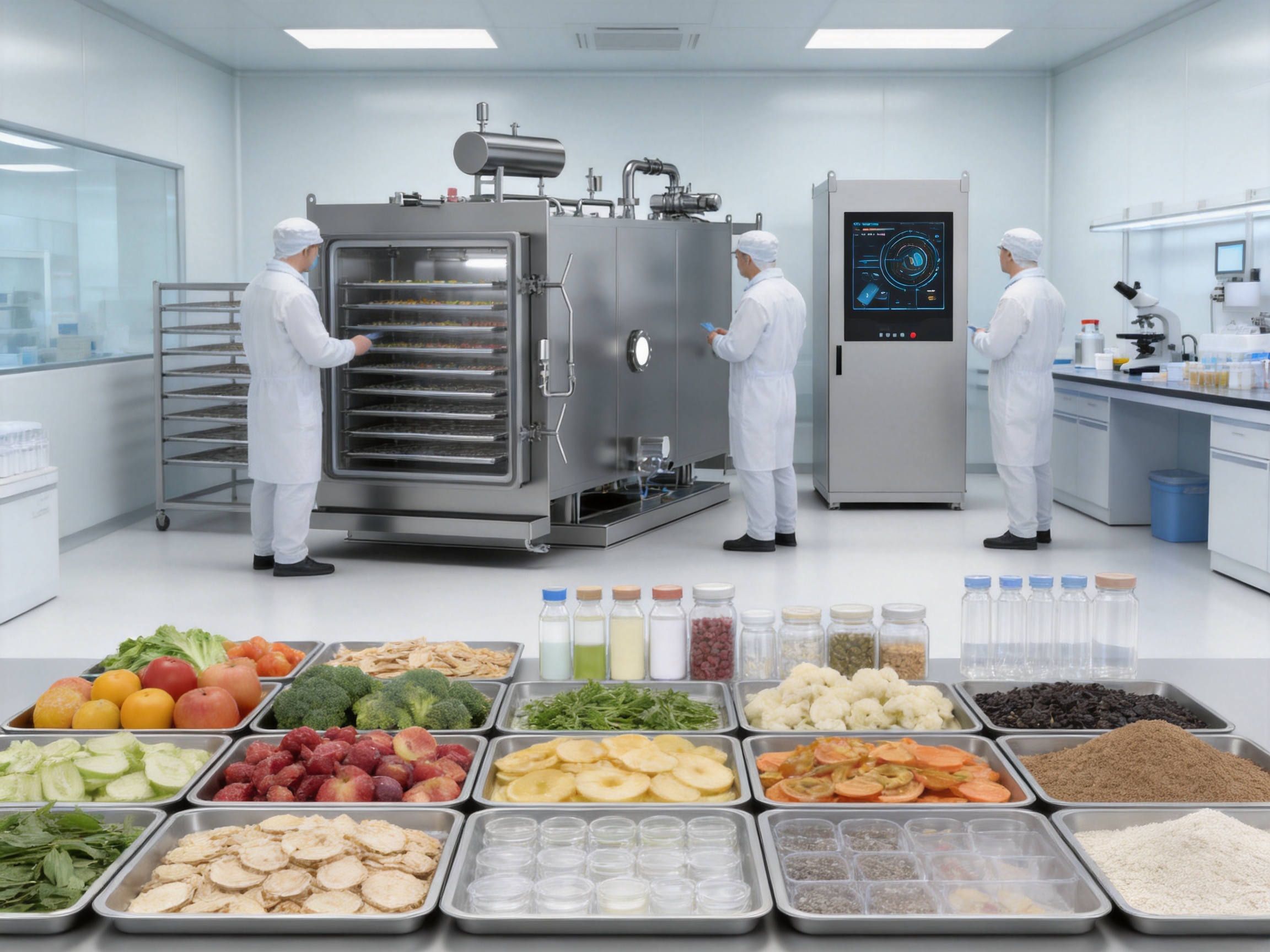
Freeze drying is increasingly important for manufacturers that need to preserve the structure, aroma, color, nutritional value, and functional properties of sensitive materials. Food processors, agricultural-product companies, pharmaceutical manufacturers, laboratories, chemical producers, and biotechnology organizations all require reliable vacuum freeze-drying systems that can deliver repeatable results while controlling energy consumption and operating costs.
The BLK-FD-10 is a medium-sized freeze-drying system designed for small-batch and flexible industrial production. With a nominal freeze-drying area of 10 square meters, a standard loading capacity of 100 kilograms, and a liquid loading capacity of up to 200 liters, the unit provides a practical balance between production capacity, footprint, equipment integration, and process control.
Unlike equipment that separates pre-freezing and drying into different systems, the BLK-FD-10 integrates these processes into one complete unit. Materials can be frozen and dried inside the same chamber, reducing handling requirements and helping manufacturers establish a more efficient workflow. Its rectangular chamber, double-layer radiant-panel design, energy-recovery systems, and intelligent control architecture further improve its suitability for modern production environments.
This article examines the technical features, operating advantages, manufacturing strengths, application potential, and customization capabilities of the BLK-FD-10. It also explains why this type of integrated freeze dryer can be a competitive alternative to conventional circular-chamber or separately configured systems.
The BLK-FD-10 is engineered for manufacturers that require more capacity than a laboratory freeze dryer can provide but do not yet need a large continuous or high-throughput industrial line. It is particularly appropriate for companies developing products, producing several varieties in limited batches, or supplying markets where product quality and flexibility are more important than maximum daily volume.
The equipment combines a pre-freezing section and a drying section in an integrated structure. This arrangement reduces the need to transfer frozen material between separate units. Less transfer can mean fewer process interruptions, less exposure to ambient conditions, lower handling labor, and a reduced risk of product damage or thawing during production.
Parameter | BLK-FD-10 Specification |
Freeze-drying area | 10 square meters |
Standard loading capacity | 100 kilograms |
Liquid loading capacity | 200 liters |
Overall dimensions | 5,300 × 2,200 × 2,700 millimeters |
Overall weight | Approximately 7.8 metric tons |
Ultimate vacuum level | 10 Pa or lower |
Chamber type | Rectangular chamber |
Energy-saving configuration | Residual cold recovery system as standard |
Control configuration | Central intelligent control system with optional remote monitoring |
The stated 100-kilogram standard loading capacity is suitable for many food, agricultural, biological, and material-processing applications. Actual capacity may vary depending on material density, tray loading height, moisture content, freezing characteristics, and the required final moisture level. The unit is designed around a tray area of approximately 10 square meters and a typical loading height of about 35 millimeters, allowing users to adapt production quantities to different raw materials.
The liquid loading capacity of 200 liters expands the range of possible products. In addition to solid pieces such as fruits, vegetables, herbs, and prepared foods, the equipment can process liquid or semi-liquid formulations that are distributed into trays before freezing. This makes it useful for product development and commercial processing of extracts, nutrition products, biological materials, and other sensitive formulations.
A major advantage of the BLK-FD-10 is its integrated process design. In a traditional configuration, pre-freezing may take place in a separate cold-storage room, blast freezer, or standalone freezing unit. The frozen product must then be transferred into a vacuum drying chamber. Although this arrangement can work, it introduces additional material handling, floor-space requirements, transfer time, and coordination between machines.
The integrated design allows the material to complete the freezing and drying stages within the same freeze dryer. This can simplify production planning and reduce the number of steps between raw-material loading and finished-product unloading. For sensitive products, the reduction in handling can also help protect the frozen structure formed during the initial stage of the process.
Integrated processing is especially valuable for small and medium-sized manufacturers. These companies often have limited workshop space and need equipment that can support multiple products without requiring a complete production-line expansion. A single integrated machine can perform the core freezing and drying functions while keeping the layout compact and operationally straightforward.
The equipment is also pre-engineered as a complete combination. Once the system is installed, the user primarily needs to connect the required water, electricity, drainage, and other utilities before commissioning. This can reduce the complexity of on-site installation compared with a system assembled from multiple independent units.
Integration also supports better process coordination. The refrigeration system, vacuum system, radiant shelves, sensors, and control platform can be designed to work together from the beginning. This allows operating parameters to be managed as part of one unified process rather than requiring separate adjustment of unrelated machines.
For manufacturers that frequently change products, integrated processing can offer additional practical benefits. Operators can load a batch, select or adjust a recipe, monitor the freezing stage, and proceed through primary and secondary drying using the same central control architecture. The exact recipe still needs to be developed for each product, but the machine platform provides a consistent foundation for repeatable production.
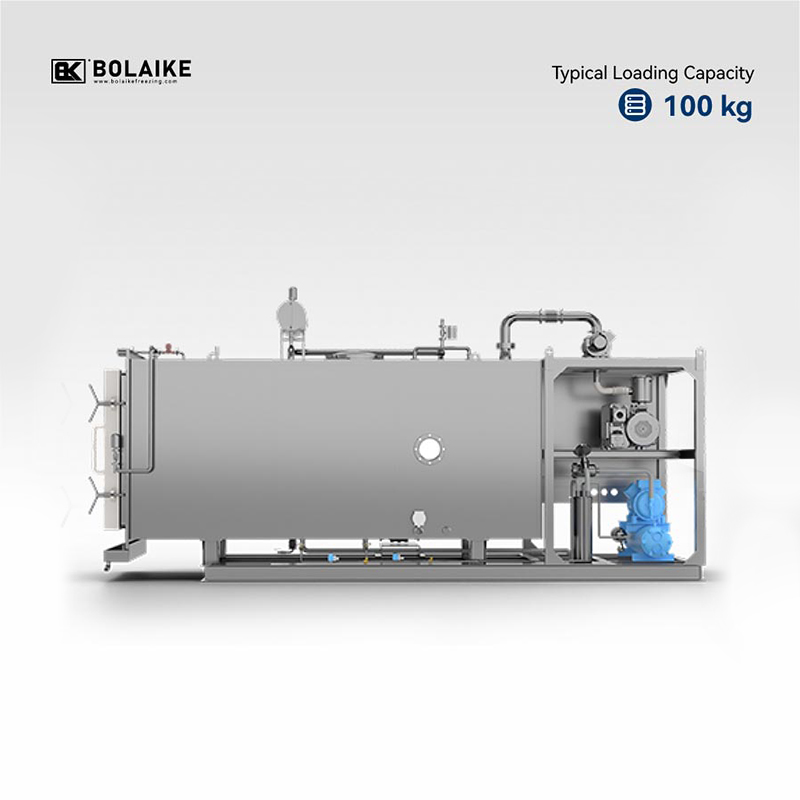
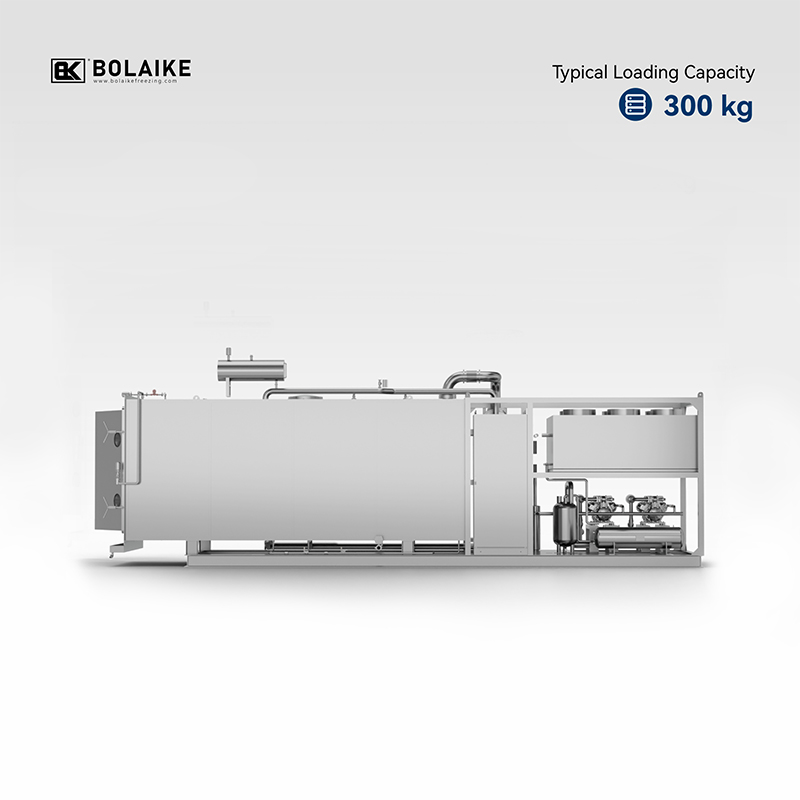
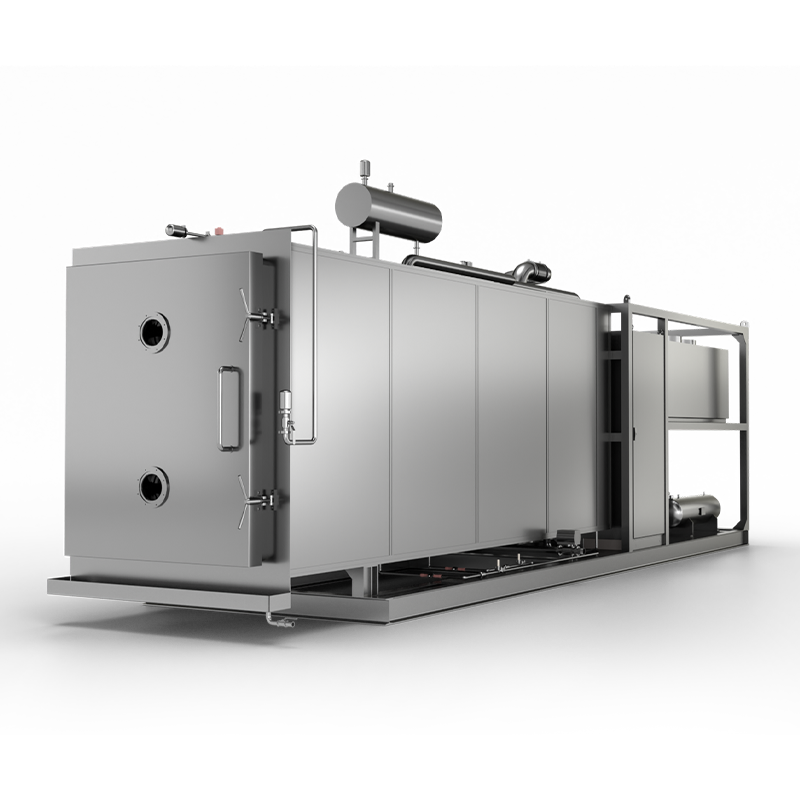
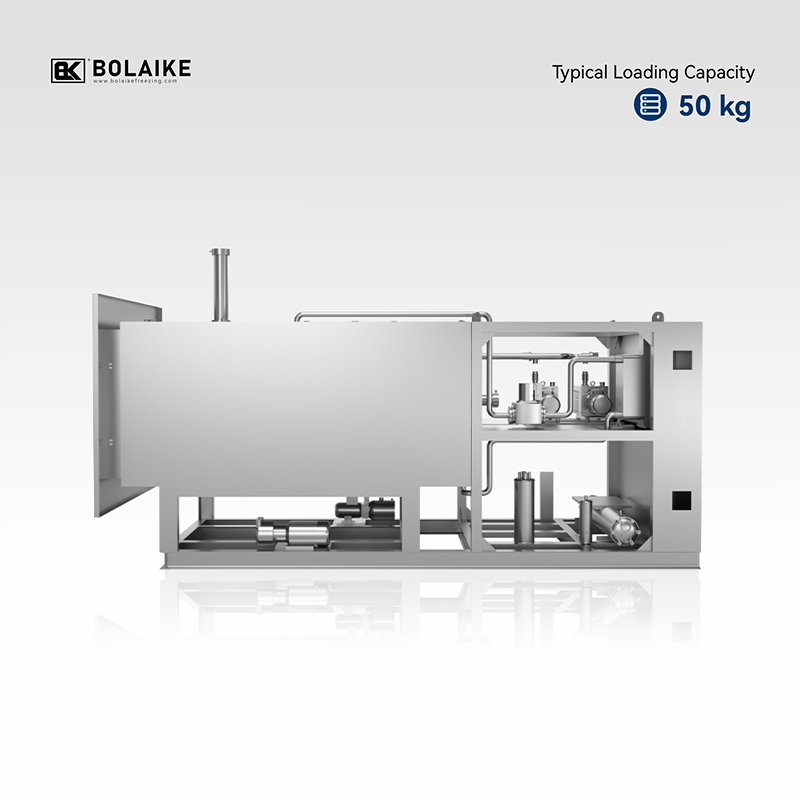
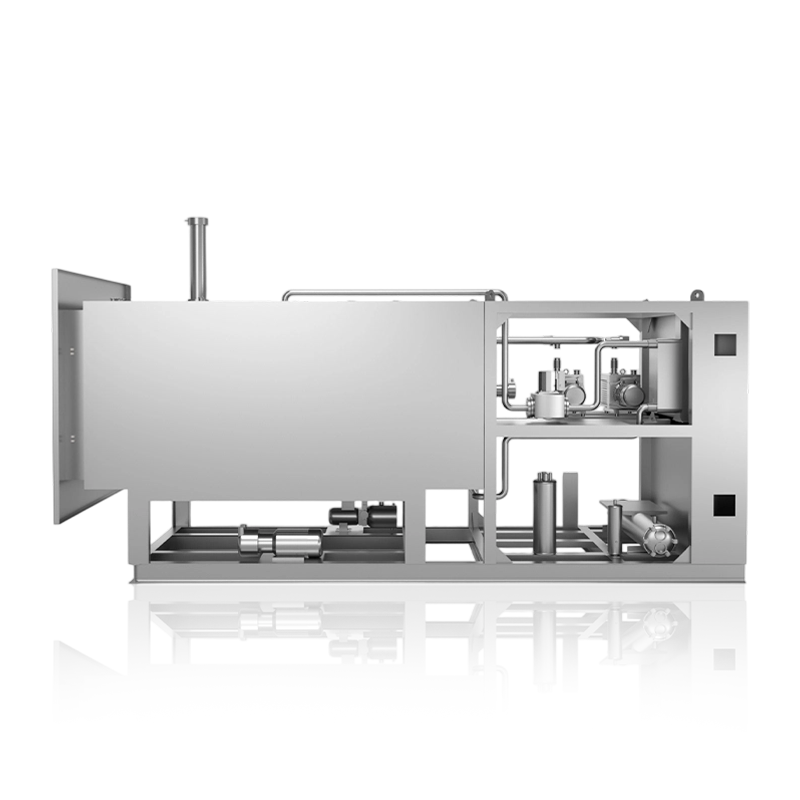
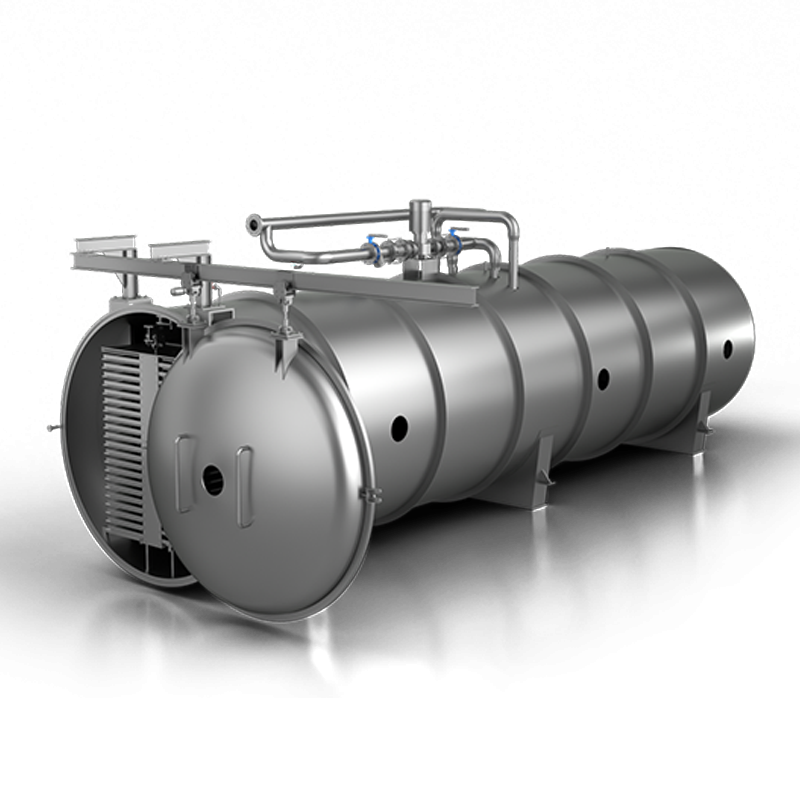
BLK-FD-10
The chamber shape is an important consideration when selecting freeze-drying equipment. Many conventional freeze dryers use circular or cylindrical chambers because of their pressure-resistance characteristics. However, a rectangular chamber can provide practical advantages for medium-sized and small-scale systems, particularly when the equipment must fit into an existing workshop.
The BLK-FD-10 uses a rectangular chamber designed to support efficient internal arrangement and more flexible external installation. For the same general loading capacity, a rectangular structure can require a smaller footprint than a circular chamber. Straight external surfaces can also make it easier to position the dryer near walls, service corridors, utilities, and other processing equipment.
Inside the chamber, rectangular geometry works naturally with flat radiant panels and rectangular trays. This reduces unused spaces around the edges and allows more of the chamber volume to be used for productive loading. When shelf dimensions, tray dimensions, and chamber dimensions are matched, the available freeze-drying area can be used more effectively.
The design can be particularly useful for manufacturers operating in facilities where floor space is expensive or restricted. Food-processing workshops, pharmaceutical production rooms, research facilities, and agricultural-processing plants may need to accommodate washing systems, filling equipment, packaging machines, cold storage, utilities, and inspection areas in the same building. A compact and adaptable dryer layout can improve the overall efficiency of the facility.
Rectangular chambers can also simplify operator access and equipment maintenance. Flat surfaces and organized service areas may support easier inspection of door assemblies, piping, electrical cabinets, valves, and control components. Maintenance access must always be considered during installation, and the final layout should include sufficient clearance around the system for servicing and safety.
The company states that the rectangular chamber has been validated through production practices involving customers in different markets. This type of field application experience is important because the value of a chamber design is determined not only by engineering calculations but also by its ability to operate reliably in actual manufacturing conditions.
First, the rectangular structure can reduce the footprint required for a given material-loading capacity. This supports a more flexible workshop arrangement and may reduce construction or expansion costs.
Second, flat radiant panels and trays can be matched more directly with the chamber geometry. Better matching helps improve usable loading area and reduces the amount of internal space that does not contribute to production.
Third, airflow and temperature distribution can be managed in a stable and predictable chamber arrangement. Consistent thermal conditions are important because freeze drying depends on controlled heat transfer and vapor removal throughout the product load.
Fourth, an efficient chamber structure can reduce the refrigeration and vacuum requirements associated with unnecessary internal volume. Lower system demand can contribute to improved energy efficiency, although actual savings depend on product type, cycle design, ambient conditions, and operating practices.
Heat transfer is one of the most important factors in freeze-drying performance. During primary drying, heat must be transferred carefully to the frozen product so that ice sublimates without causing excessive product temperature rise or structural collapse. During secondary drying, controlled heating helps remove bound moisture. At the same time, refrigeration is needed to maintain low temperatures and condense water vapor.
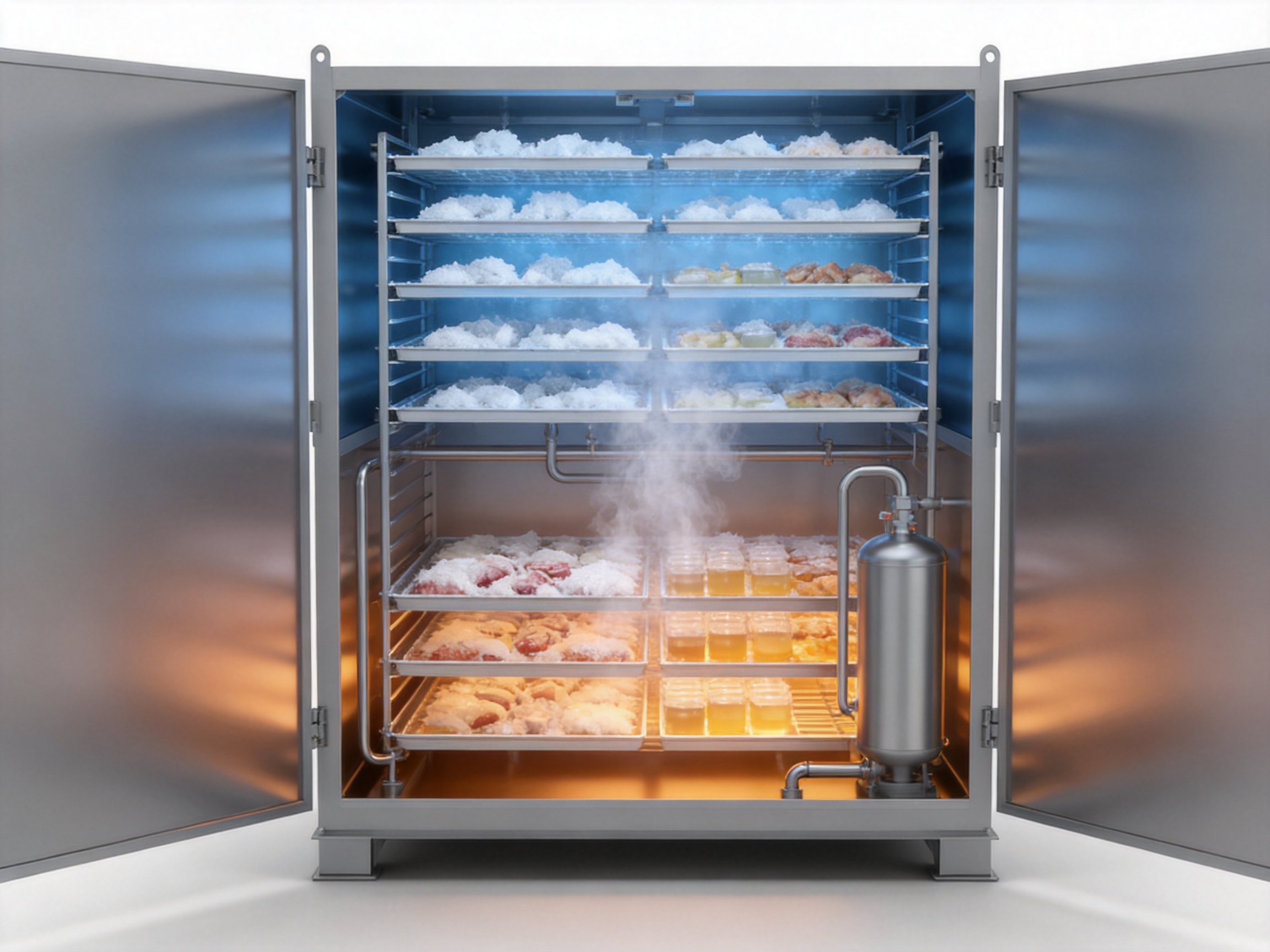
The BLK-FD-10 uses a patented double-layer radiant-panel structure with independent hot and cold circuits. The upper layer is configured as a cooling circuit, while the lower layer is configured as a heating circuit. This arrangement allows freezing and heating functions to be managed within the same radiant-panel assembly.
Independent circuits can provide more direct control of the thermal conditions required at different stages of the cycle. During freezing, the cooling circuit supports rapid and uniform temperature reduction. During drying, the heating circuit supplies controlled energy to the product while the refrigeration and vacuum systems support sublimation and vapor capture.
The radiant panels are designed with matched height and width specifications to work efficiently with the square or rectangular chamber. This contributes to better use of the internal volume and supports more uniform shelf conditions from one area of the chamber to another.
Uniform shelf temperature is important for batch consistency. If one tray receives substantially more or less heat than another, some products may dry too slowly while others may be exposed to excessive thermal conditions. A well-designed panel system helps reduce these differences and makes recipe development more reliable.
The double-layer design can also reduce the need for separate heating and cooling components. The equipment can switch between cooling and heating functions through the corresponding circuits, supporting a more compact and integrated machine structure. The result is a system that combines process flexibility with efficient internal organization.
Freeze-dried products often depend on the preservation of a porous structure. When ice sublimates from a frozen product, it leaves behind channels that support rapid rehydration and help preserve the original shape. Excessive heat or non-uniform heat transfer can damage this structure, causing shrinkage, collapse, discoloration, or uneven moisture levels.
Consistent radiant-panel performance can help operators maintain the product within the appropriate temperature range during primary drying. This does not eliminate the need for product-specific process development, but it provides a more stable mechanical and thermal platform for developing appropriate cycles.
For pharmaceutical, biological, and high-value materials, repeatability is especially important. The same product may need to be processed repeatedly under controlled conditions. A panel design that supports uniform heat transfer can contribute to consistent batch results and more predictable quality evaluation.
The BLK-FD-10 is designed to achieve an ultimate vacuum level of 10 Pa or lower. Vacuum is essential because it lowers the pressure around the frozen product and allows ice to transition directly from solid to vapor under appropriate conditions. The vapor is then directed toward the condenser or related collection system.
Achieving a low vacuum level is not the only requirement for successful freeze drying. The system must also maintain vacuum stability while vapor is generated, and the chamber, valves, seals, refrigeration system, and vacuum pumps must work together effectively. The design of the chamber and process controls therefore has a direct effect on operating performance.
A stable vacuum environment helps operators control the relationship between shelf temperature, product temperature, vapor flow, and drying time. If the vacuum is unstable, the drying cycle may become longer or less predictable. Stable pressure control can support better repeatability across different batches and products.
The equipment’s vacuum architecture is intended for medium-sized production and small-batch industrial applications. Operators can adjust process parameters according to product characteristics, including moisture content, thickness, density, sugar concentration, protein content, and sensitivity to temperature.
In practice, a freeze-drying recipe may include several stages: loading, freezing, pressure reduction, primary drying, intermediate temperature adjustment, secondary drying, pressure testing, and unloading. The appropriate values for shelf temperature and chamber pressure must be established through product testing. The machine provides the operating platform, while the final process parameters are determined by material-specific validation.
Energy consumption is a major concern in freeze-drying because the process requires refrigeration, vacuum generation, controlled shelf heating, and long operating cycles. Reducing energy use can lower production costs and improve the environmental performance of the facility.
The BLK-FD-10 is equipped with a residual cold recovery system as a standard configuration. This system is designed to recover and reuse cold energy from the refrigeration process instead of allowing all of that energy to be discharged after a single use. According to the supplied product information, this configuration can reduce energy consumption by approximately 10% to 15% compared with traditional equipment under comparable operating conditions.
The broader equipment technology is also described as capable of achieving higher energy savings in certain applications and operating conditions. Depending on the system configuration, product, cycle, and comparison basis, energy consumption reductions of approximately 20% to 40% may be achievable. These figures should be evaluated through a technical proposal and verified against the user’s actual production requirements.
Energy efficiency can come from several coordinated design elements rather than one individual component. The integrated structure reduces duplicate refrigeration requirements. The double-layer radiant panels improve thermal transfer. The rectangular chamber helps reduce unused space. Cold recovery lowers compressor demand, while heat recovery can reuse energy generated during the drying process.
In a conventional arrangement, cold energy generated during refrigeration may be used once and then discharged. This can force the compressors to operate continuously at a higher load. The cold recovery system in the BLK-FD-10 is designed to reuse recovered cold energy for the next refrigeration stage or related cooling demand.
By recycling available cold energy, the system can reduce the overall load placed on the compressor. The supplied technical information indicates that compressor load may be reduced by approximately 20% to 30% under suitable operating conditions. Lower compressor loading can contribute to lower electricity consumption, reduced mechanical stress, and potentially improved equipment service life.
Heat produced during sublimation and heating stages is often discharged in traditional systems. A heat recovery system can capture part of this energy and redirect it for material drying or another suitable low-temperature heating task. This configuration is identified as a customized option rather than a standard feature for every BLK-FD-10 installation.
For applications where the material heating temperature is no more than 35 degrees Celsius, the supplied information indicates that a very high proportion of heating energy may be saved when suitable recovered heat is available. For materials requiring heating below approximately 80 degrees Celsius, the heat recovery arrangement may reduce energy consumption by around 10 percent. Actual performance depends on the cycle, heat-source temperature, product requirements, and system design.
Heat recovery is particularly relevant to manufacturers that operate multiple thermal processes. Recovered heat may be used for product preheating, tray drying, water warming, or other compatible operations. A detailed energy balance should be completed before the system is specified so that the recovery equipment is matched to the factory’s actual demand.
The equipment technology also includes a heat pump and economizer system designed to improve compressor coefficient of performance. The supplied information states that the system can increase compressor COP to approximately 4.8 to 5.9 in suitable operating conditions. A higher COP means that more useful heating or cooling effect is produced for each unit of electrical input.
For production managers, the main value of this technology is not simply a specification number. Improved COP can help reduce operating costs over the life of the equipment, especially in facilities where the freeze dryer operates frequently or where electricity prices are significant. The final savings should be evaluated using local energy rates, annual operating hours, batch duration, and product load.
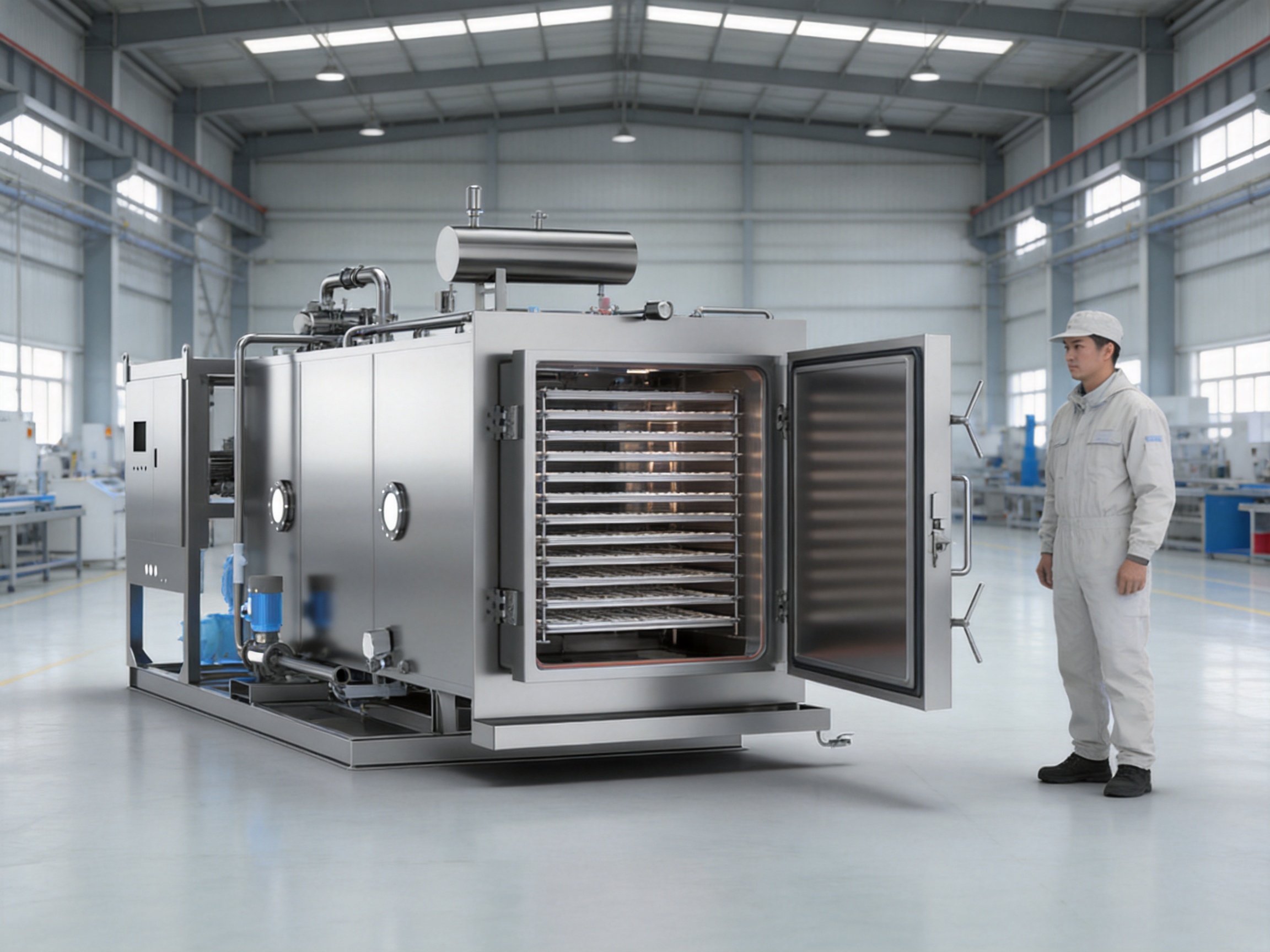
The nominal standard loading capacity of the BLK-FD-10 is 100 kilograms. However, freeze-drying capacity is not a fixed number for every product. Material density, moisture level, particle size, tray loading thickness, viscosity, shape, and final moisture target all affect the amount that can be processed during one cycle.
For this reason, the equipment information presents capacity according to broad material categories. Under a typical loading height of approximately 35 millimeters, food products may reach a processing range of about 150 to 200 kilograms in certain conditions, solution-based products may fall in the range of approximately 100 to 150 kilograms, and fruits and vegetables may be processed at approximately 80 to 100 kilograms. These figures are reference ranges and must be confirmed through product trials.
Material Category | Reference Processing Range | Important Variables |
Food products | Approximately 150–200 kilograms | Moisture content, density, formulation, shape, and tray loading |
Solution-based products | Approximately 100–150 kilograms | Solids concentration, viscosity, freezing point, and fill depth |
Fruits and vegetables | Approximately 80–100 kilograms | Piece size, cellular structure, moisture level, and product arrangement |
Liquid materials | Up to approximately 200 liters of loading capacity | Container volume, solids content, formulation, and required drying endpoint |
The distinction between loading capacity and final throughput is important. A batch may contain 100 kilograms of wet material, but the final dried weight will be lower because water and other volatile components are removed. Cycle time also varies widely. Some products may complete drying relatively quickly, while dense or highly concentrated materials may require significantly longer cycles.
Manufacturers should therefore consider annual production volume, expected batch frequency, product mix, and available operating hours when selecting the equipment. The BLK-FD-10 can be particularly attractive for companies that process several products with varying batch sizes instead of a single high-volume commodity.
The BLK-FD-10 is designed for a wide range of freeze-drying applications. Its integrated architecture, adaptable loading capacity, and controlled thermal system allow it to serve several industries without being limited to one product category.
Freeze drying can preserve the shape, taste, aroma, and nutritional value of many foods. Possible applications include instant meals, soups, sauces, dairy products, meat products, seafood, snacks, ingredients, and specialty foods. The process can reduce water activity while producing lightweight products that are convenient to store and transport.
For food manufacturers, the equipment can support product innovation as well as routine production. A company may use the same system to develop new freeze-dried meals, fruit snacks, beverage ingredients, seasoning products, or emergency foods. The ability to customize dimensions and process parameters makes the unit suitable for businesses that need to respond quickly to changing market demand.
Fruits and vegetables are frequently processed through freeze drying because the process can preserve their original appearance and create a crisp texture after drying. Common examples include berries, apples, bananas, mushrooms, corn, peas, leafy vegetables, herbs, and mixed vegetable ingredients.
Because fruits and vegetables differ considerably in cellular structure and moisture content, each product requires its own freezing and drying recipe. The rectangular chamber and even radiant-panel design provide a stable foundation for developing such recipes while maintaining efficient use of tray space.
Herbal materials, botanical extracts, nutraceutical ingredients, and health supplements can be sensitive to heat and oxidation. Freeze drying is often selected when manufacturers want to preserve valuable components or maintain the structure of a natural ingredient.
The low-temperature environment and controlled vacuum conditions of the BLK-FD-10 can be useful for products where conventional hot-air drying would cause excessive color change, aroma loss, or degradation. Appropriate hygiene, cleaning, material compatibility, and validation procedures must be incorporated into the final system specification.
Freeze drying is widely used for biological supplies, laboratory materials, diagnostic components, and pharmaceutical formulations. Such applications generally require tighter process control, documentation, cleaning procedures, and validation than ordinary food processing.
The BLK-FD-10’s controlled shelf system, vacuum capability, central monitoring, and repeatable process architecture can support development and production activities. However, pharmaceutical users must determine whether the selected configuration satisfies their applicable regulatory, cleanroom, validation, data-integrity, and quality-assurance requirements.
Some chemical and advanced-material products are sensitive to heat or require the removal of solvents or water without causing structural damage. Freeze drying may be appropriate for certain formulations, catalysts, porous materials, and specialty compounds.
Before processing chemical materials, the user must confirm compatibility among the product, chamber materials, seals, trays, refrigeration system, vacuum pump, and exhaust system. The equipment supplier can then recommend suitable materials of construction and safety provisions based on the application.
Modern freeze dryers require more than refrigeration and vacuum hardware. A successful system must provide operators with a practical method for managing temperatures, pressures, cycle stages, alarms, equipment status, and production records. The BLK-FD-10 uses an intelligent central control system designed to manage connected equipment from one operating platform.
Centralized control can simplify operation by bringing the refrigeration system, vacuum system, heating circuits, valves, sensors, and safety functions into a unified interface. Operators can monitor the process and respond to alarms without moving between several independent control panels.
The system can be configured with recipe management functions, allowing users to establish different process settings for different products. These settings may include freezing temperature, holding time, pressure, shelf temperature, drying-stage duration, and transition conditions. Product recipes should be developed and approved through appropriate testing before routine use.
Remote monitoring through a mobile application is available as an option. This function can allow authorized personnel to review equipment status away from the production floor. Remote access may be useful for managers, maintenance staff, and technical teams responsible for several machines or sites.
Multiple language options can also be customized. This is valuable for international customers because it allows the operating interface, alarms, and instructions to be adapted to the language needs of local operators. Clear language support can reduce training difficulties and help prevent operating errors.
A central control system can also support preventive maintenance. Operating hours, alarm history, temperature trends, vacuum performance, and other data may help technicians identify abnormal conditions before they develop into serious failures. The exact data-recording and communication functions should be defined in the equipment specification and validated by the customer.
Every production facility has a different building structure, utility arrangement, product range, and workflow. For this reason, the BLK-FD-10 can be customized in length, width, and height to fit the customer’s workshop conditions.
Dimensional customization can help solve installation challenges involving ceiling height, door openings, service corridors, loading routes, and adjacent processing equipment. It can also support more logical connections to water, electricity, drainage, refrigeration utilities, and packaging areas.
Customization may also involve tray configurations, shelf spacing, control language, remote monitoring, heat recovery, product-contact materials, cleaning requirements, electrical standards, and safety features. Customers should provide detailed information about their products and production goals during the design stage so that the final system is correctly matched to actual use.
For pharmaceutical and biological applications, the design may need to address cleanability, hygienic construction, surface finish, sterile or controlled loading, documentation, and validation. For food applications, the emphasis may be on throughput, cleaning efficiency, product changeover, tray handling, and integration with upstream and downstream equipment.
The equipment’s integrated structure means that customization should be completed before manufacturing whenever possible. Early coordination can reduce later modifications, shorten installation time, and help ensure that the machine arrives with the required interfaces and control functions.
The manufacturer behind the BLK-FD-10 specializes in the research, development, manufacturing, sales, installation, commissioning, and after-sales service of vacuum freeze-drying and refrigeration equipment. This integrated capability is important because freeze-drying systems combine mechanical design, refrigeration engineering, vacuum technology, thermal control, automation, fabrication, and process application knowledge.
The company was established in 2014 in Changzhou, Jiangsu, China, building on refrigeration experience that began in 2003. Over time, it has developed a professional team covering research and development, engineering, sales, installation, commissioning, and service. This structure allows customers to work with one technical organization from initial consultation through operational support.
The manufacturer operates a modern manufacturing base of approximately 24,000 square meters. A dedicated production facility can support more organized fabrication, assembly, inspection, testing, and equipment integration. For large and customized freeze dryers, manufacturing control is especially important because the final system must maintain alignment among the chamber, shelves, piping, refrigeration equipment, vacuum equipment, control cabinets, and safety systems.
The company maintains partnerships with universities and research institutions, including agricultural and food science organizations. Such cooperation can help connect equipment development with real product-processing requirements. Freeze-drying technology is highly application-specific, and collaboration with research institutions can support experimentation with freezing rates, shelf temperatures, pressure control, product structure, and drying endpoints.
The company has obtained more than 100 national invention and utility model patents. These patents cover aspects of freeze-drying, energy recovery, radiant-panel construction, integrated refrigeration, and related technologies. Patents do not by themselves guarantee performance in every application, but they demonstrate a continuing investment in proprietary engineering and product development.
A professional freeze-dryer manufacturing process normally begins with technical communication and application analysis. The manufacturer needs to understand the product, target batch size, raw-material condition, final moisture requirement, expected cycle time, workshop dimensions, local utilities, and applicable standards.
After the technical requirements are established, engineers can select the chamber dimensions, shelf arrangement, refrigeration capacity, condenser configuration, vacuum system, pump type, heating system, controls, valves, sensors, and energy-recovery options. A detailed design review helps ensure that the individual components work together as one complete system.
Fabrication of the chamber and radiant panels requires dimensional accuracy and appropriate material selection. Welding quality, surface condition, sealing arrangements, pressure resistance, and internal cleanliness are all important. The final construction must support low-temperature operation, vacuum stability, repeated thermal cycling, and long-term industrial use.
Refrigeration piping and vacuum piping must be arranged to minimize pressure loss and support reliable maintenance. Electrical cabinets and control systems must be assembled according to the required voltage, frequency, safety standards, communication functions, and language configuration. Sensors should be positioned so that they provide useful information about shelf temperature, product temperature, chamber pressure, condenser conditions, and system status.
After assembly, the equipment should undergo inspection and commissioning procedures. These may include leak testing, vacuum testing, refrigeration testing, shelf-temperature testing, control-function testing, safety-interlock testing, alarm verification, and trial operation. The exact factory acceptance process can be agreed with the customer before shipment.
The BLK-FD-10 is designed according to international specifications and is described as having EU CE certification and China quality-management-system certification. CE compliance indicates that the relevant equipment configuration is assessed against applicable European requirements for safety, health, and environmental protection. Customers should verify the exact certification scope and documentation for the model and configuration they purchase.
A quality-management system supports consistency in design, purchasing, assembly, inspection, documentation, and service. This is particularly valuable for customized machinery because each project may include different dimensions, components, control functions, and application requirements.
The BLK-FD-10 competes with several types of freeze-drying equipment, including small laboratory freeze dryers, conventional circular-chamber systems, separate pre-freezers combined with drying chambers, and basic industrial machines without energy-recovery functions. Its main advantages come from the way its design features work together.
With a 10-square-meter freeze-drying area and a standard 100-kilogram loading capacity, the BLK-FD-10 is positioned above laboratory and pilot equipment. It can support commercial production, product development, and medium-scale processing without requiring the investment and floor space of a much larger industrial system.
Combining pre-freezing and drying reduces the need for separate freezing equipment and transfer operations. This can simplify plant layout, reduce handling, and improve production coordination.
The rectangular chamber is designed to use floor and internal space efficiently. It matches rectangular trays and radiant panels more naturally and can provide a more flexible installation footprint for workshops with limited space.
The double-layer radiant-panel system provides independent heating and cooling circuits. This supports more uniform shelf temperatures and allows the same integrated structure to handle different stages of the freeze-drying cycle.
The standard cold recovery system can reduce energy consumption compared with traditional equipment. Optional heat recovery and heat-pump technologies can provide additional savings when the application and factory energy profile are suitable.
Central control, remote monitoring, multiple-language options, customized dimensions, and application-specific configurations make the machine suitable for international customers with different technical and operational requirements.
Although the BLK-FD-10 is designed as an integrated unit, successful operation depends on proper site preparation. The installation area must have adequate floor load capacity because the overall equipment weight is approximately 7.8 metric tons. Access routes should be checked before delivery, including doors, lifting points, ceiling height, and internal transport paths.
The factory should also prepare the required utilities. These may include electrical power, cooling water or related refrigeration utilities, drainage, compressed air if required by the selected configuration, ventilation, and space for service access. Utility requirements depend on the final design and should be confirmed in the technical documents.
Operators should be trained in loading procedures, recipe selection, vacuum operation, alarm response, product unloading, cleaning, and basic troubleshooting. Training should also cover the effects of tray loading height, product thickness, material density, and freezing characteristics on cycle performance.
Maintenance should include routine inspection of door seals, valves, vacuum pumps, refrigeration components, filters, sensors, electrical connections, and safety devices. The chamber and product-contact surfaces should be cleaned according to the material and hygiene requirements of the application. Preventive maintenance schedules can help reduce unexpected downtime.
For high-value products, users should establish standard operating procedures and batch records. These records can include product identification, loading quantity, tray arrangement, recipe number, cycle times, pressure values, shelf temperatures, alarms, operator information, and final moisture results.
Before ordering the equipment, potential users should evaluate their product and production requirements carefully. The first question is the expected batch size. If the company typically processes approximately 50 to 100 kilograms per batch, the BLK-FD-10 may provide an appropriate operating range. If the expected volume is substantially higher, a larger system or multiple units may be more suitable.
The second consideration is product diversity. Companies processing several product types may benefit from the machine’s flexible design and recipe-based control. Companies producing only one high-volume product should compare the expected cycle time and annual throughput with larger systems or continuous-production alternatives.
The third consideration is product sensitivity. Materials that are highly sensitive to heat, oxygen, or structural damage may require additional sensors, special loading methods, enhanced control functions, or customized materials of construction.
The fourth consideration is the factory layout. The customer should provide accurate information about available floor space, ceiling height, door dimensions, service access, and the position of upstream and downstream equipment. The ability to customize length, width, and height can be valuable, but it is most effective when considered before manufacturing begins.
The fifth consideration is energy management. Customers should estimate annual operating hours, electricity cost, refrigeration demand, available waste heat, and the potential value of cold or heat recovery. A lifecycle-cost evaluation may show that a more advanced system provides a better long-term return even if its initial purchase price is higher.
Freeze-drying equipment is a process system rather than a simple standalone machine. The quality of the final product depends on the relationship between equipment design, product formulation, loading method, freezing conditions, vacuum control, shelf temperature, drying time, and packaging.
A manufacturer with experience in research, engineering, installation, commissioning, and after-sales service can provide more useful support than a supplier that only sells standard hardware. Application support may include preliminary product assessment, capacity calculations, layout recommendations, process trials, recipe development assistance, installation guidance, operator training, and troubleshooting.
The manufacturer’s export experience is also relevant for international customers. The company’s equipment has been supplied to more than 30 countries and regions, giving it experience with different workshop conditions, electrical standards, operating practices, and customer expectations. International support still depends on the specific sales contract, local service arrangements, spare-parts planning, and communication procedures.
For a long-term investment such as a freeze dryer, customers should review documentation, warranty terms, response times, spare-parts availability, remote support, training scope, and commissioning responsibilities before placing an order.
The standard loading capacity is approximately 100 kilograms, with a freeze-drying area of 10 square meters. The actual batch capacity depends on material density, tray loading height, moisture content, product shape, and the required drying endpoint.
Yes. The stated liquid loading capacity is up to 200 liters. Liquid or semi-liquid materials are typically distributed into trays or suitable containers before freezing. The actual usable quantity depends on the formulation, fill depth, solids content, and process requirements.
Yes. The BLK-FD-10 integrates pre-freezing and drying in one unit. This allows materials to be frozen and dried within the same freeze dryer, reducing the need for separate freezing equipment and transfer operations.
The specified ultimate vacuum level is 10 Pa or lower. Operating pressure during an actual production cycle depends on product moisture release, condenser performance, vacuum-pump capacity, chamber sealing, and recipe settings.
The rectangular chamber can provide better space utilization, easier matching with trays and radiant panels, and a more flexible workshop footprint than many circular chambers. It may also reduce unused internal volume and support more efficient facility planning.
The panel contains independent circuits for cooling and heating. The upper layer is configured for cooling and the lower layer for heating. This allows the equipment to support controlled freezing and drying with more uniform shelf temperature distribution.
Yes. The residual cold recovery system is described as a standard configuration. It is intended to reuse cold energy and reduce compressor loading. The stated energy reduction is approximately 10% to 15% compared with traditional equipment under comparable conditions.
Heat recovery is identified as a customization option. It can reuse excess heat from sublimation or heating for suitable drying or heating tasks. Its value depends on the product, required temperatures, factory energy demand, and final system configuration.
Yes. Length, width, and height can be customized to suit the customer’s workshop layout, transport route, utility connections, and maintenance requirements. Dimensional requirements should be confirmed before production begins.
Potential applications include food, fruits and vegetables, medicinal herbs, health supplements, biological products, pharmaceutical materials, chemical materials, laboratory products, and other heat-sensitive materials.
Remote equipment monitoring through a mobile application is available as an optional function. Multiple language options can also be customized for international operation.
The product information identifies EU CE certification and China quality-management-system certification. Customers should request the current certificates and confirm that their scope covers the purchased model and configuration.
Cycle time varies significantly according to material type, product thickness, initial moisture, loading quantity, freezing conditions, shelf temperature, vacuum pressure, and final moisture target. A product trial is required to determine the practical cycle time.
The equipment can be considered for pharmaceutical and biological applications, but the final configuration must meet the customer’s applicable regulatory, hygiene, validation, documentation, cleanroom, and data requirements. A detailed technical and quality review should be completed before purchase.
The BLK-FD-10 is a medium-sized integrated freeze dryer designed for manufacturers that need reliable small-batch and flexible industrial production. Its 10-square-meter freeze-drying area, 100-kilogram standard loading capacity, 200-liter liquid loading capability, and vacuum level of 10 Pa or lower provide a practical platform for a broad range of materials.
Its strongest advantages come from the combination of integrated pre-freezing and drying, rectangular chamber geometry, double-layer radiant panels, independent heating and cooling circuits, cold recovery, optional heat recovery, intelligent control, and customizable dimensions. Together, these features can improve production flexibility, workshop space utilization, thermal uniformity, and energy performance.
The manufacturer adds value through its experience in refrigeration and freeze-drying technology, research partnerships, patented designs, international equipment delivery, modern manufacturing facilities, and integrated technical service capabilities. These strengths are important because freeze-drying performance depends on much more than the chamber alone. Refrigeration, vacuum, thermal transfer, automation, product trials, installation, and after-sales support must all be coordinated.
For food processors, agricultural-product companies, pharmaceutical organizations, research institutions, and specialty-material manufacturers, the BLK-FD-10 offers a scalable solution between laboratory equipment and large industrial production lines. With appropriate product testing, process validation, site planning, and customization, it can help companies develop efficient, repeatable, and commercially viable freeze-drying operations.
1. BLK-FD-10 Product Technical Specification, including capacity, dimensions, vacuum performance, chamber design, and energy-saving features.
2. Manufacturer technical information on integrated freeze-drying systems, rectangular chambers, radiant-panel technology, and energy-recovery structures.
3. Manufacturer information on research and development, manufacturing capabilities, patents, quality systems, and international equipment applications.
4. General principles of vacuum freeze drying, including freezing, primary drying, secondary drying, sublimation, vapor capture, and product-temperature control.
5. General engineering practices for industrial refrigeration, vacuum systems, heat recovery, energy efficiency, equipment commissioning, and preventive maintenance.
6. General quality and safety principles applicable to industrial food-processing, pharmaceutical, biological, and specialty-material freeze-drying equipment.
 2026/05/28
 2026/05/28
2026/05/28
2026/05/28
2026/05/28
2026/05/28


 Custom Industrial Lyophilizer Freeze Dryer Manufacturers





 English
 русский
 Español
 Français
 Deutsch
 عربى
عربى