/blog/
News
Products & Solutions
CONTACT US

+86-18068757376

blk@jsblk.com

No. 29 North Tongjiang Road, Xinbei District, Changzhou City, Jiangsu Province, China
Industrial freeze-drying requires much more than a large chamber and a powerful refrigeration system. A reliable production freeze dryer must provide accurate temperature control, stable vacuum performance, efficient vapor capture, consistent heat transfer, dependable mechanical construction, and an intelligent operating system capable of supporting demanding production schedules. It must also help manufacturers control energy consumption, reduce batch changeover time, protect product quality, and maintain repeatable results across different materials.
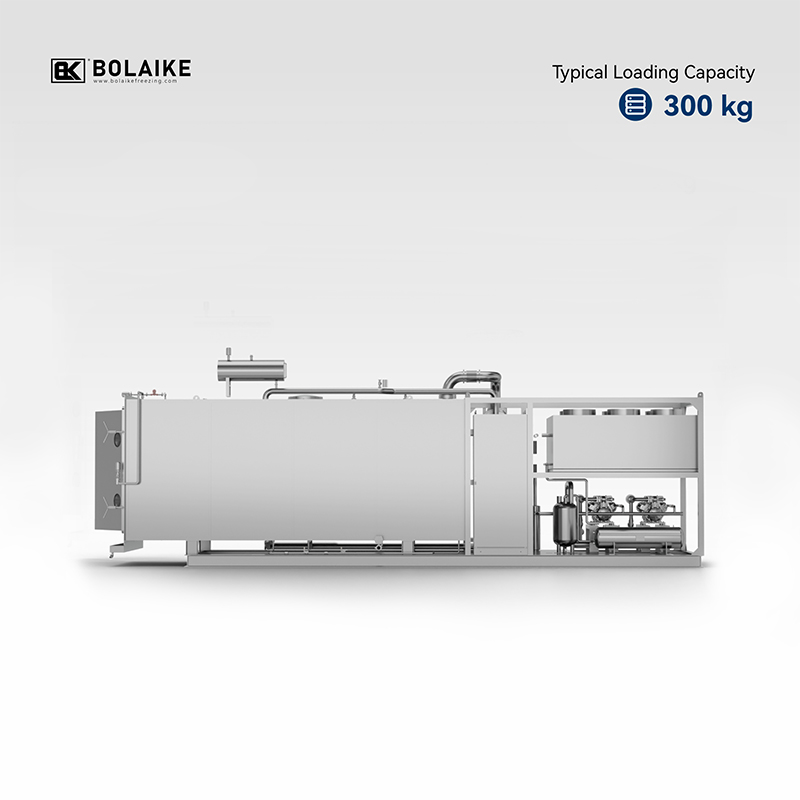
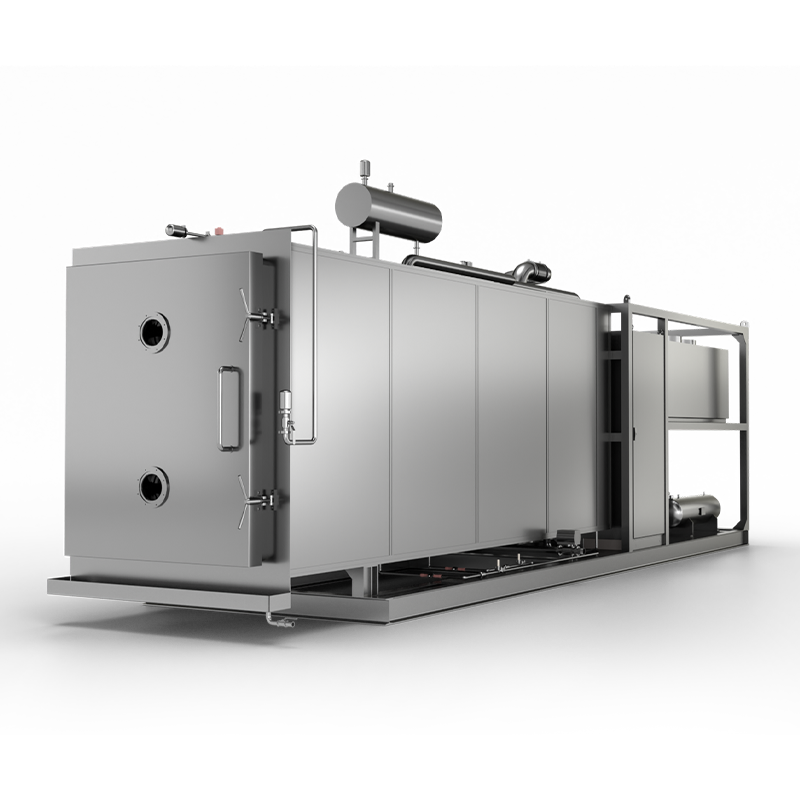
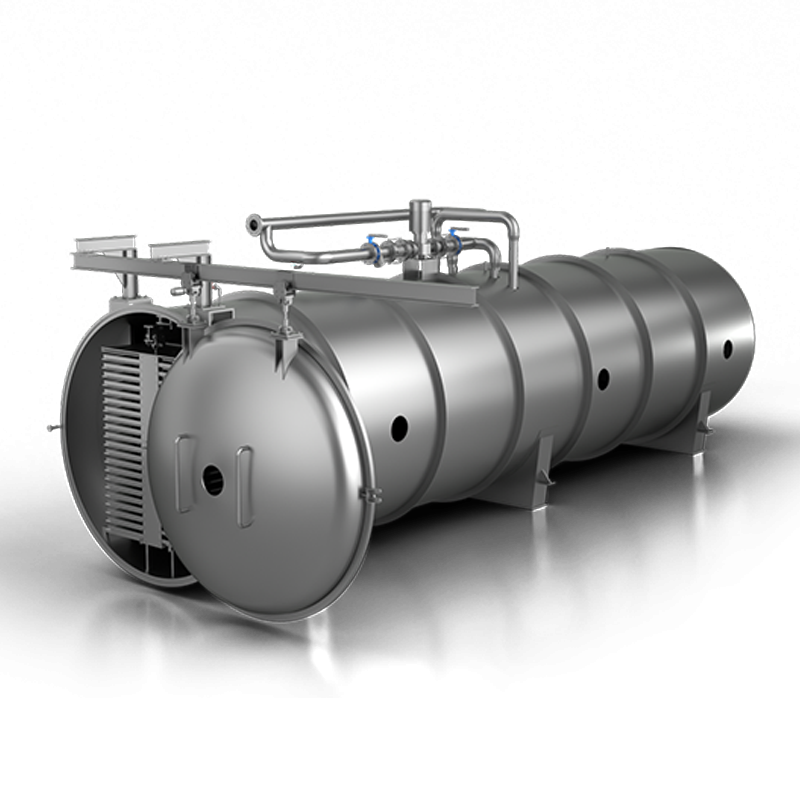
The BLK-FD-125 is a high-capacity industrial freeze-drying system designed for large-volume production. With a freeze-drying area of 125.1 square meters, a standard loading capacity of 1,250 kilograms, and a liquid loading capacity of 2,500 liters, the equipment is engineered for food, agricultural products, chemical materials, medicinal materials, biological supplies, and other products that benefit from low-temperature dehydration.
Its design combines a circular chamber structure, integrated radiation shelves, dedicated heat-transfer circuits, configurable refrigeration and vacuum systems, intelligent control technology, and energy-recovery functions. These features allow the system to provide stable drying conditions while helping reduce operating costs compared with conventional freeze-drying equipment.
Manufactured by Jiangsu BoLaiKe Refrigeration Science and Technology Development Co., Ltd., the BLK-FD-125 reflects the company’s focus on research, engineering integration, precision manufacturing, energy efficiency, and international production standards. The result is a large-scale freeze dryer designed not only for high throughput, but also for long-term reliability and flexible factory integration.
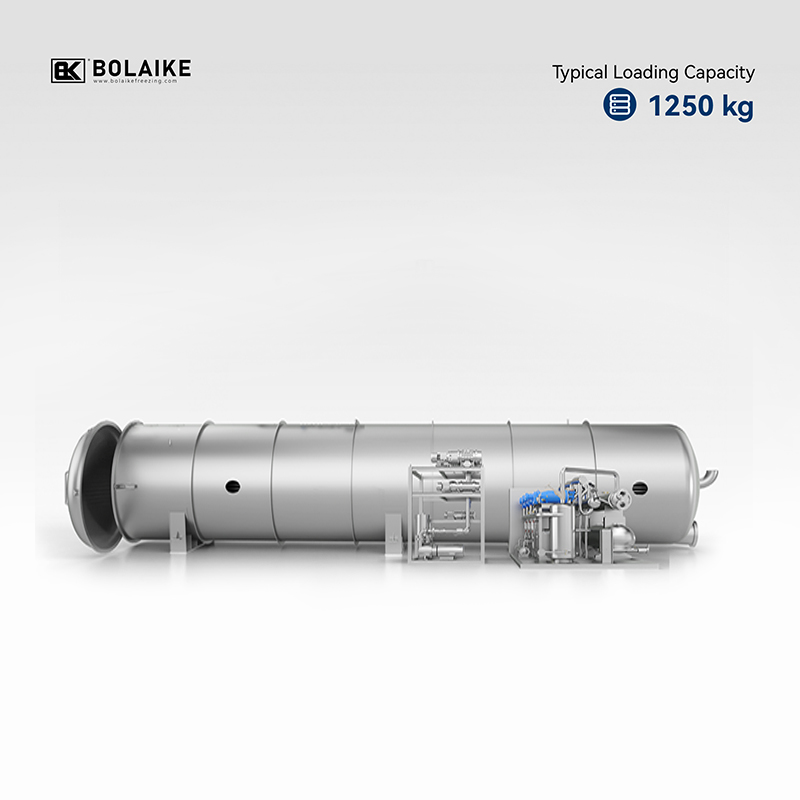
BLK-FD-125
Freeze drying, also known as lyophilization, removes moisture from a frozen product through sublimation. In this process, water changes directly from ice to vapor under vacuum conditions, avoiding the liquid phase that can cause structural collapse, shrinkage, loss of volatile compounds, or damage to heat-sensitive ingredients.
Compared with conventional hot-air drying, freeze drying can preserve product shape, color, aroma, flavor, nutritional value, and rehydration properties more effectively. It is therefore widely used for fruits and vegetables, instant coffee, prepared foods, biological materials, medicinal herbs, health supplements, chemical products, and other high-value materials.
However, industrial freeze drying is technically demanding. A production system must freeze the material uniformly, provide controlled thermal energy during sublimation, remove large quantities of water vapor, and maintain a stable vacuum throughout the entire drying cycle. Any variation in shelf temperature, pressure, product loading, or vapor flow may influence the final product.
Large-scale systems introduce additional challenges. The chamber becomes larger, the vapor load increases, heat transfer must remain uniform across a greater shelf area, and the refrigeration and vacuum systems must operate under demanding conditions. Equipment that performs well at laboratory scale cannot simply be enlarged without careful mechanical, thermal, and process engineering.
The BLK-FD-125 addresses these requirements through an integrated system architecture. Its design is intended to support substantial batch sizes while maintaining the control accuracy necessary for high-quality freeze-dried products.
Specification |
BLK-FD-125 Performance |
Freeze-drying area |
125.1 square meters |
Standard loading capacity |
1,250 kilograms |
Liquid loading capacity |
2,500 liters |
Ultimate vacuum level |
10 Pa or lower |
Chamber structure |
Circular chamber configuration |
|
Shelf construction |
Integral radiation shelves without welded splicing |
Heating options |
Electric heating or steam heating |
Trolley configuration |
Typically four material trolleys; manual or automatic options available |
Control system |
Intelligent central control with remote monitoring capability |
These specifications position the BLK-FD-125 within the large-scale industrial freeze-drying category. The 125.1-square-meter shelf area allows manufacturers to process substantial quantities in a single chamber, helping improve production efficiency and reduce the number of batches required for a given order.
The stated standard loading capacity is 1,250 kilograms, while the liquid loading capacity reaches 2,500 liters. Actual capacity depends on the material, tray loading height, moisture content, density, product geometry, freezing characteristics, and process recipe. The equipment is therefore designed to accommodate a wide range of materials rather than a single fixed product type.
The ultimate vacuum level of 10 Pa or lower provides the low-pressure environment required for sublimation. In practice, the operating vacuum selected for a specific product will depend on the formulation, shelf temperature, product resistance, vapor generation, and desired drying rate.
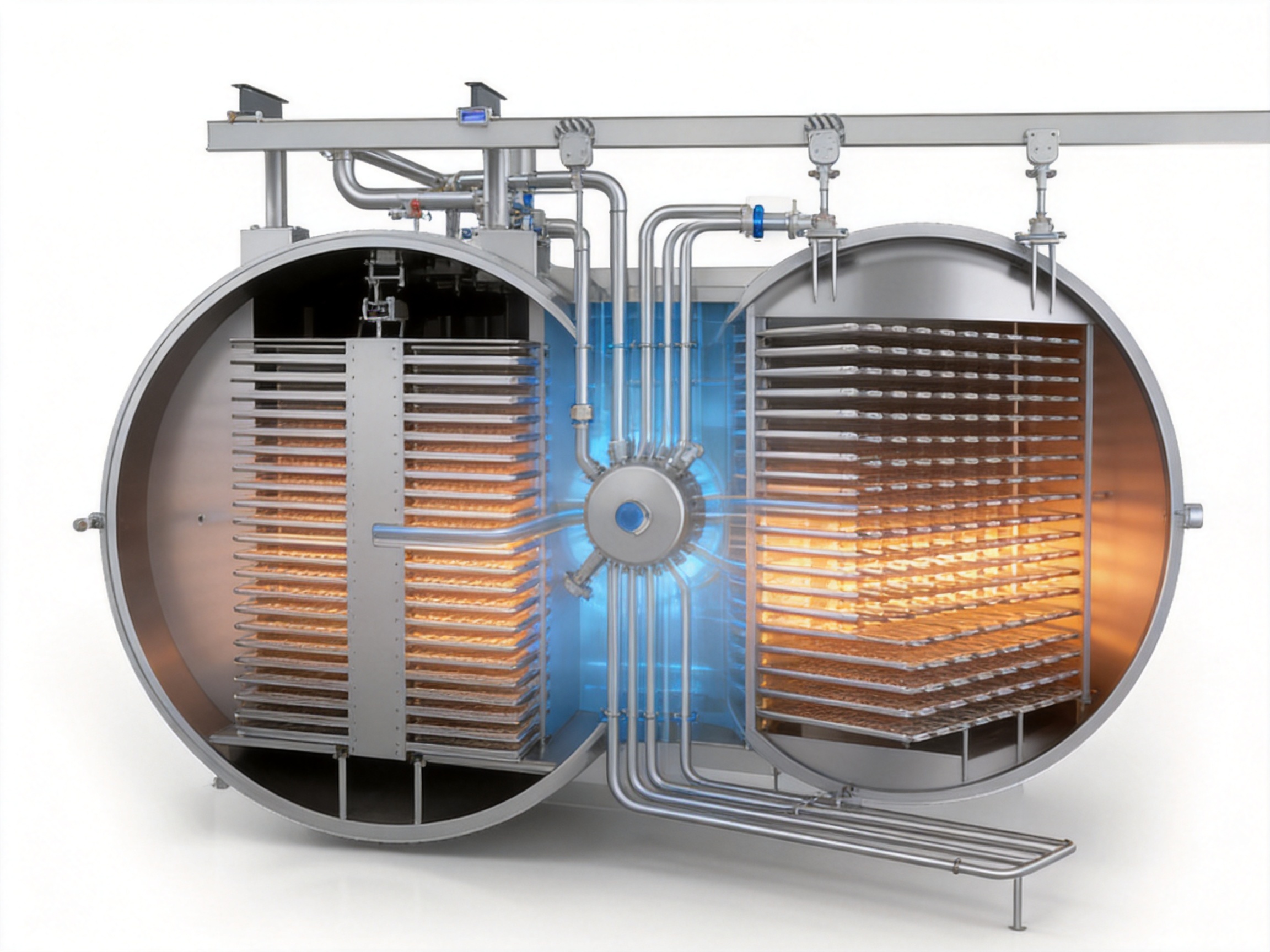
The BLK-FD-125 uses a circular chamber structure designed for mechanical stability and efficient integration of the internal drying components. A properly engineered chamber must withstand repeated pressure changes, thermal cycling, and long operating periods under vacuum.
Large industrial chambers are exposed to considerable mechanical stress. During operation, the chamber may transition from atmospheric pressure to deep vacuum and back again. It may also experience changes in temperature during freezing, primary drying, secondary drying, defrosting, cleaning, and maintenance. A robust chamber design helps preserve dimensional stability and reduces the risk of long-term deformation.
The circular configuration also supports an orderly internal arrangement of shelves, trolleys, vapor paths, and connection points. This is important because the internal geometry of a freeze dryer directly influences vapor movement and temperature distribution.
One of the key design features is the use of single integral shelf panels without welded splicing. In conventional shelf construction, welded joints may create local differences in thermal conductivity or introduce areas that are more difficult to inspect and clean. An integral-panel approach can help improve structural consistency and heat-transfer uniformity.
The shelves provide thermal energy to the product through controlled radiation and contact-related heat transfer. During primary drying, the shelf temperature must be increased gradually and precisely so that the frozen product receives enough energy for sublimation without exceeding its critical temperature.
For industrial food and biological materials, product uniformity is especially important. If one area of a shelf receives more heat than another, the product may dry unevenly. Some trays may finish early while others remain under-dried, creating difficulties for quality control and packaging. The BLK-FD-125 is designed to maintain inter-shelf temperature variation within approximately plus or minus 1 degree Celsius, supporting more consistent process conditions.
The shelf heat-transfer circuit uses a dedicated loop design. This arrangement allows the heating and cooling medium to circulate through the shelves in a controlled manner, supporting accurate shelf temperature adjustment during freezing and drying.
A dedicated circuit can also simplify process management when the equipment changes from one stage to another. The system may need to remove heat rapidly during product freezing, provide carefully controlled heat during primary drying, and deliver a different temperature profile during secondary drying. The heat-transfer system must respond to these demands while minimizing temperature fluctuations.
Stable shelf temperature is not only a matter of product quality. It also affects cycle time, energy consumption, and process repeatability. A well-designed circuit can help operators establish validated recipes and reproduce them across multiple production batches.
Large-scale freeze dryers often face difficulties in maintaining uniform temperature across a wide shelf area. The BLK-FD-125 addresses this issue through integral shelf construction and a dedicated heat-transfer circuit. Maintaining inter-shelf temperature variation within approximately plus or minus 1 degree Celsius provides a strong foundation for consistent drying.
Compared with equipment that uses less uniform shelf assemblies or less precise circulation systems, this design can reduce the risk of localized overheating, under-drying, and inconsistent product texture. This is particularly valuable for materials that have narrow processing windows.
Energy consumption is one of the largest operating costs in industrial freeze drying. Refrigeration compressors, vacuum pumps, circulation pumps, heating systems, control equipment, and defrosting systems may all operate for extended periods during a production cycle.
The BLK-FD-125 incorporates a residual cold-energy recovery system and intelligent control system. According to the provided technical information, this design can reduce energy consumption by approximately 10 to 15 percent compared with conventional equipment in the relevant configuration. Broader system-level energy-saving performance is also described in the company’s technical materials, with potential energy reductions of approximately 20 to 40 percent depending on process conditions, equipment configuration, and operating strategy.
Actual savings depend on product formulation, cycle parameters, ambient conditions, compressor loading, vacuum requirements, production scheduling, and the selected heating method. Nevertheless, energy recovery can provide a meaningful advantage because it reduces the amount of new energy required to establish and maintain operating conditions.
Batch changeover time affects the total output of a production line. Every hour spent waiting for chamber preparation, defrosting, cleaning, unloading, or system stabilization reduces available production time.
The BLK-FD-125 can be equipped with an optional patented intermediate isolation valve. This valve helps separate the drying chamber and cold trap under appropriate operating conditions. By controlling the relationship between the chamber and the vapor-condensing section, the system can support more efficient transitions between drying, defrosting, and preparation stages.
The practical benefit is a shorter interval between batches when the process and facility layout are correctly configured. Reduced changeover time can improve annual production capacity without requiring a proportional increase in chamber size.
For high-volume manufacturers, a single large dryer may not always provide the ideal production strategy. Multiple units operating in parallel can offer greater flexibility, redundancy, and scheduling efficiency.
The BLK-FD-125 supports parallel operation of multiple freeze dryers. The supplied information indicates that two units can achieve the output capacity of three under an appropriate staggered production arrangement. This advantage is associated with shared systems, coordinated feeding and unloading, and the ability of operating units to assist with water vapor capture during defrosting or transition periods.
Parallel production can also reduce the impact of maintenance. If one unit requires service, other units may continue operating, helping protect the overall production schedule. This is particularly important for facilities processing seasonal agricultural products or fulfilling time-sensitive orders.
Different factories have different utility conditions. Some facilities have reliable steam infrastructure, while others prefer electric heating because of site design, energy management, or process control requirements.
The BLK-FD-125 can be configured with electric heating or steam heating. This flexibility allows the equipment to be matched to local energy costs, available utilities, plant engineering standards, and product requirements.
Electric heating may offer precise and responsive control, while steam heating may be advantageous where a central steam system is already available. The final selection should be based on a detailed evaluation of utility capacity, process requirements, installation costs, operating costs, and maintenance capabilities.
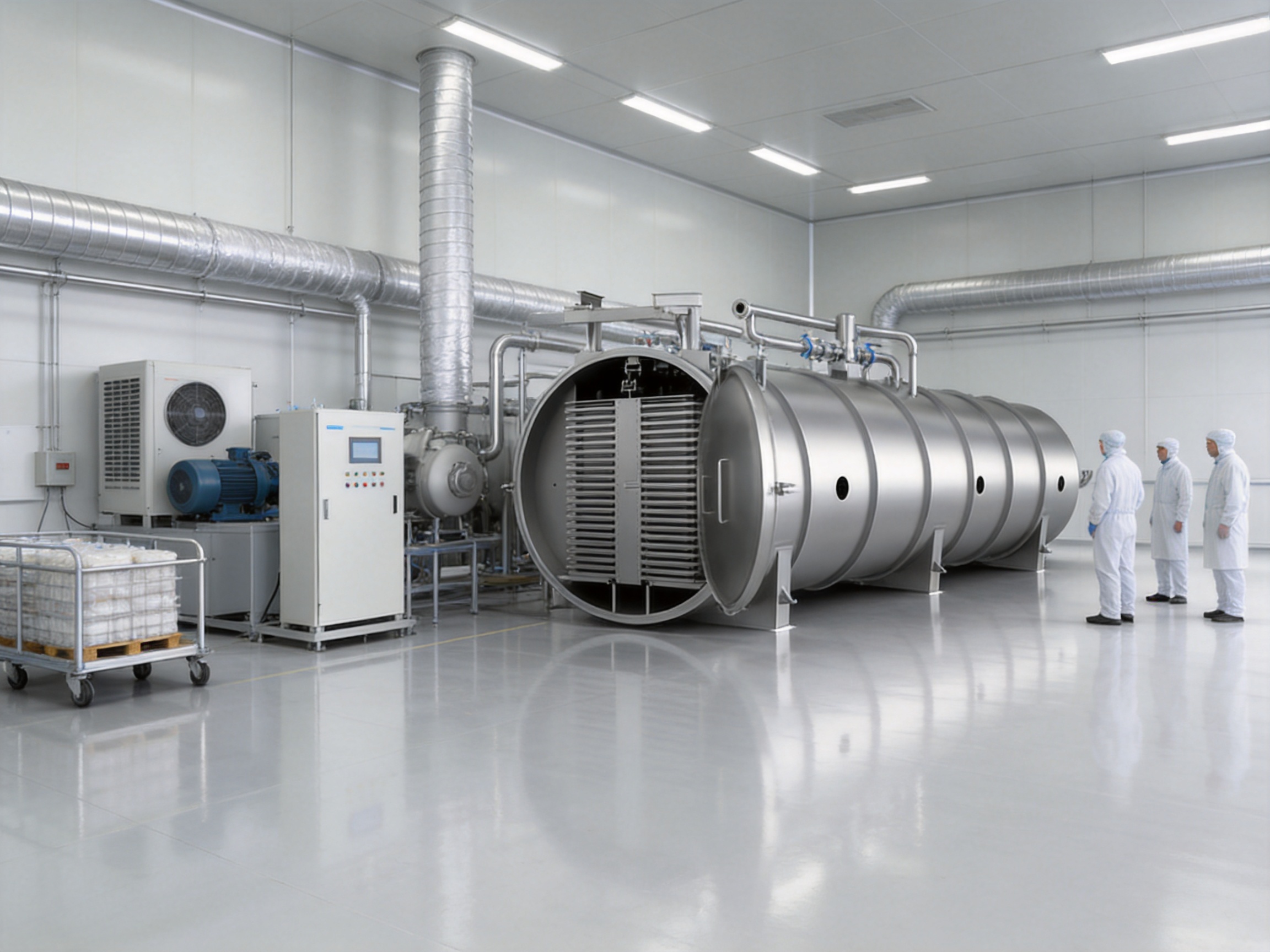
The BLK-FD-125 is suitable for a broad range of freeze-drying applications. Its large shelf area and high loading capacity make it especially relevant to manufacturers that need to process commercial quantities rather than laboratory samples.
Freeze-dried fruits and vegetables are valued for their extended shelf life, low weight, attractive appearance, and ability to rehydrate. Products may include berries, fruit pieces, sliced vegetables, vegetable powders, soup ingredients, and prepared meal components.
The equipment can help preserve the original shape and color of many products when the freezing and drying cycle is correctly developed. A controlled process can also retain volatile flavor compounds and improve the final rehydration performance.
Because fruits and vegetables vary widely in sugar content, fiber structure, moisture content, and density, production recipes must be developed for each product. The BLK-FD-125 provides the controlled temperature and vacuum environment needed for this development work at industrial scale.
Freeze-dried instant coffee requires careful control of freezing, sublimation, aroma retention, and final moisture content. The process must remove water while preserving the coffee’s desired aroma profile and granular structure.
A large freeze dryer can support commercial instant coffee production when integrated with suitable coffee extraction, concentration, freezing, granulation, loading, unloading, and packaging systems. The BLK-FD-125’s accurate shelf temperature management and vacuum capability can contribute to stable processing conditions for coffee products.
Because coffee aroma is sensitive to process conditions, manufacturers must establish product-specific recipes, including freezing temperature, shelf temperature ramps, vacuum pressure, primary drying duration, and secondary drying settings.
Medicinal herbs and health supplements may contain heat-sensitive active compounds, essential oils, pigments, and natural flavors. Freeze drying can help preserve the physical and chemical characteristics of these materials when compared with more aggressive thermal drying methods.
The BLK-FD-125 can support large-scale processing of herbal pieces, extracts, concentrates, biological ingredients, and supplement formulations. The controlled low-temperature environment is useful when manufacturers must protect sensitive components and maintain consistent batch quality.
For regulated products, the equipment should be integrated into a complete quality system covering raw material control, cleaning validation, process validation, environmental monitoring, documentation, and final product testing.
Freeze drying is also used for biological products, diagnostic materials, enzymes, cultures, specialty chemicals, and other materials whose stability may improve after water removal under controlled conditions.
The BLK-FD-125 can be configured according to the thermal sensitivity, solvent characteristics, loading method, containment requirements, and cleaning needs of the intended product. The final system design should consider whether the application requires special filtration, sterile boundaries, customized chamber finishes, or additional safety functions.
Equipment capacity should always be evaluated in relation to material density and loading height. The supplied process information uses a tray area of approximately 125 square meters and a loading height of 35 millimeters as a reference for estimating material processing capacity.
Material Category |
Indicative Processing Range |
Food products |
Approximately 3,000 to 4,000 kilograms |
Solution-based products |
Approximately 2,500 to 3,000 kilograms |
Fruits and vegetables |
Approximately 2,000 to 2,500 kilograms |
These figures are indicative and must be adjusted according to material density, solids content, product geometry, moisture content, tray arrangement, and process requirements. The standard equipment loading capacity is listed as 1,250 kilograms, while the material processing model presents broader reference ranges based on specific loading assumptions. Prospective users should request a product-specific capacity assessment before finalizing a purchase.
Proper loading strategy is essential for large-scale freeze drying. Trays should be filled at a consistent depth, with sufficient spacing to support vapor movement. Excessive loading height can increase primary drying time and create a greater difference between the top and bottom portions of the product. Uneven loading can also cause variations in freezing rate and heat transfer.
The system typically accommodates four material trolleys. Manual or automatic trolley options can be selected according to labor availability, factory automation objectives, hygiene requirements, and production scale.
The equipment uses 8-millimeter-thick 304 stainless steel in key chamber construction. Stainless steel is widely used in food, pharmaceutical, and industrial processing equipment because it offers corrosion resistance, cleanability, mechanical strength, and compatibility with controlled production environments.
The substantial material thickness supports a stable chamber structure and long service life. It also provides a durable foundation for repeated pressure cycles and thermal changes. However, long-term performance depends on the complete engineering design, including welding quality, reinforcement, inspection, surface treatment, sealing, insulation, and maintenance.
A high-capacity freeze dryer is not a collection of unrelated components. The chamber, shelves, refrigeration unit, vacuum pumps, cold trap, heating system, valves, sensors, control cabinet, and safety systems must operate as one coordinated platform.
BoLaiKe’s manufacturing model combines research and development, engineering design, production, installation, commissioning, and after-sales service. This integrated structure allows the company to coordinate mechanical, refrigeration, electrical, automation, and process requirements during system development.
For customers, this reduces the need to manage multiple independent equipment suppliers. It can also simplify communication during layout design, installation, process commissioning, troubleshooting, spare-parts planning, and future system expansion.
Industrial vacuum refrigeration equipment must pass detailed inspections before shipment. The provided manufacturing information describes five core inspection workflows and 58 inspection procedures. This inspection structure is intended to verify overall machine craftsmanship and functional reliability.
The refrigeration system is subjected to a pressure-holding test lasting more than 48 hours. The entire machine also undergoes high-pressure and low-pressure testing, including a dedicated 48-hour high-pressure test. Such testing is important for identifying leakage, weak connections, sealing problems, and other defects before the equipment reaches the customer’s site.
Pressure testing is particularly important because freeze-drying systems operate through repeated transitions between pressure conditions. A small leak can affect vacuum stability, increase pump operating time, reduce drying performance, and extend the process cycle. Thorough factory inspection helps reduce these risks.
The refrigeration system is responsible for freezing the product, maintaining low temperatures during operation, supporting cold-trap performance, and managing the thermal load generated during sublimation. The correct configuration depends on product requirements, ambient conditions, production schedule, and plant layout.
An external refrigeration configuration places the refrigeration equipment outside the main chamber area. This arrangement may provide advantages in terms of equipment-room organization, service access, noise management, and heat dissipation.
It may be preferred in facilities where the production room must remain compact or where the customer has a dedicated mechanical room. The final layout should account for refrigerant piping, insulation, ventilation, maintenance access, and maximum allowable distance between the refrigeration unit and freeze dryer.
A built-in refrigeration configuration integrates the refrigeration equipment more closely with the freeze-drying machine. This can simplify the overall footprint and may be appropriate where the plant layout does not provide a separate mechanical room.
The choice between external and built-in refrigeration should be made after reviewing the facility’s available space, temperature conditions, maintenance policy, noise requirements, energy strategy, and future expansion plans.
A single refrigeration unit can be configured to supply cooling for both cold storage and freeze-drying equipment. In multi-unit installations, intelligent variable-frequency refrigeration units can dynamically manage the drying requirements of several freeze dryers.
Variable-frequency operation helps match compressor output to actual demand. Instead of operating continuously at full capacity, the refrigeration system can adjust its output according to product load, chamber temperature, cold-trap demand, and operating stage. This can reduce unnecessary energy consumption and support smoother temperature control.
Vacuum performance is central to successful freeze drying. The vacuum pump system must remove non-condensable gases, maintain the required pressure, and support the movement of water vapor toward the cold trap.
The BLK-FD-125 can combine different vacuum pump technologies according to the required vacuum level, pumping speed, material characteristics, and cycle time. Available combinations include screw pumps with Roots pump sets, rotary vane pumps with Roots pump sets, and water-ring pumps with Roots pump sets.
A Roots pump can increase pumping capacity when paired with a suitable backing pump. The combination helps establish a vacuum environment efficiently in a large chamber. The final selection should be based on vapor load, operating pressure, pump-down time, gas composition, maintenance requirements, oil management, and facility utilities.
The system can adjust vacuum pump power according to demand. This means that the equipment does not need to use the same pumping intensity throughout every stage of the cycle. Intelligent variable-frequency pump combinations can help reduce energy consumption while maintaining the required vacuum conditions.
Vacuum pump selection should also consider product safety. Some materials may release volatile compounds or solvents that require special pump materials, filtration, exhaust treatment, or containment arrangements. A complete application review is therefore important before production equipment is specified.
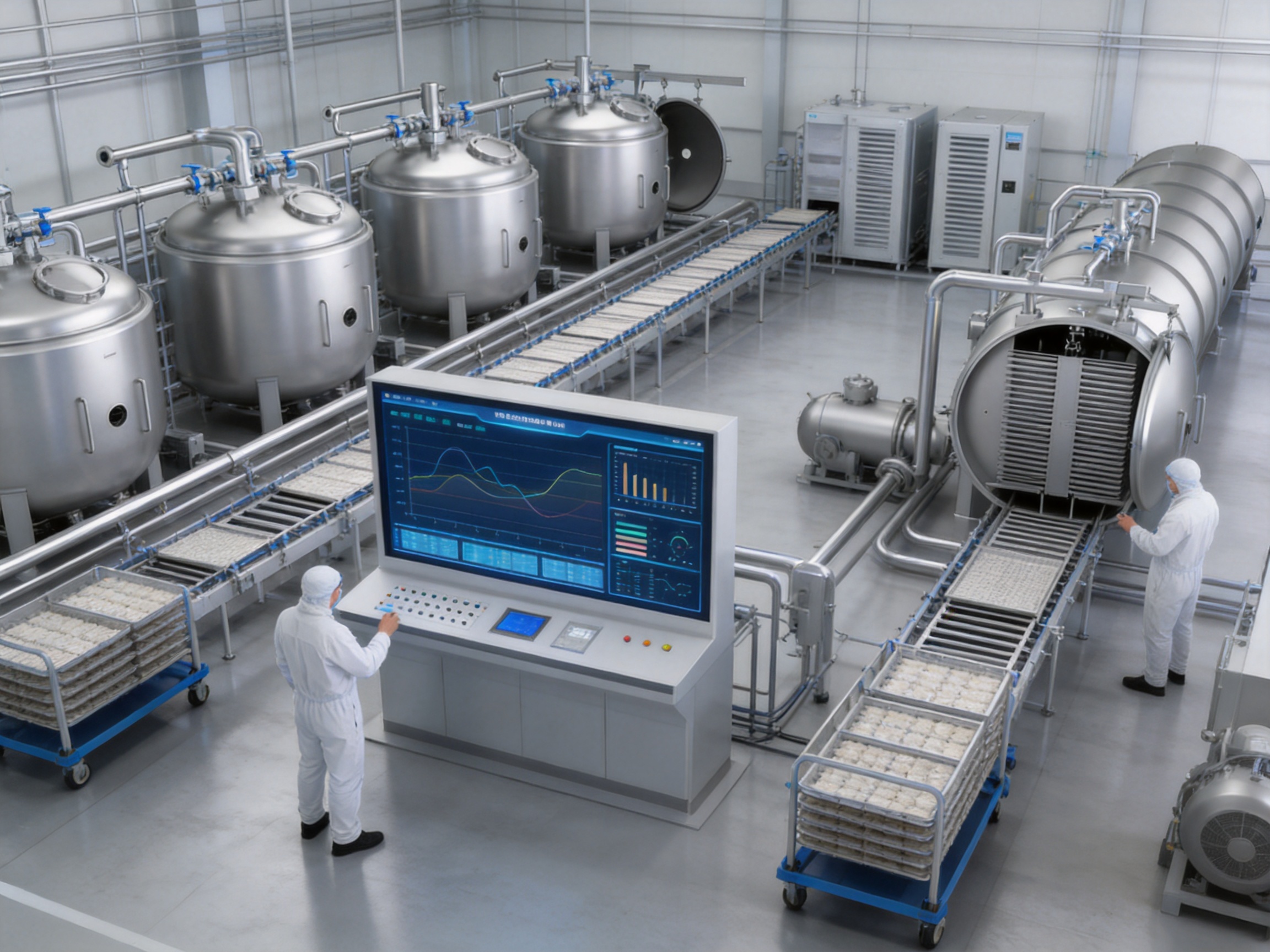
Continuous production does not necessarily mean that one freeze dryer operates without interruption. In many industrial facilities, continuous output is achieved by coordinating multiple units through staggered loading, drying, unloading, and defrosting cycles.
The BLK-FD-125 supports this type of parallel system design. When one unit reaches the final drying stage and becomes ready for cold-trap defrosting, other units may remain in active operation. Depending on the configuration, operating units can jointly undertake water-vapor capture and help maintain overall system stability.
This arrangement creates a controlled defrosting window for the unit that has completed its drying cycle. It can shorten defrosting time, reduce production interruptions, and improve the utilization rate of the overall installation.
The partitioned bulkhead and intermediate valve system separates the drying chamber from the cold trap under selected operating conditions. This allows more precise management of water-vapor flow direction and vacuum status during drying and cold-trap defrosting.
Preventing vapor backflow is important for product quality and system safety. If vapor moves in an uncontrolled direction, it can increase the moisture load in the chamber, influence product temperature, extend the drying cycle, or interfere with another unit operating in parallel.
Shared vacuum technology can also improve equipment utilization by allowing several units to coordinate their vacuum requirements. The precise configuration depends on the number of freeze dryers, product type, chamber volume, vapor load, and desired production sequence.
Traditional refrigeration designs may use cold energy once and then discharge it. This can force compressors to operate under a relatively high load for long periods. The BLK-FD-125 incorporates a cold-energy recovery concept in which residual cooling energy from one refrigeration process can be used to pre-cool the next process.
According to the supplied information, this approach can reduce the overall compressor load by approximately 20 to 30 percent in suitable operating conditions. Lower compressor loading may reduce electricity consumption, decrease thermal stress, and improve the overall operating efficiency of the refrigeration system.
Cold-energy recovery is especially valuable in facilities with repeated production cycles. The more consistently the equipment operates, the greater the opportunity to reuse available thermal capacity and avoid unnecessary energy losses.
Heat generated during the sublimation and heating stages is often discharged in conventional systems. A heat-recovery design can reuse some of this energy for material drying or other suitable process requirements.
The supplied technical information identifies heat-recovery functions for both recovered process heat and steam-based heating. It states that when material heating temperatures are 35 degrees Celsius or lower, energy savings can be particularly significant. It also indicates that when the required heating temperature is below 80 degrees Celsius, approximately 10 percent of energy consumption may be saved under appropriate conditions.
These figures are application-dependent. Heat recovery must be evaluated according to the material, heating profile, available waste heat, hygiene requirements, and the required temperature stability. Nevertheless, the concept can help reduce the amount of new heat that must be generated during each cycle.
The equipment can incorporate a heat pump and economizer system intended to improve compressor performance. The supplied information states that the system can increase the compressor coefficient of performance to approximately 4.8 to 5.9.
A higher coefficient of performance means that more useful heating or cooling effect can be produced for a given amount of electrical input. The actual result depends on refrigerant selection, evaporation and condensation temperatures, ambient conditions, compressor type, load profile, and system maintenance.
By combining heat recovery, cold-energy recovery, variable-frequency operation, and intelligent control, the BLK-FD-125 is designed to reduce avoidable operating costs while maintaining the process conditions required for freeze drying.
A large freeze-drying installation may include several chambers, refrigeration units, vacuum pump sets, material trolleys, valves, sensors, heating circuits, cold-storage systems, and auxiliary devices. Managing these components manually would be inefficient and vulnerable to operating errors.
The BLK-FD-125 uses an intelligent central control system capable of managing the operational status of connected equipment. Operators can monitor key process variables such as shelf temperature, chamber pressure, cold-trap temperature, refrigeration status, pump operation, valve position, heating status, alarms, and cycle progress.
Centralized control also helps operators establish, store, and repeat product recipes. A recipe may include freezing ramps, holding times, shelf temperature stages, vacuum set points, pressure-control parameters, secondary drying conditions, and defrosting sequences.
Remote equipment monitoring through a mobile application is supported. Remote monitoring can help production managers review equipment status, receive alarms, and respond more quickly when abnormal conditions occur. It does not replace on-site safety procedures or qualified maintenance personnel, but it can improve information visibility.
Multiple language options can be customized for international users. This is useful for factories that employ operators, engineers, and maintenance teams from different regions. Clear interface language can reduce training requirements and improve communication during operation.
Jiangsu BoLaiKe Refrigeration Science and Technology Development Co., Ltd. was established in 2014 in Changzhou, Jiangsu, China. The company originated from Changzhou Zhongleng Refrigeration Equipment Co., Ltd., which entered the refrigeration industry in 2003 and began developing vacuum freeze-drying technology at an early stage.
The company focuses on the research, development, manufacturing, sales, installation, commissioning, and after-sales service of vacuum freeze-drying and refrigeration equipment. Its solutions are used in food, fruits and vegetables, medicinal herbs, health supplements, biological products, chemical materials, and other industries.
One of the company’s strengths is its integrated professional team. Research and development personnel, mechanical engineers, refrigeration specialists, automation technicians, project managers, installation teams, and service engineers can work together through the equipment life cycle.
The company has established long-term partnerships with universities and research institutions, including the Chinese Academy of Agricultural Sciences, the Jiangsu Academy of Agricultural Sciences, and Jiangnan University. These relationships support technical research, process development, and the improvement of freeze-drying solutions.
According to the provided company information, BoLaiKe has obtained more than 100 national invention and utility model patents. The company also reports that its equipment can achieve energy savings of approximately 20 to 30 percent under suitable operating conditions and that its products have been exported to more than 30 countries and regions.
The company has moved into a modern manufacturing base covering approximately 24,000 square meters. This facility supports the production of large equipment, assembly operations, inspection procedures, and project delivery. A dedicated manufacturing base is important for large-scale freeze-drying equipment because chamber fabrication, shelf assembly, piping, electrical integration, testing, and packaging require significant space and coordination.
The BLK-FD-125 is designed according to international specifications. The supplied information identifies European Union CE certification and China Quality Management System certification as part of the equipment’s quality framework.
CE compliance indicates that the relevant equipment has been assessed against applicable European requirements for areas such as machinery safety, electrical safety, and health protection. Customers should verify the exact scope of certification and the documentation supplied with the final configuration.
A quality management system provides a framework for controlling design, procurement, production, inspection, documentation, corrective action, and customer service. For complex equipment, quality management is not limited to the final inspection. It begins with engineering review and continues through material selection, component traceability, assembly, testing, installation, commissioning, and after-sales support.
Customers evaluating an industrial freeze dryer should request technical documents covering chamber materials, pressure testing, electrical design, refrigeration components, vacuum pump specifications, safety functions, control architecture, cleaning requirements, spare parts, and maintenance intervals.
A large freeze dryer must be evaluated as part of the customer’s complete production facility. Before installation, the project team should review floor loading, equipment access, room height, utility connections, drainage, ventilation, electrical capacity, steam availability, cooling-water requirements, compressed air, refrigeration-room arrangements, and product flow.
Chamber orientation and unit placement can be customized according to factory layout. This flexibility helps customers integrate the dryer with upstream preparation processes and downstream unloading, packaging, and storage areas.
Commissioning normally includes mechanical inspection, electrical verification, refrigeration testing, vacuum testing, control-system testing, empty-chamber trials, temperature-distribution testing, and product trials. The process should confirm that the actual installation meets the agreed technical requirements.
Operators should receive training in normal operation, recipe management, alarm handling, cleaning, defrosting, vacuum-pump care, refrigeration-unit maintenance, and emergency procedures. Maintenance personnel should also be trained to identify leaks, abnormal noise, temperature deviations, pump problems, valve faults, and sensor errors.
Long-term service planning should include recommended spare parts, preventive maintenance schedules, inspection records, calibration requirements, software support, and technical assistance. A well-maintained freeze dryer can provide stable performance for many years, while poor maintenance may increase cycle times and reduce energy efficiency.
The BLK-FD-125 offers several advantages for manufacturers seeking to expand freeze-drying capacity.
First, its 125.1-square-meter freeze-drying area provides a substantial production platform for commercial operations. The large chamber can reduce the number of batches required to meet production targets.
Second, the integral radiation shelves and dedicated heat-transfer circuit support accurate thermal management. Maintaining inter-shelf temperature variation within approximately plus or minus 1 degree Celsius can help improve product consistency.
Third, the system includes multiple energy-saving concepts, including residual cold-energy recovery, heat recovery, variable-frequency vacuum and refrigeration operation, and an optional heat pump and economizer system.
Fourth, the optional intermediate isolation valve and shared vacuum technology can help reduce batch changeover interruptions and improve the coordination of multiple units.
Fifth, electric or steam heating options allow the equipment to be adapted to different factory utilities and process strategies.
Sixth, the 8-millimeter 304 stainless steel construction, pressure testing, and structured inspection procedures provide a solid foundation for long-term industrial use.
Finally, the supplier offers an integrated service model covering research and development, engineering, manufacturing, installation, commissioning, and after-sales support. This is important for customers purchasing customized systems rather than standard off-the-shelf equipment.
Before ordering a BLK-FD-125, customers should define their intended products and production objectives. Important questions include the required daily output, batch size, material density, initial moisture content, final moisture content, product thickness, freezing temperature, expected cycle time, and desired packaging format.
The customer should also identify whether the system will process one product continuously or several products with different recipes. Multi-product facilities may require additional cleaning procedures, flexible tray arrangements, recipe management functions, and more adaptable temperature-control strategies.
Utility planning is equally important. The factory should confirm the available electrical power, steam pressure and capacity if steam heating is selected, cooling-water conditions, compressed air quality, drainage, ventilation, and ambient temperature range.
The installation area should provide enough space for loading, unloading, maintenance, door opening, trolley movement, electrical cabinets, refrigeration units, vacuum-pump units, and future service activities. Poorly planned access can increase maintenance time and complicate replacement of major components.
Customers should also decide whether manual or automatic material trolleys are more appropriate. Manual handling may be suitable for smaller production teams or flexible multi-product operations. Automatic handling can improve throughput, reduce labor requirements, and support more consistent loading in high-volume facilities.
The system has a freeze-drying area of 125.1 square meters, a standard loading capacity of 1,250 kilograms, and a liquid loading capacity of 2,500 liters. Actual product capacity depends on density, loading height, moisture content, product structure, and the selected process recipe.
The equipment is suitable for fruits, vegetables, instant coffee, prepared foods, medicinal herbs, health supplements, biological materials, chemical materials, and other products that require low-temperature vacuum drying.
Yes. The BLK-FD-125 can be configured with electric heating or steam heating according to the customer’s production requirements and available factory utilities.
The equipment is designed to maintain inter-shelf temperature variation within approximately plus or minus 1 degree Celsius. Final performance should be confirmed during commissioning and temperature-distribution testing under the agreed operating conditions.
Yes. The equipment supports parallel operation of multiple units. Coordinated loading, drying, unloading, vacuum management, and defrosting can improve overall production continuity and equipment utilization.
The optional intermediate isolation valve helps separate the drying chamber and cold trap during selected operating stages. It can support vapor-flow control, reduce the risk of vapor backflow, and shorten batch changeover or defrosting intervals.
The specified ultimate vacuum level is 10 Pa or lower. The actual operating pressure during a product cycle depends on material characteristics, vapor load, shelf temperature, product resistance, and process design.
Energy-saving functions include residual cold-energy recovery, heat recovery, intelligent variable-frequency vacuum pumping, variable-frequency refrigeration, and optional heat pump and economizer technology. Actual savings vary according to product, cycle, configuration, and operating conditions.
The equipment uses 8-millimeter-thick 304 stainless steel in the chamber construction described in the technical information. Stainless steel provides corrosion resistance, strength, cleanability, and suitability for many food and industrial applications.
Yes. The intelligent central control system supports remote equipment monitoring through a mobile application. This allows authorized personnel to review equipment status and receive operational information remotely.
Yes. Chamber and unit layout positions can be customized according to production requirements, factory space, material flow, maintenance access, and the selected refrigeration and vacuum configuration.
The supplied manufacturing information describes five core inspection workflows and 58 inspection procedures. It also identifies more than 48 hours of refrigeration-system pressure holding, as well as high-pressure and low-pressure testing of the complete machine.
Customers should provide information about material type, batch size, moisture content, loading height, target final moisture, required cycle time, heating utilities, production schedule, factory layout, and automation expectations. The supplier can then recommend the appropriate chamber, vacuum, refrigeration, heating, control, and trolley configuration.
The BLK-FD-125 is designed for manufacturers that require high-capacity freeze drying with accurate thermal control, dependable vacuum performance, flexible configuration, and reduced operating costs. Its 125.1-square-meter freeze-drying area and substantial loading capacity make it suitable for demanding industrial production.
Its key engineering advantages include a circular chamber structure, integral radiation shelves, a dedicated heat-transfer circuit, optional intermediate isolation valve, parallel-operation capability, electric or steam heating options, variable-frequency vacuum and refrigeration systems, and intelligent central control.
The equipment also benefits from a manufacturing approach that combines research, engineering, production, inspection, installation, commissioning, and service. The supplier’s experience in refrigeration and freeze-drying technology, university and research partnerships, patent portfolio, international project experience, and modern manufacturing base provide valuable support for customers developing large-scale processing facilities.
For food, agricultural, coffee, pharmaceutical, biological, chemical, and health-product manufacturers, selecting a freeze dryer is a long-term investment. Capacity, product quality, energy consumption, maintenance, automation, safety, and future expansion must all be considered together. With its high-capacity architecture and energy-conscious design, the BLK-FD-125 provides a practical platform for efficient, stable, and scalable freeze-drying production.
1. Product technical specification for the BLK-FD-125 high-capacity freeze-drying equipment.
2. Manufacturer information concerning freeze-drying chamber construction, heat-transfer systems, refrigeration configurations, vacuum pump combinations, and intelligent control functions.
3. Technical documentation concerning residual cold-energy recovery and heat-recovery systems for industrial freeze dryers.
4. Technical documentation concerning heat pump and economizer systems for refrigeration and freeze-drying applications.
5. General principles of vacuum freeze drying, sublimation, shelf-temperature control, cold-trap operation, and product moisture removal.
6. Industrial guidance concerning stainless steel processing equipment, pressure testing, refrigeration-system inspection, and vacuum equipment maintenance.
7. Company information regarding research and development, manufacturing capabilities, patents, quality certifications, international projects, and after-sales service.
 2026/05/28
 2026/05/28
2026/05/28
2026/05/28
2026/05/28
2026/05/28


 Custom Industrial Lyophilizer Freeze Dryer Manufacturers





 English
 русский
 Español
 Français
 Deutsch
 عربى
عربى