/blog/
News
Products & Solutions
CONTACT US

+86-18068757376

blk@jsblk.com

No. 29 North Tongjiang Road, Xinbei District, Changzhou City, Jiangsu Province, China
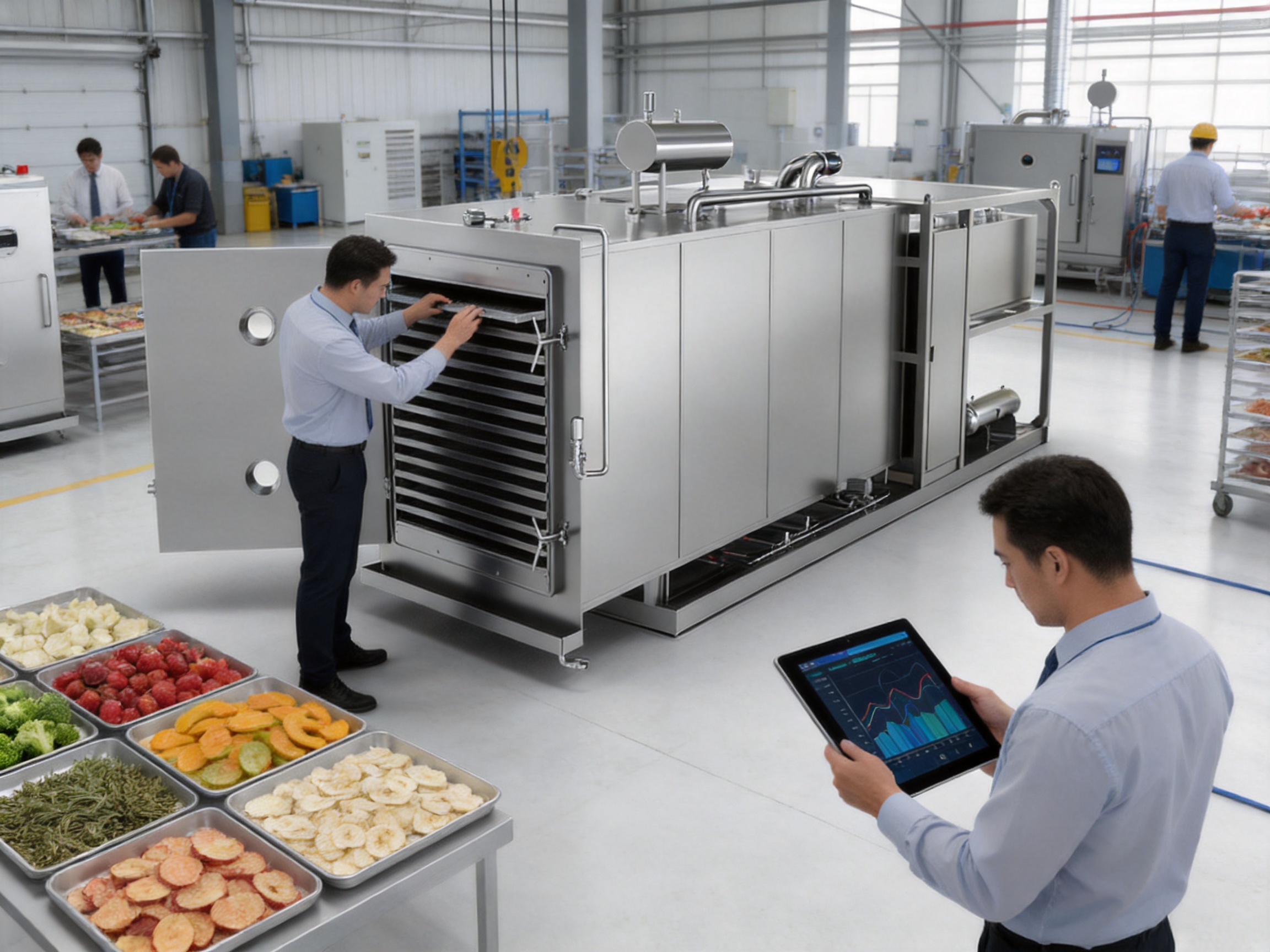
Modern food, agricultural, pharmaceutical, biological, and chemical manufacturers require freeze-drying equipment that can provide stable product quality while controlling energy consumption, labor requirements, and plant footprint. The BLK-FD-40 is a medium-sized, multi-shelf freeze dryer developed for processors that need substantially more capacity than laboratory or pilot equipment but do not yet require a full industrial production line. With a 40-square-meter freeze-drying area, an 800-liter liquid loading capacity, and a standard loading capacity of approximately 400 kilograms, the system is designed to support consistent batch production in a wide range of applications.
The BLK-FD-40 combines pre-freezing and drying in one integrated system. This configuration reduces material transfer between separate machines, simplifies workshop planning, and helps operators manage the complete freeze-drying cycle through a centralized control platform. Its rectangular chamber, double-layer radiant panels, residual cold recovery system, and optional heat recovery technology distinguish it from many conventional medium-scale freeze dryers.
Manufactured by Jiangsu BoLaiKe refrigeration science and technology development Co., Ltd., the equipment reflects the company’s long-term specialization in vacuum freeze-drying and refrigeration technology. The manufacturer combines product research and development, engineering, fabrication, installation, commissioning, and after-sales support in one professional organization. This integrated capability is especially important for freeze-drying projects because performance depends not only on the chamber itself, but also on refrigeration design, vacuum stability, heat-transfer uniformity, control logic, utilities, and the final production process.
The BLK-FD-40 is a multi-shelf medium-sized freeze dryer intended for commercial and industrial batch processing. It is suitable for companies that need a flexible production platform for fruits and vegetables, prepared foods, medicinal materials, health products, biological materials, and selected chemical products. The machine is designed to preserve the structure, color, aroma, flavor, and nutritional characteristics of temperature-sensitive materials by removing water under vacuum after freezing.
Unlike basic freeze dryers that require a separate freezing room or external pre-freezing equipment, the BLK-FD-40 integrates pre-freezing and drying functions. Materials can be loaded into trays, frozen in the chamber, and then dried without requiring a separate transfer operation. This arrangement can reduce handling steps and limit exposure to ambient conditions between freezing and sublimation.
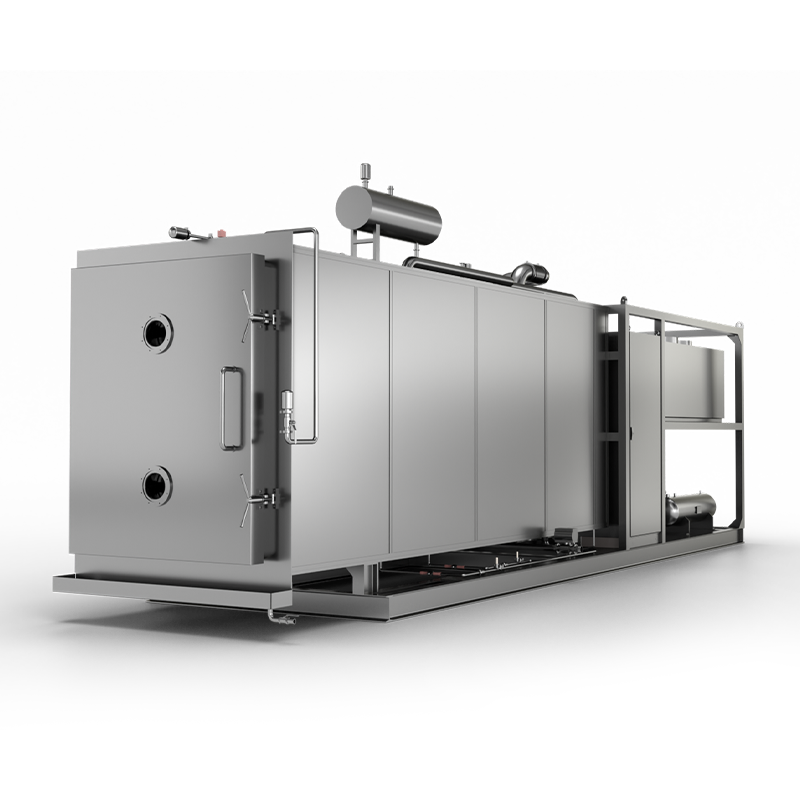
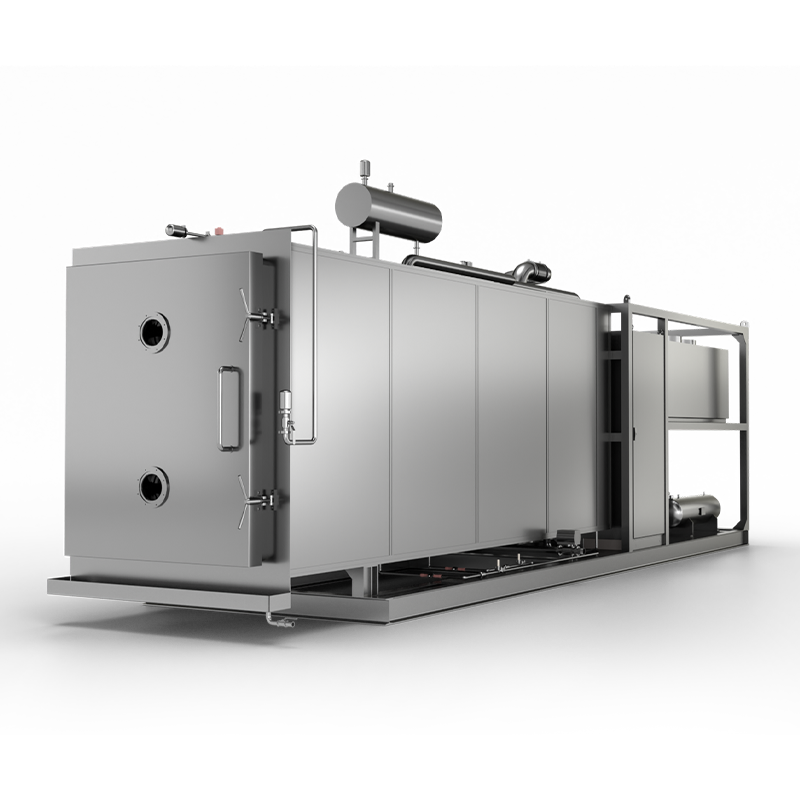
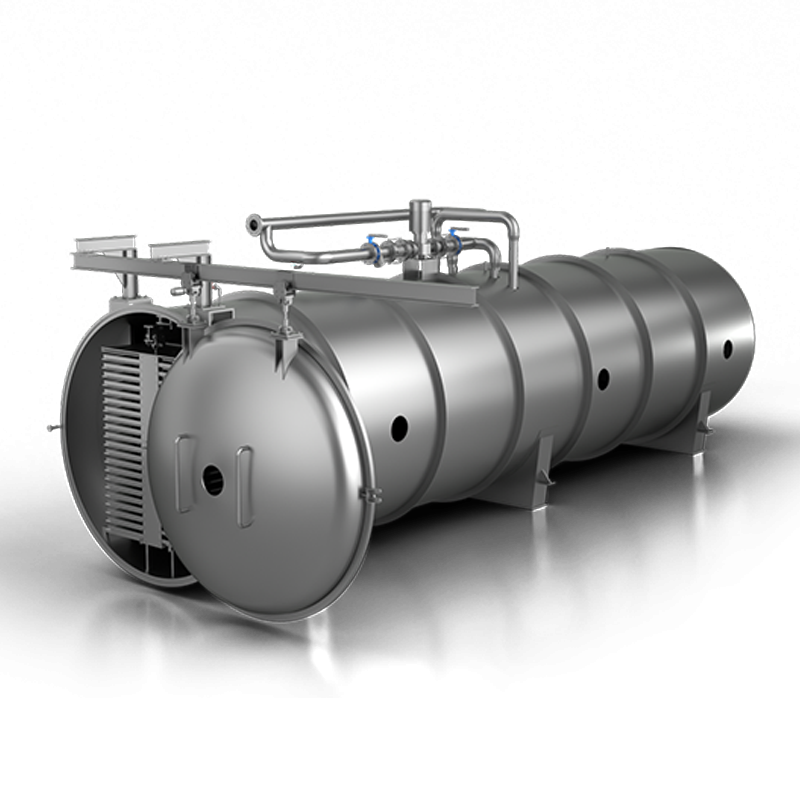
The equipment uses a rectangular chamber format. For medium- and small-scale installations, this geometry can provide practical advantages in comparison with circular chambers. A rectangular chamber can use the available workshop area efficiently, align naturally with rectangular shelves and trays, and make it easier to plan access aisles, service areas, utilities, and material flow.
The principal technical data of the BLK-FD-40 are summarized below.
Parameter |
Specification |
Freeze-drying area |
40 m² |
Standard loading capacity |
Approximately 400 kg |
Liquid loading capacity |
Approximately 800 L |
Overall dimensions |
8,600 × 2,300 × 3,400 mm |
Overall weight |
Approximately 14.5 tonnes |
Ultimate vacuum level |
≤10 Pa |
Chamber configuration |
Integrated rectangular chamber |
Primary operating mode |
Batch vacuum freeze-drying |
Actual production capacity depends on the material’s density, moisture content, layer thickness, tray arrangement, freezing point, product formulation, target residual moisture, and drying recipe. The stated loading figures should therefore be used as reference values during project planning rather than as universal output guarantees for every product.
Freeze-drying, also known as lyophilization, removes water from a frozen product through sublimation. During the process, water changes directly from ice to vapor under controlled vacuum conditions, avoiding the liquid phase. This helps protect cellular structure and reduce the thermal damage commonly associated with high-temperature drying.
A typical cycle includes loading, freezing, primary drying, secondary drying, and controlled unloading. During freezing, the product temperature is reduced sufficiently to convert free water into ice. During primary drying, vacuum is applied and heat is supplied in a controlled manner so that ice sublimates. During secondary drying, more tightly bound moisture is removed to reach the desired final moisture level and storage stability.
Reliable freeze-drying requires a balance between several conditions. The system must remove vapor efficiently, maintain a stable vacuum, deliver heat uniformly to the product, prevent excessive product temperature, and provide adequate refrigeration capacity during freezing and condensation. If one of these functions is poorly controlled, the result may be incomplete drying, product collapse, uneven moisture distribution, excessive cycle time, or unnecessary energy consumption.
The BLK-FD-40 addresses these requirements through the coordinated design of its chamber, radiant panels, refrigeration circuits, vacuum system, control system, and energy recovery features. The objective is not simply to achieve a low pressure value. The objective is to create a repeatable environment in which different trays and batches receive substantially consistent thermal treatment.
One of the most important features of the BLK-FD-40 is the integration of pre-freezing and drying in a single unit. In a conventional arrangement, operators may need to freeze materials in a separate cold room or blast freezer before moving them into a vacuum drying chamber. That configuration can require additional floor space, additional material handling equipment, and extra labor.
The integrated configuration allows materials to complete freezing and drying within the freeze dryer. This can simplify the production sequence and reduce the number of product transfers. Fewer transfers may also reduce the risk of contamination, product damage, temperature fluctuation, and loss of material during handling.
Integrated processing is particularly useful for products that are fragile after freezing. Fruits, vegetables, prepared meals, biological materials, and porous pharmaceutical products may become brittle or structurally weak once frozen. Moving such products between machines can cause breakage or disrupt tray loading. Keeping the material in the same chamber helps preserve the arrangement established at loading.
The integrated design can also support more efficient workshop planning. Rather than allocating space to a separate pre-freezing room and a separate drying chamber, a processor can organize the production area around one principal machine, loading zone, unloading zone, utilities area, and service corridor. The exact layout must still account for doors, pumps, refrigeration components, electrical panels, maintenance access, and local regulatory requirements.
For projects with special layout restrictions, the equipment’s length, width, and height can be customized within the limits of the engineering design. Once the unit has been assembled, the installation generally requires connection of the specified water, electrical, drainage, and other utility services before commissioning.
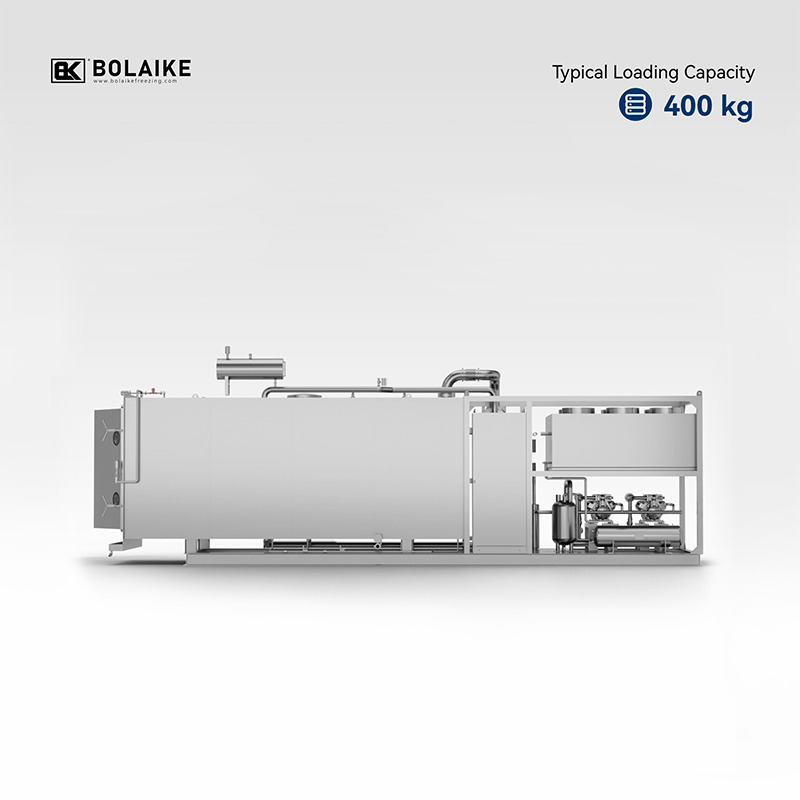
BLK-FD-40
The chamber shape has a direct influence on how shelves, trays, radiant panels, doors, service systems, and operators are arranged. The BLK-FD-40 uses a rectangular chamber intended to improve space utilization for medium- and small-scale applications.
With the same nominal freeze-drying area, a rectangular chamber can require a smaller or more practical footprint than a circular chamber. Its straight walls can align with the building structure and allow the equipment to be positioned more efficiently along a production line or beside other rectangular processing machines.
The rectangular configuration also pairs naturally with rectangular trays and shelves. This can reduce unused spaces around the edges of the chamber and allow a greater proportion of the internal volume to be used for product. Better alignment between the chamber, trays, and radiant panels can improve material loading efficiency and simplify tray handling.
Another potential advantage is workshop flexibility. A rectangular machine can be placed near walls or partitioned areas while retaining a clearly defined operating side and service side. This can be helpful for manufacturers working in existing buildings where the available space is not large enough for an ideal circular equipment layout.
Chamber geometry can also affect airflow and temperature distribution. The BLK-FD-40 is designed to provide stable operating conditions across its shelf arrangement. Actual temperature uniformity depends on product loading, shelf spacing, vapor flow, operating recipe, and installation conditions, but the chamber and panel configuration are intended to support consistent drying from batch to batch.
For the same loading requirement, a well-designed rectangular chamber can also reduce the size or power demand of associated refrigeration and vacuum systems compared with an inefficiently arranged chamber. The resulting benefit is not determined by chamber shape alone; it depends on the entire equipment design. Nevertheless, efficient internal volume utilization can contribute to lower operating requirements and a more compact plant arrangement.
Heat transfer is one of the most critical aspects of freeze-drying. If some trays receive too much heat while others receive too little, the batch may dry unevenly. Excessive heat can cause product collapse, melting, browning, or loss of quality, while insufficient heat can lengthen the cycle and leave residual moisture.
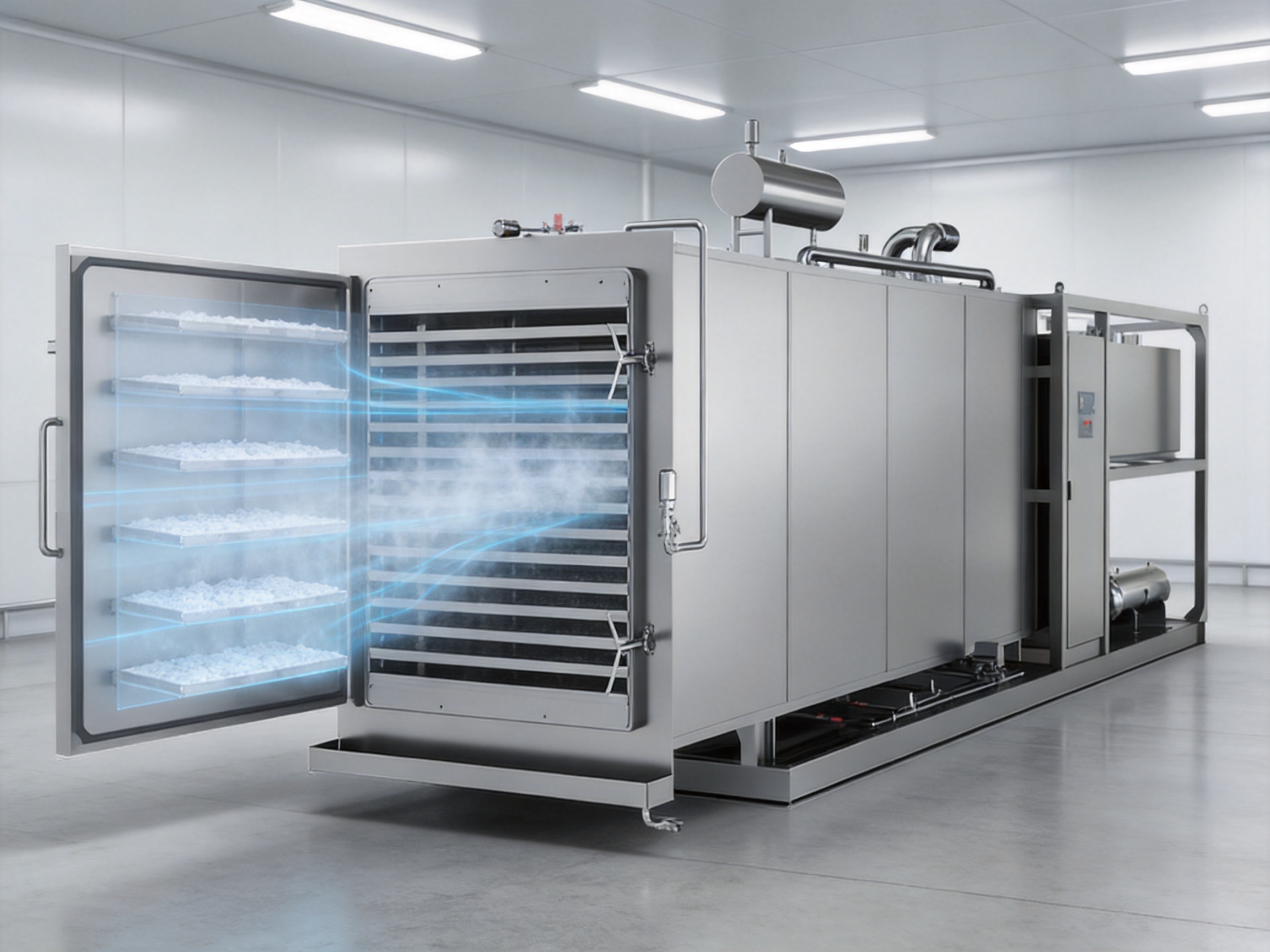
The BLK-FD-40 uses patented double-layer radiant panels with independent hot and cold circuits. The upper layer is used for cooling and the lower layer is used for heating. This arrangement allows the same panel structure to support both freezing and drying functions without relying on separate conventional heating and cooling assemblies.
During the freezing stage, the cooling circuit reduces the temperature of the shelves and product. During drying, the heating circuit supplies controlled energy to promote sublimation. Because the circuits are independently arranged, the system can transition between cooling and heating functions in a controlled manner. The design also supports more direct regulation of shelf temperature during different stages of the cycle.
The double-layer panel construction is intended to improve temperature uniformity across the shelf surface. Uniform panel dimensions and parallel circuits help reduce local hot spots and cold spots. This is important when processing multiple trays containing the same product, especially when the product has a narrow acceptable temperature range.
For pharmaceutical, biological, and high-value materials, temperature uniformity can influence product potency, structure, rehydration behavior, and shelf life. For food and agricultural products, it can influence color retention, crispness, flavor, aroma, and visual appearance. The panel system therefore contributes not only to energy performance but also to product consistency.
The radiant panel design is protected by patents identified by the manufacturer as CN209030727U and CN204392676U. Patent protection does not by itself guarantee a specific result for every product, but it demonstrates that the equipment incorporates proprietary engineering features rather than relying solely on generic chamber construction.
The BLK-FD-40 is specified with an ultimate vacuum level of no more than 10 Pa. A stable low-pressure environment is necessary for sublimation and for the controlled removal of water vapor from the frozen product.
Vacuum performance depends on several factors, including pump capacity, chamber sealing, vapor load, condenser operation, pipe dimensions, valve configuration, product temperature, and the condition of seals and filters. The stated ultimate vacuum value is normally achieved under defined equipment conditions without the full vapor load associated with production. During actual drying, the operating pressure will vary according to the recipe and product behavior.
The refrigeration system must provide enough capacity to freeze the product, maintain low temperatures, condense vapor, and support transitions between process stages. The BLK-FD-40’s integrated architecture is designed to coordinate refrigeration and drying rather than treating them as unrelated operations.
A well-matched refrigeration system can shorten freezing time and help maintain product quality. Rapid, controlled freezing may influence ice crystal size and distribution. The appropriate freezing rate depends on the product. Some materials benefit from smaller ice crystals, while others require a carefully controlled freezing profile to maintain the desired internal structure.
The manufacturer also applies heat pump and economizer technology in its equipment range. The stated objective is to improve compressor coefficient of performance and reduce the energy required for useful heating. The manufacturer reports compressor COP values in the range of 4.8 to 5.9 for this system concept, although actual results depend on ambient conditions, refrigerant selection, setpoints, load profile, and installation design.
Energy consumption is a major operating cost in freeze-drying. Electricity is required for refrigeration compressors, vacuum pumps, controls, fans, valves, heating systems, cooling systems, and auxiliary equipment. Because freeze-drying cycles can be long, even a moderate efficiency improvement can produce meaningful savings over the equipment’s service life.
The BLK-FD-40 is equipped as standard with a residual cold recovery system. The system captures or reuses available cold energy from the refrigeration process to support the next cooling operation. This reduces the amount of new refrigeration work required and helps prevent useful cold energy from being discharged without recovery.
The manufacturer states that the residual cold recovery configuration can reduce energy consumption by approximately 10% to 15% compared with traditional equipment. Broader company information also indicates potential energy savings of approximately 20% to 30% for certain equipment configurations and operating conditions. These figures should be verified through a project-specific energy analysis because actual savings vary with product, climate, loading pattern, cycle parameters, and utility prices.
The cold recovery system can also reduce compressor loading. The manufacturer describes a potential reduction of approximately 20% to 30% in overall compressor load under suitable operating conditions. Lower compressor loading may reduce peak electrical demand and contribute to less mechanical stress on refrigeration components.
In addition to cold recovery, the company offers heat recovery as a customized option. During sublimation and heating, some heat may otherwise be discharged. A heat recovery arrangement can reuse this energy for product drying or other suitable process requirements. This can reduce the use of electric or steam heating.
The manufacturer reports that when the required material heating temperature is no more than 35°C, a very high proportion of the heating energy may be recovered under the specified system configuration. For material heating requirements below 80°C, the manufacturer reports potential energy savings of approximately 10% in suitable applications. These values are application-dependent and should be confirmed through thermal calculations and testing.
The combination of integrated refrigeration, cold recovery, optional heat recovery, and a heat pump economizer gives the BLK-FD-40 a broader energy-saving strategy than simply installing a larger compressor or heater. The system attempts to reduce waste at different stages of the cycle.
The BLK-FD-40 provides a 40-square-meter freeze-drying area and a standard loading capacity of approximately 400 kilograms. Its liquid loading capacity is approximately 800 liters. These values make it suitable for medium-scale commercial production and larger-scale product development.
The actual loading capacity depends on the physical form of the material. A liquid formulation spread in a thin layer behaves differently from a solid fruit piece, an herb, a prepared meal, or a biological suspension. Product density affects the mass that can be placed on the available tray area. Moisture content influences the vapor load and total drying time. Layer thickness affects heat penetration and the distance that vapor must travel through the product.
The manufacturer provides a reference model based on a 40-square-meter tray area and a loading height of approximately 35 millimeters. Under that reference condition, capacity may vary by material density. The indicated ranges include approximately 600 to 800 kilograms for one broad food category, 400 to 600 kilograms for a solution category, and 300 to 400 kilograms for fruits and vegetables. These ranges should be treated as preliminary planning guidance rather than fixed production specifications.
Before purchasing, processors should conduct product trials to determine freezing curves, shelf temperature limits, chamber pressure, primary drying duration, secondary drying duration, final moisture, water activity, rehydration performance, and product appearance. A trial can also establish the correct tray fill weight and confirm whether the 40-square-meter area meets the expected output target.
The equipment may be used for freeze-drying a broad range of products, including fruits, vegetables, meat products, prepared foods, coffee-related products, medicinal herbs, botanical materials, health supplements, biological materials, and selected chemical products. Compatibility must be evaluated for each material, especially where flammability, solvent content, toxicity, sterility, or special containment requirements are involved.
Application area |
Representative products |
Important process considerations |
Food |
Fruit pieces, vegetables, prepared meals, snacks, ingredients |
Color, flavor, texture, rehydration, residual moisture |
Agricultural products |
Herbs, mushrooms, plant materials, specialty crops |
Seasonal variation, density, particle size, product cleanliness |
Medicinal materials |
Botanical extracts, medicinal herbs, health products |
Temperature sensitivity, batch traceability, validation requirements |
Biological products |
Biological preparations and laboratory-derived materials |
Stability, sterility, formulation, controlled temperature profiles |
Chemical products |
Selected temperature-sensitive compounds |
Solvent compatibility, safety classification, vapor management |
The performance of a freeze dryer depends heavily on the quality of its manufacturing process. A chamber that is dimensionally inaccurate, poorly sealed, or inadequately insulated can compromise vacuum stability and temperature uniformity. Refrigeration systems must be correctly selected and assembled. Piping must be designed to support suitable flow and serviceability. Electrical control cabinets must be organized for safe operation and maintenance.
Jiangsu BoLaiKe refrigeration science and technology development Co., Ltd. was established in 2014 in Changzhou, Jiangsu, China. The company developed from Changzhou Zhongleng Refrigeration Equipment Co., Ltd., which entered the refrigeration industry in 2003. This background gives the company experience in both refrigeration engineering and freeze-drying equipment development.
The manufacturer operates a professional team covering research and development, engineering, sales, manufacturing, installation, commissioning, and after-sales service. This structure can help reduce communication gaps between equipment design and field implementation. When one organization is responsible for the major stages of a project, technical feedback from installation and operation can be transferred into later product development.
The company has established cooperation with universities and research institutions, including the Chinese Academy of Agricultural Sciences, the Jiangsu Academy of Agricultural Sciences, and Jiangnan University. Such cooperation can support product testing, process research, material evaluation, and improvements in energy efficiency.
The company reports more than 100 national invention and utility model patents. These patents cover technologies related to freeze-drying, radiant panels, energy recovery, refrigeration integration, and other equipment functions. A patent portfolio is not a substitute for production quality, but it indicates ongoing investment in proprietary technology and engineering development.
The manufacturer has also moved into a modern manufacturing base with an area of approximately 24,000 square meters. A dedicated manufacturing facility can support organized fabrication, assembly, testing, inventory management, quality control, and project coordination. The exact production process and inspection standards should be confirmed during technical negotiations and factory audits.
Freeze-drying systems require coordination between mechanical, refrigeration, electrical, automation, vacuum, thermal, and process engineering. The company’s integrated professional structure allows these disciplines to be considered together rather than as isolated packages.
During a typical project, the engineering team may evaluate the product characteristics, required batch size, desired cycle time, available utilities, plant layout, local standards, cleaning requirements, access limitations, and future expansion plans. These factors influence chamber dimensions, shelf arrangement, condenser design, pump selection, control architecture, and installation requirements.
For international customers, the equipment is designed according to international specifications and is described by the manufacturer as compliant with EU CE requirements for applicable mechanical health and safety standards. The company also identifies China Quality Management System certification. Customers should request current copies of relevant certificates, declarations, inspection documents, and validation records for the exact equipment configuration supplied.
High-quality freeze-dryer manufacturing begins with suitable materials and accurate fabrication. The chamber, shelves, piping, insulation, valves, and structural supports must be manufactured to the intended dimensions. Welded areas must be properly finished where hygiene, cleanability, or vacuum integrity is important.
Assembly should include systematic checks of refrigeration circuits, electrical connections, sensors, pressure components, valves, vacuum lines, and control interfaces. The integrated design of the BLK-FD-40 requires careful coordination because the freezing and drying functions share the same chamber and panel structure.
Factory testing can include pressure testing, vacuum testing, refrigeration performance checks, shelf temperature tests, control sequence verification, alarm tests, door-seal inspections, and functional tests for recovery systems. Customers purchasing equipment for regulated production may also require factory acceptance testing and site acceptance testing according to an agreed protocol.
Installation and commissioning are important because the equipment’s performance is influenced by the site. Electrical supply, cooling water, drainage, ventilation, floor loading, ambient temperature, access, and utility quality must meet the project requirements. Improper installation can lead to unstable vacuum, insufficient refrigeration, excessive vibration, or longer cycles.
The manufacturer’s engineering and service teams can support equipment positioning, utility connection, startup, parameter checking, trial operation, operator training, and initial recipe development. A commissioning plan should define responsibilities, acceptance criteria, spare parts, documentation, safety procedures, and training records.
For export projects, customers should also clarify transportation dimensions, lifting points, modularization, packaging, import requirements, local electrical standards, refrigerant regulations, and availability of service personnel. The BLK-FD-40 weighs approximately 14.5 tonnes, so the building and handling plan must be reviewed before delivery.
The BLK-FD-40 includes an intelligent central control system designed to manage the operating status of connected equipment. A centralized platform can coordinate freezing, vacuum application, heating, pressure control, refrigeration, condenser operation, alarms, and cycle transitions.
Centralized control reduces the need for operators to adjust every subsystem independently. It can also provide a clearer overview of the process and help standardize recipes between batches. Important process variables may include shelf temperature, product temperature, chamber pressure, condenser temperature, refrigeration status, valve position, vacuum pump status, and cycle time.
Recipe management is particularly useful when a facility processes multiple products. Each product may require a different freezing rate, shelf temperature, pressure profile, primary drying duration, or secondary drying stage. A properly configured control system can store and reproduce approved recipes while restricting unauthorized changes.
The manufacturer states that remote equipment monitoring is available through a mobile application. Remote monitoring can help managers review operating status, receive alarms, and respond more quickly to abnormal conditions. Remote access should be configured according to the customer’s cybersecurity policy, network architecture, and data protection requirements.
Multiple language options can also be customized. This is useful for international installations where operators, maintenance technicians, supervisors, and auditors may work in different languages. Clear terminology and consistent alarm messages can improve training and reduce operating errors.
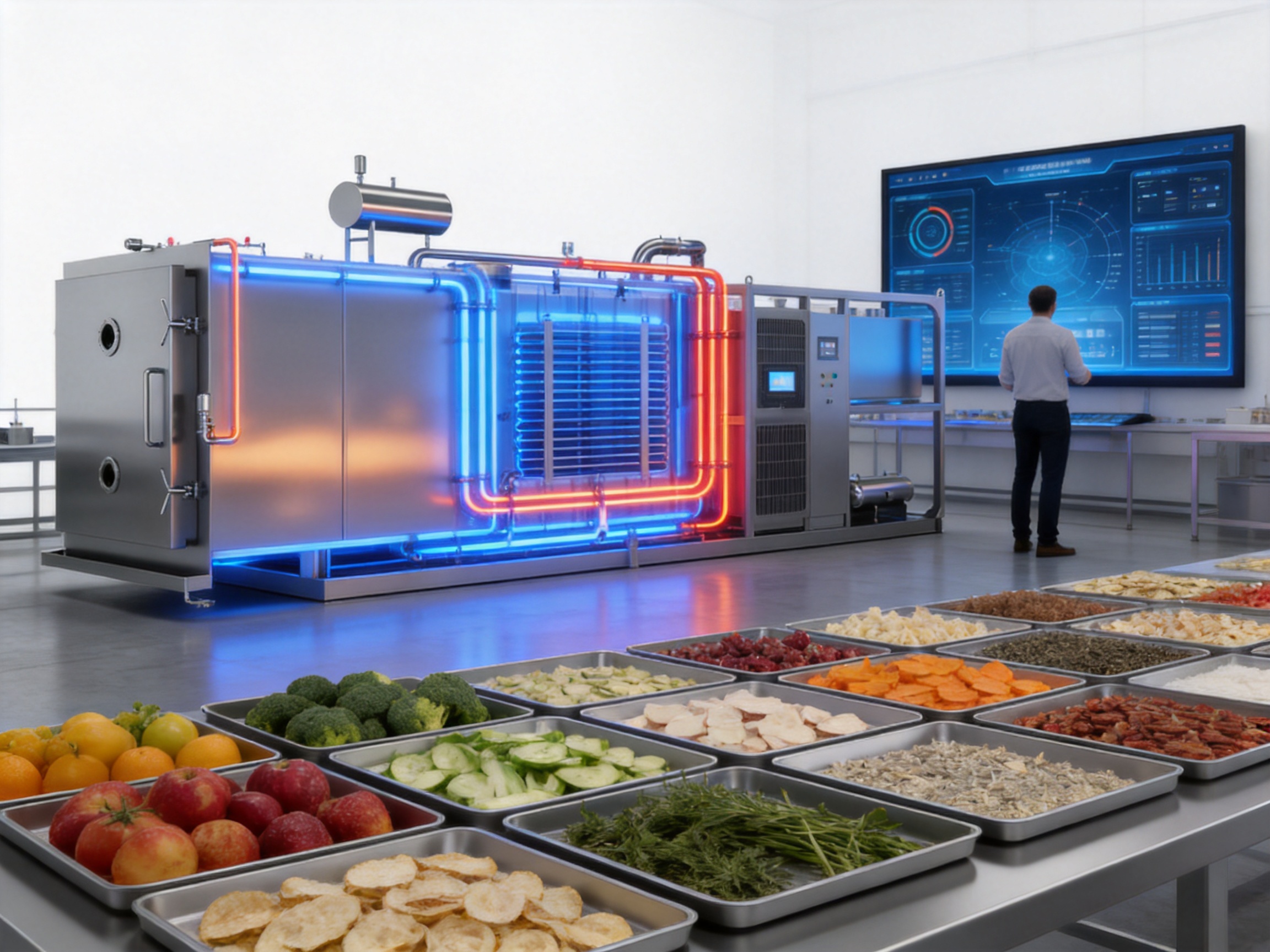
The BLK-FD-40 offers several practical advantages over conventional freeze-drying configurations. The first is its integrated pre-freezing and drying operation. A separate pre-freezing room may provide flexibility, but it also adds equipment, floor area, product transfers, and operating steps. For medium-sized facilities, integration can make the production route simpler and more compact.
The second advantage is the rectangular chamber. Circular chambers remain suitable for many applications, but the rectangular format can make better use of workshop space and align more efficiently with trays and radiant panels. This is especially valuable where the customer must install the machine in an existing building.
The third advantage is the double-layer radiant panel system. Independent cooling and heating circuits can support more uniform shelf temperatures and facilitate the transition between freezing and drying. Better temperature consistency can improve product uniformity and reduce the risk that one area of the batch is overprocessed while another remains under-dried.
The fourth advantage is the focus on energy recovery. A traditional freeze dryer may discharge useful cold or heat during different operating stages. The BLK-FD-40 can use residual cold recovery as a standard feature and offer heat recovery as a customized option. These technologies can reduce operating costs when matched to the product and cycle.
The fifth advantage is scalability. The BLK-FD-40 is larger than laboratory and small pilot equipment but more compact than a very large production line. It can serve as a commercial production machine, a central development platform, or a bridge between pilot production and future expansion.
The sixth advantage is the manufacturer’s ability to provide customized dimensions and integrated engineering support. Customers may need adaptations for building restrictions, utility conditions, product type, automation level, language, or local standards. A supplier with in-house research, engineering, manufacturing, installation, and service resources may be better positioned to coordinate those changes.
Freeze-dried product quality is determined by the relationship between formulation, loading conditions, freezing behavior, heat transfer, pressure control, and drying time. Equipment features alone cannot guarantee a successful product, but a stable machine provides the foundation for repeatable process development.
The BLK-FD-40’s shelf arrangement and radiant panel system are intended to provide consistent heat transfer over the available drying area. Operators should maintain consistent tray fill weights, product layer thickness, spacing, and loading patterns. If trays are overloaded or arranged inconsistently, differences in vapor flow and heat transfer may occur.
Product temperature should be monitored during process development. The maximum allowable product temperature during primary drying depends on the formulation and its collapse or eutectic temperature. The shelf temperature and chamber pressure should be selected to maintain a safe margin while providing reasonable sublimation speed.
After primary drying, secondary drying removes more tightly bound moisture. The target depends on the product’s intended storage life and packaging system. For food products, water activity and texture may be more important than a single moisture number. For pharmaceutical or biological products, residual moisture, potency, sterility, and stability requirements may be defined by regulatory procedures.
Process validation may include repeatability studies, temperature mapping, vacuum tests, leak tests, load pattern studies, and product quality testing. Manufacturers operating under regulated conditions should define documentation and validation requirements before final equipment selection.
A successful installation begins with a detailed site survey. The floor must support the approximately 14.5-tonne equipment weight together with dynamic and maintenance loads. The route from the delivery entrance to the final installation position must accommodate the machine’s dimensions of approximately 8,600 by 2,300 by 3,400 millimeters, as well as lifting and positioning equipment.
The building must provide suitable electrical power, water connections where required, drainage, ventilation, ambient temperature control, and service access. Refrigeration equipment can reject heat into the surrounding area, so ventilation and room temperature should be evaluated during design.
Operators should be trained in loading, door operation, vacuum procedures, recipe selection, alarm response, cleaning, defrosting, and emergency shutdown. Maintenance personnel should understand refrigeration safety, vacuum pump service, seal inspection, sensor calibration, filter replacement, valve maintenance, and control system diagnostics.
Preventive maintenance should be based on operating hours and equipment condition. Important inspection points include door gaskets, chamber seals, shelf connections, temperature sensors, pressure sensors, vacuum lines, condenser surfaces, refrigeration oil, compressor condition, pump performance, electrical terminals, and safety interlocks.
Cleaning procedures depend on the product and regulatory environment. Food and pharmaceutical applications may require documented cleaning methods, compatible cleaning agents, drainage planning, and verification of residues. The chamber and trays should be designed and operated to minimize areas where product can accumulate.
Spare parts planning is also important. Customers should identify critical components such as door seals, sensors, valves, vacuum pump service kits, filters, relays, control components, and refrigeration parts. Availability of local technical support and response times should be included in the purchase agreement.
Freeze-drying is widely used for fruits and vegetables because it can retain shape, color, aroma, and a porous structure that supports rapid rehydration. The BLK-FD-40 can be used for products such as berries, tropical fruit, mushrooms, corn, peas, vegetable pieces, herbs, and prepared ingredients, subject to recipe development.
Prepared meals and specialty foods can also benefit from freeze-drying. The process can reduce weight while extending storage stability when combined with suitable packaging. It may be used for instant meals, emergency food, camping products, premium snacks, soup ingredients, and nutritional products.
For agricultural processors, the ability to handle seasonal raw materials can be valuable. A medium-sized freeze dryer can allow producers to process harvests during peak periods and create shelf-stable products for later distribution. However, capacity planning must consider harvest volume, raw material preparation, loading labor, batch cycle time, and packaging throughput.
The equipment may also support high-value agricultural products where preservation of sensory characteristics is important. Freeze-dried materials are often sold as premium products because of their appearance, light weight, flavor retention, and rehydration properties.
Medicinal herbs and botanical materials can be sensitive to heat, oxidation, and prolonged exposure to moisture. Freeze-drying may help preserve active components and physical structure when the correct formulation and temperature profile are used. The BLK-FD-40 can provide a controlled platform for such materials, but the process must be developed according to the characteristics of each product.
Biological products may require particularly careful control of freezing and drying conditions. Formulation, protectants, container type, fill volume, sterility, and storage requirements can all affect the process. Customers in regulated industries should confirm the equipment’s suitability for their validation, documentation, cleaning, and data integrity systems.
Selected chemical products may also be processed by vacuum freeze-drying when they are temperature-sensitive or require the removal of water without conventional heating. Chemical compatibility, solvent vapor handling, material safety, explosion protection, and environmental controls must be evaluated before processing any chemical formulation.
Because the BLK-FD-40 is a batch system, it can offer flexibility for companies producing multiple products or changing formulations. The same machine can be used for development, market testing, and commercial batches, provided that cleaning, segregation, and process changeover procedures are appropriately managed.
Potential buyers should begin by defining the product and target output rather than selecting equipment solely by chamber area. Important questions include the mass of each batch, initial moisture, desired final moisture, tray fill height, acceptable cycle time, annual operating hours, number of working days, and expected future growth.
Product samples should be tested to establish freezing behavior and drying requirements. The customer should request a technical proposal showing the expected loading arrangement, shelf spacing, condenser capacity, vacuum system, refrigeration capacity, utility consumption, cycle assumptions, and optional systems.
The customer should also review the equipment layout. The stated overall dimensions do not represent the complete service envelope. Space may be required for doors, pumps, control cabinets, refrigeration components, maintenance access, loading equipment, and operator movement.
For international projects, the buyer should verify applicable electrical standards, pressure equipment requirements, refrigerant regulations, safety certification, language requirements, documentation, customs classification, and service arrangements. The supplier should provide manuals, drawings, electrical diagrams, component lists, recommended spare parts, and commissioning procedures.
Energy performance should be evaluated using a defined test condition. The customer should ask how energy savings are calculated and what baseline is used. Product load, ambient temperature, cycle duration, utility temperatures, and recovery system operation should be documented so that different suppliers can be compared fairly.
The BLK-FD-40 is a medium-sized batch freeze dryer designed to freeze and dry products under controlled vacuum conditions. It is intended for commercial and industrial processing of food, agricultural products, medicinal materials, biological products, and selected chemical materials.
The equipment provides approximately 40 square meters of freeze-drying area. The actual usable loading area depends on tray dimensions, shelf spacing, product height, and the selected loading arrangement.
The standard loading capacity is approximately 400 kilograms, and the liquid loading capacity is approximately 800 liters. Actual capacity varies according to product density, moisture content, loading height, tray arrangement, and process requirements.
No separate pre-freezing room is required for the integrated operating configuration. The machine is designed to complete pre-freezing and drying in the same chamber. A separate cold room may still be useful for certain production strategies, but it is not essential to the basic integrated process.
The rectangular chamber is intended to improve workshop space utilization, align efficiently with rectangular trays and radiant panels, and provide a practical layout for medium- and small-scale production. It may also reduce unused internal and external space compared with some circular chamber arrangements.
The double-layer radiant panels contain independent cooling and heating circuits. The cooling circuit supports freezing, while the heating circuit supplies controlled energy during drying. The design is intended to improve shelf temperature uniformity and support efficient process transitions.
The specified ultimate vacuum level is no more than 10 Pa. Actual operating pressure during a production cycle depends on vapor load, product temperature, condenser performance, pump capacity, chamber sealing, and the selected recipe.
The BLK-FD-40 includes a residual cold recovery system as standard. It can also be configured with heat recovery and heat pump economizer technologies. These systems reuse available cold or heat and can reduce compressor and heating demand under suitable operating conditions.
The manufacturer states that length, width, and height can be customized within the engineering limitations of the equipment. Customization should be confirmed during the layout and technical proposal stage because it may affect capacity, transport, structural design, utilities, and cost.
The equipment can be considered for medicinal and biological applications, but suitability depends on the product, regulatory requirements, cleaning procedures, validation approach, sterility expectations, and documentation system. Customers should conduct product trials and define all compliance requirements before purchase.
The manufacturer states that remote monitoring through a mobile application is available. The final configuration should be reviewed for network security, user permissions, data recording, alarm management, and integration with the customer’s information technology policies.
Customers should confirm product capacity, cycle assumptions, utility requirements, chamber layout, shelf arrangement, energy consumption, certifications, installation conditions, acceptance testing, warranty, training, spare parts, maintenance, and after-sales service responsibilities.
The BLK-FD-40 is designed for manufacturers seeking a medium-scale freeze-drying system that combines production capacity, flexible applications, practical layout, and energy-conscious operation. Its 40-square-meter drying area, approximately 400-kilogram standard loading capacity, 800-liter liquid capacity, integrated pre-freezing and drying process, and ultimate vacuum specification of no more than 10 Pa make it suitable for a broad range of commercial batch applications.
The equipment’s strongest technical features include its rectangular chamber, double-layer radiant panels, independent cooling and heating circuits, residual cold recovery system, optional heat recovery, heat pump economizer, and intelligent central control system. Together, these features are intended to improve temperature uniformity, reduce unnecessary energy use, simplify operation, and make better use of available workshop space.
Its value is further supported by the manufacturer’s experience in refrigeration and freeze-drying, proprietary technology development, manufacturing facilities, engineering resources, international equipment orientation, and full project support from design through commissioning and after-sales service.
As with all freeze-drying projects, final performance depends on the product and process. A responsible equipment selection should include product trials, capacity calculations, energy evaluation, site planning, acceptance criteria, and validation requirements. When properly matched to the application, the BLK-FD-40 can serve as a reliable platform for expanding freeze-dried product production while maintaining flexibility for future development.
1. Manufacturer technical specification sheet for the BLK-FD-40 medium-sized freeze dryer.
2. Manufacturer application materials concerning integrated pre-freezing and vacuum freeze-drying systems.
3. Manufacturer engineering information on double-layer radiant panels and independent cooling and heating circuits.
4. Manufacturer technical information on residual cold recovery, heat recovery, and heat pump economizer systems.
5. Manufacturer company profile and corporate information concerning research, manufacturing, patents, certifications, and international projects.
6. General principles of vacuum freeze-drying, sublimation, primary drying, secondary drying, and product process development.
7. General guidance for freeze-dryer installation, commissioning, preventive maintenance, temperature mapping, and process validation.
 2026/05/28
 2026/05/28
2026/05/28
2026/05/28
2026/05/28
2026/05/28


 Custom Industrial Lyophilizer Freeze Dryer Manufacturers





 English
 русский
 Español
 Français
 Deutsch
 عربى
عربى