/blog/
News
Products & Solutions
CONTACT US

+86-18068757376

blk@jsblk.com

No. 29 North Tongjiang Road, Xinbei District, Changzhou City, Jiangsu Province, China
The global market for premium instant coffee is moving toward products that combine convenience with the sensory qualities of freshly brewed coffee. Consumers increasingly expect instant coffee to dissolve quickly, retain its natural aroma, and preserve the flavor complexity associated with specialty beans. At the same time, coffee processors need equipment that can deliver consistent production, lower operating costs, strong energy performance, and reliable automation at industrial scale.
A fully automatic instant coffee freeze-drying production line addresses these requirements by integrating concentrate preparation, rapid freezing, crushing, granulation, weighing, conveying, vacuum freeze-drying, pallet discharge, and product recovery into one coordinated system. Instead of treating freeze-drying as an isolated operation, the line connects the main process stages into a continuous or highly coordinated production workflow. This design improves material handling, reduces manual intervention, supports stable product quality, and simplifies production management.
The production line described in this article was designed for an annual output of approximately 4,000 metric tons of freeze-dried coffee powder. It is intended for large-scale coffee processors, specialty coffee producers, food manufacturers, and investors developing premium instant coffee projects. Its process concept combines low-temperature cold extraction with continuous freeze-drying technology, providing a solution for manufacturers that want to expand capacity without sacrificing aroma retention or finished-product performance.
Instant coffee is produced by extracting soluble coffee components from roasted and ground beans, concentrating the extract, drying it, and converting the dried material into a form that can be packaged and reconstituted. The drying stage has a major influence on the final product. Excessive heat can reduce volatile aroma compounds, alter acidity, and create a flatter taste profile. Freeze-drying is widely used for higher-value instant coffee because it removes water from a frozen product under vacuum and at low temperature.
During freeze-drying, the concentrated coffee extract is frozen, and the ice is then removed through sublimation. Sublimation changes ice directly into vapor without passing through the liquid state. Because the product remains at a comparatively low temperature during the principal drying stage, many of the aroma and flavor characteristics developed during roasting and extraction can be retained more effectively than with conventional high-temperature drying processes.
The resulting coffee generally has a porous structure. This structure enables fast rehydration and can support a high dissolution rate when the product is placed in hot or cold water. It also makes it possible to produce recognizable coffee granules rather than only fine powder. Granular products are convenient for packaging, dosing, and consumer use, while their appearance can communicate premium quality.
However, freeze-drying is technically demanding. It requires accurate control of freezing temperature, product thickness, vacuum level, shelf temperature, condenser performance, drying time, and material transfer. An industrial line must also prevent moisture pickup between stages. Any weakness in conveying, weighing, pallet handling, or discharge can reduce the benefit of the drying chamber itself. For this reason, a complete production line must be engineered as an integrated system rather than as a collection of unrelated machines.
The line consists of nine principal process sections:
1. Coffee liquid concentrate
2. Quick-freezing tunnel
3. Crushing and granulation platform
4. Metering and weighing system
5. Conveying platform
6. Vacuum freeze-drying chamber
7. Pallet emptying system
8. Finished coffee granule collection
9. Recovery conveying system
These sections are arranged to create a controlled material path from concentrated coffee liquid to finished freeze-dried granules. Depending on the project configuration, the line can be connected with upstream extraction, clarification, concentration, storage, and blending systems, as well as downstream screening, packaging, metal detection, and warehouse handling equipment.
The fully automatic concept is based on coordinated control of production steps. Operators can monitor key operating conditions, manage recipes, adjust process parameters, review alarms, and track production information through a centralized control system. Automated weighing and conveying help reduce human contact with the product and limit variation in material loading. Automatic pallet handling also improves safety and reduces the physical demands associated with transferring frozen coffee material.
For a large-scale coffee factory, the benefit of automation is not limited to labor reduction. It also contributes to repeatability. Consistent loading, stable residence times, accurate dosing, and synchronized transfer make it easier to maintain the same product specifications across different batches or production cycles.
The quality of the final freeze-dried coffee begins before the product reaches the freezing tunnel. Coffee beans, roast profile, grinding conditions, extraction method, clarification, and concentration all influence the chemical and sensory properties of the liquid concentrate. A freeze dryer cannot restore aroma compounds that have already been lost during upstream processing. Therefore, the extraction and concentration stages must be designed to protect the coffee’s natural characteristics.
The production concept described here uses low-temperature cold extraction as one of its core technologies. This approach is intended to limit thermal stress during extraction and preserve a greater proportion of the coffee’s native aromatic compounds. According to the supplied project information, the process can retain more than 90% of the coffee’s native aromatic compounds while achieving an extraction concentration of approximately 40% to 45%.
A concentrated liquid feed offers several process advantages. Removing part of the water before freezing reduces the amount of ice that must later be sublimated. This can lower the overall drying load and help improve the productivity of the freeze-drying system. A stable concentrate also makes it easier to control the thickness and mass of the material distributed onto trays or pallets.
Feed consistency is particularly important in a fully automatic line. Variations in solids content, viscosity, temperature, or dissolved gas can affect freezing behavior and drying time. For this reason, the concentrate section should be operated with appropriate measurement and control instruments. Typical monitoring points may include feed temperature, concentration, flow rate, tank level, and product pressure.
The concentration target must be selected according to the coffee formulation, equipment capacity, desired granule structure, and packaging requirements. A higher solids concentration can reduce the water load, but it may also increase viscosity and make uniform spreading more difficult. A well-designed line balances these factors to obtain stable freezing and efficient sublimation.
Premium instant coffee is judged by more than yield. Aroma intensity, acidity, bitterness, body, aftertaste, color, and dissolution behavior all influence customer acceptance. Low-temperature processing helps protect volatile compounds, while rapid transfer between extraction, concentration, freezing, and drying minimizes unnecessary exposure to heat and oxygen.
Process design should also consider the time that the concentrate remains in holding tanks. Excessive residence time can affect flavor and may encourage changes in the liquid before freezing. Insulated tanks, controlled temperatures, hygienic design, and suitable cleaning procedures support product stability.
When the concentrate reaches the freezing stage with consistent solids content and temperature, the downstream freeze-drying cycle becomes easier to control. This connection between upstream preparation and downstream drying is one of the main reasons why an integrated production line can outperform a series of disconnected machines.
The quick-freezing tunnel prepares the coffee concentrate for sublimation. Rapid and uniform freezing is essential because ice crystal size affects the internal structure of the dried product. Faster freezing generally produces smaller ice crystals, while slower freezing can create larger crystals. The final pore structure influences drying resistance, granule strength, dissolution rate, and appearance.
A quick-freezing tunnel provides a controlled environment in which the coffee concentrate can be frozen to the required temperature before entering the freeze-drying chamber. The tunnel may be configured for tray, belt, or pallet loading according to the overall line design. Its key functions include removing heat rapidly, maintaining a stable low-temperature environment, and delivering frozen material with consistent physical characteristics.
Uniform freezing is particularly important for large-scale production. If one area of a tray is frozen more slowly than another, the material may require different drying conditions across the same load. This can result in residual moisture variation, uneven color, fragile granules, or under-dried sections. Proper product distribution and controlled air circulation help reduce these differences.
The freezing stage also affects energy performance. Efficient refrigeration, insulation, door management, and heat exchange reduce unnecessary energy loss. Since the line is designed for high production capacity, even small improvements in refrigeration efficiency can create meaningful annual savings.
Rapid freezing helps lock in the distribution of coffee solids and water. It can reduce the time available for unwanted separation or migration within the product. After freezing, the material should remain at a sufficiently low temperature during transfer so that it does not partially thaw before vacuum drying.
The transfer path between the tunnel and the freeze-drying chamber must therefore be carefully designed. Insulated conveyors, coordinated pallet movement, and automatic scheduling help maintain product condition. Reducing manual handling also lowers the risk of temperature fluctuation and physical damage.
After quick freezing, the coffee material is transferred to the crushing and granulation platform. This stage converts the frozen mass into pieces or granules with a suitable size and thickness for efficient freeze-drying. The objective is not simply to break the material apart. It is to create a repeatable product geometry that allows heat to reach the frozen material and water vapor to escape during sublimation.
Granule size affects several finished-product characteristics. Smaller pieces may dry more quickly, but excessive fines can create dust, reduce visual appeal, and complicate packaging. Larger pieces may offer a premium appearance, but they can require longer drying times and may produce higher residual moisture if the cycle is not adjusted. The granulation platform should therefore be matched to the target product specification.
Controlled crushing can also improve loading density. When material is distributed evenly across the trays or pallets, the chamber can be used more efficiently. Uneven piles create thick areas that dry slowly and thin areas that may become over-dried. Accurate granulation and spreading contribute to more consistent heat and mass transfer.
For specialty coffee products, granulation should preserve the desired sensory and visual identity. The process must avoid excessive mechanical stress that could create unnecessary fines or generate heat. Equipment surfaces and contact components should be selected for hygienic operation and easy cleaning.
The metering and weighing section controls how much coffee material enters each tray, pallet, or drying load. Accurate loading is essential because the freeze-drying cycle is designed around a defined product mass and thickness. Overloading can extend the drying time and cause residual moisture variation. Underloading reduces chamber productivity and can increase the cost per kilogram.
Automated weighing provides a more consistent alternative to manual filling. The control system can compare actual loading weight with the target value and adjust the feeding operation. This improves batch-to-batch repeatability and makes production data easier to document.
Material distribution must also be uniform across the loading surface. A consistent layer helps achieve similar freezing conditions and drying behavior throughout the pallet. Where the product is formed into granules, controlled distribution can prevent clumping and support a more predictable finished structure.
Accurate metering offers benefits beyond process control. It improves yield accounting, reduces giveaway, supports inventory management, and simplifies packaging preparation. In a large plant, even small weighing errors can represent significant material losses over a full year.
Food-contact equipment should be designed with hygienic principles in mind. Smooth surfaces, accessible inspection points, appropriate seals, and easy-clean construction can reduce the risk of product accumulation. The line should also support documented sanitation procedures and controlled maintenance.
Automatic weighing and conveying reduce the number of direct contact points between operators and coffee. This can improve hygiene, protect the frozen material, and support a more organized factory environment. It also allows personnel to focus on monitoring, quality assurance, maintenance, and process optimization rather than repetitive manual handling.
The conveying platform links the major process sections. It transfers coffee from freezing to granulation, from granulation to weighing, from weighing to the freeze-drying chamber, and from the chamber to discharge and recovery. Because freeze-dried coffee is sensitive to moisture, the conveying system must be designed to limit exposure to humid ambient air.
Material flow is one of the most important differences between a basic freeze dryer and a fully integrated production line. A standalone machine may provide excellent vacuum drying performance, but the total factory output can still be limited by manual transport, waiting time, loading delays, or inconsistent pallet handling. An automated conveying platform reduces these bottlenecks.
The line can be organized around production scheduling logic. Empty pallets are supplied to the loading area, filled with accurately metered frozen coffee, moved into the chamber, and discharged after the cycle. The control system can coordinate these movements with chamber availability and upstream production rates.
Well-planned conveying also improves worker safety. Frozen pallets and loaded trays can be heavy and difficult to move manually. Automated transfer reduces lifting, pushing, and repeated movement in cold environments. It also makes the factory layout more orderly and improves access for inspection and maintenance.
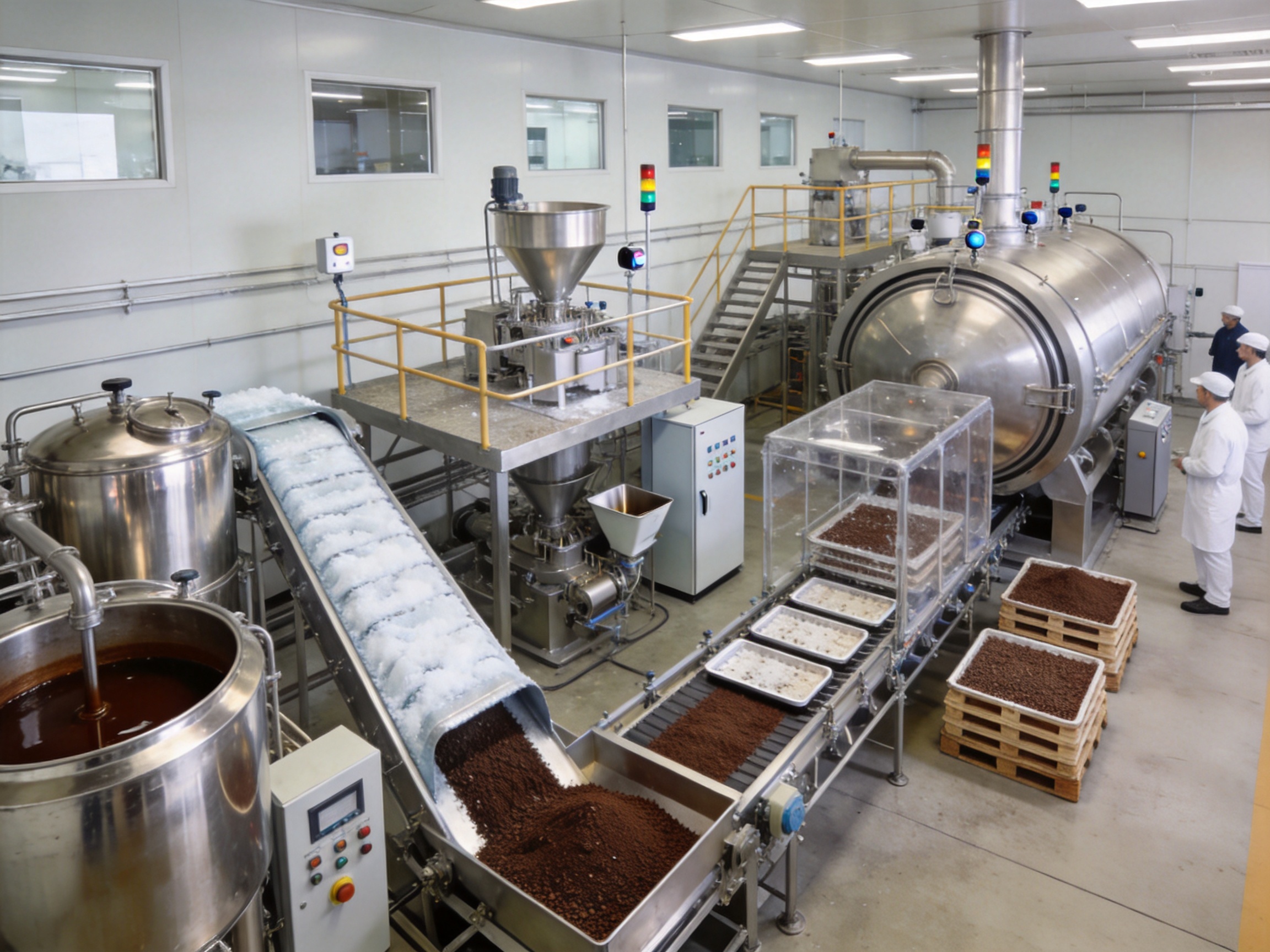
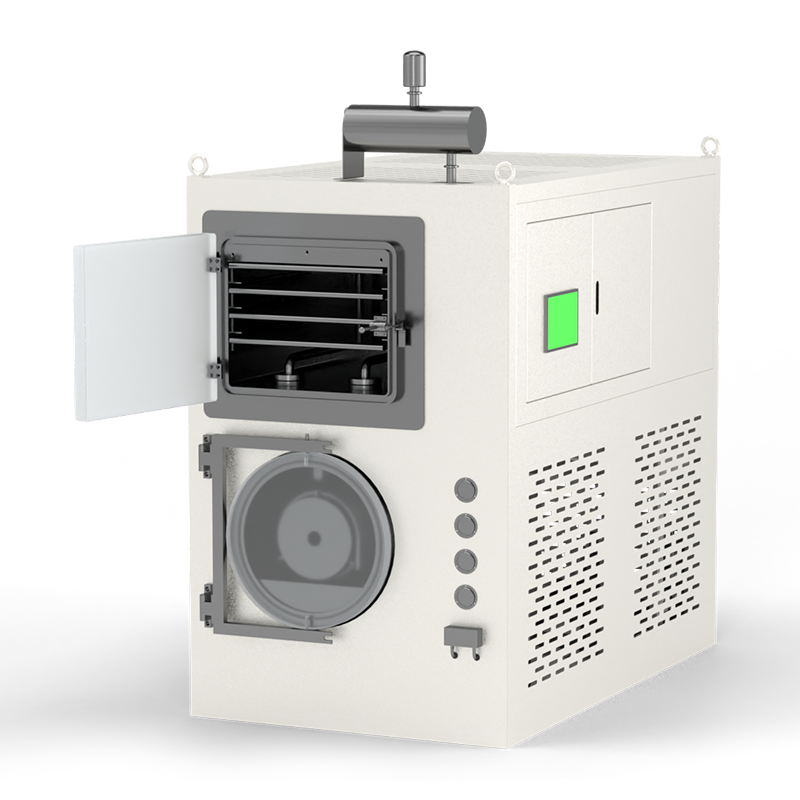
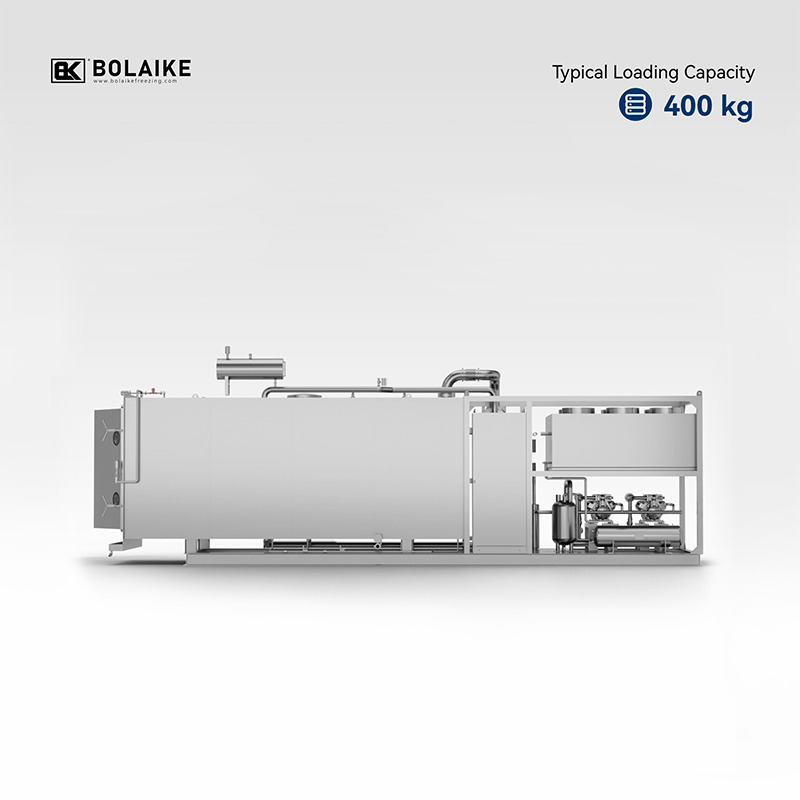
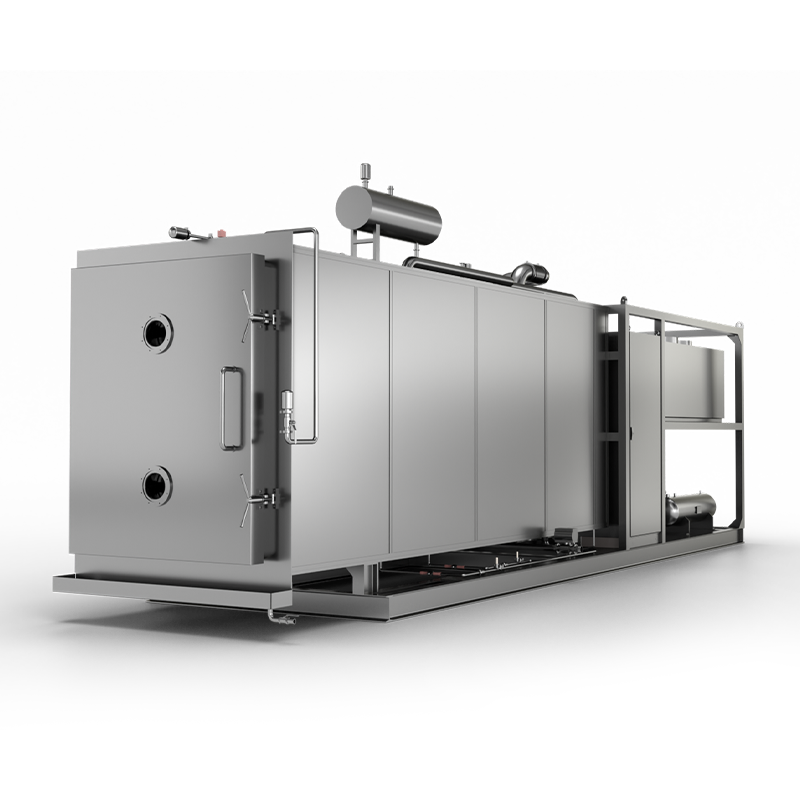
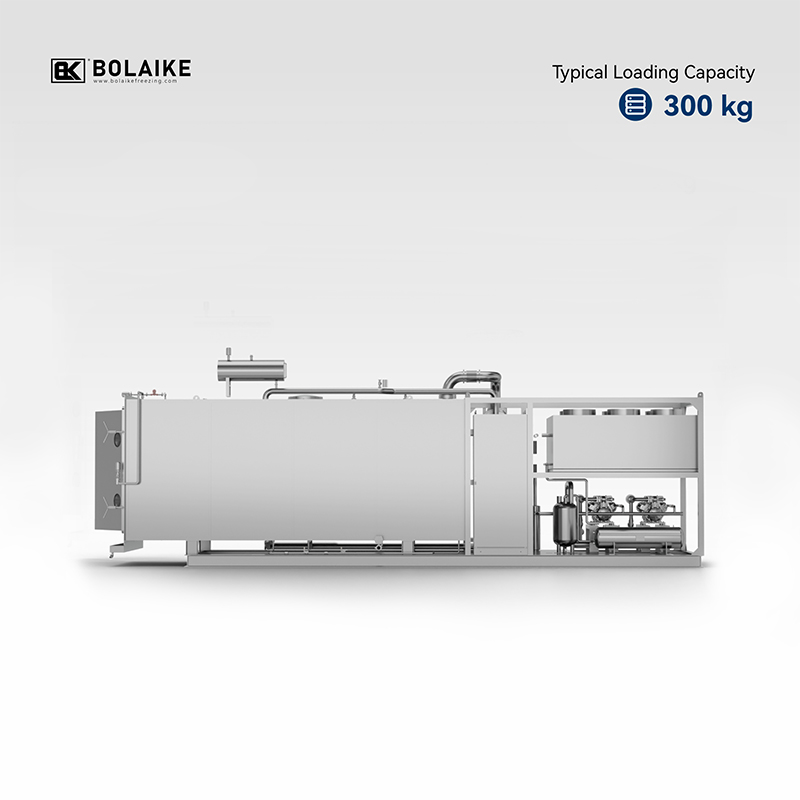
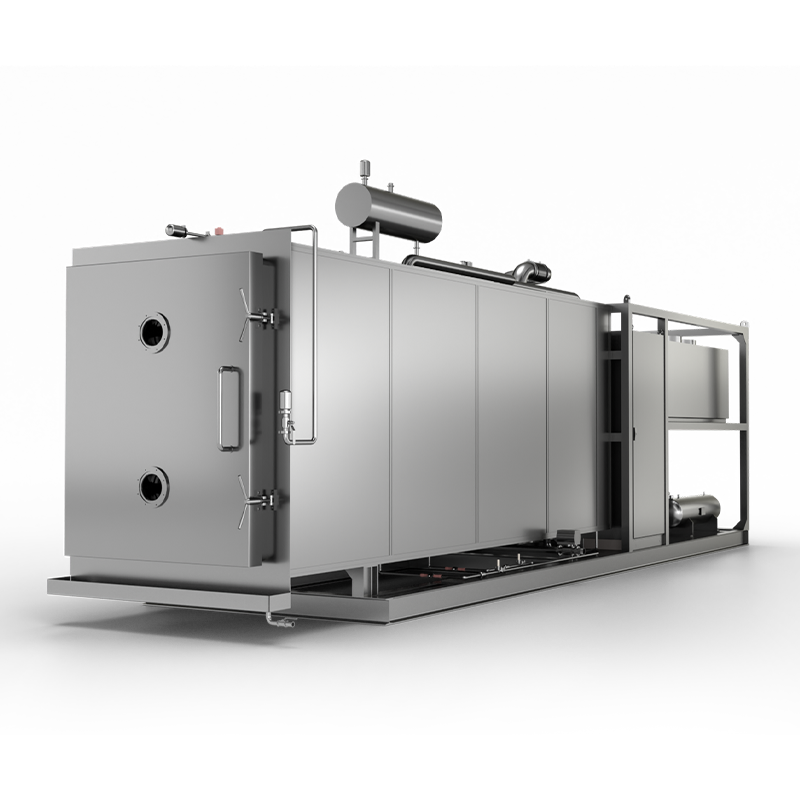
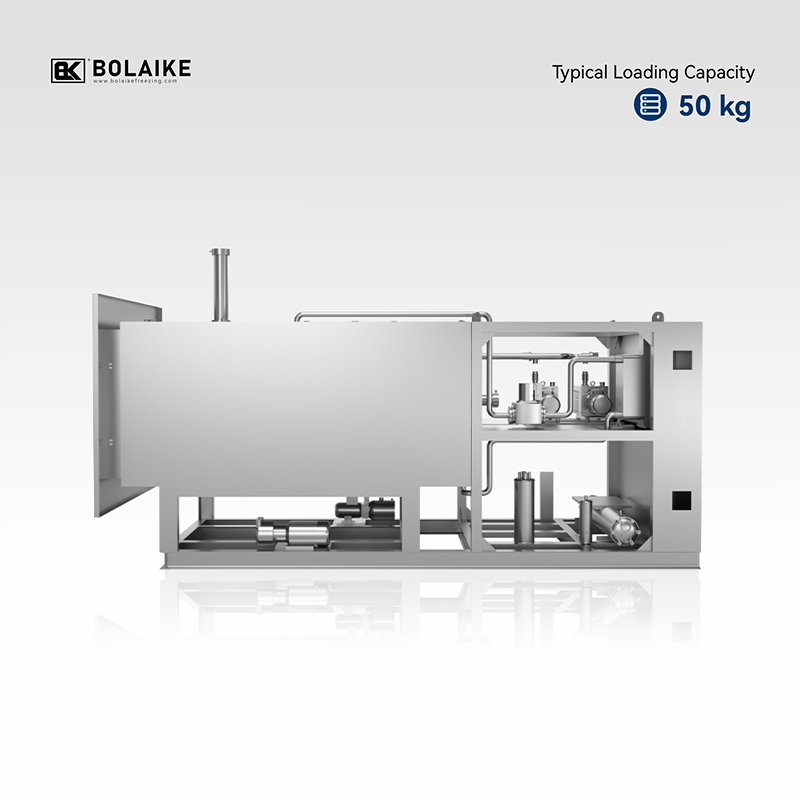
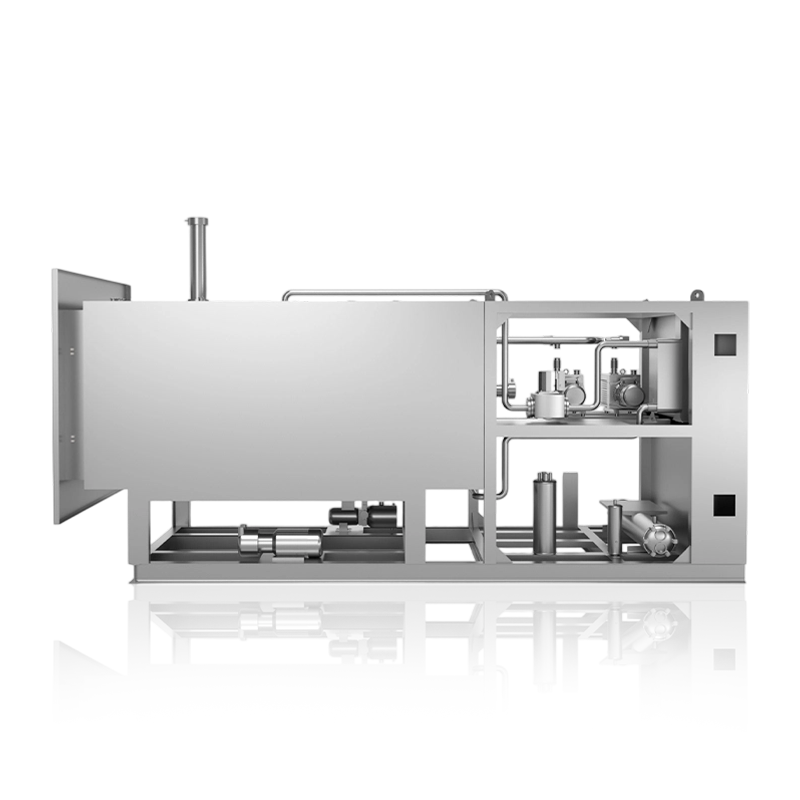
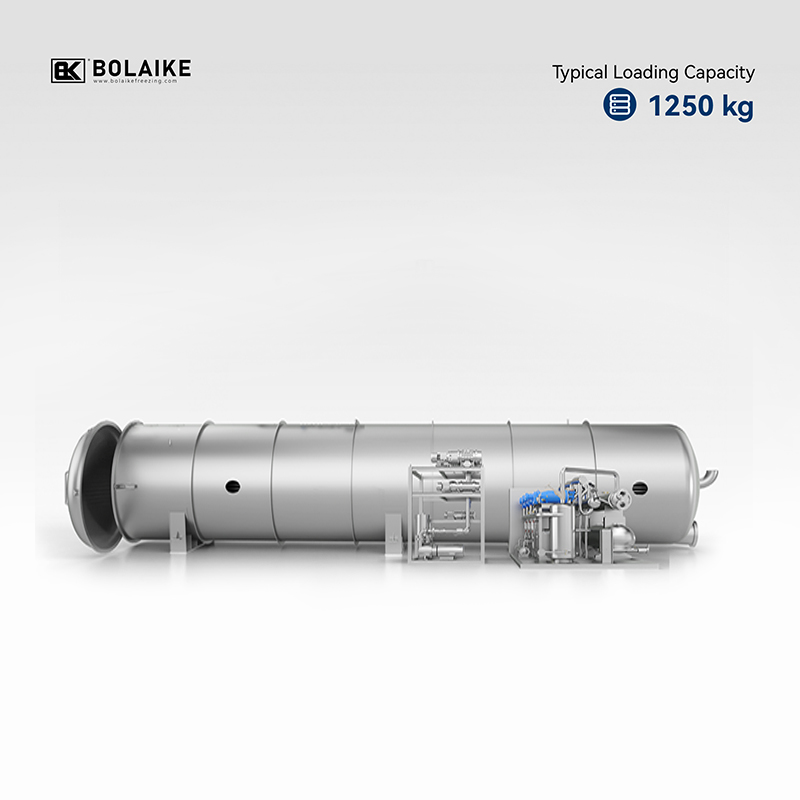
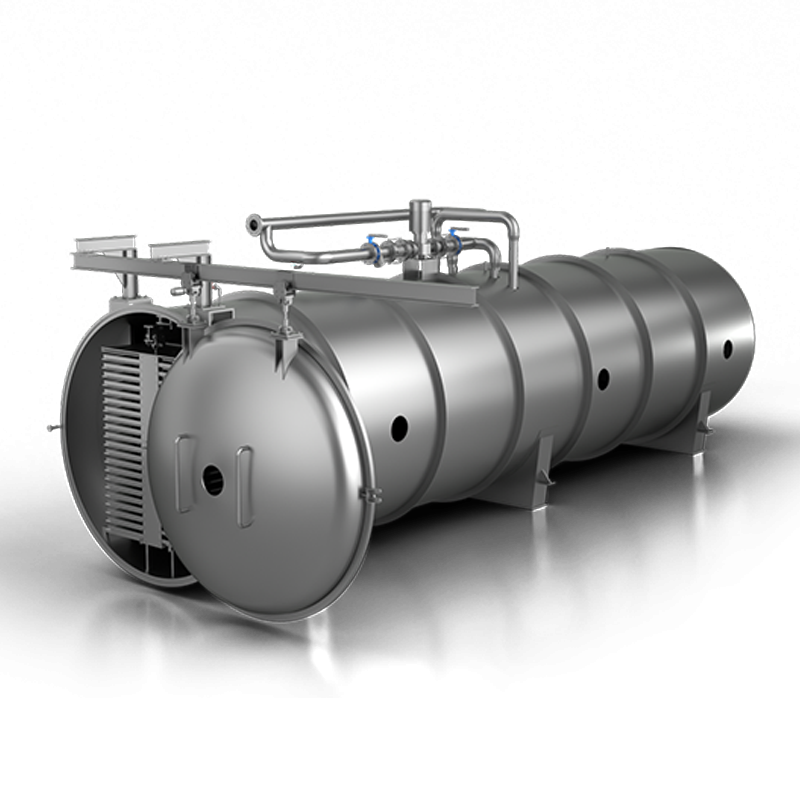
The vacuum freeze-drying chamber is the central process unit. After the coffee has been frozen and prepared in an appropriate granule or layer format, it is placed inside the chamber. The chamber is evacuated to create a low-pressure environment, and controlled heat is supplied through shelves or another product-contact system. The ice within the coffee sublimates, and the resulting water vapor is captured by a low-temperature condenser.
The chamber must maintain a balance between product temperature, shelf temperature, chamber pressure, condenser capacity, and drying time. If heat input is too low, the process may be unnecessarily slow. If heat input is too high, the product may collapse, lose quality, or experience localized melting. Accurate control is therefore necessary to obtain efficient drying without damaging the coffee structure.
The supplied production information indicates that the continuous freeze-drying technology can reduce the processing cycle to approximately 6 to 8 hours. A single line is described as capable of achieving a daily output of around 13.2 metric tons under the stated project conditions. Actual performance depends on feed concentration, product formulation, loading weight, granule dimensions, operating schedule, utility conditions, and final moisture specifications.
The line is also described as yielding approximately 550 kilograms of freeze-dried powder per hour, compared with around 450 kilograms over a 24-to-30-hour cycle for conventional models. These figures illustrate the intended productivity advantage of the integrated process. They should be confirmed during technical design, pilot testing, and acceptance procedures for each specific coffee formulation.
Traditional freeze-drying systems often depend on long batch cycles and substantial manual intervention. Each batch may require loading, freezing, chamber preparation, drying, unloading, cleaning, and product transfer. The process can be reliable, but the factory may experience extended idle periods between stages.
A continuous or highly coordinated freeze-drying approach seeks to reduce these interruptions. While the vacuum chamber itself may still operate through controlled cycles, upstream and downstream material handling can be organized continuously. The result is a more stable production rhythm, better equipment utilization, and improved synchronization between freezing, drying, and packaging.
The principal advantage is not only a shorter nominal drying time. It is the reduction of non-productive time across the whole process. Less waiting, fewer manual transfers, and more consistent loading can increase effective output even when the fundamental sublimation mechanism remains the same.
The vacuum system removes non-condensable gases and maintains the pressure required for sublimation. The condenser captures vapor released from the product and protects the vacuum system from excessive moisture loading. Stable condenser performance is essential because a saturated or improperly controlled condenser can slow drying and reduce process stability.
Industrial equipment must be selected according to the expected water load, product throughput, chamber volume, cycle time, and operating temperature. Refrigeration capacity, vacuum pump selection, sealing design, and defrost procedures all influence reliability. Regular inspection and preventive maintenance are necessary to preserve performance over the equipment’s service life.
Once the freeze-drying cycle is complete, the pallets or trays must be emptied efficiently. The pallet emptying section transfers the dry coffee from the drying surface to the finished-product conveying system. This stage should minimize breakage, dust generation, and exposure to humid air.
Freeze-dried coffee is porous and relatively fragile compared with wet frozen material. Excessive impact can create fines or alter the desired granule shape. Controlled discharge helps preserve the product’s appearance and supports consistent downstream screening and packaging.
The recovery conveying section collects the finished granules and directs them toward inspection, temporary storage, blending, or packaging. Depending on the final product design, the line may include sieving, particle-size classification, fines management, metal detection, and controlled filling into intermediate containers.
Moisture protection is especially important after drying. The coffee should not remain exposed to ambient air for longer than necessary because the porous structure can absorb moisture quickly. Enclosed conveying, controlled room conditions, and rapid packaging help protect crispness, dissolution behavior, and shelf stability.
The target finished product can be a powder, granule, or a blend of particle sizes. A premium freeze-dried coffee product typically requires:
• Low and uniform residual moisture.
• Rapid dissolution in water.
• Stable aroma and flavor.
• Attractive color and granule structure.
• Controlled particle-size distribution.
• Good resistance to excessive breakage during handling.
• Compatibility with the selected packaging format.
The production line supports these goals by controlling the material from concentrate through freezing, granulation, drying, and recovery. Final quality still depends on raw material selection, formulation, process recipes, packaging conditions, and quality-control procedures.
The fully automatic production line offers several advantages for manufacturers seeking to produce premium instant coffee at industrial scale.
The project configuration is designed for an annual output of approximately 4,000 metric tons of freeze-dried coffee powder. The stated daily output is approximately 13.2 metric tons per line, while the reported hourly output is around 550 kilograms. This capacity allows a producer to serve large private-label contracts, retail brands, food-service customers, and export markets.
High capacity also improves the economic utilization of supporting infrastructure. Extraction systems, refrigeration systems, utilities, laboratories, warehouses, and packaging lines can be organized around a stable industrial production schedule.
The stated 6-to-8-hour processing cycle is significantly shorter than the 24-to-30-hour cycle associated with conventional models in the supplied comparison. A shorter cycle can increase equipment availability and reduce the amount of product held in intermediate storage.
Cycle time should always be evaluated together with product quality. The objective is not to dry as quickly as possible under all circumstances, but to achieve the required residual moisture and sensory profile with an efficient and repeatable process. Automated control makes it possible to optimize this balance.
Energy efficiency is a major consideration in freeze-drying because refrigeration, vacuum generation, heating, and condenser operation require substantial power. The supplied performance information reports energy consumption of approximately 3.6 kilowatt-hours per kilogram, compared with about 11.1 kilowatt-hours per kilogram for conventional equipment. It also indicates an overall energy reduction of approximately 30% to 40% under the relevant operating conditions.
Energy savings may result from several coordinated design features: higher solids concentration before drying, faster freezing, improved chamber utilization, shorter cycles, efficient refrigeration, optimized vacuum operation, and reduced idle time. The actual value depends on local electricity prices, operating hours, product formulation, and utility conditions.
With an automation rate above 85 percent, the production line is designed to reduce repetitive manual work. The supplied information indicates a labor-cost reduction of approximately 20 percent. Automation can lower the number of operators required for pallet movement, weighing, loading, unloading, and routine material transfer.
Labor savings should not be interpreted as the elimination of skilled personnel. A large freeze-drying line still requires trained operators, electricians, refrigeration technicians, maintenance personnel, quality specialists, and production supervisors. Automation changes the nature of labor by moving personnel away from repetitive handling and toward process oversight, troubleshooting, sanitation, and continuous improvement.
The line is designed to preserve floral and fruity acidity profiles associated with high-quality coffee. The supplied data reports a dissolution rate of approximately 99 percent and states that the finished coffee can meet international Specialty Coffee Association-oriented quality expectations. Specific quality compliance should be verified through laboratory testing and sensory evaluation for each product.
Quality consistency is supported by low-temperature extraction, controlled freezing, accurate weighing, uniform granulation, stable vacuum drying, and reduced manual handling. These features work together to reduce variation between loads.
The process information reports process wastewater recycling of approximately 70 percent. Water recycling can reduce freshwater demand and lower the volume of wastewater requiring treatment. The line is also described as supporting green manufacturing and carbon-reduction objectives.
Environmental performance depends on the complete factory system, including extraction wastewater, cleaning operations, refrigeration systems, boiler or steam systems, packaging, and waste management. Nevertheless, improved energy efficiency and water recovery create a strong foundation for a more sustainable coffee-processing project.
| Performance or Design Item | Reported or Targeted Value | Business Relevance |
|---|---|---|
| Annual production capacity | Approximately 4,000 metric tons | Supports large-scale retail, food-service, and export production |
| Daily line output | Approximately 13.2 metric tons | Enables stable industrial scheduling |
| Reported hourly output | Approximately 550 kilograms | Improves throughput compared with conventional models |
| Freeze-drying cycle | Approximately 6–8 hours | Reduces waiting time and increases equipment utilization |
| Extraction concentration | Approximately 40%–45% | Reduces the water load entering freeze-drying |
| Aroma compound retention | More than 90% according to supplied project information | Supports premium sensory positioning |
| Automation rate | More than 85% | Reduces repetitive labor and handling variation |
| Reported labor-cost reduction | Approximately 20% | Improves operating economics |
| Reported energy reduction | Approximately 30%–40% | Lowers production cost and environmental impact |
| Process wastewater recycling | Approximately 70% | Supports water conservation and environmental compliance |
The figures in this table are based on the supplied product information. Final guaranteed values should be established through a technical specification, product trials, utility review, and formal performance acceptance.
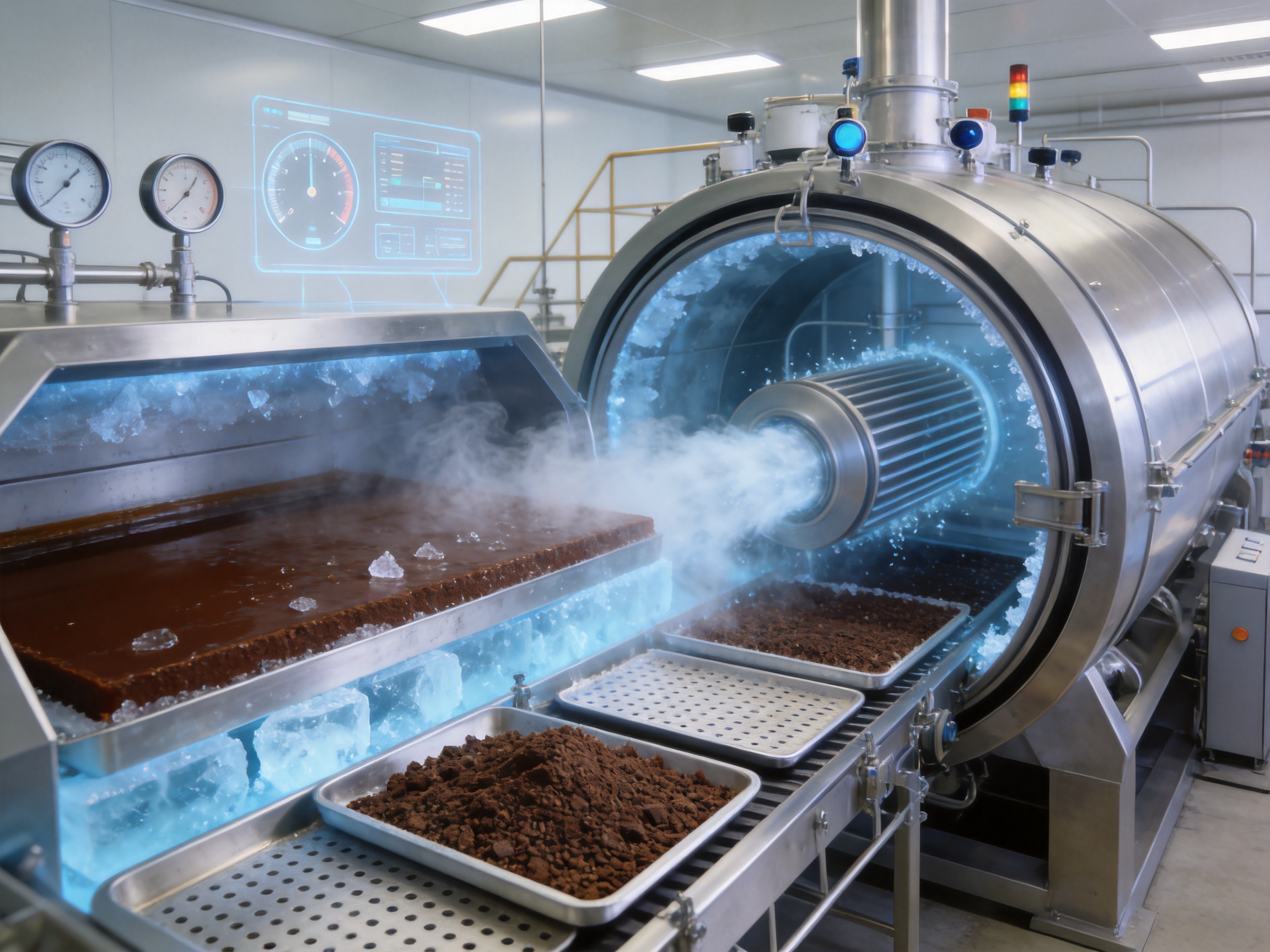
Conventional freeze-drying equipment remains useful for small and medium production volumes, research, product development, and applications requiring frequent recipe changes. However, large-scale coffee production creates different demands. The factory must maintain continuous material flow, reduce manual labor, control energy expenditure, and achieve a predictable cost per kilogram.
According to the supplied comparison, conventional models may produce approximately 450 kilograms over a 24-to-30-hour cycle, while the integrated line is reported to produce approximately 550 kilograms per hour. These figures represent a major difference in throughput. The comparison should be interpreted in the context of loading conditions, chamber size, product concentration, cycle recipe, and whether the conventional figure refers to a complete operating cycle or a particular equipment configuration.
The integrated line also offers a shorter delivery and investment pathway compared with the imported system referenced in the project information. The comparison describes imported systems such as those associated with Germany’s GEA as having a delivery lead time of approximately three to four years and a price range of RMB 380 million to RMB 500 million. The supplied information states that the described line can be delivered within approximately one to one and a half years at a project cost of around RMB 180 million.
These figures create an important investment advantage for companies that need to bring capacity online within a commercially meaningful timeframe. Shorter delivery can allow earlier market entry, faster customer qualification, and earlier revenue generation. Lower capital expenditure can also improve project financing and reduce the payback period.
Investment comparisons should always be made on a total-cost-of-ownership basis. Buyers should evaluate the scope of supply, installation, commissioning, utilities, civil construction, spare parts, operator training, warranty, maintenance, packaging, and after-sales support. A lower equipment price is most valuable when it is combined with reliable performance and clear technical responsibility.
Spray drying is often selected for high-volume soluble coffee production because it can be fast and economical. It atomizes liquid coffee extract into a hot drying medium. However, the use of higher temperatures can influence volatile aroma retention and finished-product structure. Freeze-drying generally requires more complex refrigeration and vacuum equipment, but it is better suited to premium products where aroma, appearance, and reconstitution quality justify a higher processing investment.
The correct technology depends on the target market. A value-oriented product may prioritize minimum processing cost, while a specialty product may prioritize sensory differentiation. A fully automatic freeze-drying line is particularly appropriate where the manufacturer wants to position the product as a premium instant coffee with preserved aroma and distinctive granules.
Small batch freeze dryers provide flexibility and are useful for pilot production, laboratory development, and limited product volumes. They may be easier to install and less expensive at the beginning of a project. However, scaling many small units can increase labor, floor-space requirements, maintenance complexity, and energy consumption per kilogram.
A large integrated line is more suitable when demand is established and production must run efficiently for long periods. Centralized control, automatic handling, and optimized utilities can provide a more consistent cost structure than operating numerous small machines.
The manufacturer behind the line is Jiangsu Bolaike Freezing Technology Development Co., Ltd., a Chinese company specializing in vacuum freeze-drying and refrigeration equipment. The company was established in 2014 in Changzhou, Jiangsu, and developed from Changzhou Zhongleng Refrigeration Equipment Co., Ltd., which entered the refrigeration industry in 2003.
This background combines experience in refrigeration with the development of vacuum freeze-drying technology. Such experience is important because freeze-drying performance depends on the interaction of refrigeration capacity, vacuum engineering, heat transfer, vapor condensation, control systems, and mechanical handling.
The company operates an integrated professional team covering research and development, engineering, sales, installation, commissioning, and after-sales service. An integrated team can shorten communication paths during project development. It also allows process requirements to be considered during mechanical design rather than added after the equipment has been built.
The company has established long-term partnerships with universities and research institutions, including the Chinese Academy of Agricultural Sciences, the Jiangsu Academy of Agricultural Sciences, and Jiangnan University. Cooperation with academic and agricultural research organizations can support advances in food processing, low-temperature technology, product development, energy efficiency, and process validation.
These relationships are especially valuable for coffee processing because raw materials vary by origin, variety, roast profile, and extraction recipe. Research cooperation can help manufacturers evaluate how process parameters influence aroma, acidity, color, solubility, and structure.
The company has obtained more than 100 national invention and utility model patents. Patents alone do not guarantee that a production line will meet every customer’s needs, but they indicate sustained investment in product development and engineering innovation.
In a complex system, technical development may cover refrigeration circuits, vacuum equipment, chamber design, energy recovery, automatic loading, material handling, control software, cleaning access, and product discharge. The strength of a patented design is most meaningful when it contributes to measurable improvements in performance, reliability, maintainability, or operating cost.
The company has moved into a modern manufacturing base covering approximately 24,000 square meters. A dedicated manufacturing facility supports equipment fabrication, assembly, inspection, testing, and project coordination. Large-scale freeze-drying projects require more than individual machine production. They involve engineering drawings, utility calculations, control integration, factory acceptance, site installation, commissioning, training, and documentation.
A structured manufacturing process helps control these activities. Typical project stages include technical consultation, product testing, process design, equipment configuration, manufacturing, factory inspection, shipment, installation, commissioning, validation, and after-sales service.
Although the product is described as a standardized fully automatic instant coffee freeze-drying production line, industrial projects must be customized to the client’s production objectives. Important design inputs include:
• Annual and daily production targets.
• Coffee origin, bean variety, and roast profile.
• Extraction method and concentrate solids content.
• Target granule size and finished-product moisture.
• Required dissolution performance.
• Available electrical power, steam, chilled water, and process water.
• Factory building dimensions and logistics routes.
• Packaging format and downstream production speed.
• Local food-safety, pressure-vessel, electrical, and environmental requirements.
• Desired level of process data collection and factory automation.
A complete engineering study should calculate the material balance and energy balance. It should identify how much coffee extract enters the line, how much water is removed, what refrigeration load is required, how much vacuum capacity is needed, and how the final powder or granules move to packaging.
Layout planning is equally important. The line needs sufficient space for operation, cleaning, maintenance, spare parts, utilities, pallet movement, and safe access. Equipment should be positioned to avoid unnecessary cross-traffic between raw materials, wet product, frozen product, dried product, packaging materials, and waste.
Different coffee products may require different freezing and drying recipes. A light-roasted specialty coffee may have different requirements from a dark-roasted blend. The control system should allow authorized personnel to manage recipe parameters while protecting critical settings from unauthorized changes.
Important process records may include concentrate temperature, solids content, loading weight, freezing time, chamber pressure, shelf temperature, condenser condition, cycle duration, discharge time, and final moisture. Digital records improve traceability and help production teams identify the causes of quality variation.
Food safety must be addressed throughout the production line. Coffee processing involves wet extracts, frozen materials, dry porous granules, and packaging. Each stage has different risks and control requirements. The design should support hygienic zoning, cleaning access, preventive maintenance, pest control, and documented operating procedures.
Product-contact surfaces should be compatible with coffee extract and suitable for repeated sanitation. Dead zones and difficult-to-clean areas should be minimized. Conveyors, hoppers, trays, pallets, seals, and discharge points require regular inspection because product residues can accumulate if cleaning is incomplete.
Quality assurance should include raw material inspection, concentrate testing, frozen-product checks, freeze-drying monitoring, finished-product moisture measurement, particle-size analysis, dissolution testing, sensory evaluation, and packaging inspection.
The reported dissolution rate of approximately 99 percent is an important performance indicator, but it should be measured using a defined test method. Dissolution can be influenced by water temperature, agitation, particle size, product density, and sample mass. A clear internal specification allows the manufacturer and buyer to evaluate results consistently.
Sensory testing is also essential. Laboratory measurements should be supported by trained tasting panels or qualified sensory professionals who assess aroma, acidity, body, bitterness, balance, and aftertaste. This is particularly important when the product is marketed as premium or specialty instant coffee.
Freeze-drying is energy intensive, so sustainability improvements can create both environmental and commercial benefits. The reported energy consumption reduction from 11.1 kilowatt-hours to 3.6 kilowatt-hours per kilogram demonstrates the importance of process integration. Lower energy use reduces operating expenditure and can improve the carbon footprint of every package sold.
Several design principles support energy efficiency:
• Concentrating the coffee extract before freezing reduces the water load.
• Efficient quick-freezing reduces residence time and refrigeration losses.
• High chamber utilization improves energy use per kilogram.
• Shorter cycles reduce auxiliary equipment operating time.
• Automated scheduling minimizes idle periods.
• Proper insulation reduces heat gain.
• Optimized vacuum and condenser operation reduce unnecessary power demand.
• Preventive maintenance helps systems operate close to their design efficiency.
Water management is another important consideration. The supplied information indicates that process wastewater recycling can reach approximately 70 percent. Water-recovery systems should be designed according to the composition of the wastewater, sanitation chemicals, local regulations, and reuse purpose. Recovered water may be suitable for selected non-product-contact applications after appropriate treatment and verification.
Green manufacturing also includes responsible refrigerant selection, reduction of product waste, efficient steam or electrical heating, durable equipment construction, and repairable components. A life-cycle approach helps buyers evaluate sustainability beyond the initial purchase.
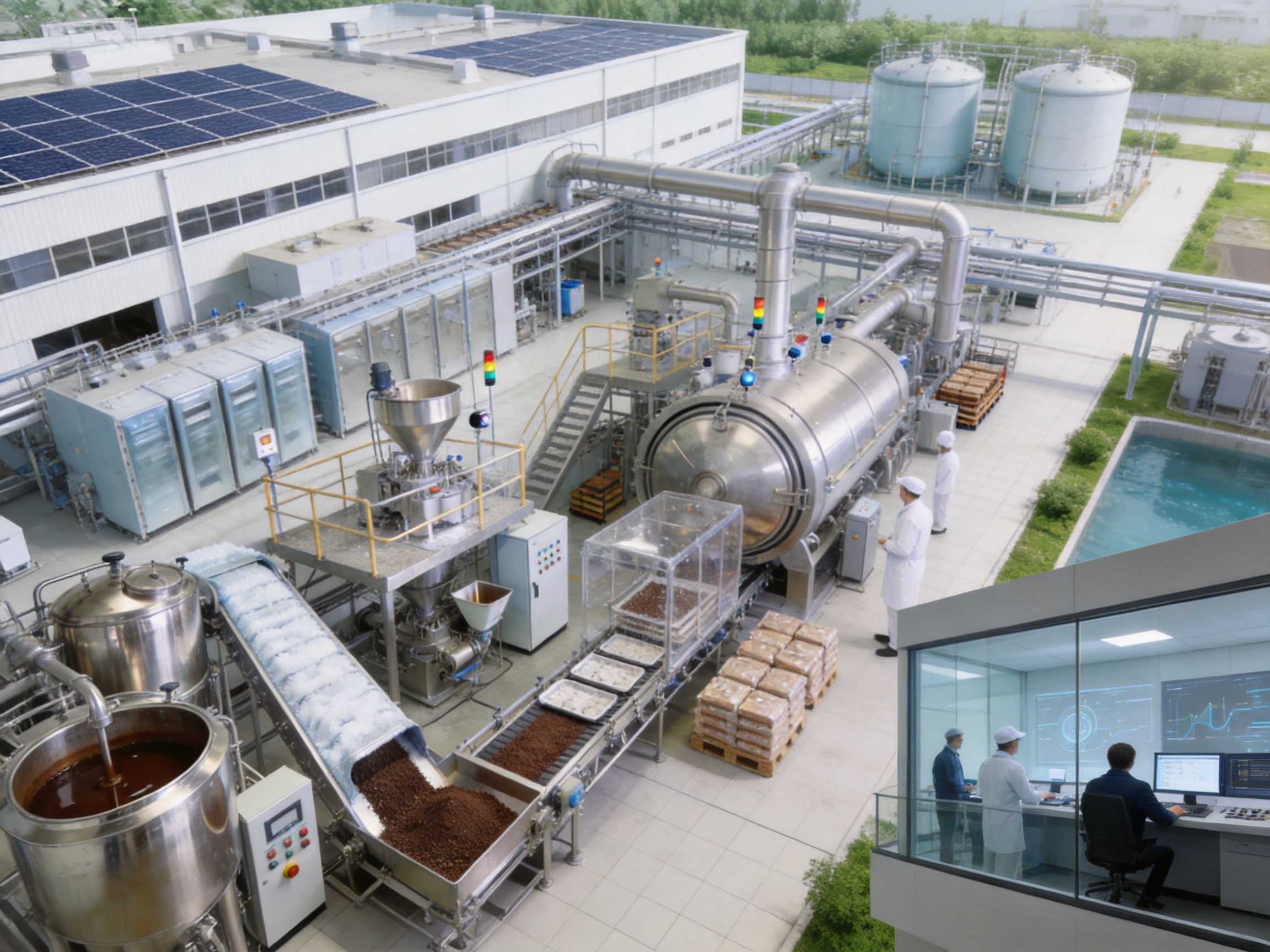
A large freeze-drying line requires professional installation. The project may involve foundations, cleanable floors, drainage, electrical distribution, refrigeration piping, vacuum piping, steam or hot-water connections, compressed air, process water, ventilation, fire protection, and environmental systems.
Commissioning should be conducted in stages. Mechanical completion confirms that the equipment has been installed according to drawings. Dry commissioning checks motors, valves, sensors, safety circuits, and control logic without product. Wet commissioning verifies fluid systems and cleaning procedures. Product trials then evaluate freezing, granulation, loading, drying, discharge, and finished-product quality.
Performance acceptance should be based on agreed criteria. These may include throughput, cycle time, residual moisture, dissolution, energy consumption, temperature stability, automation functions, product recovery, and safety performance. Acceptance testing should use representative coffee extract and operating conditions whenever possible.
Operator training is essential for long-term reliability. Personnel should understand normal operating procedures, alarm responses, sanitation, product changeover, vacuum-system operation, refrigeration safety, emergency shutdown, and basic troubleshooting. Maintenance staff should receive training on lubrication, seals, sensors, valves, pumps, vacuum components, refrigeration equipment, and control-system diagnostics.
After-sales service is particularly important for an industrial production line because unexpected downtime can affect customer deliveries and product inventories. Spare-parts planning, remote technical support, preventive maintenance, and scheduled inspections help reduce operational risk.
When assessing a freeze-drying production line, buyers should calculate more than the purchase price. The investment model should include capital expenditure, installation, utilities, labor, maintenance, spare parts, packaging, wastewater treatment, product loss, financing, and expected sales revenue.
The supplied comparison places the project cost of the described line at approximately RMB 180 million, compared with RMB 380 million to RMB 500 million for the referenced imported systems. It also indicates a delivery period of approximately one to one and a half years, compared with three to four years for the imported comparison. These differences can materially affect project economics.
A shorter delivery time may reduce the period during which capital is committed without generating revenue. It can also help a producer respond to market demand, meet supply contracts, and establish a regional processing center sooner. For coffee-producing regions, local or regional freeze-drying capacity can reduce the need to export soluble extract or green beans for overseas processing.
Operating savings may come from energy reduction, lower labor requirements, reduced product loss, higher output, and improved equipment utilization. The actual payback period depends on the price of coffee raw materials, finished instant coffee, utilities, financing, operating hours, and sales contracts.
Manufacturers should prepare several scenarios. A conservative model may use lower capacity, higher energy prices, and slower market growth. A base model may use expected utilization and sales prices. An expansion model may evaluate additional shifts, new products, or future chamber additions. Scenario planning supports better decisions and reduces the risk of basing the project only on ideal conditions.
The line is suitable for deep-processing projects in premium coffee-producing areas, including regions such as Yunnan. Establishing local freeze-dried coffee capacity can create value by processing coffee closer to the source. It may reduce transportation of bulky or water-rich materials, support regional employment, and allow producers to develop products based on local bean characteristics.
Regional production also creates opportunities for origin-based branding, contract manufacturing, specialty coffee collaborations, and direct relationships with farmers or cooperatives. A modern production line can help transform locally grown coffee into higher-value soluble products for domestic and international markets.
However, local deployment requires a careful assessment of utilities, logistics, water availability, wastewater treatment, technical labor, raw material seasonality, and market access. The plant should be designed to handle changes in coffee supply and to maintain stable production outside the peak harvest period.
Before purchasing a fully automatic instant coffee freeze-drying production line, a buyer should request detailed technical information and confirm the following points:
1. Required annual, monthly, daily, and hourly capacity.
2. Feed concentration range and allowable viscosity.
3. Freezing temperature, freezing time, and product layer thickness.
4. Granule-size range and finished-product appearance.
5. Chamber volume, pallet dimensions, and loading weight.
6. Vacuum range and condenser capacity.
7. Heating method and utility consumption.
8. Expected cycle time for the buyer’s actual coffee formulation.
9. Finished-product moisture and dissolution specifications.
10. Energy consumption under defined operating conditions.
11. Automation architecture, control interface, and data-recording functions.
12. Cleaning, sanitation, and product-changeover procedures.
13. Food-contact materials and hygienic design details.
14. Installation requirements and factory layout.
15. Commissioning, acceptance testing, and warranty terms.
16. Spare-parts availability and response time.
17. Training for operators and maintenance personnel.
18. Environmental compliance and wastewater-recovery scope.
19. Delivery schedule and responsibility for transportation and installation.
20. References from comparable coffee-processing projects.
Product trials are strongly recommended. A coffee line should be evaluated with the buyer’s own extract, since different beans and extraction recipes can produce different freezing and drying behavior. Testing can help establish the appropriate concentration, granule size, loading mass, cycle recipe, and final quality specification before full-scale production.
Jiangsu Bolaike Freezing Technology Development Co., Ltd. focuses on the research, development, manufacturing, and sales of vacuum freeze-drying and refrigeration equipment. Its application areas include food, fruits and vegetables, medicinal herbs, health supplements, bioproducts, chemical materials, and other industries.
This broad application experience can benefit coffee projects because many freeze-drying principles are shared across industries. At the same time, coffee requires specialized attention to aroma, extraction chemistry, granulation, sensory quality, and rapid moisture protection. A manufacturer with experience across food and technical applications can bring knowledge from multiple process environments while adapting the line to coffee-specific needs.
The company reports that its products are exported to more than 30 countries and regions. International project experience can help with documentation, overseas installation, communication, export packaging, electrical adaptation, and customer support. Each destination still requires compliance with its own regulations and technical standards, so buyers should confirm the applicable requirements at the beginning of the project.
The company’s stated mission is to promote transformation in food, pharmaceutical, and other industries through innovative freeze-drying technology. Its development direction emphasizes green, environmentally friendly, intelligent, and reliable high-end freeze-drying solutions.
It is an integrated industrial system that processes coffee concentrate through rapid freezing, crushing, granulation, weighing, conveying, vacuum freeze-drying, pallet emptying, and finished-product recovery. Automation coordinates the stages and reduces repetitive manual handling.
The supplied project information describes a line designed for approximately 4,000 metric tons of freeze-dried coffee powder per year. It also reports a daily output of approximately 13.2 metric tons and an hourly output of around 550 kilograms under the relevant operating conditions.
The described continuous freeze-drying technology is reported to reduce the processing cycle to approximately 6 to 8 hours. The exact cycle depends on concentrate solids content, product thickness, granule size, loading quantity, target residual moisture, and the selected recipe.
Freeze-drying removes water from a frozen product under vacuum and at low temperature. This reduces exposure to high heat during the main drying stage. The line also uses low-temperature cold extraction, which is intended to preserve more of the coffee’s native aromatic compounds before drying.
The supplied information identifies an extraction concentration of approximately 40 percent to 45 percent. The optimum value must be confirmed through product trials because concentration affects viscosity, freezing behavior, loading, drying time, and final texture.
Yes. The process includes a crushing and granulation platform, and the final product can be configured according to the required powder or granule specification. Particle-size distribution should be confirmed during technical design and testing.
The supplied comparison reports energy consumption of approximately 3.6 kilowatt-hours per kilogram, compared with about 11.1 kilowatt-hours per kilogram for conventional equipment. It also reports an overall energy reduction of approximately 30 percent to 40 percent. Final energy performance depends on operating conditions and should be verified during acceptance testing.
The line has a reported automation rate of more than 85 percent, and the supplied information indicates a labor-cost reduction of approximately 20 percent. Skilled operators and maintenance personnel remain necessary for supervision, quality control, sanitation, troubleshooting, and preventive maintenance.
The supplied information reports process wastewater recycling of approximately 70 percent and overall energy reductions of approximately 30 percent to 40 percent. Environmental performance depends on the complete factory design, including refrigeration, heating, sanitation, wastewater treatment, and waste management.
The supplied project comparison states that certain imported systems may require three to four years for delivery and cost approximately RMB 380 million to RMB 500 million. The described line is presented with a delivery period of approximately one to one and a half years and a project cost of around RMB 180 million. Buyers should compare complete scopes of supply and confirmed performance rather than equipment price alone.
It is designed for premium instant coffee applications and is intended to preserve floral, fruity, and acidic flavor characteristics. Specialty suitability should be confirmed through sensory testing using the buyer’s own beans, extraction process, and product specification.
A quotation should clearly identify equipment scope, capacity, utility consumption, automation functions, installation, commissioning, training, spare parts, warranty, delivery schedule, acceptance criteria, and after-sales service. It should also state which civil works, utilities, packaging systems, and auxiliary equipment are excluded.
A fully automatic instant coffee freeze-drying production line provides a comprehensive solution for manufacturers seeking premium quality and industrial-scale output. By combining low-temperature cold extraction, rapid freezing, controlled granulation, automatic weighing, coordinated conveying, vacuum freeze-drying, and efficient product recovery, the line addresses both product quality and factory productivity.
Its reported advantages include an annual production capacity of approximately 4,000 metric tons, a daily output of approximately 13.2 metric tons, a processing cycle of around 6 to 8 hours, more than 85 percent automation, reduced energy consumption, lower labor requirements, high dissolution performance, and wastewater-recycling capability.
Compared with conventional equipment, the integrated system is intended to provide higher throughput, shorter processing times, stronger energy performance, and more consistent product handling. Compared with the imported systems referenced in the project information, it is also presented as offering a shorter delivery period and lower project investment.
The manufacturer strengthens this offering through experience in refrigeration and vacuum freeze-drying, a professional team covering engineering and service, cooperation with research institutions, more than 100 national patents, a modern manufacturing base, and international export experience.
For investors and coffee processors, the most important next step is a project-specific technical evaluation. The final design should be based on the desired coffee profile, concentrate properties, capacity target, utilities, plant layout, packaging plan, local regulations, and acceptance criteria. With proper customization and validation, the production line can support the development of efficient, high-quality, and commercially competitive freeze-dried instant coffee products.
1. Supplied product information for the fully automatic instant coffee freeze-drying production line.
2. Supplied company information for Jiangsu Bolaike Freezing Technology Development Co., Ltd.
3. International Specialty Coffee Association. General principles for specialty coffee quality assessment.
4. International Organization for Standardization. General principles of food hygiene and food-processing management.
5. Food and Agriculture Organization of the United Nations. Guidance on sustainable food processing and resource efficiency.
6. Rey, L., and May, J. C. Freeze-Drying and Applied Technologies.
7. Mellor, J. D. Fundamentals of Freeze-Drying.
8. Food-processing engineering literature concerning sublimation drying, vacuum systems, refrigeration, and coffee-soluble solids.
 2026/05/28
 2026/05/28
2026/05/28
2026/05/28
2026/05/28
2026/05/28


 Custom Industrial Lyophilizer Freeze Dryer Manufacturers





 English
 русский
 Español
 Français
 Deutsch
 عربى
عربى