/blog/
News
Products & Solutions
CONTACT US

+86-18068757376

blk@jsblk.com

No. 29 North Tongjiang Road, Xinbei District, Changzhou City, Jiangsu Province, China
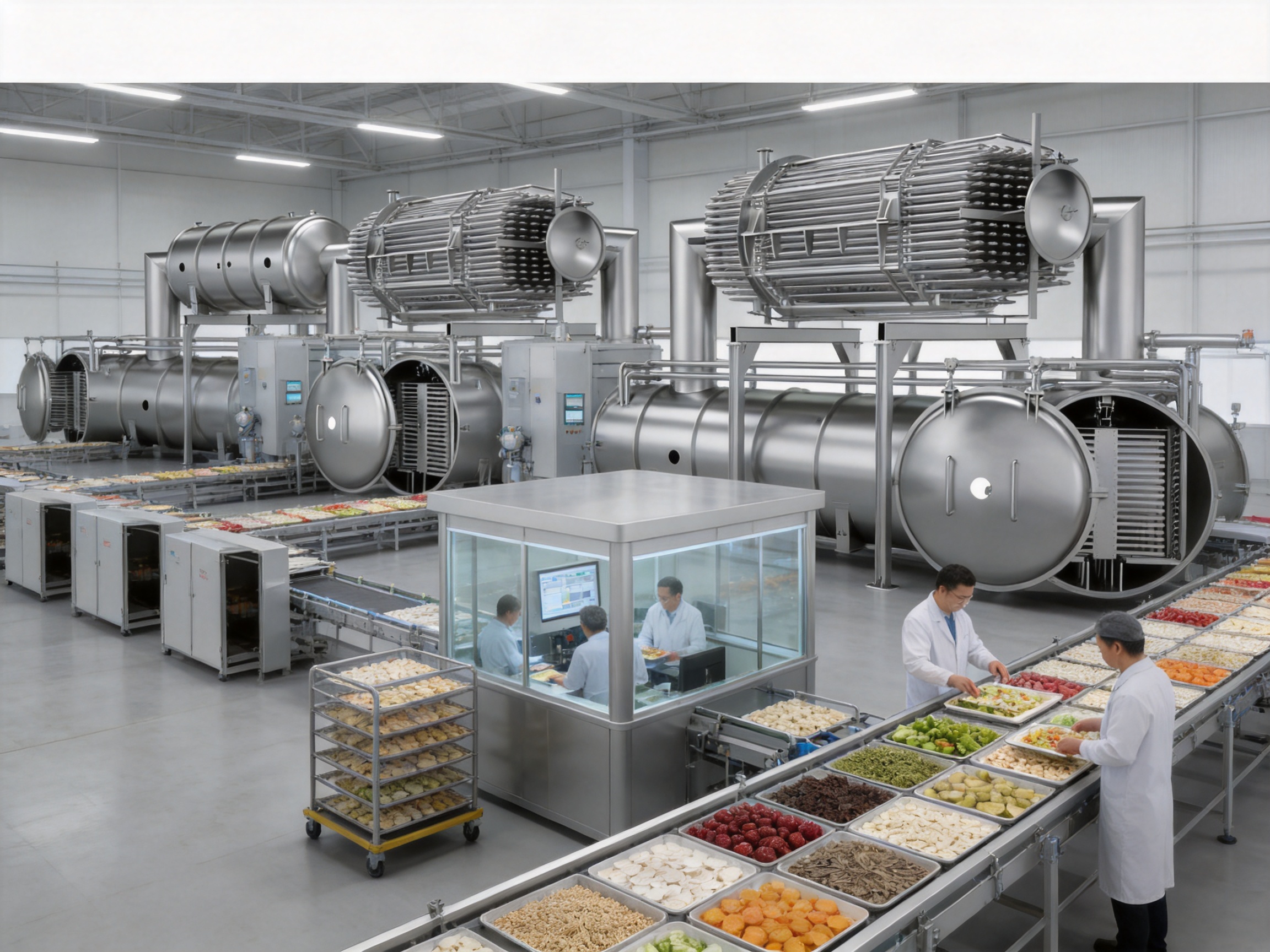
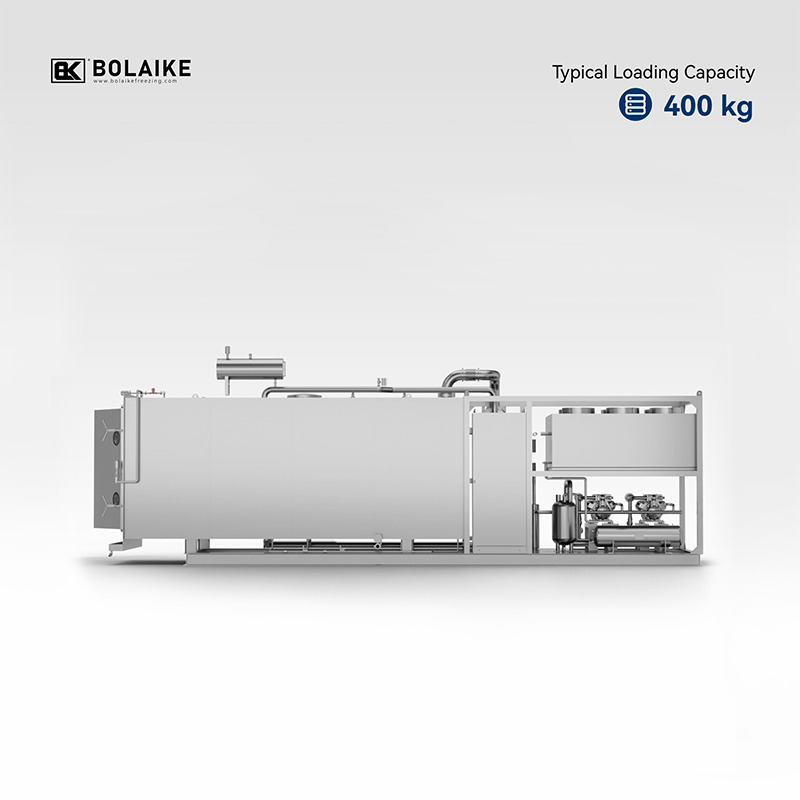
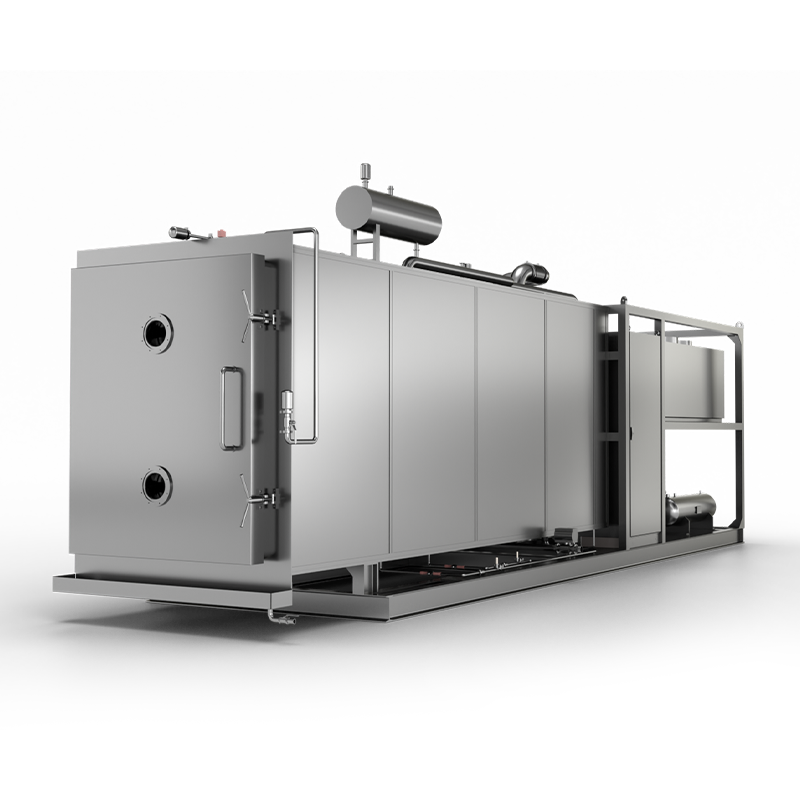
Large-scale freeze-drying operations require far more than a spacious chamber and a powerful refrigeration system. Industrial users need consistent heat transfer, stable vacuum performance, dependable refrigeration, efficient cold-trap operation, intelligent process control, and a manufacturing partner capable of delivering equipment that performs reliably over many years. The BLK-FD-200 is designed to address these requirements as a heavy-duty freeze-drying system for food, agricultural products, medicinal materials, biological supplies, health products, and selected chemical applications.
With a freeze-drying area of 202.2 square meters, a standard loading capacity of 2,000 kilograms, a liquid loading capacity of 4,000 liters, and an ultimate vacuum level of no more than 10 Pa, the BLK-FD-200 is positioned for demanding industrial production. It combines a cylindrical chamber structure, one-piece radiation plates, intelligent control, flexible heating options, energy-recovery technologies, and parallel system capability in a single large-scale platform.
The equipment is manufactured by Jiangsu Bolaike Freezing Technology Development Co., Ltd., a Chinese high-tech enterprise specializing in vacuum freeze-drying and refrigeration equipment. The company integrates research and development, engineering, manufacturing, sales, installation, commissioning, and after-sales service. Its technical experience, patent portfolio, production infrastructure, and cooperation with universities and research institutions support the development of customized freeze-drying solutions for international customers.
Freeze-drying, also known as lyophilization, removes water from a frozen product through sublimation under vacuum. Compared with conventional hot-air drying or spray drying, the process can better preserve structure, flavor, aroma, color, nutrients, and rehydration performance. However, the process is technically demanding because the product must be frozen, heated, and dried under carefully controlled conditions.
At industrial scale, the main challenge is maintaining uniform conditions across a large number of trays and a substantial product load. Even a small temperature difference between shelves can influence sublimation rates, residual moisture, texture, and final quality. Uneven vacuum distribution can create differences in vapor movement and extend the drying cycle. Insufficient refrigeration capacity can delay freezing or reduce the ability of the cold trap to capture water vapor. A system that performs acceptably at laboratory scale may therefore be unsuitable for continuous, high-volume production.
The BLK-FD-200 is designed around these industrial realities. Its configuration focuses on stable temperature transfer, high-capacity vacuum generation, strong refrigeration performance, intelligent process management, and production continuity. These elements help manufacturers move from small or medium batches to a more efficient industrial workflow without sacrificing product quality.
Technical item |
BLK-FD-200 specification |
Freeze-drying area |
202.2 square meters |
Standard loading capacity |
2,000 kilograms |
Liquid loading capacity |
4,000 liters |
Ultimate vacuum level |
No more than 10 Pa |
Chamber structure |
Cylindrical chamber |
Radiation plate construction |
One-piece design without welded joints |
Inter-shelf temperature deviation |
Within plus or minus 1 degree Celsius |
Heating options |
Electric heating or steam heating |
Material trolley capacity |
Typically eight sets, with manual or automatic options |
Control configuration |
Intelligent central control with remote monitoring options |
The specifications demonstrate that the BLK-FD-200 is intended for large-scale processing rather than pilot production. The 202.2-square-meter drying area provides substantial tray capacity, while the standard 2,000-kilogram load supports commercial production targets. The 4,000-liter liquid loading capacity gives users a useful reference when evaluating liquid formulations or material loads before freezing.
Actual output depends on the product, loading thickness, solids content, density, freezing characteristics, target residual moisture, packaging requirements, and process cycle. The stated capacity should therefore be treated as a design reference rather than a universal output guarantee. During project planning, manufacturers can adjust the system and process configuration according to the properties of the customer’s material.
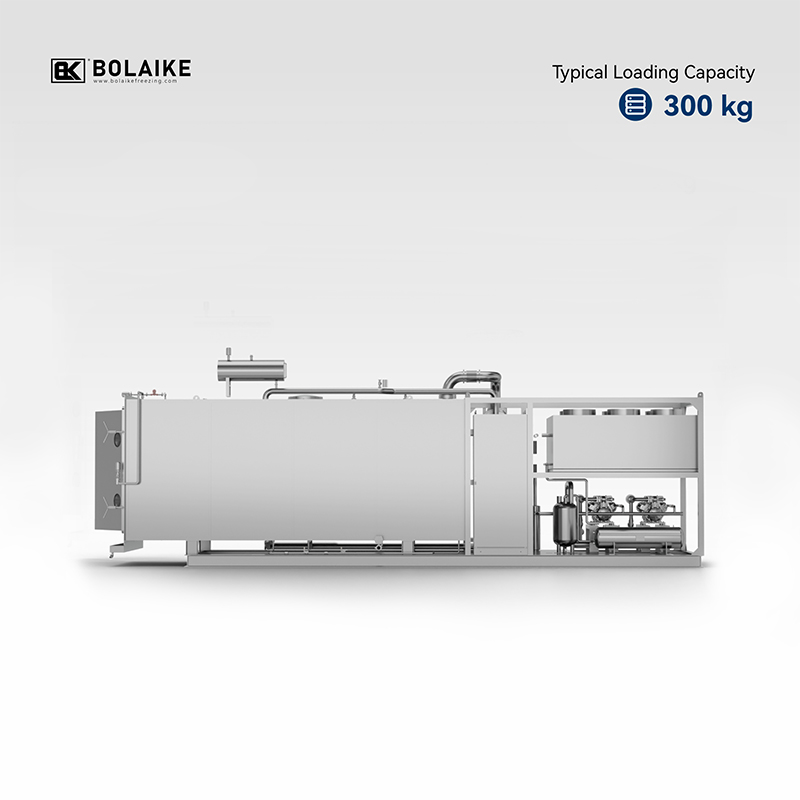
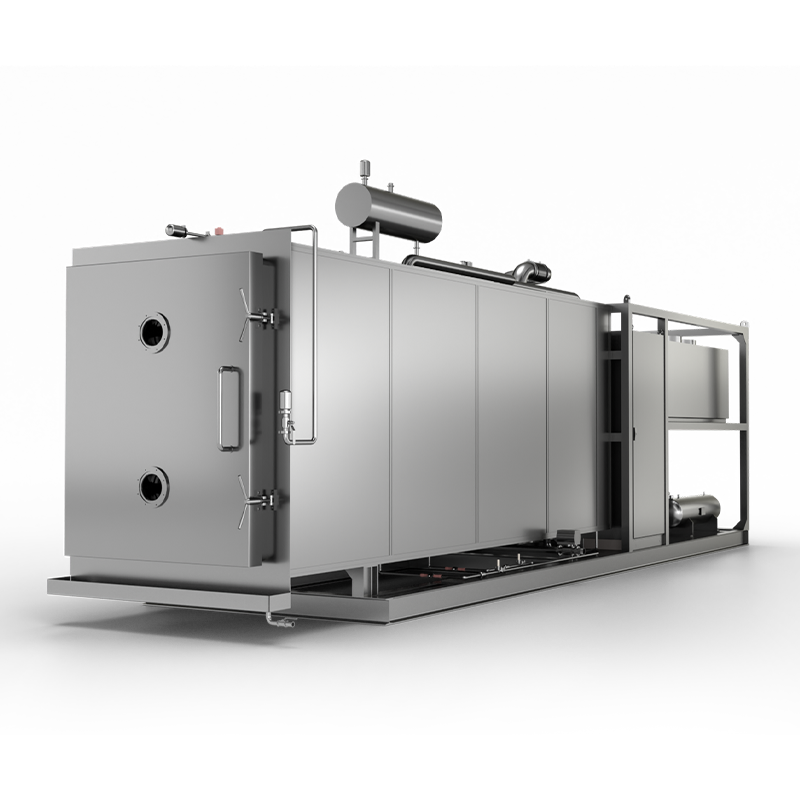
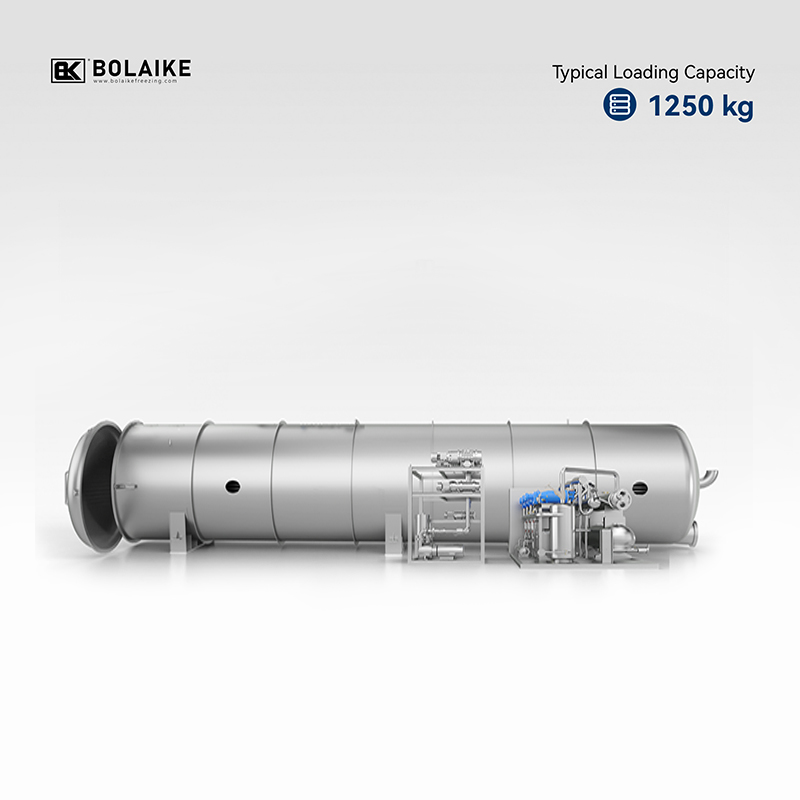
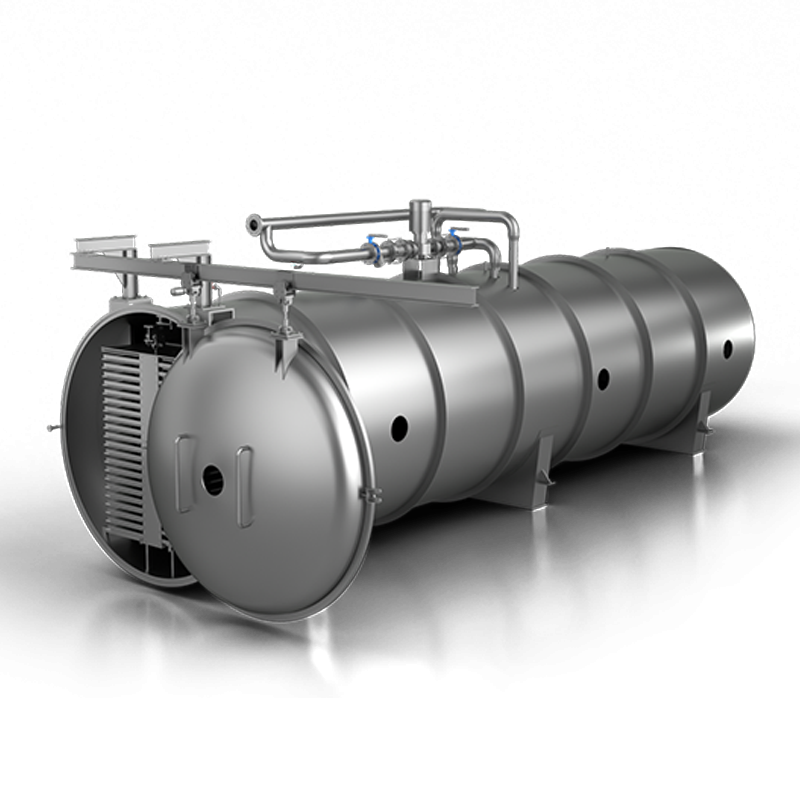
The cylindrical chamber structure is one of the key design features of the BLK-FD-200. Large vacuum chambers must withstand pressure differentials safely and maintain dimensional stability during repeated evacuation and return to atmospheric pressure. A cylindrical geometry distributes mechanical stress more evenly than many flat-sided configurations, helping support a robust structure for long-term vacuum operation.
Industrial freeze-drying equipment is exposed to repeated cycles of freezing, heating, vacuum evacuation, vapor loading, defrosting, cleaning, and unloading. These cycles place demands on chamber materials, seals, doors, welds, piping, valves, and support structures. A heavy-duty chamber must be designed not only for nominal operating conditions but also for the repetitive nature of production.
The BLK-FD-200 uses 8-millimeter-thick 304 stainless steel in its chamber construction. This material provides a combination of corrosion resistance, mechanical strength, cleanability, and service life that is appropriate for many food, agricultural, and industrial applications. Stainless steel also supports hygienic production environments when the interior is properly finished, cleaned, and maintained according to the requirements of the specific product.
The equipment typically accommodates eight sets of material trolleys. Manual or automatic trolley configurations can be selected according to the factory layout, labor strategy, loading requirements, and desired level of automation. This flexibility allows the same core platform to be adapted for different production environments.
Heat transfer is central to freeze-drying performance. During primary drying, controlled heat is supplied to the frozen product so that ice can sublime. During secondary drying, the product temperature is raised to remove bound moisture. The heat must be delivered gradually and evenly to avoid product collapse, melting, excessive drying time, or inconsistent moisture content.
The BLK-FD-200 uses one-piece radiation plates without welded joints. This construction reduces potential discontinuities in the heat-transfer surface and supports a more stable plate structure. The special heat-transfer-fluid circuit is designed to maintain inter-shelf temperature deviation within plus or minus 1 degree Celsius.
Uniformity at this level is important for products loaded across multiple shelves. If one shelf is significantly warmer or colder than another, the material may dry at different rates. Operators may then need to extend the entire batch cycle to protect the slowest-drying areas, increasing energy consumption and reducing production capacity. More consistent shelf temperatures can help operators develop repeatable recipes and reduce the risk of over-processing or under-processing.
The one-piece radiation plate design also helps support long-term equipment reliability. Welded joints can become points requiring additional inspection, particularly when exposed to repeated thermal cycling and pressure-related stress. A design with fewer welded interruptions in the plate surface can simplify quality control and reduce potential maintenance concerns, provided the entire manufacturing process is properly executed and tested.
Vacuum conditions determine the environment in which sublimation takes place. The BLK-FD-200 can achieve an ultimate vacuum level of no more than 10 Pa. This provides a suitable vacuum reference for demanding freeze-drying processes and supports the removal of water vapor from the drying chamber.
Large chambers require considerable vacuum-pumping capability because the internal volume is high and the amount of water vapor generated during drying can be substantial. The system must establish the required vacuum within the specified time and maintain stable pressure as the product releases vapor. For this reason, the BLK-FD-200 can be configured with different combinations of vacuum pumps, including screw pump and Roots pump sets, rotary vane pump and Roots pump sets, or water-ring pump and Roots pump sets.
These combinations allow the system to be matched to different process requirements. Roots pumps can increase pumping capacity and help rapidly establish the required vacuum environment, while the primary pump type can be selected according to the application, operating conditions, maintenance preferences, and facility utilities.
The equipment also supports adjustment of vacuum-pump power according to the required vacuum degree. Intelligent variable-frequency combinations can reduce unnecessary energy consumption by avoiding continuous operation at maximum power when the process does not require it. This approach is particularly valuable in large systems, where vacuum equipment can represent a significant part of the overall electrical load.
Stable vacuum performance is not determined by the pumps alone. Chamber sealing, valve quality, piping design, cold-trap performance, pressure measurement, control logic, and leak testing all contribute to the final result. The BLK-FD-200 is therefore subjected to structured inspection and pressure-testing procedures before delivery.
The refrigeration system performs several essential functions. It freezes the product before drying, maintains low temperatures during the process, and condenses or captures water vapor in the cold trap. The refrigeration system must be sufficiently powerful to handle both the initial product load and the vapor generated during sublimation.
The BLK-FD-200 can use a refrigeration configuration in which a single refrigeration unit supplies cooling to both cold storage and freeze-drying equipment. Intelligent variable-frequency refrigeration units can dynamically manage the drying process of multiple freeze-drying devices. This configuration may help improve equipment utilization and reduce the need for unnecessarily duplicated refrigeration capacity.
Two refrigeration panel configurations are available for different site and process requirements. An external refrigeration system can provide flexibility when the plant layout separates the main drying equipment from the refrigeration machinery. A built-in refrigeration system can provide a more integrated configuration when space, installation arrangement, or project design favors a compact layout.
The selection between external and built-in refrigeration should be made after reviewing the factory’s available space, ventilation, ambient temperature, electrical infrastructure, maintenance access, noise requirements, and expansion plans. The chamber and unit layout positions can be customized, allowing the equipment to be integrated into different production lines.
Energy consumption is one of the most important operating-cost factors in industrial freeze-drying. Refrigeration compressors, vacuum pumps, heating systems, defrosting equipment, cooling water systems, and auxiliary components all contribute to the total cost of a batch. Improving energy efficiency can therefore influence the competitiveness of the final product.
The BLK-FD-200 is standard-equipped with residual cold recovery and an intelligent control system. According to the supplied product information, energy consumption can be reduced by approximately 10 to 15 percent compared with traditional equipment through the standard configuration. Other system-level energy-saving technologies described for the platform indicate potential energy-consumption reductions of approximately 20 to 40 percent, depending on the process, configuration, operating conditions, and comparison baseline.
Cold recovery works by reusing available refrigeration capacity rather than allowing residual cold energy to be discharged without benefit. Recovered cold can be used to pre-cool the next refrigeration cycle or support another stage of the process. This reduces the workload placed on compressors and can improve the overall energy profile of the system.
The company’s described energy-recycling system can reduce overall compressor load by approximately 20 to 30 percent under applicable operating conditions. The actual result depends on product load, ambient conditions, process recipe, system configuration, compressor performance, and utilization rate. Customers should verify projected savings through a process-specific technical evaluation.
Heat recovery is another important feature. During freeze-drying, heat generated or discharged during one phase may be recovered for use in material heating or another suitable process stage. Steam heat may also be integrated into the heat-recovery strategy. When the required material heating temperature is relatively low, the potential savings can be especially significant because the recovered heat can cover a larger proportion of the heating demand.
Energy efficiency should not be evaluated only by nameplate power. A more meaningful assessment includes energy used per kilogram of finished product, cycle duration, product yield, batch consistency, defrosting time, maintenance requirements, and the number of batches completed per year. The BLK-FD-200 is designed to improve several of these factors simultaneously.
The heat pump and economizer system is designed to improve the efficiency of the refrigeration and heating cycle. The supplied information states that the system can increase compressor coefficient of performance to approximately 4.8 to 5.9. A higher coefficient of performance means that the system can provide more useful heating or cooling output for a given amount of electrical input.
In practical terms, the heat pump and economizer arrangement can reduce the operating burden on compressors and improve the recovery of available energy. It may also support more stable process control by providing an efficient source of heat for appropriate stages of the freeze-drying cycle.
The benefits of this design are most relevant when the equipment operates frequently and at a high utilization rate. In a large production facility, even a moderate reduction in energy use per cycle can produce meaningful annual savings. The system can also contribute to a lower environmental impact by reducing the electricity required for each unit of finished product.
Energy-saving equipment must be evaluated as part of an integrated process. Refrigerant selection, compressor capacity, heat-exchanger design, insulation, control logic, ambient conditions, loading patterns, and operator practices all influence final performance. Bolaike’s approach combines equipment technologies with process engineering and commissioning support rather than treating energy efficiency as an isolated component feature.
Batch intervals can be a major limitation in conventional freeze-drying facilities. When one unit requires cold-trap defrosting, the drying chamber and cold trap may need to remain in a fixed operating relationship. This can delay the next batch and reduce the effective production capacity of the plant.
The BLK-FD-200 can be equipped with an optional patented intermediate isolation valve. The valve separates the drying chamber from the cold trap and helps control the movement of water vapor and the vacuum status of different parts of the system. By isolating sections of the equipment when appropriate, operators can shorten the interval between batches and organize production more efficiently.
Shared vacuum technology supports this strategy by enabling multiple units to cooperate under a coordinated vacuum arrangement. The partitioned bulkhead with valve can separate the drying chamber and cold trap during operating conditions such as freeze-drying and cold-trap defrosting. This helps prevent water-vapor backflow and supports product quality and operational safety.
In a large facility, the advantage is not limited to a single machine. Several freeze dryers can be connected in parallel, allowing production to be organized through staggered loading, drying, unloading, and defrosting cycles. When one unit enters the final drying stage or requires cold-trap defrosting, other operating units can jointly undertake water-vapor capture and maintain system stability.
The supplied product information states that two units can achieve the output of three units under an appropriate parallel operating strategy. This claim should be understood as a system-design objective dependent on product, recipe, scheduling, and plant conditions. Nevertheless, the principle is significant: coordinated equipment can increase production continuity without simply multiplying the number of independent machines.
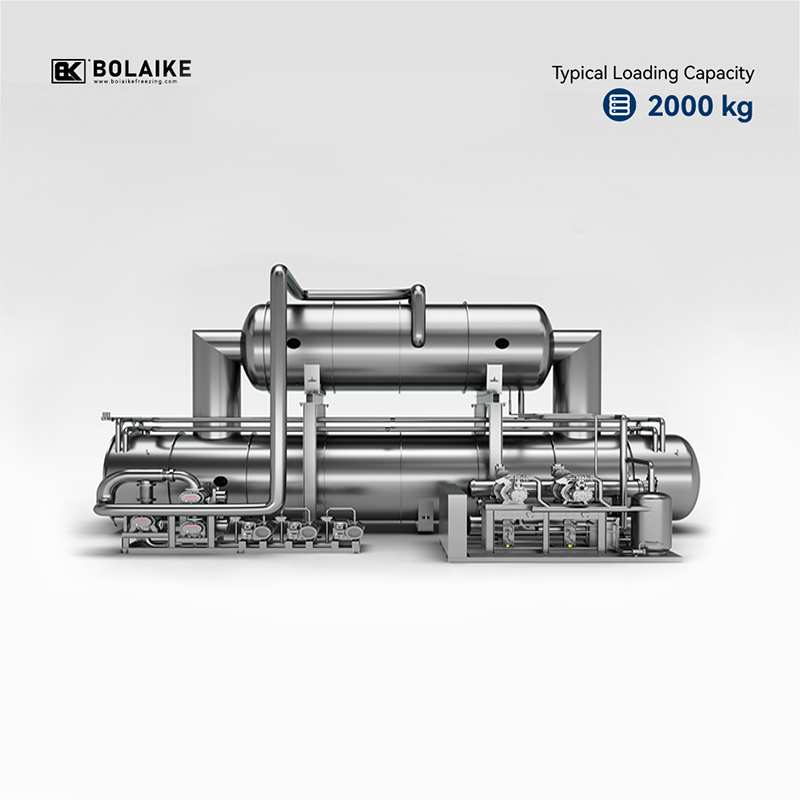
BLK-FD-200
The intelligent central control system is designed to manage the operating status of all connected equipment from a centralized interface. A unified control structure can help operators monitor chamber temperature, shelf temperature, pressure, refrigeration status, vacuum-pump operation, cold-trap conditions, heating output, alarm status, and other important process variables.
Centralized control is particularly valuable when multiple freeze dryers operate in parallel. Without coordinated control, staggered production can become difficult to manage because each unit may have a different stage of freezing, primary drying, secondary drying, unloading, or defrosting. A central system can provide a clearer overview and help production personnel identify conflicts, abnormal conditions, or maintenance requirements.
The control system supports intelligent variable-frequency operation for vacuum and refrigeration units. Instead of treating every stage of the process as a fixed-load operation, the system can adjust equipment power according to demand. This may reduce energy waste, improve process stability, and minimize mechanical stress caused by unnecessary full-load operation.
Remote monitoring through a mobile application is also supported. Remote access can help authorized personnel review equipment status, receive notifications, and respond more quickly to selected operating events. This is useful for production managers, technical departments, maintenance teams, and service engineers who need visibility beyond the control-room floor.
Multiple language options can be customized for international users. A clear user interface is important because freeze-drying equipment requires accurate operation and careful interpretation of alarms and trends. Language customization can assist training and help standardize operating procedures across multinational production sites.
Automation should not eliminate the need for trained operators. Instead, it should give operators better information and more consistent control. Production teams remain responsible for recipe validation, material loading, hygiene, cleaning, maintenance, quality checks, and compliance with applicable regulations.
The performance of a large-scale freeze dryer depends heavily on how it is manufactured. A design can include advanced specifications, but poor fabrication, inconsistent welding, inadequate surface treatment, incorrect assembly, or insufficient testing can reduce reliability. Bolaike emphasizes an integrated manufacturing process covering engineering design, component selection, fabrication, assembly, testing, installation, commissioning, and after-sales support.
The BLK-FD-200 uses an 8-millimeter-thick 304 stainless-steel chamber structure. Material selection is only the first step. Industrial equipment must also be manufactured with control over dimensional accuracy, plate flatness, joint quality, pipe routing, sealing surfaces, insulation, electrical installation, and component accessibility.
The equipment is subjected to five core inspection workflows and 58 inspection procedures according to the supplied product information. These inspections are intended to verify the overall craftsmanship and reliability of the machine. A multi-stage inspection strategy can identify issues earlier than a single final inspection because components and subsystems are reviewed throughout manufacturing.
The refrigeration system undergoes a pressure-holding test lasting more than 48 hours. Pressure testing is important for identifying leaks, confirming the integrity of refrigeration piping, and verifying that the system can maintain pressure over an extended period. A system that passes only a short inspection may still contain small leaks that appear under prolonged conditions, so extended testing provides a stronger quality reference.
The entire machine also undergoes high-pressure and low-pressure tests. The high-pressure test includes 48 hours dedicated to pressure verification. These tests help assess the integrity of the chamber, refrigeration circuits, piping, valves, and related components. Testing procedures must be conducted using appropriate safety controls and documented according to the project’s quality requirements.
Factory inspection is complemented by installation and commissioning at the customer’s site. Large-scale freeze dryers must be correctly positioned, connected to utilities, leveled, integrated with material-handling systems, and tested under actual operating conditions. Commissioning helps verify vacuum performance, temperature uniformity, refrigeration behavior, control functions, alarm logic, and the customer’s selected process recipes.
International projects require equipment that can be evaluated against recognized quality and safety expectations. The BLK-FD-200 is described as being designed to international specifications and is associated with European Union CE certification and China quality-management-system certification.
CE certification indicates conformity with applicable European mechanical, health, and safety requirements when the equipment is supplied under the relevant certification scope. Quality-management certification provides a framework for controlled production and documented processes. Customers should review the exact certificates, standards, technical files, and scope of conformity applicable to their specific project.
For food, pharmaceutical, biological, or chemical applications, customers may also need additional documentation. Depending on the product and destination market, this may include material certificates, pressure-test records, electrical documentation, risk assessments, calibration records, cleaning procedures, validation support, and factory-acceptance test documentation.
Bolaike’s project experience in food, fruits and vegetables, medicinal herbs, health supplements, biological products, and chemical materials gives customers a foundation for discussing these requirements during the design stage. The final compliance package should always be developed according to the application, local regulations, customer quality systems, and export destination.
Freeze-drying is widely used for fruits, vegetables, coffee, dairy-based products, meat, seafood, prepared meals, ingredients, and specialty foods. The process can preserve delicate structures and create lightweight products with extended shelf stability when properly packaged.
The BLK-FD-200 is especially suitable for food manufacturers that require consistent large-batch processing. Its large tray area can support high-volume production, while its temperature uniformity and process-control capabilities help maintain repeatable results across batches.
Fruits and vegetables often contain high water content and may be sensitive to heat. Freeze-drying can preserve color, aroma, shape, and rehydration characteristics more effectively than many conventional drying methods. The final result depends on preparation, freezing rate, slice thickness, formulation, loading density, and process control.
The supplied processing reference indicates that capacity varies according to material density. For a tray area of approximately 200 square meters and a loading height of 35 millimeters, indicative processing ranges include approximately 3,000 to 4,000 kilograms for food-category materials, 2,500 to 3,000 kilograms for solution-category materials, and 2,000 to 2,500 kilograms for fruits and vegetables. These values are reference ranges and must be confirmed through product testing.
Medicinal herbs, botanical materials, extracts, nutritional ingredients, and health supplements can benefit from low-temperature drying when the preservation of active compounds, aroma, or structure is important. Freeze-drying may also be used for selected formulations that are sensitive to high temperatures or oxygen exposure.
These applications often require strict control of cleaning, traceability, documentation, and validation. The BLK-FD-200 can be customized with appropriate control, material, documentation, and process configurations after the customer defines the product and regulatory requirements.
Selected biological materials, laboratory products, and chemical formulations may require controlled low-temperature drying to improve storage stability or handling characteristics. The suitability of freeze-drying depends on formulation, concentration, thermal behavior, container type, and the desired final moisture content.
For sensitive products, process development should be conducted before commercial production. Laboratory or pilot testing can help identify freezing conditions, shelf-temperature profiles, vacuum requirements, primary-drying endpoints, and secondary-drying parameters.
Freeze-drying is used for premium instant coffee because it can help preserve aroma and flavor while producing a porous granule that dissolves efficiently. The BLK-FD-200 belongs to the large-scale equipment category and can be considered as part of a broader production system for coffee and other specialty ingredients.
Commercial coffee projects normally require more than the freeze dryer itself. They may include extraction, concentration, freezing, granulation, loading, freeze-drying, unloading, screening, packaging, and quality-control systems. The freeze-drying equipment must therefore be integrated with upstream and downstream machinery.
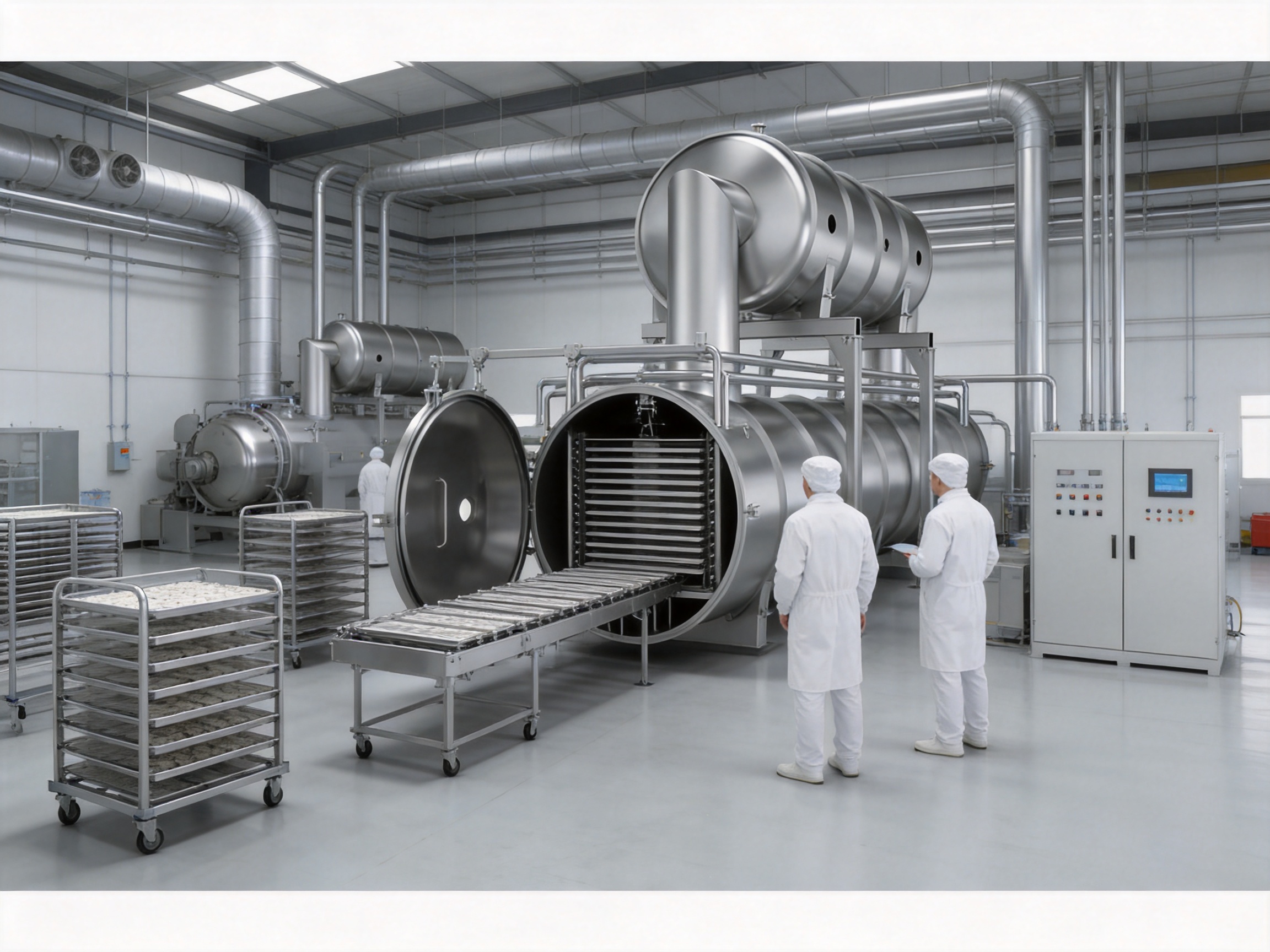
One advantage of the BLK-FD-200 is its focus on system integration. Some competing machines may offer a large chamber but rely on conventional, fixed-speed vacuum and refrigeration equipment. The BLK-FD-200 combines large capacity with variable-frequency operation, intelligent control, energy recovery, and flexible system architecture.
A second advantage is temperature uniformity. The one-piece radiation plates and specially designed heat-transfer-fluid circuit are intended to keep inter-shelf temperature deviation within plus or minus 1 degree Celsius. More consistent shelf conditions can help reduce batch variation and support better product quality.
A third advantage is production continuity. The optional intermediate isolation valve and shared vacuum technology allow users to separate the drying chamber from the cold trap under suitable operating conditions. This can help shorten batch intervals and reduce downtime associated with defrosting.
A fourth advantage is layout flexibility. The chamber and unit positions can be customized, and external or built-in refrigeration configurations are available. This gives equipment planners more freedom when adapting the machine to existing buildings, new factories, clean areas, cold-storage rooms, material-flow paths, or future expansion plans.
A fifth advantage is scalable parallel operation. Multiple units can be connected and scheduled through staggered cycles. This approach may provide higher effective output than a group of unrelated machines because shared systems and coordinated production can reduce idle time.
A sixth advantage is the emphasis on testing. Extended pressure-holding tests, full-machine pressure tests, and multiple inspection workflows create a more comprehensive quality-control process than a basic visual inspection or short-duration factory test.
Finally, the equipment is supported by a manufacturer with experience in research, engineering, production, installation, commissioning, and after-sales service. This integrated capability can reduce the risk that customers must coordinate separate suppliers for the chamber, refrigeration system, control system, energy recovery, installation, and technical support.
No two freeze-drying facilities are identical. The available floor area, ceiling height, loading route, utility capacity, cleanroom classification, cold-storage position, product type, batch schedule, and automation level all influence the final equipment design.
The BLK-FD-200 allows customization of chamber and unit layout positions. This may help customers accommodate narrow buildings, existing production lines, separated refrigeration rooms, special material-flow requirements, or future expansion. Layout planning should consider access for maintenance, trolley movement, cleaning, electrical panels, refrigeration service, vacuum-pump replacement, and emergency response.
Heating can be configured as electric or steam heating. Electric heating may be appropriate where electrical infrastructure is readily available and precise independent control is preferred. Steam heating may be attractive in factories that already operate a reliable steam system or where steam integration supports broader energy-management goals.
Material trolleys can be selected with manual or automatic operation. Manual systems may be suitable for smaller labor teams or facilities that prioritize straightforward operation. Automatic handling may improve throughput, reduce manual lifting, and support a more integrated production line.
Vacuum-pump combinations can also be selected according to the product and process. The customer’s process engineer should evaluate the required evacuation time, vapor load, operating pressure, maintenance strategy, available utilities, noise limits, and environmental conditions before choosing the final configuration.
The stated 2,000-kilogram standard loading capacity provides a reference for industrial planning, but actual production performance depends on the material. Density is particularly important because the same tray volume can contain different masses of different products. Water content, solids content, particle size, layer thickness, container geometry, and product temperature all influence the drying cycle.
For example, a dense food paste may provide a higher mass per tray than sliced fruit, but it may also require a longer drying time because of its internal structure and resistance to vapor movement. A porous product may dry more quickly but occupy more volume per kilogram. A liquid formulation may require special consideration during freezing to prevent foaming, expansion, or uneven solidification.
Loading height also affects heat transfer and vapor movement. The supplied reference uses a 35-millimeter loading height for capacity estimation. Customers should not automatically increase the loading height to raise batch weight because excessive thickness may extend the primary-drying stage and increase the risk of incomplete drying.
Product development should include laboratory or pilot trials, followed by scale-up testing. Important measurements may include freezing curves, product temperature, shelf temperature, chamber pressure, vapor temperature, endpoint detection, residual moisture, rehydration, texture, color, aroma, and microbial or chemical stability.
The manufacturer’s engineering team can use these results to help configure the equipment and develop an initial production recipe. Final process validation remains the responsibility of the customer in accordance with the requirements of the applicable industry and quality system.
Large-scale freeze-drying equipment is a significant capital investment. Successful operation depends on more than delivery of the machine. Site preparation, utility installation, transportation access, foundation requirements, electrical connection, cooling-water supply, steam or power availability, drainage, ventilation, and production-room conditions must be addressed before installation.
Bolaike provides an integrated professional team covering engineering, installation, commissioning, and after-sales service. This support helps customers move from equipment selection to operation in a structured manner. During commissioning, technicians can check vacuum performance, refrigeration operation, shelf-temperature uniformity, heating response, defrosting, control functions, alarm systems, and production sequencing.
Operator training is another important part of commissioning. Personnel should understand start-up and shutdown procedures, recipe management, loading practices, vacuum-pump operation, refrigeration safety, cleaning, defrosting, alarm response, emergency procedures, and routine maintenance.
Preventive maintenance should include inspection of seals, valves, pumps, refrigeration components, heat-transfer-fluid circuits, sensors, electrical connections, insulation, control cabinets, and trolley systems. A documented maintenance plan can reduce unplanned downtime and extend the service life of the equipment.
Remote monitoring can support after-sales service by allowing authorized personnel to review selected operating information. Remote access does not replace on-site maintenance, but it can help technical teams identify operating patterns and provide faster preliminary assistance when an alarm or performance change occurs.
Jiangsu Bolaike Freezing Technology Development Co., Ltd. was established in 2014 in Changzhou, Jiangsu, China. Its predecessor entered the refrigeration industry in 2003 and began developing vacuum freeze-drying technology at an early stage. This background combines refrigeration experience with specialized knowledge of freeze-drying systems.
The company operates a modern manufacturing base of approximately 24,000 square meters. Its professional team covers research and development, engineering, sales, manufacturing, installation, commissioning, and after-sales service. This structure allows the company to manage projects across multiple stages instead of functioning only as a machine fabricator.
Bolaike has established long-term partnerships with universities and research institutions, including the Chinese Academy of Agricultural Sciences, the Jiangsu Academy of Agricultural Sciences, and Jiangnan University. Cooperation with research organizations can support product development, process research, material testing, energy-saving innovation, and application expansion.
The company reports more than 100 national invention and utility-model patents. The supplied product information identifies patented technologies associated with cold recovery, heat recovery, intermediate isolation, and heat-pump or economizer systems. Patents do not automatically guarantee a specific result in every application, but they demonstrate a continuing focus on technical development and proprietary equipment solutions.
The company’s equipment has been exported to more than 30 countries and regions. International project experience can help a supplier understand differences in electrical systems, documentation, site conditions, language requirements, shipping arrangements, local regulations, and customer expectations.
Bolaike serves industries including food, agricultural products, medicinal materials, health supplements, biological products, chemical materials, and cold-storage engineering. This range of applications gives the manufacturer a broad base for adapting freeze-drying systems to different materials and production objectives.
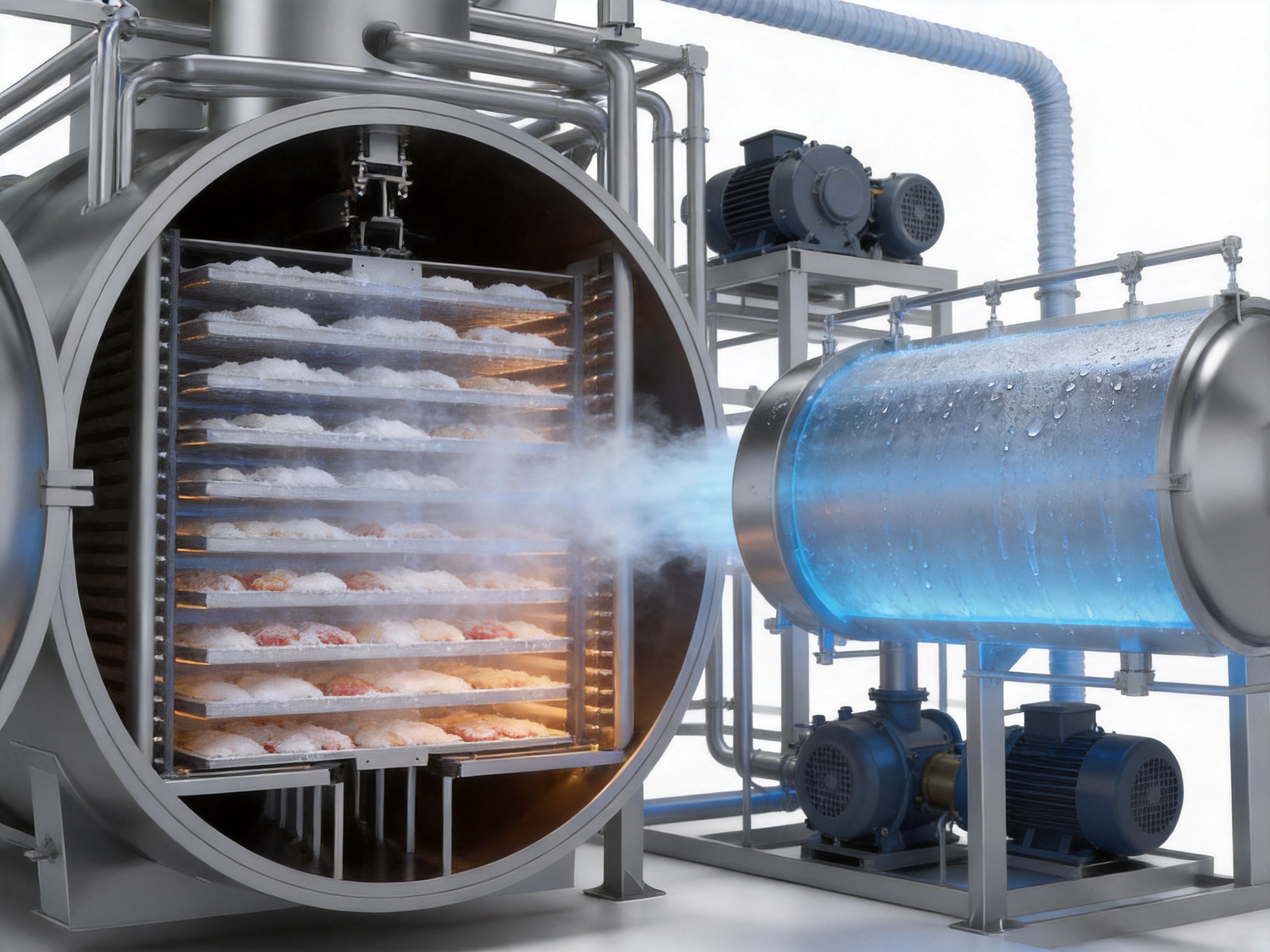
When comparing the BLK-FD-200 with competing large-scale freeze dryers, buyers should evaluate the complete system rather than focusing on chamber area alone. Important questions include whether the quoted capacity is based on tray area, liquid volume, product mass, or a specific loading thickness.
Temperature uniformity should be verified through documented testing rather than assumed from the equipment design. Customers should request information about test methods, measurement points, acceptance criteria, and test conditions. Vacuum performance should likewise be assessed through leak testing, pump-down time, ultimate vacuum, operating pressure stability, and vapor-load performance.
Energy efficiency should be compared using the same product, load, cycle, ambient conditions, and finished-product specification. A system with a higher installed power rating may still use less energy per kilogram if it shortens the cycle or improves heat and cold recovery. Conversely, a claimed percentage reduction should be confirmed through a defined baseline.
Production continuity is another important comparison point. Buyers should examine whether the system supports parallel operation, shared vacuum, isolation valves, independent or shared refrigeration, automated scheduling, and cold-trap defrosting without unnecessary interruption.
Manufacturing quality should be evaluated through material certificates, inspection records, pressure-test reports, factory-acceptance procedures, weld inspection, control-panel testing, and commissioning plans. The supplier’s ability to provide service, spare parts, training, documentation, and remote support should also be included in the purchasing decision.
The BLK-FD-200 has a freeze-drying area of 202.2 square meters. It is commonly described as a 200-square-meter-class industrial freeze dryer.
The standard loading capacity is 2,000 kilograms. Actual batch capacity depends on the density, water content, loading thickness, container arrangement, and drying characteristics of the material.
The liquid loading capacity is 4,000 liters. This figure is a design reference and should be confirmed against the customer’s liquid formulation, tray configuration, loading height, and process requirements.
The stated ultimate vacuum level is no more than 10 Pa. Operating vacuum during a production cycle will vary according to the process stage, vapor load, product temperature, pump configuration, and control strategy.
Yes. Electric heating and steam heating are selectable according to production requirements, available utilities, control preferences, and site conditions.
The system uses one-piece radiation plates without welded joints and a special heat-transfer-fluid circuit design. The stated inter-shelf temperature deviation is within plus or minus 1 degree Celsius.
Yes. Multiple units can be connected in parallel. Staggered loading, drying, unloading, and defrosting cycles can improve production continuity and equipment utilization.
The optional intermediate isolation valve separates the drying chamber from the cold trap under suitable conditions. It helps control vapor flow, supports safe cold-trap defrosting, and can shorten the interval between batches.
Both external and built-in refrigeration configurations are available. The appropriate option depends on the site layout, maintenance access, available space, ventilation, and project requirements.
Possible combinations include screw pump with Roots pump, rotary vane pump with Roots pump, and water-ring pump with Roots pump. The final selection should be based on vapor load, required pump-down time, maintenance preferences, utilities, and product conditions.
Yes. Chamber and unit layout positions can be customized. Trolley handling, heating method, refrigeration arrangement, control configuration, vacuum-pump combination, and production-line integration can also be evaluated during project design.
The equipment is suitable for many food products, fruits and vegetables, medicinal materials, health supplements, biological supplies, chemical materials, and other products that require vacuum freeze-drying. Product trials are recommended before final process approval.
The supplied information describes five core inspection workflows and 58 inspection procedures, more than 48 hours of refrigeration pressure holding, and high-pressure and low-pressure testing for the complete machine. Documentation and acceptance requirements should be agreed upon for each project.
Yes. Remote monitoring through a mobile application is supported. Multiple language options are also available for customization.
Energy-saving performance should be assessed using a defined product, batch size, process cycle, ambient condition, and comparison baseline. Cold recovery, heat recovery, variable-frequency operation, and heat-pump technology can reduce energy use, but actual savings vary by installation and operating practice.
The BLK-FD-200 is a high-capacity freeze-drying platform designed for manufacturers that need dependable industrial performance, flexible configuration, and improved production efficiency. Its 202.2-square-meter drying area, 2,000-kilogram standard loading capacity, 4,000-liter liquid loading capacity, and ultimate vacuum level of no more than 10 Pa provide a strong foundation for large-scale processing.
Its principal advantages include a cylindrical stainless-steel chamber, one-piece radiation plates, controlled heat-transfer uniformity, flexible heating choices, multiple vacuum-pump configurations, external or built-in refrigeration options, residual cold recovery, heat recovery, intelligent variable-frequency operation, and parallel production capability.
The equipment is also supported by a manufacturing approach that emphasizes inspection, pressure testing, engineering integration, commissioning, and after-sales service. These strengths are important because industrial freeze-drying performance depends on the combined quality of mechanical construction, refrigeration, vacuum generation, control software, process development, installation, and maintenance.
For customers evaluating a large-scale freeze dryer, the BLK-FD-200 offers more than a large chamber. It provides a configurable production system aimed at improving batch consistency, reducing energy consumption, shortening production intervals, and supporting the long-term development of commercial freeze-drying operations.
1. Jiangsu Bolaike Freezing Technology Development Co., Ltd. Product specifications and technical information for the BLK-FD-200 large-scale freeze-drying equipment.
2. Jiangsu Bolaike Freezing Technology Development Co., Ltd. Company profile, manufacturing capabilities, application information, and engineering service materials.
3. General principles of vacuum freeze-drying, including freezing, primary drying by sublimation, secondary drying, vacuum control, and cold-trap operation.
4. Technical documentation concerning industrial refrigeration systems, vacuum-pump combinations, heat recovery, cold recovery, and variable-frequency equipment control.
5. Project-specific factory-acceptance, pressure-testing, installation, commissioning, and process-validation documentation for industrial freeze-drying systems.
 2026/05/28
 2026/05/28
2026/05/28
2026/05/28
2026/05/28
2026/05/28


 Custom Industrial Lyophilizer Freeze Dryer Manufacturers





 English
 русский
 Español
 Français
 Deutsch
 عربى
عربى