/blog/
News
Products & Solutions
CONTACT US

+86-18068757376

blk@jsblk.com

No. 29 North Tongjiang Road, Xinbei District, Changzhou City, Jiangsu Province, China
Modern food, agricultural, pharmaceutical, and biochemical manufacturers require freeze-drying systems that can deliver high throughput without sacrificing product quality, process stability, or operating efficiency. The BLK-FD-200 is a heavy-duty industrial freeze dryer designed for large-scale vacuum freeze-drying production. With a nominal freeze-drying area of 202.2 square meters, a standard loading capacity of 2,000 kilograms, and a liquid loading capacity of 4,000 liters, it is engineered for demanding production environments.
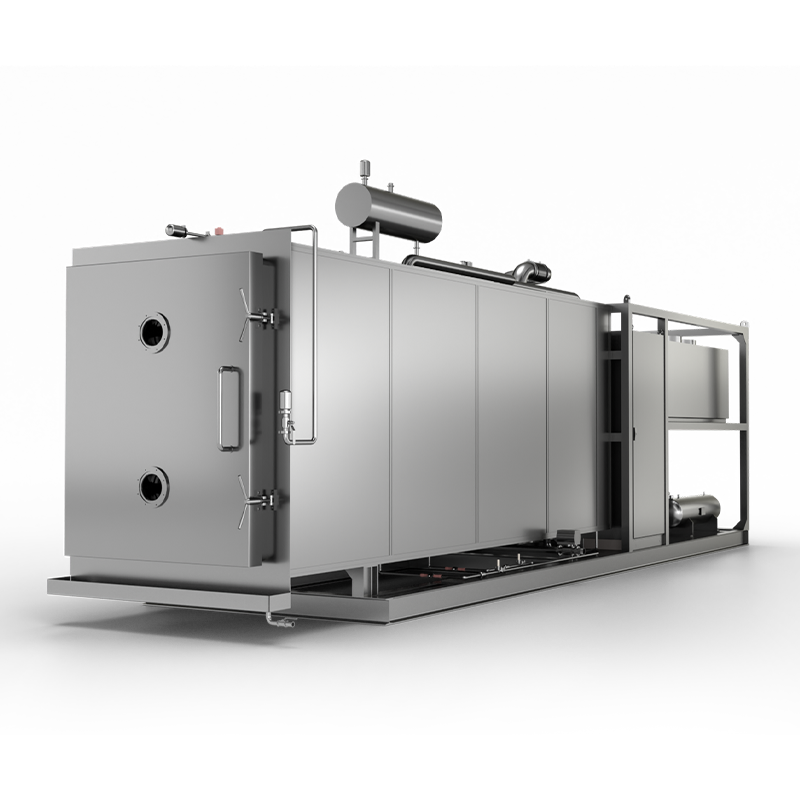
Unlike smaller laboratory or pilot freeze dryers, the BLK-FD-200 is designed as an integrated industrial platform. Its cylindrical chamber structure, one-piece radiation plates, intelligent control system, configurable refrigeration and vacuum systems, and optional intermediate isolation valve support continuous, reliable, and energy-conscious production. The equipment can also be integrated into parallel production systems, allowing manufacturers to increase output while improving equipment utilization and scheduling flexibility.
Manufactured by Jiangsu Bolaike Freezing Technology Development Co., Ltd., the BLK-FD-200 combines large processing capacity with careful engineering control. The company provides research and development, manufacturing, installation, commissioning, and after-sales support, enabling customers to receive a complete freeze-drying solution rather than a standalone machine.
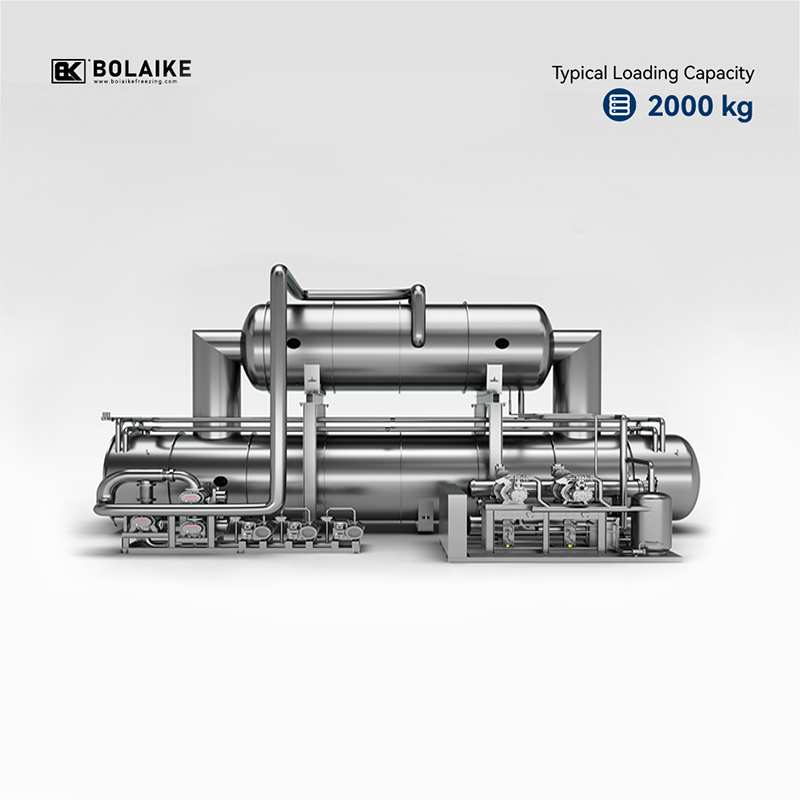
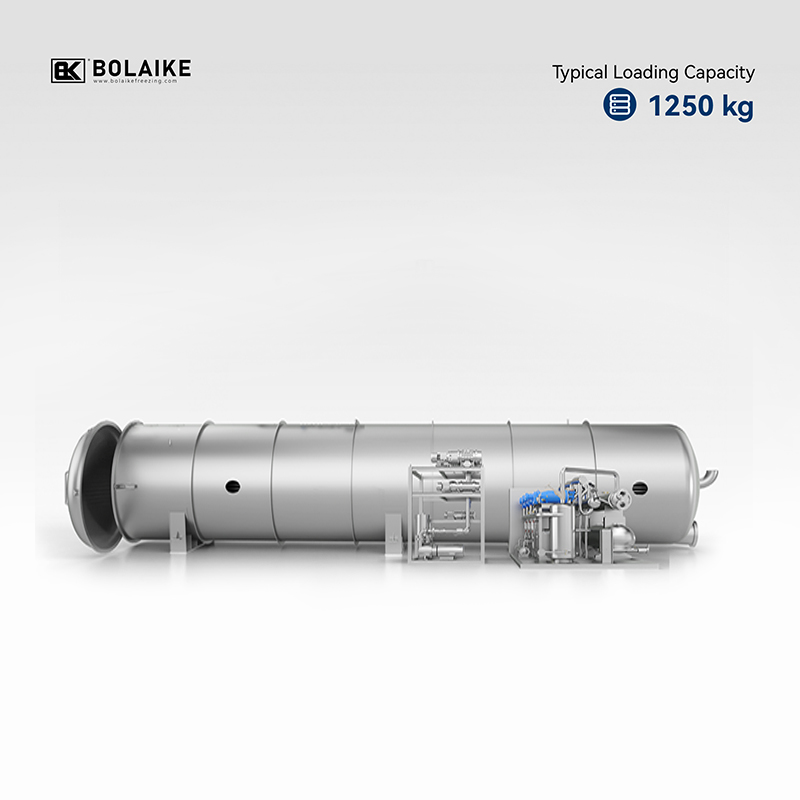
BLK-FD-200
The BLK-FD-200 belongs to the large-scale freeze-drying equipment category. It is intended for manufacturers that need to process substantial quantities of products in a controlled vacuum environment. Freeze-drying removes moisture through sublimation: frozen water changes directly from ice to vapor under vacuum, allowing many heat-sensitive products to retain their structure, color, aroma, flavor, and nutritional characteristics.
Large-scale freeze-drying requires more than simply enlarging a small machine. As equipment capacity increases, the design must address heat-transfer uniformity, vapor movement, refrigeration performance, vacuum stability, structural strength, loading logistics, cleaning, maintenance, energy recovery, and process automation. The BLK-FD-200 addresses these requirements through coordinated mechanical, thermal, refrigeration, vacuum, and control-system engineering.
The freeze-drying area is approximately 202.2 square meters. This provides a substantial surface area for trays, containers, or other approved material-loading systems. The standard loading capacity is 2,000 kilograms, while the liquid loading capacity can reach 4,000 liters, depending on product characteristics, tray configuration, loading depth, and process conditions.
The ultimate vacuum level is specified at no more than 10 Pa. A stable and sufficiently deep vacuum is essential for controlling sublimation conditions and supporting efficient vapor removal. Actual operating pressure and drying time depend on the material, formulation, freezing point, layer thickness, solid content, target residual moisture, and required product quality.
Specification |
BLK-FD-200 Performance |
Production Significance |
Freeze-drying area |
202.2 square meters |
Supports high-volume batch processing |
Standard loading capacity |
2,000 kilograms |
Suitable for large industrial production schedules |
Liquid loading capacity |
4,000 liters |
Supports liquid and semi-liquid product applications |
Ultimate vacuum level |
10 Pa or lower |
Provides a controlled environment for sublimation |
Chamber structure |
Cylindrical industrial chamber |
Offers strength and suitability for large-scale operation |
Heating options |
Electric or steam heating |
Allows adaptation to different plant utilities |
In a small freeze dryer, minor differences in shelf temperature, product thickness, or vapor flow may be manageable. In a large industrial chamber, these differences can affect hundreds or thousands of kilograms of product. Uneven heat transfer may cause some areas to dry too slowly while others receive excessive thermal energy. Variations in vapor flow may lead to pressure instability, extended cycles, or inconsistent residual moisture.
For this reason, large-scale freeze-drying equipment must maintain stable conditions across the entire chamber. The BLK-FD-200 uses a special heat-transfer fluid circuit design to help keep the temperature deviation between shelves within approximately plus or minus 1 degree Celsius. This uniformity supports repeatable production and reduces the risk of batch-to-batch variation.
The equipment also requires a high-performance cold trap or refrigeration system. During sublimation, large volumes of water vapor are released from the product. This vapor must be captured and condensed efficiently to protect the vacuum system and maintain the drying environment. A properly designed refrigeration system must provide sufficient cooling capacity, manage changing loads during the cycle, and recover from defrosting operations without disrupting overall production.
Vacuum management is equally important. Large chambers have greater internal volume and may contain complex product loads. The vacuum system must remove air and non-condensable gases rapidly, maintain the required pressure, and respond to changes in vapor release. The BLK-FD-200 can be configured with different vacuum pump combinations, including screw pump and Roots pump sets, rotary vane pump and Roots pump sets, or water ring pump and Roots pump sets.
These combinations provide manufacturers with flexibility when balancing vacuum performance, maintenance requirements, plant conditions, product characteristics, and investment objectives. Intelligent variable-frequency control can further adjust pump operation according to actual demand instead of running all equipment continuously at maximum power.
One of the important design features of the BLK-FD-200 is its one-piece radiation plate construction. The plates are manufactured without welded joints across the main heat-transfer surface. This approach helps create a more stable and consistent thermal surface while reducing potential weak points associated with multiple welded sections.
The radiation plates work together with a specially designed heat-transfer fluid circuit. During the freezing stage, the shelves remove heat from the product to create a uniform frozen structure. During primary and secondary drying, the shelves supply carefully controlled heat to promote sublimation and remove bound moisture. The heat must be delivered gradually and evenly because excessive heating can cause product collapse, shrinkage, browning, or loss of quality.
A shelf temperature deviation within approximately plus or minus 1 degree Celsius provides a useful foundation for process consistency. It does not eliminate the need for product-specific process development, but it gives operators a more uniform thermal environment. This is particularly valuable for products loaded across many trays and for customers seeking predictable cycle performance at industrial scale.
The one-piece plate design may also simplify the internal thermal layout and contribute to long service life. In a large freeze dryer, the shelves are repeatedly exposed to low temperatures, heating cycles, vacuum conditions, and mechanical loading. Structural stability and resistance to long-term thermal cycling are therefore important considerations when selecting equipment.
Uniform heat transfer helps protect products with narrow process windows. Fruits, vegetables, herbs, prepared foods, biological materials, and pharmaceutical ingredients may respond differently to temperature and pressure changes. A stable shelf environment allows operators to develop recipes with greater confidence and to reproduce approved process parameters over repeated production campaigns.
Consistent temperature also supports more predictable endpoint determination. When product zones experience similar heat-transfer conditions, measurements and process trends are easier to interpret. This can help reduce excessive drying time while maintaining the desired residual moisture and physical structure.
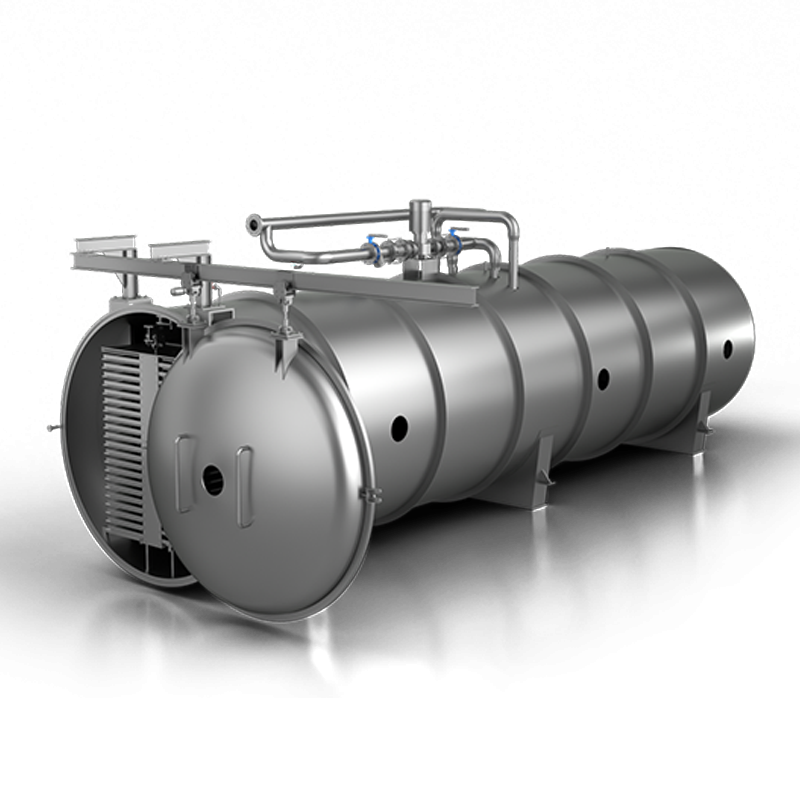
The BLK-FD-200 uses a cylindrical chamber structure designed for heavy-duty industrial service. The chamber is constructed from 8-millimeter-thick 304 stainless steel, providing a stable and durable enclosure for vacuum freeze-drying operations. Stainless steel is widely used in food, pharmaceutical, and chemical processing because it offers corrosion resistance, cleanability, and compatibility with many production environments.
The chamber typically accommodates eight sets of material trolleys. Manual or automatic trolley configurations can be selected according to the customer’s production model, labor organization, plant layout, and automation objectives. Trolley handling is an important part of large-scale freeze-drying because the machine must be loaded and unloaded efficiently without unnecessary product exposure or production delays.
The structural design is intended to withstand repeated pressure changes between atmospheric pressure and deep vacuum. Large vacuum chambers are subject to significant external pressure loads, and the design must maintain dimensional stability throughout operation. Properly engineered chamber construction also helps protect internal shelves, doors, valves, seals, and product-handling components.
Chamber and equipment layout positions can be customized. This is useful for factories with different building dimensions, material-flow routes, utility locations, cleanroom arrangements, or expansion plans. A customized layout can help separate raw-material entry, pre-freezing, freeze-drying, unloading, packaging, and finished-product storage while supporting efficient personnel and material movement.
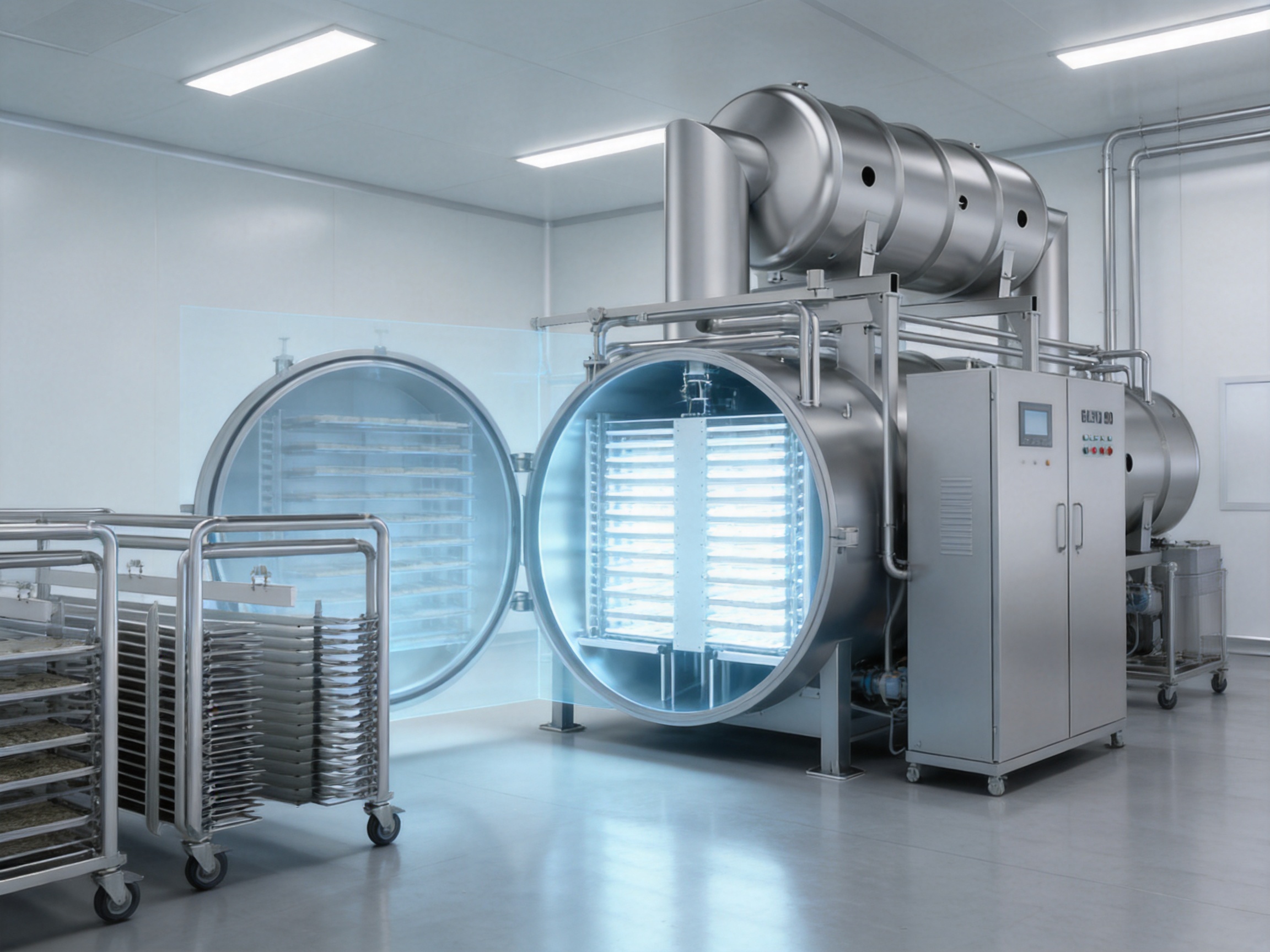
Industrial plants do not all have the same available utilities. Some facilities have reliable steam generation, while others prefer electrical heating because of local energy costs, infrastructure, or environmental considerations. The BLK-FD-200 supports electric or steam heating, allowing the system to be matched to the customer’s production requirements.
Steam heating may be appropriate for factories that already operate a central boiler system and need to use existing thermal infrastructure. Electric heating can provide direct control and may be convenient for facilities without a steam network. The final selection should be based on local energy prices, plant capacity, installation standards, operating schedules, maintenance resources, and product requirements.
The equipment can be supplied with different refrigeration panel configurations to suit site conditions and process requirements. An external refrigeration system separates major refrigeration components from the main chamber and may be useful when a factory requires convenient equipment-room access or specific space planning. A built-in refrigeration system places the refrigeration arrangement closer to the freeze dryer and may be selected for compact integration.
The best configuration depends on the facility layout, ambient conditions, maintenance strategy, noise-control requirements, available service space, and the number of freeze dryers planned for installation. Bolaike’s engineering team can assess these factors during the design stage rather than applying a single standard arrangement to every project.
The vacuum system can combine different pump technologies to establish the vacuum environment quickly and maintain it during drying. Screw pumps, rotary vane pumps, water ring pumps, and Roots pumps each have different operating characteristics. A Roots pump can be paired with a backing pump to increase pumping performance over suitable pressure ranges.
Variable-frequency control allows the vacuum pump unit to adapt its power to changing process demand. During the early part of a cycle, the system may need to remove a larger amount of gas and water vapor. Later, the vapor load may decline, and the pump system can operate at a lower output. Intelligent coordination can reduce unnecessary energy use and may reduce mechanical stress caused by continuous operation at full capacity.
A single refrigeration unit can supply cooling to both the cold storage area and the freeze-drying equipment, depending on the selected system design. This arrangement can help coordinate cold-storage preparation and freeze-drying production. Intelligent variable-frequency refrigeration units can also dynamically manage the drying process of multiple freeze dryers.
For facilities operating several machines, shared or coordinated refrigeration may improve resource utilization. The system should be engineered according to the combined cooling load, peak demand, defrosting schedule, ambient temperature, product cycle, and required redundancy. Proper capacity planning is essential because inadequate cooling can extend cycles, while excessive capacity may increase capital and operating costs.
The BLK-FD-200 supports parallel operation of multiple freeze dryers. A parallel system is designed around staggered loading, drying, unloading, and defrosting cycles. Instead of treating every machine as an isolated production unit, the control strategy coordinates multiple freeze dryers so that the overall line remains productive.
When one unit reaches the final drying stage and requires cold-trap defrosting, other units may still be operating. These active units can jointly support water-vapor capture and help maintain system stability, depending on the final system architecture. This creates a controlled defrosting window for the unit that has completed its drying operation.
Parallel operation can shorten interruptions and improve production scheduling. The supplied product information indicates that two units can achieve the output of three under an appropriate coordinated operating model. Actual performance depends on product, cycle time, loading method, defrosting requirements, utility capacity, and the configuration of the complete production line. Nevertheless, the principle is important: intelligent scheduling can increase effective capacity without requiring every machine to operate independently at maximum intensity.
For large manufacturers, this approach may also improve expansion flexibility. A facility can begin with a defined number of freeze dryers and add additional units as market demand grows. Shared vacuum or refrigeration technologies may be evaluated during the original plant design so that future expansion does not require a complete reconstruction of the utility system.
An optional patented intermediate isolation valve can be used to separate sections of the freeze-drying system during selected operating stages. This arrangement helps control the relationship between the drying chamber and the cold trap, particularly when production and cold-trap defrosting must be managed with greater independence.
The partitioned bulkhead with valve enables more precise control of water-vapor flow direction and vacuum status. During freeze-drying, it can help guide vapor toward the condensing area. During cold-trap defrosting, it can help prevent unwanted vapor backflow into the drying chamber. Maintaining separation between these areas supports product protection and operational safety.
The isolation function can also contribute to shorter batch intervals. If the chamber, cold trap, and vacuum system are managed in a coordinated manner, operators may be able to reduce the time required between unloading, defrosting, cleaning, and the next loading cycle. The actual benefit depends on the validated production process and the customer’s operating procedures.
Shared vacuum technology is particularly valuable in a multi-unit installation. A properly designed shared system can distribute vacuum resources among connected equipment according to the current production stage. This makes it possible to prioritize the unit with the greatest immediate demand while maintaining appropriate conditions in other connected units.
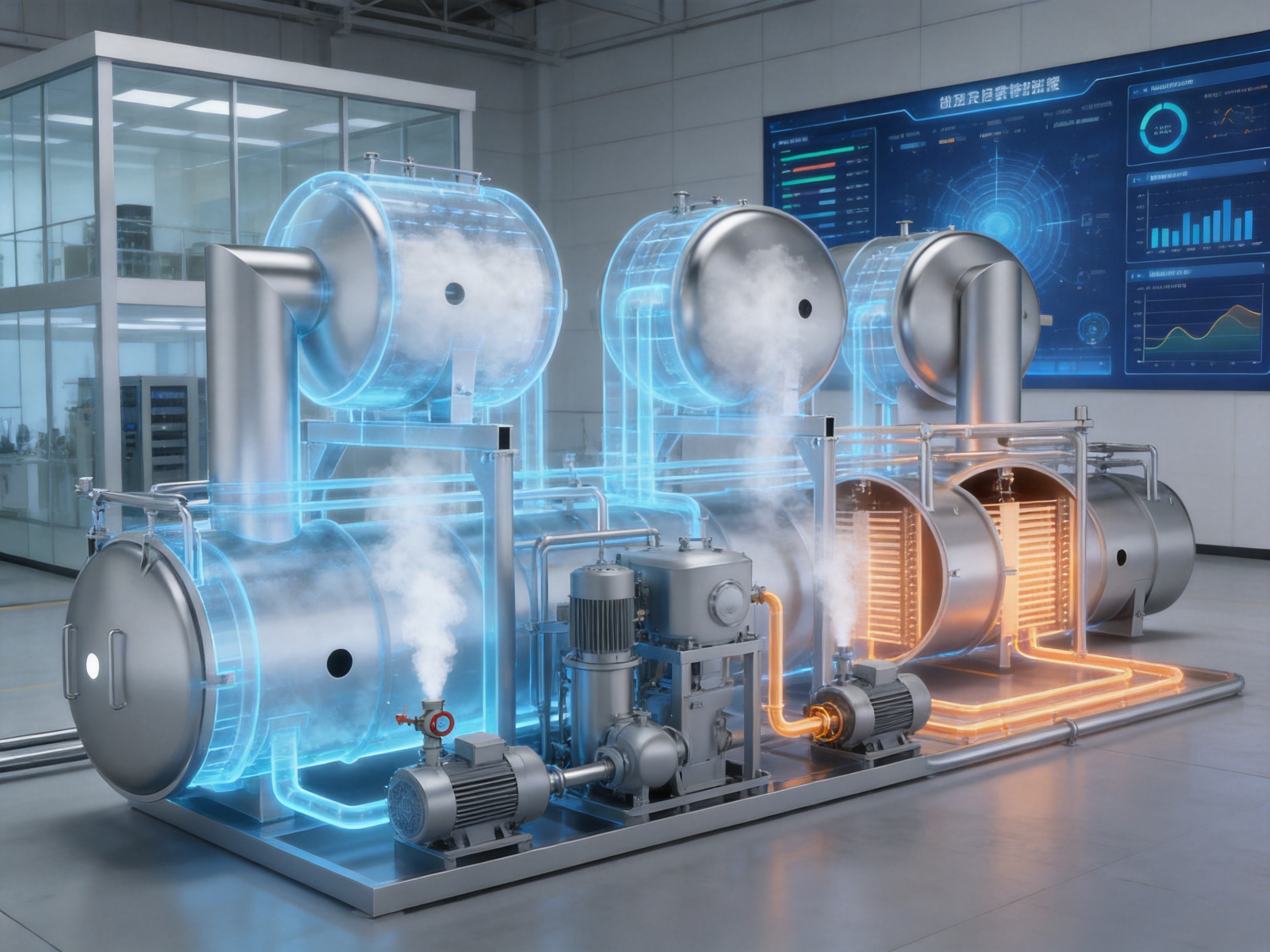
Energy consumption is one of the major operating costs in freeze-drying. Refrigeration compressors, vacuum pumps, heating systems, defrosting equipment, controls, and auxiliary systems all contribute to the total energy demand. Because industrial freeze-drying cycles can last many hours, even modest efficiency improvements can produce meaningful savings over a full year of operation.
The BLK-FD-200 is equipped with residual cold recovery and an intelligent control system. Compared with traditional equipment, the standard product information indicates a potential energy-consumption reduction of approximately 10% to 15% for the equipment configuration. The broader Bolaike energy-saving system is described as capable of reducing energy use by approximately 20% to 40%, depending on the specific design, process, operating conditions, and energy-recovery technologies selected.
These figures should be evaluated through a project-specific energy assessment. Product composition, cycle time, ambient temperature, batch size, heating method, refrigeration temperature, vacuum-pump selection, and operating schedule all influence actual results. Even so, the system architecture provides several practical routes for reducing energy demand.
Traditional refrigeration systems may use cold energy once and then discharge it, causing compressors to remain under a relatively high load. The BLK-FD-200 can use a cold recovery concept in which available refrigeration capacity is reused to pre-cool a subsequent refrigeration process. This can reduce the overall compressor load and improve the utilization of generated cooling energy.
The supplied technical information identifies a potential reduction of approximately 20% to 30% in overall compressor load through cold-energy recycling. Such a system may reduce peak demand and help stabilize refrigeration operation, particularly in installations with repeated or staggered production cycles.
Heat recovery provides another opportunity to reduce operating costs. In a conventional process, excess heat generated or rejected during one stage may be discharged. A heat-recovery system can redirect suitable heat or steam heat to support material drying or another thermal process.
The product information describes different energy-saving results according to the required material-heating temperature. For some low-temperature applications, the recovered energy can provide substantial savings. For heating requirements below approximately 80 degrees Celsius, the stated potential saving is around 10 percent in the relevant energy consumption. Actual performance depends on the process design, heat-source temperature, heat-exchanger efficiency, insulation, and operating sequence.
The heat pump and economizer system is designed to improve compressor performance. The supplied information states that the system can increase the compressor coefficient of performance to approximately 4.8 to 5.9. A higher coefficient of performance means that more useful heating or cooling effect can be produced for a given amount of electrical input.
Compared with traditional freeze-drying equipment, the system is described as improving energy efficiency by approximately five to six times in the relevant heat-pump operating mode. Customers should confirm the applicable operating range, baseline equipment, and measurement method before using this figure for financial planning.
Large-scale freeze-drying requires precise coordination of temperature, pressure, refrigeration, heating, valve position, pump operation, defrosting, and production scheduling. Manual control of every stage would be inefficient and could increase the risk of operator error. The BLK-FD-200 therefore uses an intelligent central control system to manage connected equipment and process functions.
A central control system can monitor the operational status of all connected units. Operators can view key parameters, identify abnormal trends, adjust approved recipes, and coordinate multiple machines from a unified interface. Centralized control is especially useful for facilities operating several freeze dryers, cold-storage units, vacuum pumps, refrigeration units, and material-handling systems.
Remote monitoring through a mobile application is supported. Remote access can help authorized personnel review equipment status, respond to alarms, coordinate maintenance, and monitor production progress without remaining beside the machine at all times. Access control and cybersecurity procedures should be established by the customer according to plant policy.
Multiple language options are available for customization. This supports international installations and helps operating teams use the equipment more effectively. Clear interface design, consistent terminology, alarm records, data trends, and recipe management can all contribute to safer and more repeatable production.
The control system can coordinate the sequence of freezing, vacuum establishment, primary drying, secondary drying, pressure adjustment, heating, cold-trap operation, defrosting, and recovery. It can also manage the relationship between connected machines in a parallel system.
Process automation does not replace the need for qualified process development. Each product must be evaluated to determine appropriate freezing conditions, shelf-temperature profiles, chamber-pressure settings, endpoint criteria, and acceptable cycle variation. However, automation provides a repeatable platform for applying validated procedures across many batches.
Large vacuum freeze dryers are complex systems assembled from pressure-resistant chambers, refrigeration circuits, vacuum pumps, shelves, valves, controls, electrical components, and thermal systems. Manufacturing quality therefore depends on process discipline throughout fabrication, assembly, testing, and commissioning.
Bolaike describes five core inspection workflows and 58 inspection procedures for the BLK-FD-200. These procedures are intended to verify overall machine craftsmanship and system reliability. Detailed inspection programs may include material verification, dimensional inspection, weld and surface checks, pressure testing, electrical inspection, vacuum testing, refrigeration testing, control-system verification, and final operational checks.
The refrigeration system undergoes more than 48 hours of pressure-holding testing. Extended pressure holding can help identify leakage or instability that may not be visible during a short inspection. A reliable refrigeration circuit is essential because leakage, insufficient pressure stability, or poor component performance can affect cooling capacity and product quality.
The entire machine also undergoes two pressure tests: a high-pressure test and a low-pressure test. The supplied information specifies 48 hours dedicated to high-pressure testing. These tests are important for confirming the integrity of relevant pressure-bearing components and connections before delivery.
Pressure testing is only one part of quality assurance. A complete manufacturing program must also consider material traceability, component compatibility, sealing performance, insulation, electrical safety, control logic, and cleanliness. The combination of structured inspection workflows and functional testing gives customers greater confidence when purchasing a large industrial machine.
The BLK-FD-200 is designed according to international specifications. The product information identifies European CE certification and compliance with mechanical health and safety standards, as well as China Quality Management System certification.
Internationally oriented design is valuable for customers operating in different regulatory environments. It can support equipment acceptance, safety review, documentation management, and integration with existing industrial systems. Certification does not remove the customer’s responsibility to meet local installation, electrical, pressure, hygiene, environmental, and occupational safety requirements, but it provides an important foundation for project compliance.
Quality management is also essential because industrial freeze dryers are normally customized to some degree. The chamber size, trolley arrangement, heating source, refrigeration panel, vacuum pump configuration, control language, layout, and production sequence may vary by project. A disciplined quality system helps ensure that customization does not compromise reliability or process performance.
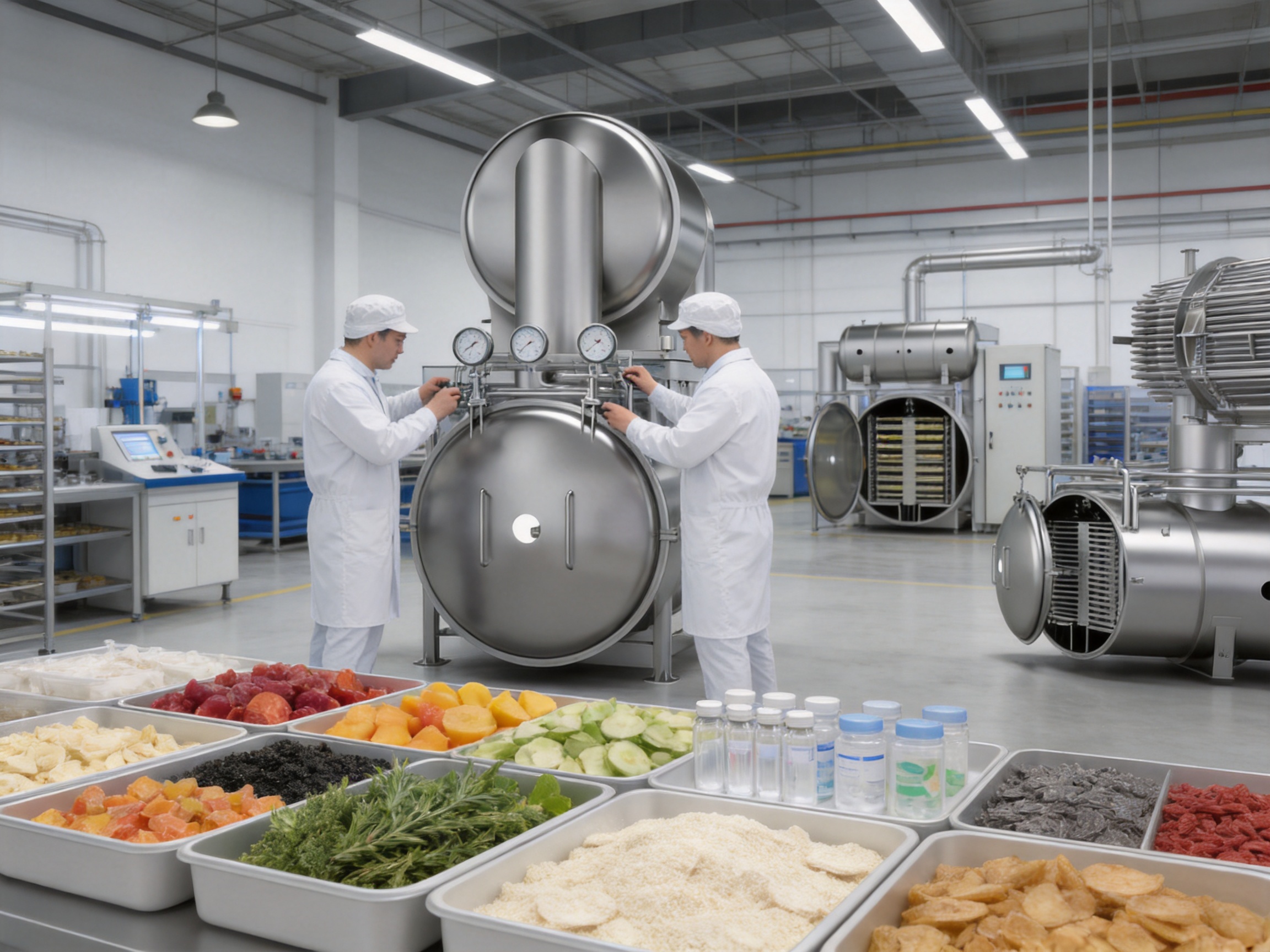
The BLK-FD-200 is suitable for a broad range of materials that benefit from low-temperature dehydration and long-term storage stability. Its large surface area and high loading capacity make it appropriate for industrial producers that need to move beyond laboratory or pilot-scale processing.
Food manufacturers use freeze-drying to preserve products while maintaining desirable sensory and physical characteristics. Potential applications include instant coffee, fruits, vegetables, prepared meals, meat products, seafood, dairy ingredients, sauces, soups, beverages, snacks, and specialty nutrition products.
Freeze-dried foods are lightweight and generally rehydrate more quickly than many conventionally dried products. Because the process operates at low temperatures compared with many hot-air drying methods, it can help protect volatile aromas, colors, shapes, and heat-sensitive nutrients. The actual quality outcome depends on raw-material preparation, freezing rate, formulation, tray loading, process recipe, packaging, and storage conditions.
Fruits and vegetables are often sensitive to color changes, texture damage, and aroma loss. Freeze-drying can help retain the original shape and produce a porous structure that rehydrates efficiently. The BLK-FD-200 is suitable for processing sliced, diced, pureed, or otherwise prepared agricultural products, subject to suitable tray and loading configurations.
The supplied batch-capacity information indicates that a 200-square-meter tray area and a 35-millimeter loading height may produce different capacities according to material density. Illustrative ranges include approximately 3,000 to 4,000 kilograms for food-category materials, 2,500 to 3,000 kilograms for solution-category materials, and 2,000 to 2,500 kilograms for fruits and vegetables. These are reference ranges only and should be adjusted according to density, solids content, viscosity, loading depth, and product formulation.
Medicinal herbs, botanical extracts, functional ingredients, and health supplements may contain heat-sensitive compounds or volatile components. Freeze-drying can support the preservation of selected characteristics when the process is properly developed and validated.
For these applications, manufacturers must consider microbial control, raw-material quality, solvent or water content, active-ingredient stability, cleaning procedures, documentation, and packaging. The freeze dryer should be integrated into a broader quality system that includes incoming inspection, process validation, environmental control, and finished-product testing.
Biological products and pharmaceutical materials often require precise temperature and pressure control. Freeze-drying may be used for certain vaccines, diagnostic materials, enzymes, cultures, laboratory reagents, and other temperature-sensitive formulations. The final application must be evaluated against applicable regulatory requirements and validated process parameters.
The BLK-FD-200 provides a stable platform for large-scale drying, but pharmaceutical users should confirm all required documentation, qualification protocols, cleanability provisions, sterilization requirements, material compatibility, data integrity controls, and regulatory expectations before project approval.
Some chemical products, catalysts, specialty compounds, and laboratory materials may benefit from freeze-drying when conventional drying methods cause degradation, agglomeration, or loss of functional properties. The chamber, seals, heat-transfer fluids, vacuum system, and exhaust arrangement should be reviewed for compatibility with each specific material.
The BLK-FD-200 competes not only through chamber size but through the integration of capacity, process uniformity, energy management, automation, and customization. A large chamber without effective heat transfer or vacuum control may produce inconsistent results. Conversely, an efficient control system cannot compensate for an undersized chamber or inadequate refrigeration capacity. The value of this product lies in the way its subsystems are designed to work together.
With a freeze-drying area of approximately 202.2 square meters and a standard loading capacity of 2,000 kilograms, the BLK-FD-200 can reduce the number of small machines required for a high-volume operation. Fewer machines may simplify material handling, maintenance planning, operator training, and production scheduling.
The one-piece radiation plates and heat-transfer fluid circuit are designed to limit inter-shelf temperature variation. This can support more consistent drying and reduce the need to compensate for large temperature differences between shelves.
Electric or steam heating, external or built-in refrigeration, and several vacuum-pump combinations allow the machine to be adapted to different factories. This flexibility may provide an advantage over equipment designed around a single fixed utility configuration.
Cold recovery, heat recovery, heat-pump technology, and variable-frequency control provide multiple opportunities to reduce energy consumption. These technologies can be selected and coordinated according to the customer’s process and facility conditions.
Multiple BLK-FD-200 units can be connected and operated as a coordinated production system. Staggered cycles and shared technology can improve throughput and reduce the impact of defrosting or individual machine downtime.
Chamber and unit locations, material trolleys, control languages, heating methods, refrigeration arrangements, and vacuum configurations can be customized. This makes the system suitable for international projects with different building standards and operating practices.
Jiangsu Bolaike Freezing Technology Development Co., Ltd. was established in 2014 in Changzhou, Jiangsu, China. Its predecessor, Changzhou Zhongleng Refrigeration Equipment Co., Ltd., entered the refrigeration industry in 2003 and began developing vacuum freeze-drying technology at an early stage.
The company specializes in the research, development, manufacture, and sale of vacuum freeze-drying and refrigeration equipment. Its products serve food, fruits and vegetables, medicinal herbs, health supplements, biological products, chemical materials, and other industries.
Bolaike operates an integrated professional team covering research and development, engineering, sales, installation, commissioning, and after-sales service. This integrated structure is important for large industrial projects because successful installation requires coordination between equipment design, building layout, utilities, material flow, control logic, operator training, and maintenance planning.
The company has established long-term partnerships with universities and research institutions, including the Chinese Academy of Agricultural Sciences, the Jiangsu Academy of Agricultural Sciences, and Jiangnan University. These relationships support technical development and help connect industrial equipment design with research in food processing, agricultural products, materials, and drying technology.
Bolaike has obtained more than 100 national invention and utility model patents. Its stated energy-saving performance is approximately 20% to 30% in relevant equipment and process applications, and its products have been exported to more than 30 countries and regions.
The company has moved into a modern manufacturing base covering approximately 24,000 square meters. This manufacturing foundation supports the production of large chambers, refrigeration systems, vacuum equipment, shelves, control cabinets, and customized components. For international customers, a manufacturer’s ability to support the complete project lifecycle can be as important as the initial equipment specification.
Purchasing a large freeze dryer is a process-engineering decision rather than a simple equipment transaction. Before manufacturing begins, the customer should define product characteristics, expected annual production, batch size, cycle time, loading method, raw-material preparation, pre-freezing requirements, packaging line capacity, utility availability, room classification, and future expansion plans.
Installation planning should include foundations, access routes, lifting requirements, service clearances, electrical supply, steam or hot-water connections, cooling-water requirements, drainage, compressed air, ventilation, and control-system communication. The equipment layout should provide adequate space for trolley movement, inspection, cleaning, maintenance, and safe operator access.
Commissioning normally includes mechanical inspection, electrical connection, vacuum testing, refrigeration testing, heating verification, control-system checks, alarm verification, and trial operation. Product trials are then used to adjust recipes and confirm actual capacity. Customers should establish acceptance criteria before commissioning so that performance can be evaluated objectively.
After-sales support may include operator training, preventive-maintenance guidance, spare-parts planning, troubleshooting, software support, process assistance, and periodic service. Because industrial freeze dryers operate with refrigeration, vacuum, pressure, heating, and automated controls, a well-organized maintenance program helps preserve performance and extend service life.
Customers comparing large-scale freeze dryers should evaluate more than nominal chamber area. The following factors are especially important:
Effective freeze-drying area and usable loading area.
Standard and maximum loading capacity under the intended product conditions.
Temperature uniformity across all shelves and trolley positions.
Vacuum pump capacity, ultimate vacuum, and pressure-control response.
Cold-trap capacity, refrigeration temperature, and defrosting method.
Heating source, heating-control accuracy, and utility consumption.
Automation functions, data recording, alarm management, and remote monitoring.
Energy-recovery options and measurable operating-cost benefits.
Materials of construction, chamber thickness, sealing design, and cleanability.
Inspection procedures, pressure testing, certifications, and documentation.
Installation support, commissioning, process trials, training, and spare parts.
Future expansion capability and compatibility with parallel production.
A factory should also request a process-specific capacity assessment. The same machine may process different quantities of different products because density, moisture content, viscosity, solids concentration, loading height, freezing behavior, and target endpoint all affect cycle performance.
The freeze-drying area is approximately 202.2 square meters. The usable area and final tray arrangement should be confirmed according to the selected trolley, tray, and loading configuration.
The standard loading capacity is 2,000 kilograms, and the liquid loading capacity is up to 4,000 liters. Actual batch capacity varies according to material density, product formulation, loading height, tray arrangement, and process requirements.
The specified ultimate vacuum level is 10 Pa or lower. The operating vacuum used during production depends on the product and the validated drying recipe.
Yes. Electric or steam heating can be selected according to the customer’s available utilities, energy strategy, and production requirements.
Yes. The BLK-FD-200 supports parallel operation of multiple units. A coordinated system can use staggered loading, drying, unloading, and defrosting cycles to improve production continuity and equipment utilization.
The optional intermediate isolation valve separates the drying chamber and cold trap during selected process stages. It helps control vapor flow, reduce the risk of vapor backflow, and create a more efficient defrosting and batch-transition sequence.
Possible combinations include screw pump with Roots pump, rotary vane pump with Roots pump, and water ring pump with Roots pump. The appropriate combination depends on the product, required pumping speed, plant conditions, maintenance preferences, and project budget.
Yes. The equipment can include residual cold recovery, intelligent variable-frequency control, heat recovery, cold-energy recycling, and a heat-pump and economizer system. Actual savings depend on the selected configuration and operating conditions.
Yes. The chamber is constructed from 8-millimeter-thick 304 stainless steel, which provides structural stability, corrosion resistance, and suitability for many industrial processing environments.
The chamber typically accommodates eight sets of material trolleys. Manual and automatic trolley options are available according to the customer’s handling and automation requirements.
The central control system supports remote monitoring through a mobile application, and multiple language options can be customized. Final functions and communication interfaces should be confirmed during technical design.
Applications include food, fruits and vegetables, instant coffee, medicinal herbs, health supplements, biological products, pharmaceutical materials, chemical materials, and other products that require controlled low-temperature dehydration.
Customers should provide product type, moisture content, expected batch size, loading method, target annual output, preferred cycle time, heating utility, available refrigeration conditions, plant layout, automation requirements, destination country, and applicable standards. This information helps the manufacturer develop an accurate technical and commercial proposal.
The BLK-FD-200 is a high-capacity industrial freeze dryer designed for manufacturers that need reliable production at approximately 200 square meters of drying area. Its combination of a 2,000-kilogram standard loading capacity, 4,000-liter liquid capacity, 10 Pa or lower ultimate vacuum, uniform radiation plates, configurable vacuum and refrigeration systems, and intelligent control provides a strong foundation for demanding production environments.
Its main advantages are not limited to size. The equipment is designed to improve thermal consistency, support flexible plant integration, reduce energy consumption, coordinate multiple machines, and shorten interruptions between batches. Optional isolation-valve technology, parallel operation, cold-energy recovery, heat recovery, and variable-frequency control further strengthen its suitability for continuous and cost-conscious production.
Jiangsu Bolaike’s research background, manufacturing capabilities, inspection procedures, pressure-testing program, international certifications, patent portfolio, and integrated engineering services add value to the equipment purchase. For customers seeking a customized large-scale freeze-drying system, the BLK-FD-200 offers a comprehensive platform that can be configured around product requirements, factory utilities, production targets, and future expansion plans.
1. Jiangsu Bolaike Freezing Technology Development Co., Ltd. Product Technical Information for BLK-FD-200 Large-Scale Freeze-Drying Equipment.
2. Jiangsu Bolaike Freezing Technology Development Co., Ltd. Company Profile and Manufacturing Capability Information.
3. General principles of vacuum freeze-drying, sublimation, heat transfer, vapor capture, and moisture removal in industrial food and pharmaceutical processing.
4. Technical documentation concerning cold-energy recovery, heat recovery, heat-pump systems, and variable-frequency refrigeration control.
5. Industrial equipment quality-management, pressure-testing, mechanical safety, and CE conformity principles.
 2026/05/28
 2026/05/28
2026/05/28
2026/05/28
2026/05/28
2026/05/28


 Custom Industrial Lyophilizer Freeze Dryer Manufacturers





 English
 русский
 Español
 Français
 Deutsch
 عربى
عربى