/blog/
News
Products & Solutions
CONTACT US

+86-18068757376

blk@jsblk.com

No. 29 North Tongjiang Road, Xinbei District, Changzhou City, Jiangsu Province, China
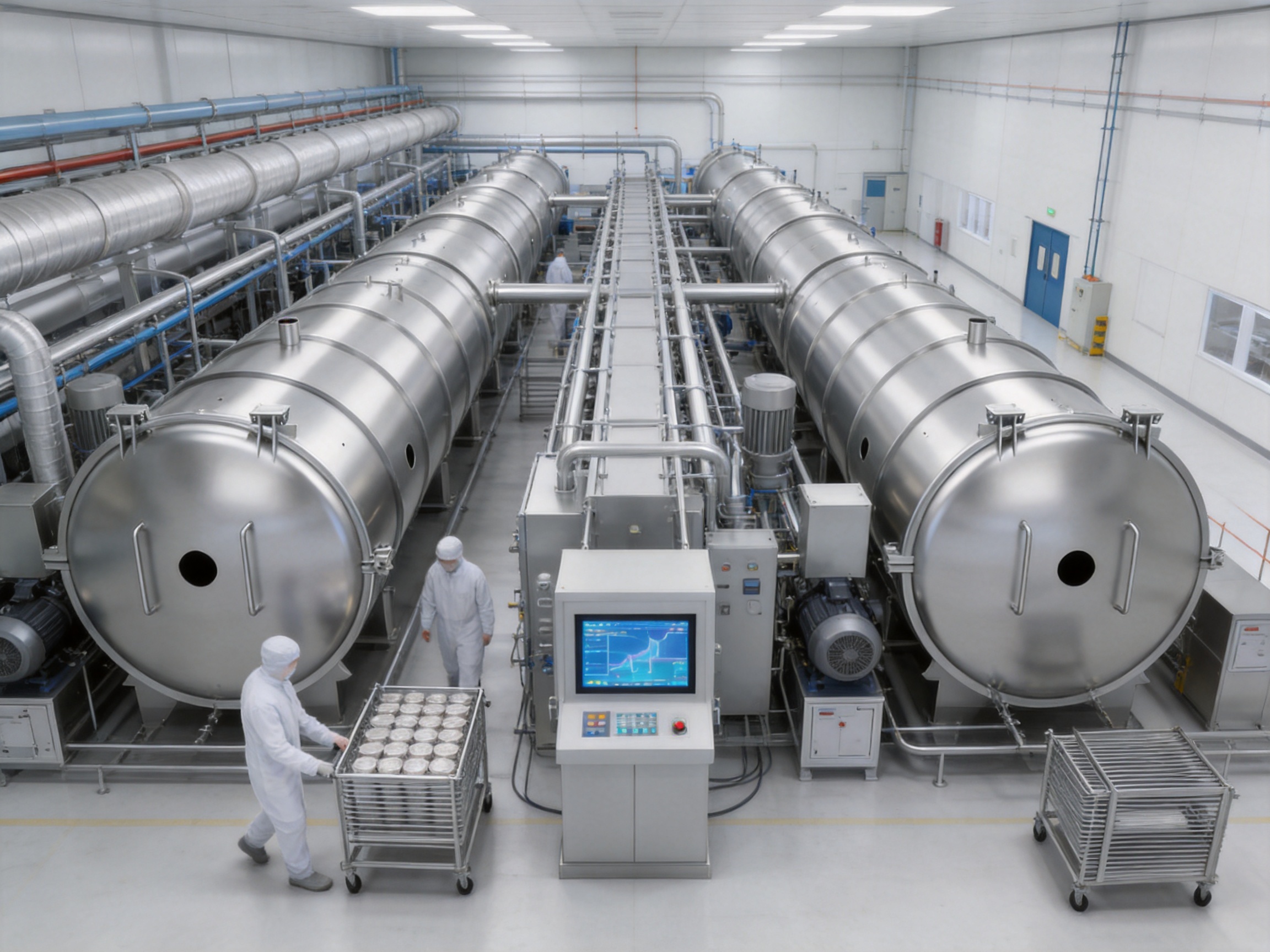
Industrial freeze-drying is one of the most demanding preservation technologies used in modern food processing, pharmaceutical production, biotechnology, agricultural product processing, and specialty chemical manufacturing. The process must remove moisture under vacuum while preserving structure, color, aroma, nutritional value, biological activity, and rehydration performance. At industrial scale, the equipment must also provide stable temperature control, dependable refrigeration, repeatable vacuum performance, safe operation, efficient energy use, and a production layout that can adapt to changing requirements.
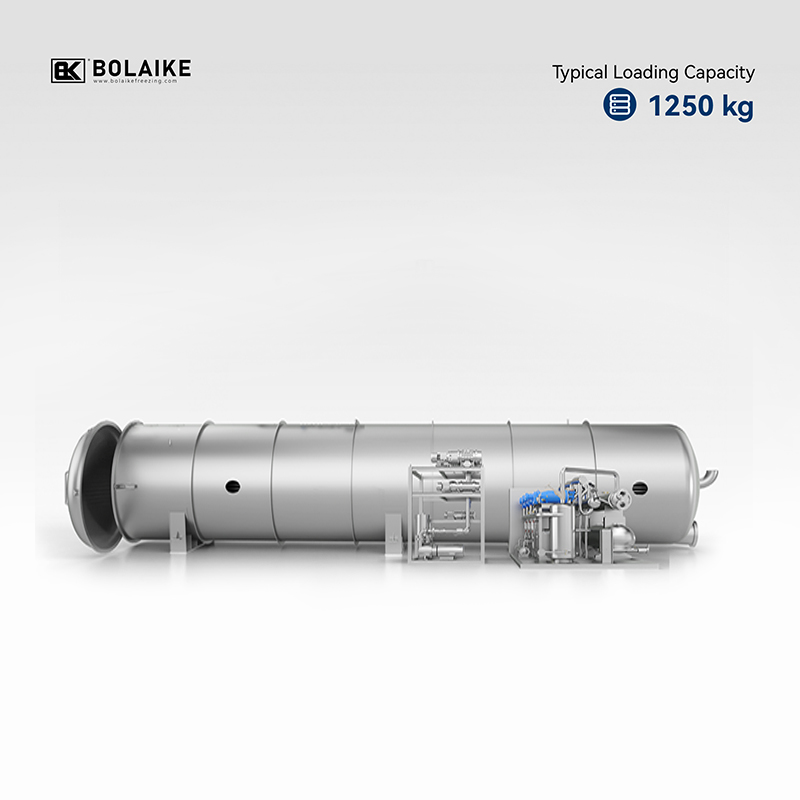
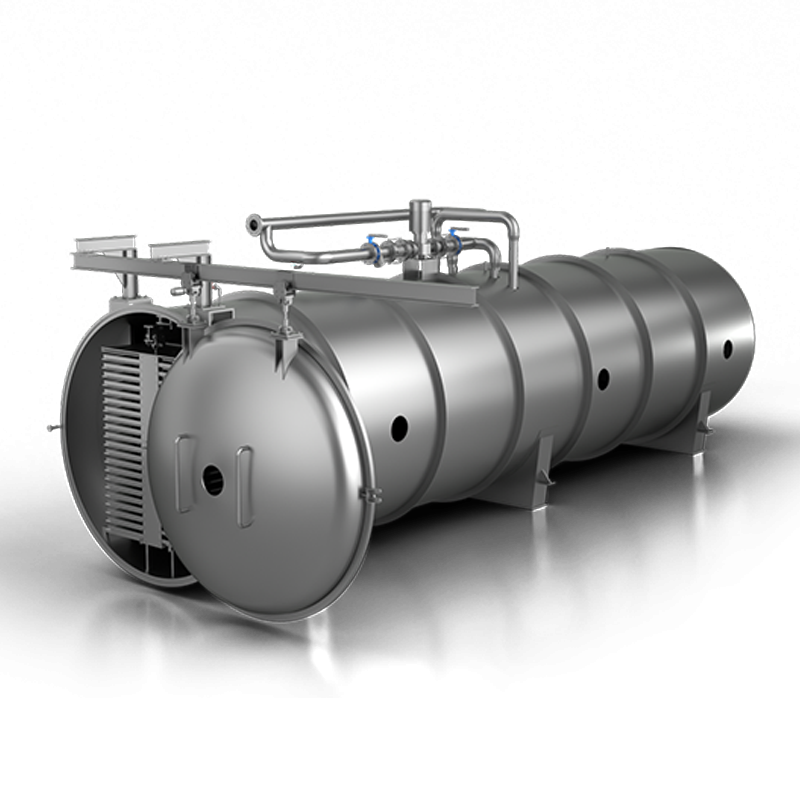
The BLK-FD-100 is a standard-duty large-scale freeze-drying system developed for manufacturers that require high processing capacity and precise control. With a nominal freeze-drying area of 101.1 square meters, a standard loading capacity of 1,000 kilograms, and a liquid loading capacity of 2,000 liters, it is designed to support continuous and repeatable industrial production. Its cylindrical chamber, integrated intelligent control system, optional intermediate isolation valve, energy-recovery technologies, and flexible utility configurations provide a comprehensive solution for demanding freeze-drying applications.
Unlike a basic vacuum drying machine, a modern industrial freeze dryer must coordinate several interconnected systems. These include the drying chamber, product shelves, refrigeration circuit, cold trap, vacuum pumps, heat-transfer system, control platform, defrosting arrangement, material trolleys, and supporting utilities. The performance of the complete system depends not only on individual components but also on how these components are designed, assembled, tested, and controlled as a whole.
This article examines the design, performance, manufacturing strengths, energy-saving technologies, quality procedures, applications, and purchasing considerations associated with the BLK-FD-100. It also explains why system integration and production engineering are essential when selecting equipment for large-scale freeze-drying operations.
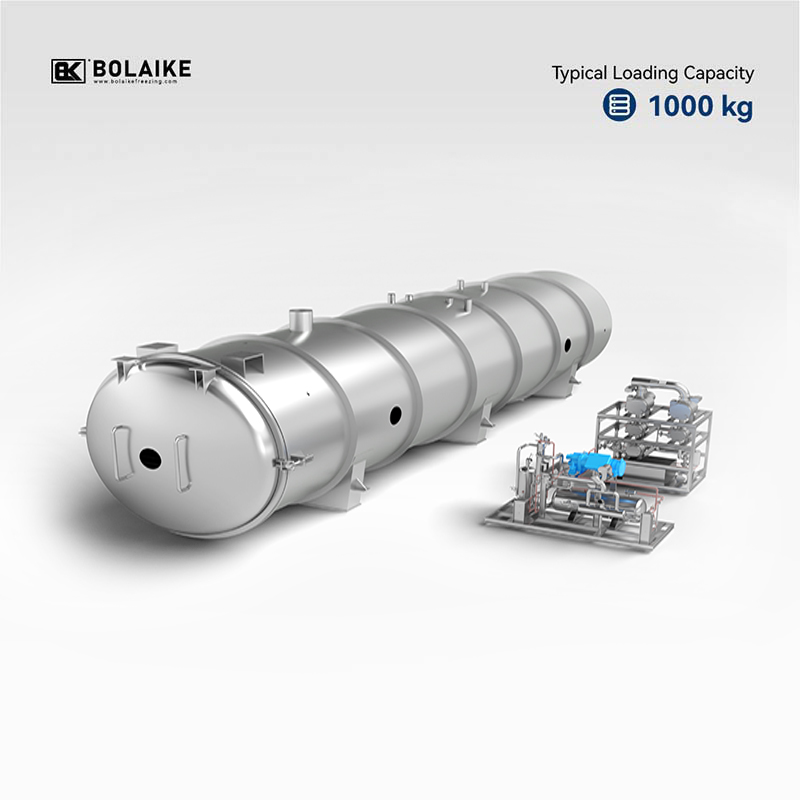
BLK-FD-100
The BLK-FD-100 belongs to the large-scale freeze-drying equipment category. It is intended for production environments where laboratory or pilot-scale equipment cannot meet the required throughput. Its design emphasizes reliable batch processing, stable heat transfer, efficient vapor capture, and integration into larger production systems.
Specification |
BLK-FD-100 Value |
Production Significance |
Freeze-drying area |
101.1 m² |
Provides a large effective shelf area for industrial batches. |
Standard loading capacity |
1,000 kg |
Supports high-volume production with controlled loading conditions. |
Liquid loading capacity |
2,000 L |
Suitable for liquid formulations and products prepared in bulk. |
Ultimate vacuum level |
≤10 Pa |
Provides the low-pressure environment required for sublimation drying. |
Standard chamber structure |
Cylindrical |
Offers structural stability and supports uniform pressure distribution. |
Heating options |
Electric or steam |
Allows the system to match available utilities and production economics. |
Actual production capacity depends on product density, solids content, layer thickness, loading pattern, freezing behavior, target residual moisture, shelf temperature, formulation, and required cycle time. The stated standard loading capacity should therefore be understood as a reference design value rather than a universal result for every product. Before final purchase, manufacturers should conduct process trials or engineering calculations for the intended material.
The equipment can also be configured according to site conditions. Chamber orientation, unit placement, material transfer routes, utility connections, operator access, and refrigeration panel arrangements may be adapted to suit a new facility or an existing production line. This flexibility is important because industrial freeze dryers are rarely installed as isolated machines. They must normally connect with preparation rooms, filling systems, pre-freezing equipment, cold storage, packaging areas, cleaning systems, and quality-control procedures.
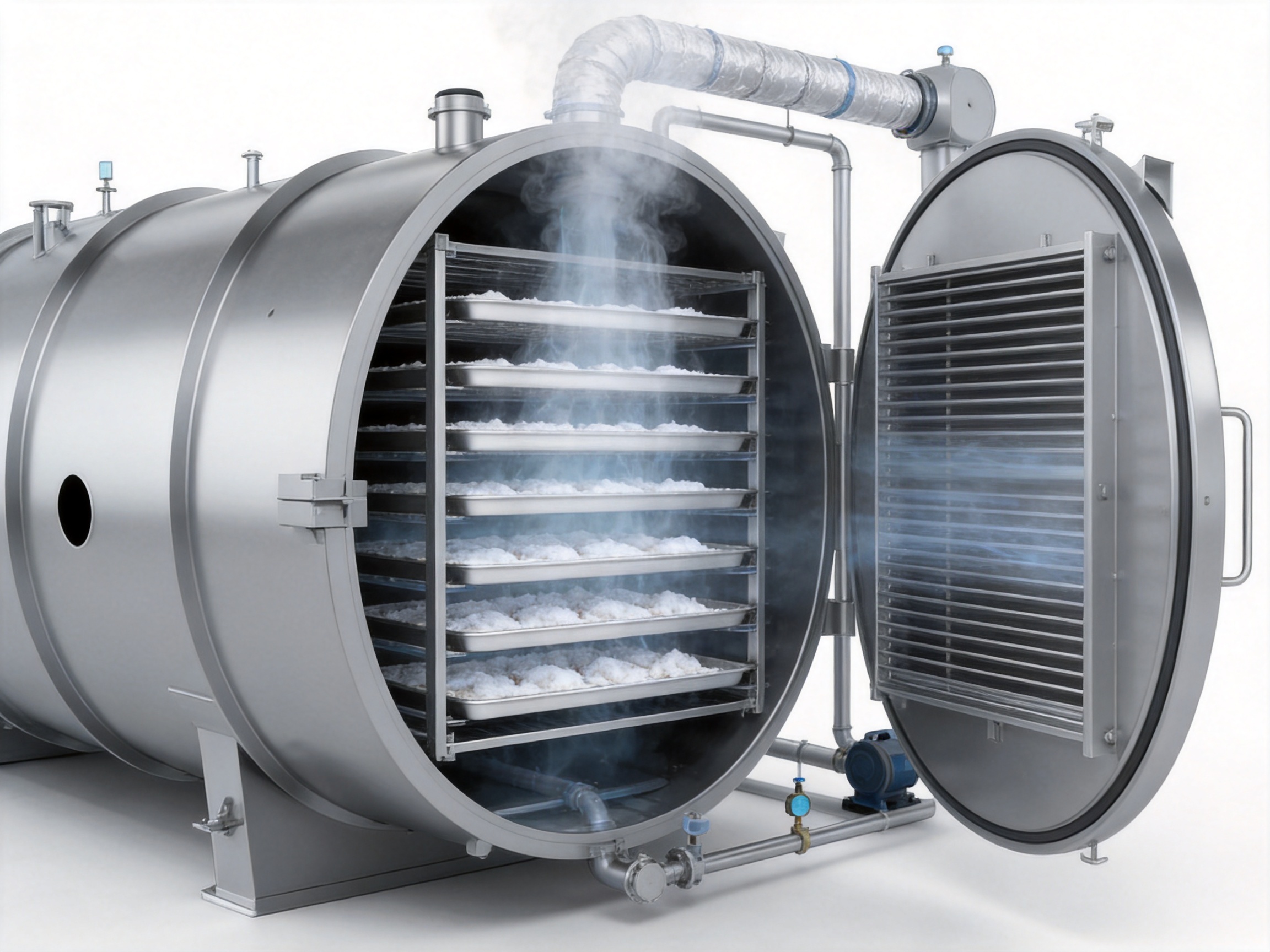
Freeze-drying, also known as lyophilization, generally consists of three main stages: freezing, primary drying, and secondary drying. During freezing, the product is cooled until its free water forms ice. During primary drying, the chamber pressure is reduced and heat is supplied in a controlled manner, allowing ice to change directly from solid to vapor through sublimation. During secondary drying, residual bound moisture is removed to achieve the required final moisture content and product stability.
The process requires a carefully balanced relationship between shelf temperature, product temperature, chamber pressure, condenser temperature, vapor flow, and drying time. If the product temperature becomes too high, collapse, shrinkage, melting, loss of structure, or degradation may occur. If the temperature is too low or the vacuum is poorly controlled, the cycle may become unnecessarily long and energy-intensive.
The BLK-FD-100 is designed to provide the physical conditions needed for controlled sublimation. Its large shelf area supports substantial product loading, while the heat-transfer fluid circuit is designed to keep the temperature deviation between shelves within approximately ±1°C under appropriate operating conditions. Uniform temperature distribution helps reduce variations between trays and improves batch consistency.
The cold trap or condenser captures water vapor released from the product. Efficient vapor capture protects the vacuum system, supports stable chamber pressure, and prevents excessive vapor migration into the vacuum pumps. The refrigeration system must therefore provide both low-temperature performance and sufficient capacity for the expected vapor load. In large-scale operation, the interaction between the chamber, cold trap, and refrigeration unit is just as important as the performance of the vacuum pumps.
The cylindrical chamber structure is designed to withstand vacuum conditions while maintaining mechanical stability. A pressure vessel operating under vacuum must be engineered to resist deformation, maintain sealing performance, and support repeated pressure cycles. The chamber also needs enough internal clearance for shelves, trolleys, product trays, sensors, vapor flow, and cleaning access.
For large-scale equipment, chamber construction quality has a direct effect on service life. The use of robust stainless-steel construction, carefully finished internal surfaces, accurate door and seal alignment, and controlled welding procedures helps reduce the risk of leakage, contamination, and structural fatigue. The BLK-FD-100 is described as using 8-millimeter-thick 304 stainless steel in key structural construction, providing a stable body and long operating life when properly maintained.
The radiation plates are designed as one-piece components without welded joints across the heat-transfer surface. This construction can reduce potential weak points, improve surface uniformity, and support more consistent thermal behavior. Fewer welded joints may also simplify cleaning and reduce the risk of local deformation or leakage in the plate structure.
The heat-transfer fluid circuit inside the plates is designed to promote even distribution of heating and cooling energy. During freezing, the shelves must remove heat from the product. During primary and secondary drying, they must supply heat in a controlled way. A stable circuit helps the equipment transition between these stages without creating excessive temperature differences between shelf locations.
Temperature uniformity is one of the most important indicators of freeze-dryer performance. If one area of the chamber is warmer than another, some products may dry too quickly while others remain wet. Such variation can increase rejection rates, complicate process validation, and make it more difficult to establish a reliable recipe.
The BLK-FD-100 is designed to maintain inter-shelf temperature deviation within approximately ±1°C under specified operating conditions. This level of control supports repeatable drying and helps process engineers develop recipes that can be transferred from one batch to another. Actual uniformity should always be verified during commissioning, qualification, and routine performance monitoring.
An optional intermediate isolation valve can separate the drying chamber from the cold trap. This function is valuable during cold-trap defrosting and in installations where production continuity is a priority. By controlling the connection between the chamber and condenser, the system can manage vapor flow more precisely and reduce the risk of water vapor returning toward the product chamber.
In a multi-unit installation, isolation technology also supports staggered operation. One dryer may be undergoing defrosting while other units remain in production. This arrangement can shorten batch intervals, improve equipment utilization, and reduce the impact of maintenance or defrosting operations on the overall production schedule.
Multiple BLK-FD-100 units can be arranged for parallel operation. Parallel production allows operators to coordinate loading, drying, unloading, defrosting, cleaning, and maintenance across several chambers. The supplied technical material indicates that two units may achieve output comparable to three conventional units in certain system configurations. This statement depends on cycle time, product, equipment utilization, and process organization, but it illustrates the potential value of coordinated system design.
A parallel system can also improve operational resilience. If one unit is stopped for inspection or service, the remaining units may continue processing. Shared vacuum, refrigeration, or control technologies can be configured according to site requirements, although the benefits and risks of shared utilities should be assessed during engineering design.
Freeze-drying capacity cannot be determined only by chamber volume. Product density and layer thickness have a major effect on the mass that can be loaded onto a fixed shelf area. A low-density fruit product may occupy significantly more space than a dense solution or concentrated formulation. Similarly, a product with high water content may require a longer cycle and greater condenser capacity than a product with lower moisture content.
For a reference tray area of approximately 100 square meters and a loading height of 35 millimeters, the indicative material processing capacity of the BLK-FD-100 varies by category and material density.
Reference Product Category |
Indicative Processing Range |
Important Considerations |
Food products |
Approximately 3,000–4,000 kg |
Depends on water content, density, shape, and tray loading method. |
Solution-based products |
Approximately 2,500–3,000 kg |
Depends on solids concentration, fill depth, and freezing behavior. |
Fruits and vegetables |
Approximately 2,000–2,500 kg |
Depends on cut size, moisture content, density, and product arrangement. |
These figures are indicative engineering references and should not replace a product-specific capacity study. A manufacturer evaluating the machine should provide information about the product form, initial moisture, final moisture, tray size, layer thickness, target cycle time, pre-freezing conditions, and packaging requirements. Such information allows the supplier to evaluate refrigeration capacity, heat-transfer requirements, vacuum pump sizing, and expected batch throughput more accurately.
Energy consumption is a major cost factor in industrial freeze-drying. Refrigeration compressors, vacuum pumps, heating systems, defrosting systems, circulation pumps, control equipment, and auxiliary utilities all contribute to total energy demand. Because freeze-drying cycles can last many hours, even modest efficiency improvements can produce significant annual savings.
The BLK-FD-100 incorporates several technologies intended to reduce energy consumption and operating costs. The equipment is described as achieving a 10%–15% reduction in energy consumption compared with traditional equipment through its standard intelligent control and residual cold recovery configuration. Additional system-level technologies are associated with possible energy reductions of approximately 20%–40%, depending on configuration, product, operating conditions, and comparison baseline.
In a conventional refrigeration arrangement, cold energy may be used once and then discarded or lost during system transitions. A cold recovery system can reuse available cooling energy to pre-cool another part of the refrigeration circuit or the next cooling stage. This reduces the amount of work required from the compressor and helps the refrigeration unit operate more efficiently.
The supplied technical information indicates that cold recovery may reduce the overall compressor load by approximately 20%–30% under suitable operating conditions. The practical result depends on the refrigeration cycle, ambient conditions, product load, condenser demand, and control strategy. Cold recovery is especially valuable in installations with repeated batches and predictable production scheduling.
Freeze-drying requires carefully controlled heating during sublimation and final drying. Some systems discharge useful heat generated during refrigeration or other stages. A heat-recovery arrangement can redirect suitable waste heat or steam heat toward material drying, preheating, or other process requirements.
Heat recovery must be managed carefully because product temperature limits are often strict. A system intended for sensitive food, pharmaceutical, biological, or herbal materials cannot simply apply the highest available heat. Instead, the control system should regulate the heat-transfer fluid and shelf temperature according to the process recipe.
The supplied information describes substantial energy-saving potential when material heating temperatures are at or below 35°C, as well as approximately 10% savings when required material heating temperatures remain below 80°C. These values should be verified for each application because actual savings depend on the product, operating schedule, heat source, ambient temperature, and integration with other factory utilities.
A heat pump and economizer configuration can improve the operating efficiency of the refrigeration system by recovering and redirecting energy within the cycle. The stated coefficient of performance for the system is approximately 4.8–5.9, with the potential to improve energy efficiency by five to six times compared with certain traditional freeze-drying arrangements.
A high coefficient of performance does not mean that total plant energy use is automatically reduced by a fixed amount in every installation. Plant engineers should evaluate the complete energy balance, including compressor operation, pump power, vacuum demand, heating demand, cooling-water requirements, defrosting, and auxiliary systems. Nevertheless, high-efficiency refrigeration and heat recovery can significantly improve the economics of continuous industrial production.
Vacuum and refrigeration demand changes during a freeze-drying cycle. Maximum capacity may be needed during periods of high vapor release, while lower output may be sufficient during later stages. Variable-frequency drives allow pump and compressor speed to respond to actual process demand rather than operating continuously at full capacity.
The BLK-FD-100 can be equipped with intelligent variable-frequency vacuum and refrigeration combinations. This approach can reduce unnecessary power consumption, support more stable pressure control, reduce mechanical stress, and extend equipment service life. It also allows operators to adapt system output to different products and production loads.
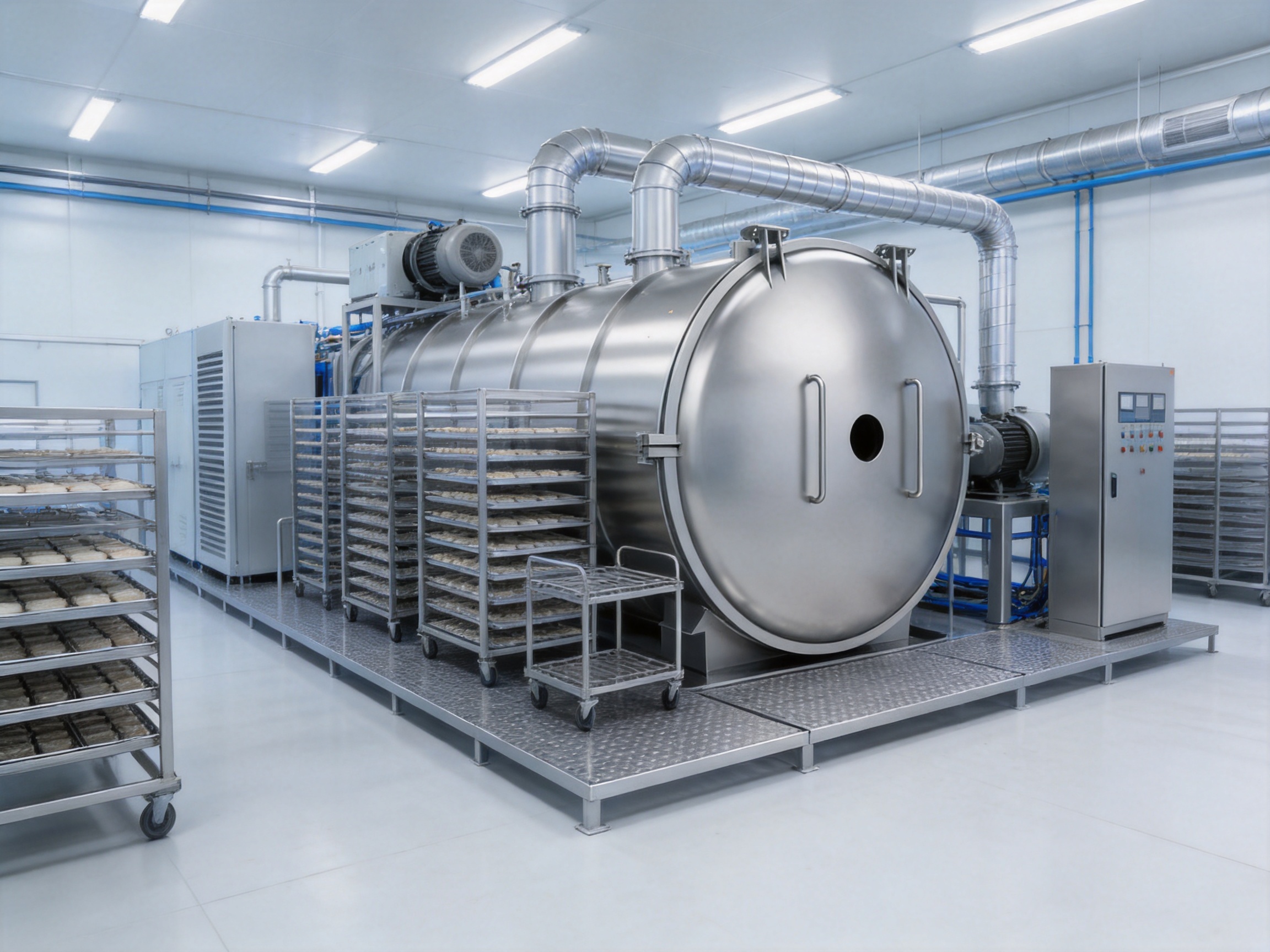
The vacuum system is responsible for reducing chamber pressure to the level required for sublimation. Large industrial chambers contain considerable internal volume, and the vacuum system must remove air and non-condensable gases quickly enough to establish the required process conditions. It must also manage the continuing release of water vapor during drying.
The equipment can be configured with different combinations of vacuum pumps, including screw pumps with Roots pump sets, rotary vane pumps with Roots pump sets, and water-ring pumps with Roots pump sets. The appropriate arrangement depends on the required vacuum level, pumping speed, vapor load, product characteristics, maintenance preferences, utility availability, and environmental conditions.
Vacuum Configuration |
Typical Strength |
Selection Consideration |
Screw pump plus Roots pump |
High pumping performance and suitability for industrial operation. |
Requires appropriate maintenance and oil-free or low-contamination management according to configuration. |
Rotary vane pump plus Roots pump |
Established technology and flexible performance. |
Oil management and operating conditions must be carefully controlled. |
Water-ring pump plus Roots pump |
Can tolerate certain vapor and operating conditions. |
Requires water management and evaluation of utility consumption. |
The refrigeration system may also be arranged as an external or built-in configuration. An external refrigeration panel can provide convenient access for maintenance and may simplify heat rejection and plant layout. A built-in configuration can reduce external footprint and provide a more compact installation. The correct arrangement depends on available space, ambient conditions, service access, noise requirements, and the design of the complete production area.
One refrigeration unit may be configured to supply cooling for both cold storage and freeze-drying equipment. In larger installations, intelligent variable-frequency refrigeration units can dynamically manage the drying requirements of multiple freeze dryers. Such integration may reduce duplicated equipment, improve utilization, and allow cooling capacity to follow production demand.
Industrial freeze-drying requires precise coordination between temperature, pressure, refrigeration, heating, valve position, pump operation, defrosting, and safety interlocks. Manual control of all these functions would be inefficient and vulnerable to operator variation. An intelligent central control system provides a unified platform for recipe management, equipment monitoring, alarm handling, data recording, and operational coordination.
A central control system can manage the status of connected freeze dryers and supporting equipment. Operators can monitor chamber pressure, shelf temperature, condenser temperature, pump status, refrigeration conditions, valve positions, and cycle progress from a centralized interface. The system may also support remote monitoring through a mobile application, allowing authorized personnel to review equipment status and receive notifications away from the control room.
Multiple language options can be incorporated for international facilities and diverse operating teams. User-access management can be used to separate operator, engineer, maintenance, and administrator permissions. Data-recording functions are particularly important for regulated industries, where production history, alarm records, process deviations, and recipe changes may need to be reviewed.
One important advantage of an intelligent multi-unit system is the ability to coordinate production using staggered loading and unloading cycles. For example, one chamber may be approaching the end of its drying cycle while another is entering primary drying. A third unit may be undergoing defrosting or cleaning. Proper scheduling allows the factory to maintain a more consistent production rhythm instead of waiting for every unit to complete the same stage at the same time.
When multiple freeze dryers are connected in parallel, a unit entering cold-trap defrosting can be isolated while other units continue operating. The active units can help maintain overall vapor-handling stability, while the isolated unit receives the time and conditions needed for safe defrosting. This strategy can shorten interruptions and improve the utilization of the complete installation.
A partitioned bulkhead with an isolation valve can separate the drying chamber from the cold trap. This arrangement provides more precise control over vapor direction and vacuum status during normal drying, defrosting, maintenance, and transition operations. It also helps prevent vapor backflow and supports product quality and system safety.
Shared vacuum technology can reduce duplication in a multi-unit installation, but it must be designed with adequate isolation, redundancy, control logic, and failure protection. A detailed engineering review should evaluate the consequences of pump failure, valve failure, unexpected pressure changes, and simultaneous demand from multiple chambers.
Large-scale freeze dryers require more than high-quality components. The assembly process must maintain dimensional accuracy, cleanliness, weld integrity, pressure resistance, insulation performance, electrical safety, and control-system reliability. Small defects can become serious problems when the equipment operates under repeated vacuum and temperature cycles.
The manufacturing process associated with the BLK-FD-100 includes multiple inspection stages intended to verify overall machine craftsmanship. The supplied information refers to five core inspection workflows and 58 inspection procedures. These procedures are intended to cover key manufacturing and assembly points rather than relying only on a final visual check.
The chamber, shelves, piping, frames, doors, and refrigeration connections require accurate fabrication. Welded components should be inspected for continuity, penetration, surface quality, deformation, and cleanliness. Internal surfaces are especially important in food, pharmaceutical, and biological applications because rough areas or incomplete finishing can retain product residue and complicate sanitation.
Dimensional inspection verifies that shelves, trolleys, doors, valves, piping, and connection points align correctly. Proper alignment supports door sealing, trolley movement, shelf spacing, sensor placement, and reliable product loading. The manufacturing team must also ensure that insulation and external cladding are installed without gaps that could produce unwanted heat transfer or condensation.
Pressure testing is a critical part of quality verification. The refrigeration system is subjected to a pressure-holding test lasting more than 48 hours according to the supplied specifications. The complete machine also undergoes high-pressure and low-pressure testing, with a dedicated 48-hour high-pressure test identified in the technical materials.
These tests are intended to identify leaks, weak connections, sealing problems, and assembly defects before delivery. A pressure test does not replace operational commissioning, but it provides an important layer of assurance. After installation, the equipment should still undergo vacuum testing, refrigeration performance verification, temperature mapping, control validation, safety-interlock checks, and process trials.
A professional acceptance process should define the responsibilities of the manufacturer and purchaser. Factory acceptance may include inspection of materials, welding records, electrical assemblies, control logic, pump operation, refrigeration performance, alarm functions, and documentation. Site commissioning should verify that the installed machine performs correctly with the customer's utilities, product loading method, room conditions, and production procedures.
For pharmaceutical or highly regulated applications, the qualification program may include design qualification, installation qualification, operational qualification, and performance qualification. Food manufacturers may use a different validation framework, but they still benefit from documented testing of temperature uniformity, vacuum stability, drying repeatability, cleaning access, and product quality.
Industrial freeze-drying depends heavily on efficient material handling. Operators must load trays consistently, transfer trolleys safely, minimize product exposure, and avoid unnecessary waiting time between preparation, freezing, drying, and packaging. Poor material handling can reduce the effective capacity of an otherwise well-designed machine.
The BLK-FD-100 is typically arranged to accommodate four sets of material trolleys, with manual and automatic options available. Manual trolleys may be suitable for smaller facilities or operations where layout flexibility is more important than maximum automation. Automatic transfer systems can reduce labor requirements, improve loading repeatability, and support higher-throughput production environments.
Trolley design should account for tray dimensions, shelf spacing, product weight, wheel and guide performance, operator ergonomics, cleaning procedures, and alignment with the chamber entrance. The loading height must be controlled because an excessive product layer can extend the drying cycle and create temperature or moisture variation. Consistent tray loading is therefore part of process control, not merely a material-handling detail.
Freeze-drying is widely used for fruits, vegetables, herbs, coffee ingredients, ready-to-eat meals, dairy components, flavoring materials, and high-value snacks. The process can preserve shape, color, aroma, and nutritional characteristics while producing a lightweight product with strong rehydration performance.
The large shelf area of the BLK-FD-100 is suitable for manufacturers that need to process substantial batches of food products. The system can be integrated with washing, cutting, blanching, pre-freezing, weighing, filling, packaging, and metal-detection equipment. Food manufacturers should pay particular attention to hygienic design, cleaning access, product-contact materials, condensation control, and separation between raw and finished product zones.
Fruits and vegetables often have high moisture content and irregular shapes. Their density can vary considerably depending on cut size, ripeness, pre-treatment, and loading method. Freeze-drying preserves the original structure more effectively than many thermal drying methods, making it suitable for premium ingredients and long-life products.
Process development should establish the appropriate freezing rate, slice thickness, shelf temperature, chamber pressure, and final moisture target. Products with sugar, fiber, or cellular structures may behave differently during sublimation. Pilot testing and representative production trials are recommended before finalizing the commercial recipe.
Medicinal herbs, botanical extracts, health supplements, and nutraceutical products may contain heat-sensitive compounds. Low-temperature processing and controlled vacuum conditions can help protect valuable constituents. The equipment's temperature uniformity and programmable control functions support repeatable batch processing.
Manufacturers in this sector should also evaluate cleaning validation, cross-contamination control, material traceability, data integrity, and documentation requirements. Product-specific studies are needed to confirm that the freeze-drying cycle preserves the intended active ingredients and meets final moisture specifications.
Freeze-drying is used for biological materials, diagnostic reagents, vaccines, enzymes, cultures, and pharmaceutical preparations. These products can be particularly sensitive to temperature, pressure, formulation, container configuration, and residual moisture. The BLK-FD-100 can be considered for large-scale applications where the chamber, control system, vacuum system, and validation procedures are designed to meet the applicable production standard.
In pharmaceutical applications, the equipment selection must be based on a complete compliance assessment. This may include cleanability, sterilization strategy, filtered venting, aseptic transfer, validated sensors, electronic records, alarm management, and qualification documentation. The standard equipment configuration may require additional options or engineering adaptations depending on the product and regulatory environment.
Some chemical materials, catalysts, enzymes, and specialty formulations benefit from freeze-drying when conventional evaporation or hot-air drying would cause degradation or undesirable structural changes. The appropriate vacuum pump, corrosion-resistant materials, solvent compatibility, ventilation, and safety system must be evaluated carefully before processing any chemical product.
The BLK-FD-100 offers several advantages when compared with conventional large-scale freeze-drying arrangements that lack integrated energy recovery, advanced control, or coordinated multi-unit operation.
One-piece radiation plates and a carefully designed heat-transfer circuit support more uniform shelf conditions. This can reduce product-to-product variation and improve the repeatability of drying cycles.
Residual cold recovery, heat recovery, variable-frequency control, and high-efficiency refrigeration can reduce energy consumption compared with older systems that operate pumps and compressors at fixed output. The exact saving depends on process conditions, but the design direction is particularly valuable for facilities running many batches each year.
An optional intermediate isolation valve and coordinated parallel operation can reduce the time lost during cold-trap defrosting. Shorter intervals improve annual output without necessarily requiring a proportional increase in chamber size.
Electric or steam heating, external or built-in refrigeration, manual or automatic trolleys, and customizable chamber layouts allow the system to be adapted to different factories. This flexibility can be a practical advantage over standardized machines that require substantial building modifications.
The central control system can supervise multiple units and connected equipment. Remote monitoring, multilingual interfaces, process recording, and intelligent variable-frequency operation contribute to easier management and more consistent production.
The manufacturer provides research and development, engineering, sales, installation, commissioning, and after-sales service through an integrated professional team. This is important because industrial freeze-dryer performance depends on correct installation, process configuration, operator training, and long-term maintenance rather than on the machine alone.
Jiangsu Bolaike Refrigeration Science and Technology Development Co., Ltd. was established in Changzhou, Jiangsu, China, in 2014. Its predecessor entered the refrigeration industry in 2003 and began developing vacuum freeze-drying technology at an early stage. The company focuses on research, development, manufacturing, sales, installation, commissioning, and after-sales service for vacuum freeze-drying and refrigeration equipment.
The company serves customers in food, agricultural products, medicinal herbs, health supplements, biological products, chemical materials, and other sectors. Its technical team has worked with universities and research institutions, including agricultural and food-science organizations. These partnerships support continued development in process engineering, refrigeration, energy recovery, intelligent control, and equipment optimization.
The company reports more than 100 national invention and utility model patents. Its equipment portfolio emphasizes energy efficiency, intelligent operation, and customized engineering. The company also reports exports to more than 30 countries and regions, requiring its products and documentation to accommodate different technical standards, site conditions, electrical systems, operating practices, and customer expectations.
The manufacturing base covers approximately 24,000 square meters. A modern production base of this scale can support the fabrication, assembly, testing, and dispatch of large industrial equipment while allowing engineering, quality-control, and service teams to work together. For large freeze dryers, manufacturing capability is important because the equipment includes oversized pressure vessels, complex refrigeration circuits, large vacuum systems, control cabinets, shelves, trolleys, and custom utility connections.
The BLK-FD-100 is designed according to international specifications and is associated with European CE certification and China quality-management-system certification. Certification and management-system claims should be reviewed against the specific supplied configuration and current documentation, but these standards indicate the importance of mechanical safety, electrical safety, manufacturing control, and documented quality procedures.
Purchasing a freeze dryer should be treated as a lifecycle decision rather than a simple equipment transaction. Before installation, the customer should confirm floor loading, access routes, building height, ventilation, cooling-water requirements, steam or electrical capacity, drainage, compressed air, vacuum exhaust, room temperature, and maintenance access.
Commissioning should include leak testing, refrigeration testing, vacuum testing, shelf-temperature mapping, condenser performance verification, defrost testing, emergency-stop verification, alarm testing, and control-system training. If the machine is integrated into a larger line, signal exchange with upstream and downstream equipment should also be tested.
Routine maintenance should include inspection of door seals, valves, vacuum pump oil or water systems, refrigeration components, filters, sensors, electrical connections, heat-transfer fluid, trolley wheels, shelf surfaces, and control-system backups. Preventive maintenance is especially important for equipment operating under repeated thermal and pressure cycles.
Operators should be trained in loading patterns, recipe selection, vacuum response, defrosting, alarm interpretation, cleaning, and safe shutdown. A well-trained team can identify abnormal pressure rise, unusual compressor behavior, temperature imbalance, excessive cycle time, or product inconsistency before a minor issue becomes a major production interruption.
The standard BLK-FD-100 configuration may be suitable for many food and industrial applications, but every purchaser should evaluate the following factors before confirming the final design.
Evaluation Area |
Questions to Confirm |
Product characteristics |
What are the initial moisture, final moisture, density, solids content, shape, and heat sensitivity? |
Batch size |
What is the required mass or liquid volume per batch? |
Cycle time |
How quickly must freezing, primary drying, secondary drying, and defrosting be completed? |
Heating utility |
Is electric or steam heating more practical for the facility? |
Vacuum system |
Which pump combination best matches vapor load, maintenance resources, and environmental requirements? |
Refrigeration layout |
Is an external or built-in refrigeration configuration better for the available space? |
Automation |
Are manual or automatic trolleys and transfer systems required? |
Future expansion |
Will multiple units, shared vacuum, or centralized control be added later? |
Compliance |
Are food, pharmaceutical, biological, electrical, or export-market standards applicable? |
A detailed technical proposal should define the guaranteed performance points, utility consumption, allowable temperature deviation, vacuum level, condenser temperature, material loading assumptions, testing method, spare parts, training scope, documentation, and after-sales response. Clear performance definitions help both the equipment supplier and the purchaser avoid misunderstandings.
The stated freeze-drying area is 101.1 square meters. This is the effective shelf area available for product loading under the specified equipment configuration.
The standard loading capacity is 1,000 kilograms. Actual capacity varies according to material density, moisture content, loading height, tray arrangement, and process requirements.
The stated liquid loading capacity is 2,000 liters. The practical batch volume depends on product formulation, fill depth, tray size, freezing behavior, and the required drying cycle.
The ultimate vacuum level is specified as no more than 10 Pa. Actual operating pressure during production is selected according to the product and process recipe.
Yes. Electric or steam heating can be selected according to production requirements, available utilities, energy economics, and site conditions.
Yes. Multiple units can be operated in parallel. A coordinated multi-unit installation can support staggered loading, drying, unloading, and defrosting schedules.
Chamber and unit layout positions can be customized. The final design should consider building dimensions, material flow, operator access, maintenance space, utilities, and future expansion.
Possible combinations include screw pumps with Roots pumps, rotary vane pumps with Roots pumps, and water-ring pumps with Roots pumps. The best selection depends on vapor load, vacuum requirements, maintenance preferences, and site utilities.
Yes. The design can include residual cold recovery, heat recovery, variable-frequency vacuum and refrigeration systems, and a heat pump and economizer arrangement. Actual energy savings must be verified for the specific product and operating conditions.
The intelligent central control system supports remote equipment monitoring through a mobile application. Access permissions, communication conditions, and customer cybersecurity requirements should be reviewed during system design.
The supplied information identifies five core inspection workflows and 58 inspection procedures. It also describes more than 48 hours of refrigeration-system pressure holding and high-pressure and low-pressure testing of the complete machine.
It may be suitable for selected pharmaceutical or biological applications, but the final configuration must be evaluated against the applicable regulatory, hygienic, validation, sterilization, data-integrity, and aseptic-processing requirements.
Yes. Product trials are strongly recommended. They help confirm loading capacity, cycle time, shelf temperature, vacuum conditions, residual moisture, product appearance, rehydration behavior, and energy consumption before commercial installation.
The BLK-FD-100 is a large-scale industrial freeze dryer designed for manufacturers that need high capacity, controlled heat transfer, dependable vacuum performance, energy-efficient operation, and flexible system integration. Its 101.1-square-meter freeze-drying area, 1,000-kilogram standard loading capacity, 2,000-liter liquid loading capacity, and ultimate vacuum level of no more than 10 Pa provide a substantial foundation for industrial production.
Its key technical advantages include a cylindrical chamber, one-piece radiation plates, a heat-transfer circuit designed for approximately ±1°C inter-shelf temperature deviation, optional intermediate isolation technology, electric or steam heating, configurable refrigeration and vacuum systems, and support for parallel operation. Energy-recovery technologies and variable-frequency control can further reduce operating costs when correctly matched to the production process.
The strength of the equipment is not limited to its specifications. Manufacturing quality, pressure testing, inspection procedures, intelligent control, layout customization, installation support, commissioning, and after-sales service are equally important. A freeze dryer becomes a reliable production asset only when its mechanical, thermal, vacuum, electrical, software, and process systems function together.
For food, fruits and vegetables, medicinal herbs, health supplements, biological materials, chemical products, and other heat-sensitive products, the BLK-FD-100 offers a scalable platform for modern freeze-drying production. The best results will come from a product-specific engineering process that includes trials, capacity verification, utility assessment, factory acceptance, site commissioning, operator training, and preventive maintenance planning.
1. Product technical information for the BLK-FD-100 large-scale freeze-drying equipment.
2. General principles of vacuum freeze-drying, sublimation, condenser operation, and secondary drying.
3. Industrial refrigeration system design and energy-recovery engineering practices.
4. Principles of vacuum pump selection for large-scale freeze-drying systems.
5. Good manufacturing and equipment qualification practices for food, pharmaceutical, and biological processing equipment.
6. Technical information on stainless-steel pressure vessels, heat-transfer shelves, vacuum testing, and refrigeration pressure testing.
7. General engineering methods for freeze-drying capacity estimation based on tray area, loading height, density, and product moisture.
 2026/05/28
 2026/05/28
2026/05/28
2026/05/28
2026/05/28
2026/05/28


 Custom Industrial Lyophilizer Freeze Dryer Manufacturers





 English
 русский
 Español
 Français
 Deutsch
 عربى
عربى