/blog/
News
Products & Solutions
CONTACT US

+86-18068757376

blk@jsblk.com

No. 29 North Tongjiang Road, Xinbei District, Changzhou City, Jiangsu Province, China
Freeze-drying, also known as lyophilization, is one of the most demanding unit operations used in pharmaceutical development, biotechnology, food technology, and advanced materials research. It must remove water efficiently while preserving structure, activity, appearance, sterility, and reconstitution performance. A successful freeze-drying system therefore requires much more than a vacuum chamber and a refrigeration unit. It must provide accurate temperature control, stable vacuum performance, efficient moisture capture, hygienic construction, flexible recipe management, and a reliable path from laboratory experiments to pilot and commercial production.
The BLK-FD-0.2 is an integrated experimental freeze dryer developed for this purpose. With an effective tray area of 0.2 m² and a typical loading capacity of 2 kg, it occupies an important position between small laboratory instruments and larger pilot-scale systems. Its compact square-integrated design is intended for pharmaceutical and biochemical research and development centers, contract development and manufacturing organizations, universities, national laboratories, and small-scale production environments that require production-oriented engineering in a controlled research platform.
Compared with basic benchtop freeze dryers, the BLK-FD-0.2 offers a stronger combination of loading capacity, vacuum stability, sanitary design, process flexibility, and documentation support. Compared with large pilot units, it requires less floor space and lower installation resources while still providing the engineering features necessary for meaningful scale-up studies. This balance makes it suitable for formulation screening, cycle development, process optimization, aseptic preparation research, and the preservation of sensitive biological materials.
In pharmaceutical and biotechnological manufacturing, the laboratory stage determines many of the technical and commercial risks that appear later in production. A formulation may appear stable during short-term storage but lose potency after freezing and drying. A product may retain its active ingredient but develop an unacceptable cake structure. A cycle may perform well in a small vial but fail when the batch size, fill depth, container arrangement, or heat-transfer conditions change.
An experimental freeze dryer provides the controlled environment needed to investigate these variables. Researchers can study freezing rates, nucleation behavior, primary drying pressure, shelf temperature, secondary drying temperature, endpoint detection, and product resistance. The resulting data can be used to construct a repeatable freeze-drying curve before the process is transferred to larger equipment.
The challenge is that a small unit must still reproduce the essential thermal and vacuum behavior of larger production equipment. If the research instrument has unstable pressure, insufficient condenser capacity, poor shelf uniformity, or a weak control system, the resulting data may not represent the process that will eventually be used in a pilot or commercial plant. The BLK-FD-0.2 addresses this issue by combining a compact footprint with a high-capacity cold trap, silicone oil electric heating, a temperature-controlled shelf system, and an integrated control architecture.
The equipment is designed as a pre-pilot-scale system. This means that it can be used not only for initial laboratory experiments but also for more representative process development work. Its 2 kg typical loading capacity allows users to evaluate larger sample quantities, multiple formulations, and more realistic batch arrangements than are normally possible in very small laboratory units.
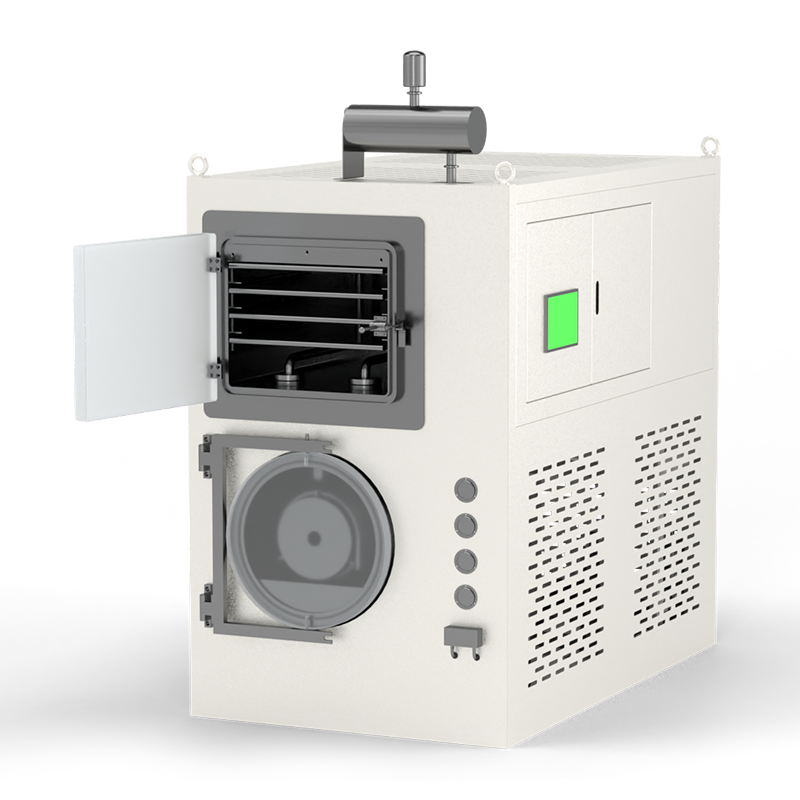
The BLK-FD-0.2 has an overall dimension of approximately 1100 × 900 × 1400 mm. Its square integrated structure combines the main refrigeration, vacuum, heating, control, and product-processing functions into a coordinated equipment platform. The design makes efficient use of floor space and simplifies the relationship between the process chamber and supporting systems.
The effective tray area is 0.2 m², and the typical loading capacity is 2 kg. The shelf temperature range extends from -55°C to +80°C, while the refrigeration panel can reach a minimum temperature of -70°C. The ultimate vacuum degree is below 10 Pa in an empty chamber. Heating is provided through silicone oil electric heating, supporting stable and controllable heat transfer during primary and secondary drying.
| Technical Item | BLK-FD-0.2 Specification |
|---|---|
| Equipment type | Integrated experimental freeze dryer |
| Overall dimensions | 1100 × 900 × 1400 mm |
| Tray area | 0.2 m² |
| Typical loading capacity | 2 kg |
| Shelf temperature range | -55°C to +80°C |
| Refrigeration panel temperature | Minimum -70°C |
| Ultimate vacuum degree | Below 10 Pa in an empty chamber |
| Heating method | Silicone oil electric heating |
| Installed power | Approximately 4.5 kW |
| Structural configuration | Square integrated design |
These specifications provide a practical balance between capacity and controllability. A 0.2 m² tray area is large enough for meaningful formulation development but compact enough for installation in a research facility. The -55°C to +80°C shelf range enables both deep freezing and controlled secondary drying. The low-temperature refrigeration panel supports effective vapor capture during demanding cycles, while the vacuum specification establishes a suitable operating foundation for pharmaceutical and biochemical applications.
The unit is also part of a broader model range that includes 0.1 m², 0.5 m², 1 m², and 2 m² configurations. This range enables users to select an appropriate scale while maintaining a similar design philosophy. Data generated on the 0.2 m² system can therefore support structured scale-up planning instead of requiring an entirely different equipment concept at the next development stage.
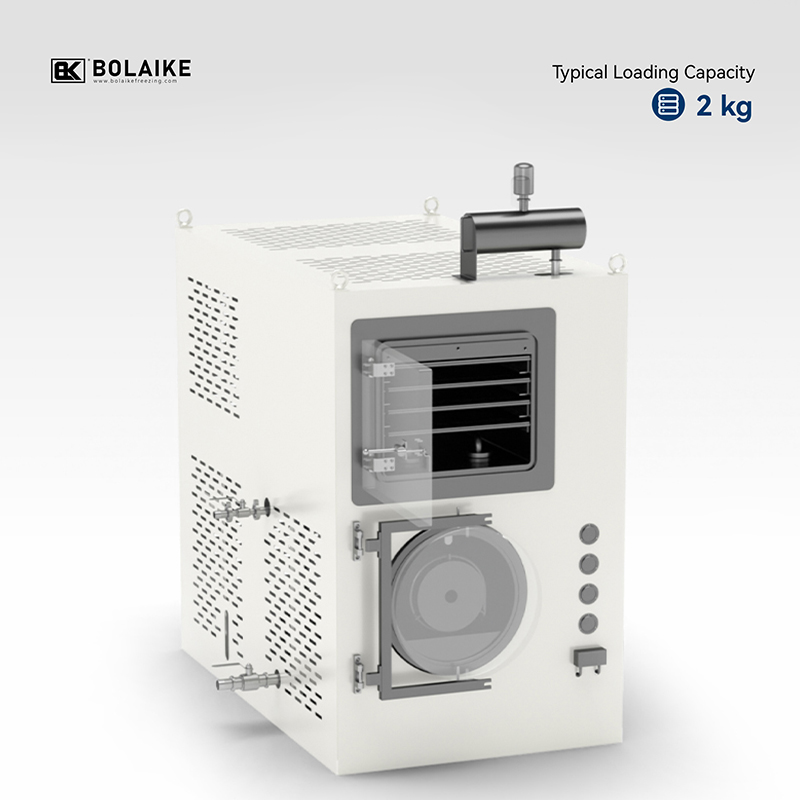
BLK-FD-0.2
Traditional freeze-drying installations may use separate or loosely connected assemblies for refrigeration, vacuum generation, heating, control, and moisture collection. Such arrangements can increase the installation footprint, complicate service access, and create additional connections that must be inspected and maintained. The integrated structure of the BLK-FD-0.2 brings these functions together in a coordinated enclosure.
The square configuration is particularly suitable for laboratories and research facilities where floor space is limited. Its footprint allows the equipment to be positioned efficiently against a wall or within a controlled process area. Integration also helps reduce the number of external interfaces, which can simplify commissioning and support a more orderly installation.
An integrated system can provide benefits during both operation and maintenance. Refrigeration, heating, vacuum, and control components are designed as parts of one process platform rather than as independent devices selected without reference to one another. This coordinated approach can help reduce mismatched capacities and improve the overall response of the equipment during freezing, primary drying, and secondary drying.
The integrated design also supports energy-conscious operation. The supplied technical information describes a shared refrigeration arrangement in which cooling and freeze-drying functions can use integrated refrigeration circuits. Compared with systems that duplicate energy systems for separate cold-storage and drying functions, a shared arrangement can reduce unnecessary equipment losses and improve utilization of installed refrigeration capacity.
Small size alone is not a sufficient measure of laboratory equipment quality. An overly compact freeze dryer may provide limited shelf space, inadequate vapor handling, or poor access to maintenance components. The BLK-FD-0.2 takes a different approach by using structural optimization to increase the effective surface area to 0.2 m² while retaining the same general compact dimensions as the smaller 0.1 m² model.
This optimization increases productivity per unit of floor area. Users can process more material in each development cycle without moving immediately to a large pilot machine. For pharmaceutical researchers, this may mean more vials, more formulation variants, or more representative fill volumes in one experiment. For small-scale manufacturers, it can support limited production while preserving the flexibility expected from a research-oriented system.
Freeze dryers used in pharmaceutical and biochemical applications must be designed with cleaning, contamination control, inspection, and documentation in mind. The BLK-FD-0.2 is described as a pre-pilot-scale system compliant with GMP principles. Its design incorporates hygienic materials, sanitary connections, and sealing components intended for regulated process environments.
Product-contact surfaces use high-grade 316 stainless steel. This material is widely selected for applications requiring corrosion resistance, mechanical durability, and compatibility with cleaning and sanitizing procedures. The specified surface roughness is Ra ≤0.4 µm, helping reduce areas where residues or microorganisms could remain attached.
The connection design uses hygienic quick-release clamps instead of hard-to-clean threaded joints in relevant process areas. Threaded connections can create crevices and dead spaces that are difficult to inspect and clean. Quick-clamp connections are easier to disassemble, visually inspect, and reassemble. They can also simplify maintenance work and reduce the time required to access process components.
Sealing materials are selected to meet FDA-related requirements for hygienic applications. Appropriate seals are important because they influence vacuum integrity, chemical compatibility, cleaning performance, and the prevention of air or moisture ingress. In a freeze-drying process, even a small leak can affect pressure stability and extend the cycle, making sealing quality a critical engineering consideration.
The hygienic design does not automatically make a process compliant with every regulatory requirement. Final compliance depends on the user’s facility, validation program, operating procedures, cleaning agents, utilities, documentation, and product-specific risk assessment. However, equipment designed around GMP principles gives users a stronger technical foundation for qualification and validation than a general-purpose industrial vacuum dryer.
The control system can provide technical documentation that supports CIP and SIP validation activities. Documentation may assist users in establishing cleaning procedures, reviewing process parameters, preparing qualification records, and maintaining a traceable operating history. For facilities working under regulated quality systems, documentation support is an important part of equipment value.
Validation is not limited to hardware inspection. It also requires confirmation that the process can repeatedly achieve the required temperature, pressure, drying endpoint, and product quality. By supporting complex freeze-drying curves and offering a platform closer to pilot equipment, the BLK-FD-0.2 can help users develop a more complete process knowledge base.
Moisture removal is the central function of a freeze dryer. During primary drying, ice within the frozen product sublimates into water vapor. The vapor must travel through the product structure, enter the chamber headspace, and be captured on a low-temperature refrigeration panel or condenser. If the cold trap is too small or too warm, water vapor may migrate toward the vacuum pump, reduce vacuum performance, or return to the product as moisture back-streaming.
The BLK-FD-0.2 uses a high-capacity cold trap designed to maintain a stable vacuum environment under low-pressure and heavy-load process conditions. The refrigeration panel can reach a minimum temperature of -70°C, creating a strong temperature gradient that encourages vapor capture. This is particularly valuable during high-moisture cycles, when the rate of sublimation is high and the condenser must handle a significant vapor load.
Stable vapor capture contributes to more consistent primary drying. If the chamber pressure fluctuates because the cold trap is overloaded, the product may experience changing mass-transfer conditions. This can affect drying time, product temperature, cake structure, and residual moisture. A cold trap with adequate capacity provides a larger operating margin and reduces the risk that process conditions will deteriorate as the batch progresses.
The design is also intended to prevent moisture back-streaming. Back-streaming can occur when captured moisture or vapor is not effectively controlled and migrates into the process chamber or vacuum line. Such behavior can increase residual moisture, compromise product stability, and make endpoint determination more difficult. Effective condensation and appropriate vacuum-system design are therefore essential for both product quality and equipment reliability.
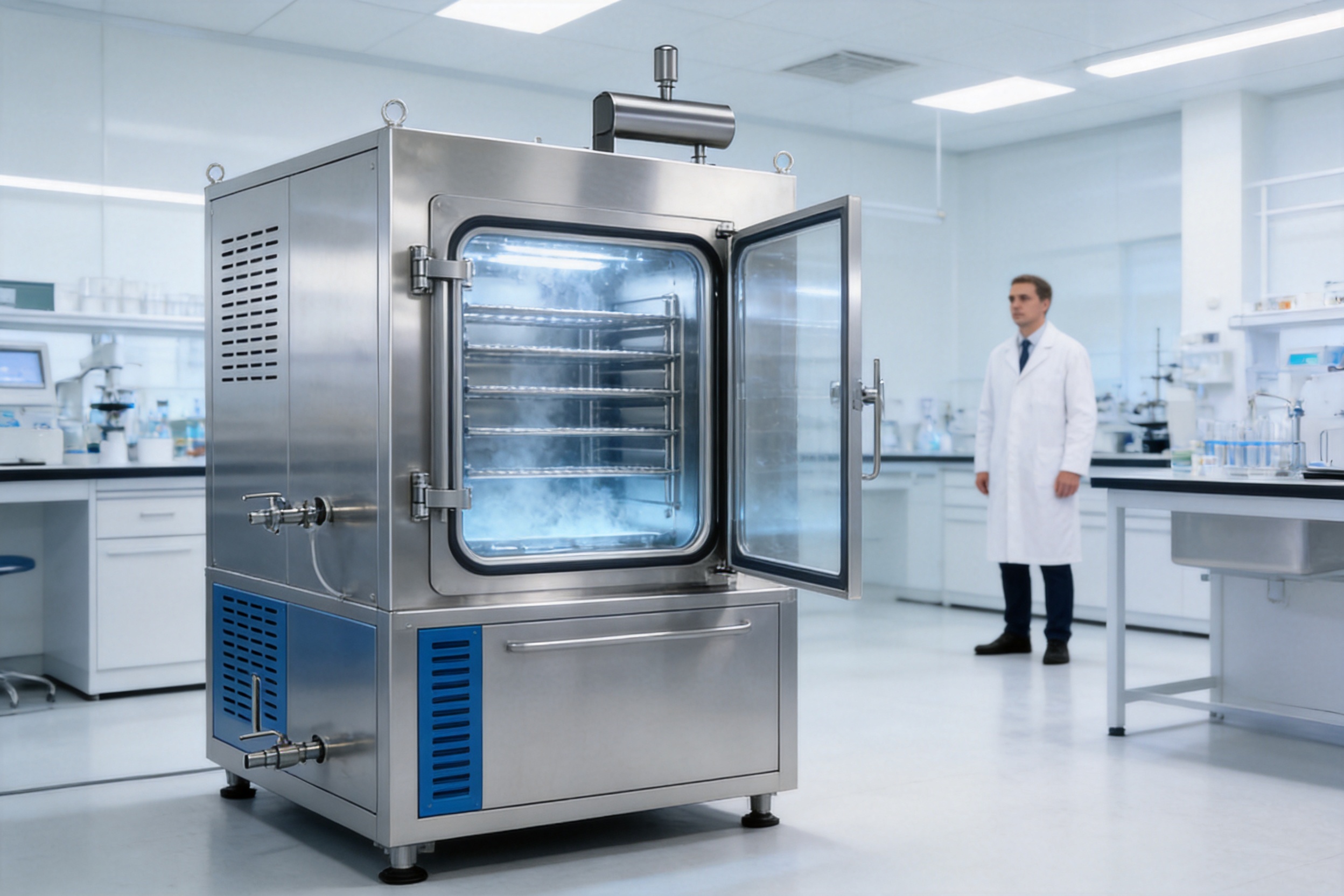
Controlled shelf heating is essential in freeze-drying because the product must receive energy gradually and predictably. During primary drying, the shelf supplies heat that drives sublimation while the product remains below its critical temperature. During secondary drying, higher shelf temperatures can be used to remove bound moisture, provided the formulation can tolerate the selected conditions.
The BLK-FD-0.2 uses silicone oil electric heating. A circulating heat-transfer medium can help distribute thermal energy across the shelves and provide stable adjustment over the operating range. Electric heating also avoids the need for an external steam or hot-water generation system, which can simplify installation in a laboratory or development facility.
The shelf temperature range of -55°C to +80°C supports a broad process window. Low temperatures allow controlled freezing and may be useful for sensitive formulations. Intermediate temperatures can be used for primary drying studies, while elevated temperatures support secondary drying and moisture reduction. The actual temperature profile must always be established according to formulation characteristics, critical temperature, collapse temperature, eutectic behavior, and product stability.
Temperature control must be considered together with vacuum control and product resistance. A shelf temperature that appears suitable in one formulation may cause collapse in another. The value of a flexible system is that researchers can construct multiple curves, compare outcomes, and identify a stable process window instead of relying on a single fixed program.
Modern freeze-drying processes often require multiple stages and carefully defined transitions. A typical cycle may include loading, freezing, controlled nucleation or annealing, pressure reduction, primary drying, intermediate holds, secondary drying, and final venting. Different products may require different ramp rates, dwell times, pressure levels, and temperature limits.
The BLK-FD-0.2 control system supports the configuration of complex freeze-drying curves. This flexibility is important for research because development work involves comparison. Researchers may need to evaluate different freezing rates, alter the shelf-temperature ramp, compare chamber pressures, or introduce additional holds to study their effect on product structure.
A programmable control system also improves repeatability. Manual adjustment of temperature and vacuum during a cycle can lead to operator-to-operator variation and make it difficult to reproduce successful trials. A stored recipe provides a common operating reference, allowing teams to repeat a cycle and compare data more reliably.
For scale-up work, recipe management can help preserve process knowledge. A successful laboratory cycle can be documented and used as a starting point for the 0.5 m², 1 m², or 2 m² models in the same general equipment family. Scale-up is never a simple matter of copying setpoints, but a common control philosophy can make the transfer process more systematic.
A useful development freeze dryer should allow operators to define temperature and pressure stages, control transition conditions, monitor equipment status, and review process history. It should also support alarms and protective actions when temperatures, pressure, refrigeration conditions, or other operating parameters move outside defined limits.
The supplied information identifies a central control system capable of managing the operating status of connected equipment. Remote monitoring through a mobile application is supported, and multiple language options can be customized. The operation screen may be positioned on the front or side according to actual installation requirements.
These features can improve usability in a busy research or pilot environment. Centralized status information reduces the need to inspect multiple independent devices. Remote monitoring can help technical staff observe an extended cycle without remaining beside the equipment continuously. Flexible screen placement can also improve ergonomics and access when the machine is installed within a constrained laboratory layout.
The BLK-FD-0.2 is intended for a wide range of applications involving sensitive biological or pharmaceutical materials. Its controlled freezing, vacuum drying, and low-temperature moisture capture capabilities are suitable for products that cannot tolerate conventional evaporation or high-temperature drying.
Biologics such as vaccines, monoclonal antibodies, enzymes, hormones, and other protein-based drugs can be sensitive to temperature, moisture, interfacial stress, and mechanical disturbance. Freeze-drying may improve storage stability when a suitable formulation and cycle are developed. The BLK-FD-0.2 can support formulation screening and process development by allowing researchers to compare excipients, fill volumes, freezing conditions, and drying profiles.
For protein products, the objective is not simply to remove water. The process must preserve biological activity and produce a dried structure that can be reconstituted consistently. Researchers may investigate the effects of stabilizing sugars, polymers, buffers, surfactants, and bulking agents. The equipment’s programmable shelves and vacuum system provide the process control needed for these studies.
Freeze-drying is frequently used for injectable preparations, including lipid-based systems, nanoparticles, microspheres, antibiotics, toxic drugs, and specialized formulations. These products may require close control of temperature and pressure to maintain particle size, dispersion behavior, potency, and reconstitution performance.
The hygienic construction of the BLK-FD-0.2 is beneficial for development environments where contamination control and cleaning access are important. Quick-clamp connections, stainless-steel product-contact surfaces, and compatible seals can help researchers establish more appropriate procedures for aseptic preparation studies.
Long-term preservation research may involve stem cells, bacterial strains, viral vectors, tissue-engineering materials, bone, skin, and other biological samples. The objective may be to reduce degradation during storage while maintaining viability, function, or structural properties.
These materials often have narrow tolerance ranges. Freezing rate, ice-crystal formation, residual moisture, and reconstitution conditions can strongly affect the final result. The BLK-FD-0.2 supports controlled experimentation in which researchers can study how cycle conditions influence the preservation outcome.
Although the strongest fit is pharmaceutical and biochemical development, the equipment concept can also be relevant to nutraceuticals, functional foods, botanical extracts, specialty chemicals, advanced materials, and high-value research samples. Freeze-drying can preserve volatile compounds, porous structures, flavors, colors, and heat-sensitive ingredients when the process is properly designed.
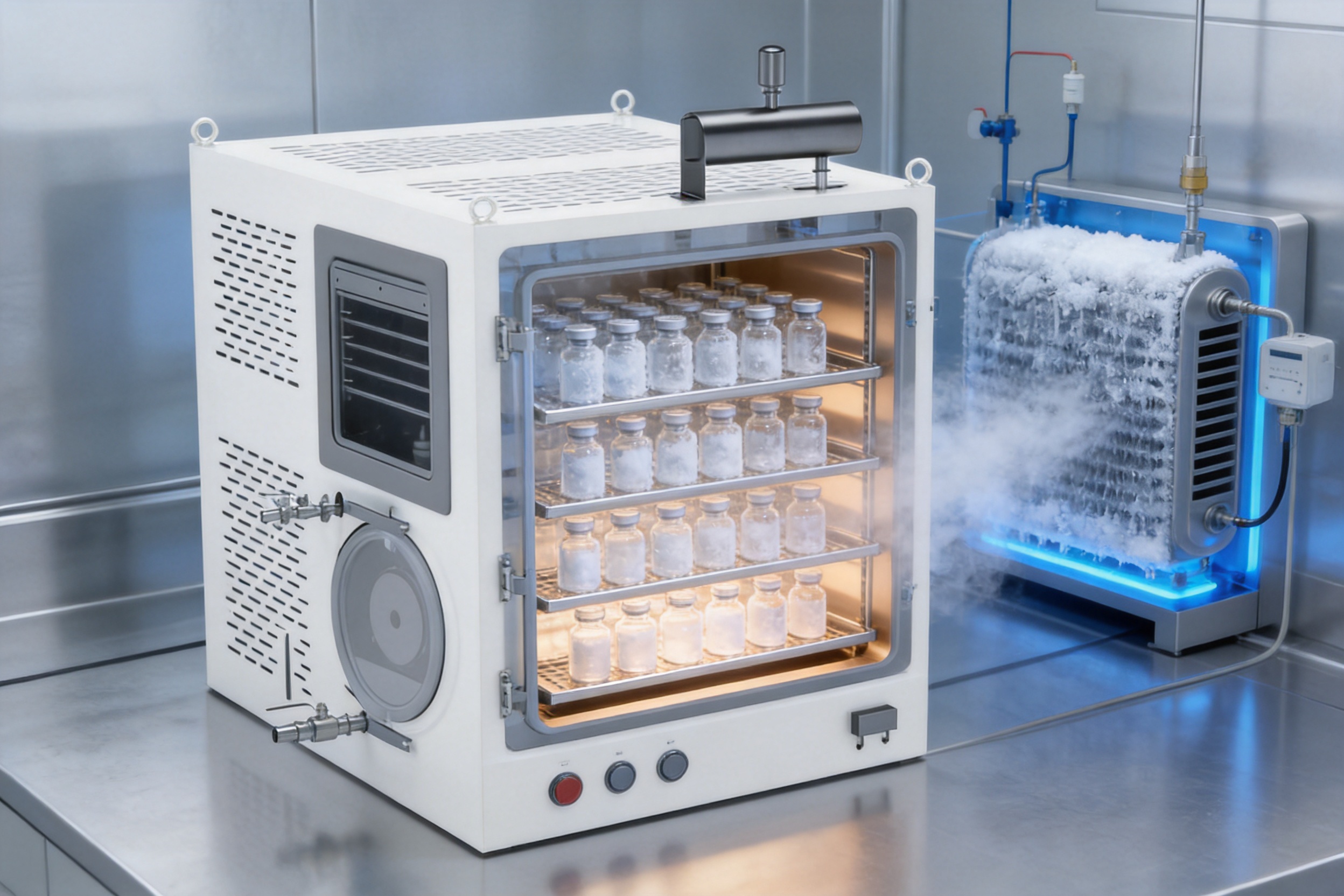
Basic laboratory freeze dryers are useful for preliminary investigations, but they may have limited capacity and simplified process controls. They may also use general-purpose fittings, smaller condensers, or less flexible temperature programs. These limitations can become apparent when users begin working with higher moisture loads, complex formulations, or validation-oriented development.
The BLK-FD-0.2 offers several advantages in this comparison. Its 0.2 m² tray area and 2 kg loading capacity provide more representative batch conditions. Its high-capacity cold trap is designed for stable operation under heavy loads. Its shelf temperature range supports both freezing and secondary drying studies. Its sanitary design is more suitable for regulated development environments than equipment built solely for educational or non-controlled laboratory use.
The system also provides a bridge between laboratory experimentation and pilot production. When researchers use an instrument that reflects the construction and process logic of larger production equipment, they can develop procedures with scale-up considerations in mind. This may reduce the risk of discovering major differences only after moving to a larger machine.
Conventional non-integrated systems can require additional external components, complex utility arrangements, and more space. Separate refrigeration and vacuum assemblies may increase the number of hoses, valves, electrical interfaces, and maintenance points. The overall process may still function, but commissioning and troubleshooting can become more complicated.
The integrated architecture of the BLK-FD-0.2 is intended to simplify the equipment package. Refrigeration, heating, vacuum, and controls are designed to operate as one coordinated unit. This can reduce installation complexity and help users operate the system with a more consistent control interface.
The integrated energy-efficient structure can also improve utility utilization. The product information indicates that shared refrigeration circuits reduce losses compared with duplicate cooling arrangements. This feature is especially meaningful for facilities that operate multiple cycles per week or maintain strict control over laboratory energy consumption.
Energy consumption is an important part of total cost of ownership. Freeze dryers use refrigeration, vacuum pumping, heating, controls, and sometimes defrosting systems. Inefficient design can increase operating costs and generate unnecessary heat and noise in the facility.
The equipment information identifies energy-saving performance that can reduce energy consumption by approximately 20% to 40% and shorten a single-batch cycle by approximately 15% to 25%, depending on operating conditions. These figures should be evaluated against the actual product, cycle, load, facility utilities, and operating schedule. Nevertheless, the underlying design features are relevant to efficiency improvement.
One feature is the integrated refrigeration structure. By sharing refrigeration circuits between cooling and drying functions, the system can avoid duplicating certain energy-consuming components. Another feature is cold-energy recovery. In a conventional arrangement, residual cold energy from refrigeration media may be discharged after one cycle. A recovery arrangement can reuse some of this residual capacity to pre-cool the next cycle’s media, thereby reducing compressor workload.
The supplied information indicates that cold-energy recovery can lower overall compressor load by approximately 20% to 30% under suitable conditions. Actual savings depend on cycle duration, ambient temperature, load, defrost method, and refrigeration operating point. Users should verify performance during commissioning and calculate energy use using measured facility data.
Shorter cycle time can also improve productivity. If the same equipment completes more batches within a defined operating period, the cost per batch may decrease. Faster cycles must not be achieved by exceeding product temperature limits or compromising quality. The appropriate objective is a validated cycle that removes moisture efficiently while preserving product performance.
The equipment is manufactured by Jiangsu BoLaiKe refrigeration science and technology development Co., Ltd., a Chinese high-technology enterprise specializing in vacuum freeze-drying and refrigeration equipment. The company was established in 2014 in Changzhou, Jiangsu, and developed from an earlier refrigeration business that entered the industry in 2003.
This background provides experience in both refrigeration engineering and freeze-drying equipment development. A freeze dryer requires the integration of thermodynamics, vacuum technology, heat transfer, stainless-steel fabrication, automation, electrical control, hygienic design, and after-sales service. A manufacturer with capabilities across these disciplines is better positioned to coordinate the equipment as a complete process system.
The company operates an integrated professional team covering research and development, engineering, sales, installation, commissioning, and after-sales support. This structure is valuable because equipment performance depends not only on factory assembly but also on correct installation, startup, operating training, maintenance, and technical response during the product life cycle.
The company has established partnerships with universities and research institutions, including agricultural research organizations and Jiangnan University. Such cooperation can contribute to practical product development, application testing, and the adaptation of freeze-drying systems to different materials and industries.
More than 100 national invention and utility model patents are associated with the company. The supplied information also identifies patented technologies related to integrated energy-efficient structures and cold-energy recovery. Patent ownership alone does not guarantee application performance, but it indicates ongoing investment in equipment design and process innovation.
The company operates a modern manufacturing base of approximately 24,000 square meters and exports products to more than 30 countries and regions. International delivery requires attention to documentation, electrical standards, packaging, commissioning, spare parts, and communication. These capabilities can support customers that need equipment for laboratories, pilot plants, or overseas production sites.
High-quality freeze-drying equipment depends on controlled manufacturing at several stages. Stainless-steel material selection and fabrication must be managed carefully to achieve smooth product-contact surfaces. Welding quality is important because internal irregularities, weld discoloration, or crevices can affect cleaning and contamination control. Piping and connections must be arranged to limit dead spaces and support drainage where applicable.
Vacuum-system assembly requires attention to sealing surfaces, valve selection, gasket installation, and leak testing. Refrigeration systems require correct component matching, pressure testing, evacuation, refrigerant charging, and operating verification. Electrical and control systems must be wired, tested, and configured so that alarms, interlocks, sensors, and protective functions operate correctly.
Factory testing should include checks of vacuum performance, shelf-temperature response, refrigeration-panel temperature, control functions, alarm behavior, and general mechanical operation. For customers working under quality systems, factory documentation can support installation qualification, operational qualification, and later process qualification activities.
Scale-up is one of the most important reasons to select a pre-pilot-scale freeze dryer. Laboratory results must eventually be translated into a process that can operate at a larger surface area and higher product load. The transfer can be affected by vial arrangement, shelf loading, heat-transfer coefficients, chamber pressure, condenser capacity, equipment geometry, and product resistance.
The BLK-FD-0.2 belongs to a series that includes larger 0.5 m², 1 m², and 2 m² models. The available model range allows a development team to plan its equipment path. A formulation may begin on a smaller system, move to the 0.2 m² pre-pilot unit for more representative studies, and then progress to a larger machine after the process window has been confirmed.
Using production-oriented equipment during development can reduce scale-up risk. Researchers can evaluate whether the cycle remains stable at a higher load, whether the cold trap maintains capacity, whether shelf temperatures remain uniform, and whether the selected pressure is appropriate. They can also generate documentation that is closer in structure to the records required for later pilot or commercial operations.
Scale-up still requires scientific analysis. Setpoints cannot simply be copied from one unit to another without considering equipment differences. However, comparable construction, controls, and process functions can make the transfer more predictable and reduce the amount of re-development required.
Before installation, users should confirm floor loading, room access, electrical supply, ventilation, ambient temperature, service clearance, and any requirements related to cleanroom or controlled-area operation. Utility conditions can affect refrigeration performance and vacuum stability, so the installation environment should be reviewed during project planning.
Operators should be trained in product loading, recipe selection, freezing procedures, vacuum operation, cycle monitoring, defrosting, cleaning, and emergency response. A freeze dryer may be automated, but automation does not eliminate the need for process understanding. Operators must know how to recognize abnormal pressure behavior, temperature deviations, condenser overload, and product-specific warning signs.
Routine maintenance should include inspection of seals, valves, vacuum lines, refrigeration components, sensors, electrical connections, and moving parts. Product-contact areas should be cleaned using procedures compatible with the stainless-steel surfaces and sealing materials. Quick-clamp connections can make inspection and disassembly more convenient, but they still require correct assembly and regular replacement of worn seals.
Preventive maintenance is especially important for research equipment because development schedules may involve frequent recipe changes and repeated cycles. Maintaining vacuum integrity and accurate temperature measurement helps ensure that experimental data remain reliable over time.
A research freeze dryer should be evaluated not only by its purchase price but also by the value of the data it generates. If an instrument produces results that do not transfer to larger equipment, the apparent initial saving may lead to higher costs later. Repeated experiments, delayed development, failed scale-up trials, and product loss can exceed the difference between a basic unit and a better-engineered pre-pilot system.
The BLK-FD-0.2 is positioned as a platform that can serve both advanced research and compliant pilot-oriented development. Pharmaceutical biotechnology companies, CDMOs, universities, and national laboratories can use it to develop formulations, establish cycles, preserve samples, and investigate process variables using equipment that reflects production requirements.
Purchasing such a platform with a research-equipment budget may also provide longer-term value. The system can support early formulation work, process optimization, technology transfer, small-batch production, and operator training. As project needs change, the unit remains useful instead of becoming obsolete when the organization moves beyond basic laboratory testing.
The combination of a 2 kg loading capacity, hygienic construction, programmable process control, strong cold-trap performance, and energy-conscious architecture gives the equipment a broad application range. It is compact enough for research facilities but engineered with the process discipline expected in more advanced production environments.
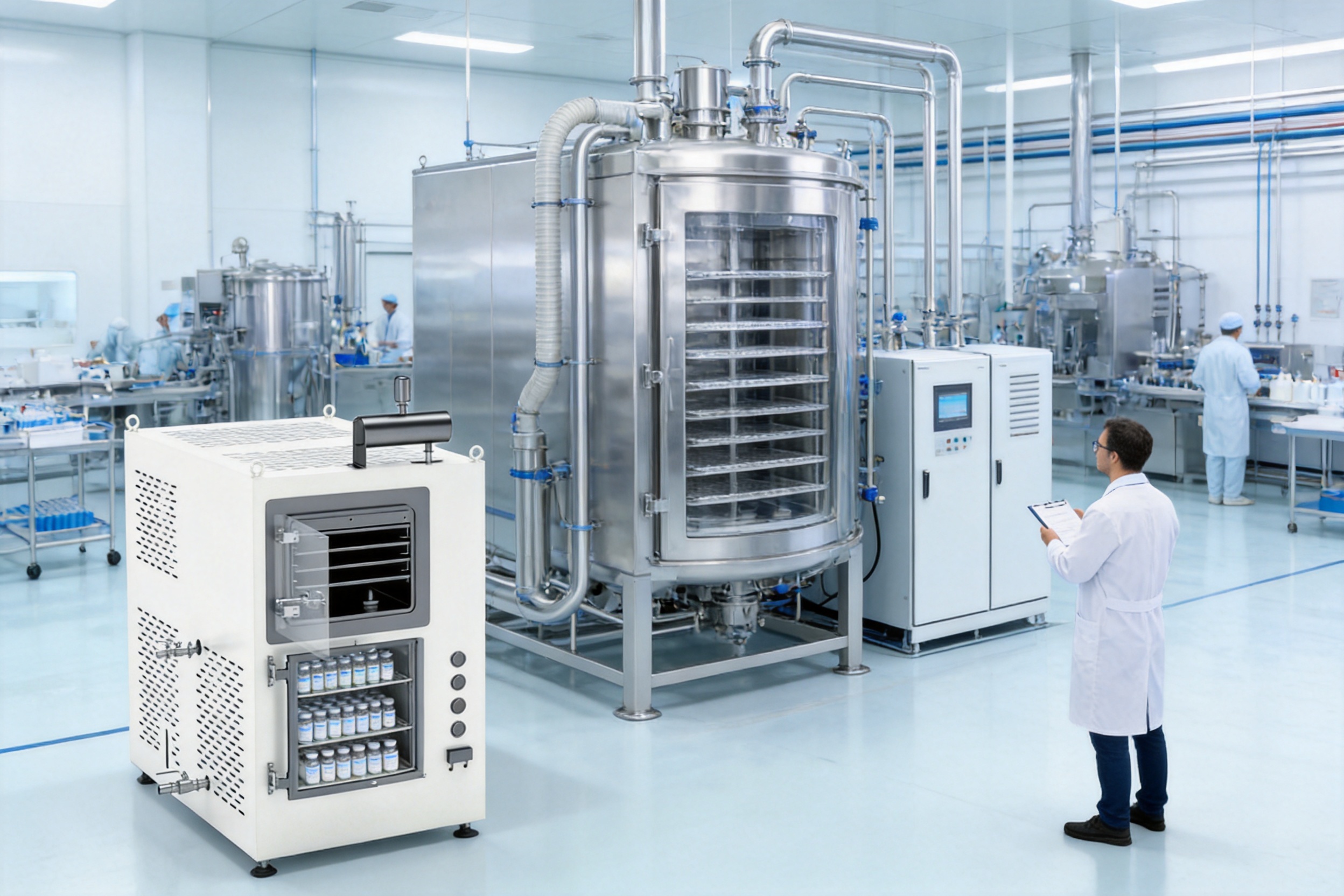
The BLK-FD-0.2 is a suitable choice when the expected batch size is close to 2 kg, when the development team needs more than a basic benchtop unit, or when future scale-up is a major consideration. It is particularly appropriate for products that require complex freezing and drying curves, stable vapor capture, sanitary connections, and detailed process records.
Users should review the following factors before ordering:
Expected product type, formulation characteristics, fill volume, container format, and batch frequency.
Required shelf area and typical loading capacity, including future development needs.
Product critical temperature, collapse temperature, eutectic behavior, and acceptable residual moisture.
Required vacuum range, condenser capacity, shelf-temperature range, and endpoint-detection strategy.
Cleaning, sanitization, CIP, SIP, documentation, and validation expectations.
Electrical supply, room conditions, service access, and integration with existing laboratory utilities.
Operator training, preventive maintenance, spare parts, commissioning, and after-sales support.
Future movement from laboratory development to pilot or commercial equipment.
Customers may also request customized configurations, including control-language options, screen placement, process instrumentation, connection arrangements, documentation packages, and application-specific accessories. Customization should be defined during the technical specification stage so that the final system meets both process and facility requirements.
The main application is pharmaceutical and biochemical research and development, including formulation screening, freeze-drying cycle development, aseptic preparation research, biological sample preservation, and small-scale or pre-pilot production.
The typical loading capacity is approximately 2 kg, supported by an effective tray area of 0.2 m². Actual capacity depends on the product, fill depth, container arrangement, moisture content, and selected cycle.
The shelf temperature range is approximately -55°C to +80°C. This range supports freezing, primary drying, and secondary drying studies, although the appropriate operating profile must be determined for each formulation.
The refrigeration panel can reach a minimum temperature of approximately -70°C. This low temperature supports vapor capture during demanding freeze-drying cycles and helps reduce the risk of moisture back-streaming.
Yes. The control system supports the configuration of complex freeze-drying curves, allowing users to define multiple temperature, pressure, ramp, hold, and transition stages.
The system is designed as a pre-pilot-scale unit following GMP principles. It uses 316 stainless-steel product-contact surfaces, a specified surface roughness of Ra ≤0.4 µm, sanitary quick-clamp connections, and hygienic sealing materials. Final GMP compliance depends on the complete facility, procedures, validation program, and intended use.
Quick-clamp connections are easier to disassemble, inspect, clean, and reassemble than many threaded joints. They help reduce hard-to-clean crevices and support hygienic maintenance practices.
It can support development work involving vaccines, monoclonal antibodies, enzymes, hormones, gene-therapy-related materials, and other protein or biological products. Each product requires its own formulation, stability evaluation, and validated freeze-drying cycle.
Yes. The BLK-FD-0.2 is positioned between laboratory and pilot-scale equipment and belongs to a series that includes larger tray-area models. Its production-oriented construction and programmable control system can help users generate more transferable process data.
The design includes integrated refrigeration and a cold-energy recovery concept intended to reduce compressor workload and improve energy utilization. Actual savings depend on the operating cycle, load, ambient conditions, and facility configuration.
The operation screen can be positioned on the front or side according to installation needs. Multiple language options are also available for customization.
The manufacturer provides capabilities covering research and development, engineering, sales, installation, commissioning, and after-sales service. Customers should confirm the exact scope of commissioning, training, validation documentation, spare parts, and service response during the quotation process.
The BLK-FD-0.2 is an integrated experimental freeze dryer designed for organizations that need more than a basic laboratory instrument but do not yet require a full-scale production system. Its 0.2 m² tray area, 2 kg typical loading capacity, -55°C to +80°C shelf range, -70°C refrigeration panel, and ultimate vacuum below 10 Pa provide a practical platform for advanced process development.
Its main strengths are the combination of compact dimensions, high-capacity moisture capture, silicone oil electric heating, programmable freeze-drying curves, sanitary quick-clamp connections, 316 stainless-steel product-contact surfaces, and GMP-oriented documentation support. These features make the unit suitable for biologics, injectable preparations, biological samples, pharmaceutical formulations, and other heat-sensitive materials.
The equipment also benefits from the manufacturer’s experience in refrigeration, vacuum freeze-drying, energy-efficient systems, manufacturing, installation, and technical service. Integrated refrigeration and cold-energy recovery technologies are intended to reduce operating losses, while the broader equipment range supports a structured route from laboratory research to pilot and commercial production.
For pharmaceutical and biochemical organizations, the most important benefit is process continuity. A reliable development freeze dryer can help researchers produce better data, reduce scale-up uncertainty, improve batch repeatability, and establish a stronger foundation for validation. By combining laboratory flexibility with production-oriented engineering, the BLK-FD-0.2 provides a strategic platform for turning formulation concepts into stable, scalable, and commercially relevant freeze-drying processes.
1. Product technical information for the BLK-FD-0.2 integrated experimental freeze dryer, including dimensions, tray area, temperature range, vacuum performance, heating method, and loading capacity.
2. Equipment design information covering GMP-oriented materials, 316 stainless-steel product-contact surfaces, sanitary quick-clamp connections, FDA-related sealing materials, and surface roughness requirements.
3. Manufacturer-provided information concerning integrated refrigeration, cold-energy recovery, energy-saving performance, intelligent central control, and model-range specifications.
4. International Society for Lyophilization and Freeze Drying, technical principles of freeze-drying cycle development, product temperature control, condenser operation, and process scale-up.
5. United States Pharmacopeia, general principles relating to sterile products, aseptic processing, packaging, and quality control considerations.
6. Current good manufacturing practice principles for pharmaceutical equipment design, cleaning, qualification, validation, documentation, and maintenance.
7. General engineering references on vacuum drying, sublimation, heat transfer, vapor condensation, refrigeration systems, and cold-energy recovery.
 2026/05/28
 2026/05/28
2026/05/28
2026/05/28
2026/05/28
2026/05/28


 Custom Industrial Lyophilizer Freeze Dryer Manufacturers





 English
 русский
 Español
 Français
 Deutsch
 عربى
عربى