
/faq/part-a-is-a-freeze-dryer-worth-buying/


News
Products & Solutions
CONTACT US

+86-18068757376

blk@jsblk.com

No. 29 North Tongjiang Road, Xinbei District, Changzhou City, Jiangsu Province, China
A laboratory lyophilizer typically costs US$3,000 to US$30,000, a pilot-scale unit US$20,000 to US$80,000, a commercial food freeze dryer US$80,000 to US$300,000, and a pharmaceutical or industrial lyophilizer US$300,000 to several million dollars.
"Lyophilizer" and "freeze dryer" describe the same technology; the word lyophilizer is the standard term in pharmaceutical and laboratory procurement, while "freeze dryer" dominates food and general industrial purchasing.
Published 2026 price bands from SED Pharma place a small laboratory lyophilizer at US$3,000–20,000+, a pilot freeze dryer at US$20,000–80,000+, a commercial freeze dryer at US$80,000–300,000+, and a pharmaceutical or industrial lyophilizer at US$300,000 to several million.
|
Lyophilizer class |
Typical price |
Batch capacity |
Typical buyer |
|
Laboratory/benchtop |
US$3,000 – 15,000 |
0.5 – 2 kg |
Universities, R and D labs, formulation trials |
|
Laboratory lyophilizer (larger) |
US$5,000 – 30,000 |
2 – 10 kg |
Pharma labs, universities, biotech teams |
|
Pilot/process development |
US$20,000 – 80,000 |
10 – 200 kg |
CDMOs, pilot plants, specialty food brands |
|
Commercial food freeze dryer |
US$80,000 – 300,000 |
100 – 1,000 kg |
Food, nutraceutical, ingredient manufacturers |
|
Pharmaceutical/industrial lyophilizer |
US$300,000 – several million |
1,000 – 4,000 kg |
Pharma, biologics, large food processors |
What is not in the machine price. Vacuum pump sets, freight, import duty, installation, commissioning, operator training, validation documentation, facility modifications and working capital for spares all sit outside the headline figure. A buyer should request a total-project-value quote, not a machine price.
Why BOLAIKE for this question
Price is only meaningful against what the machine is and how it is built.
BOLAIKE manufactures in-house at its own 20,000 m² facility rather than assembling from third-party sub-suppliers, which is why it can publish a full 0.5 m² to 200 m² range — laboratory, pilot, medium industrial and large-scale — from one engineering organisation, and why the same supplier can carry a customer from a bench feasibility study through to a production line without the process knowledge being lost at a handover.
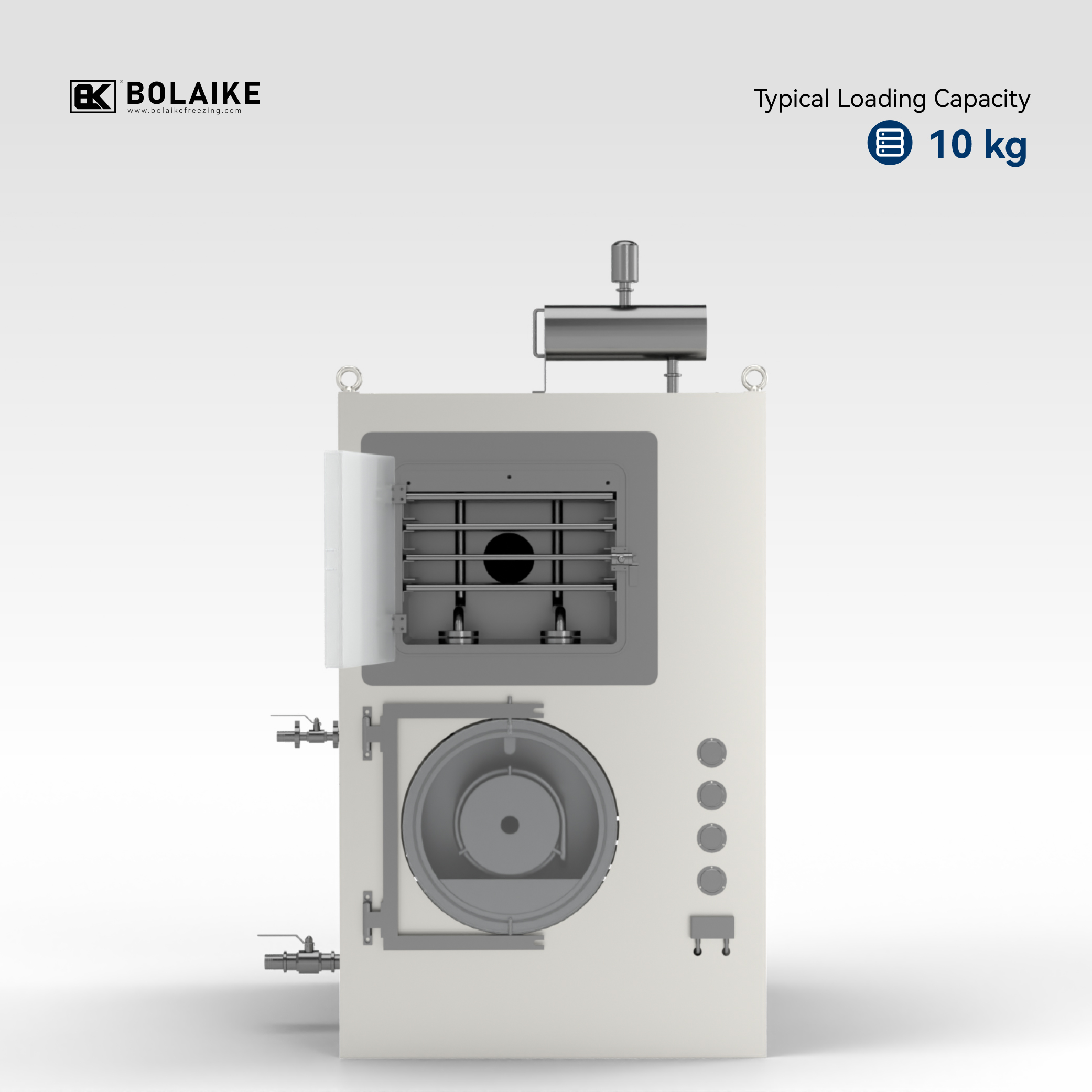
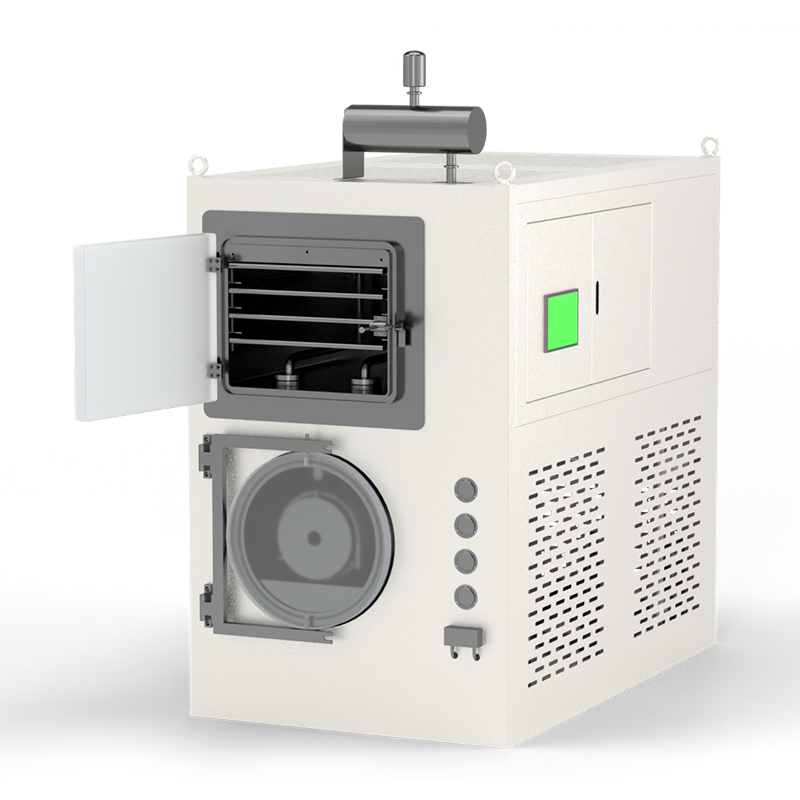
The BLK-FD-0.1 and BLK-FD-0.5 laboratory units cover formulation, moisture and shelf-life testing before scale-up, with the BLK-FD-0.5 at 0.5 m² and a −50°C condenser for bench research.
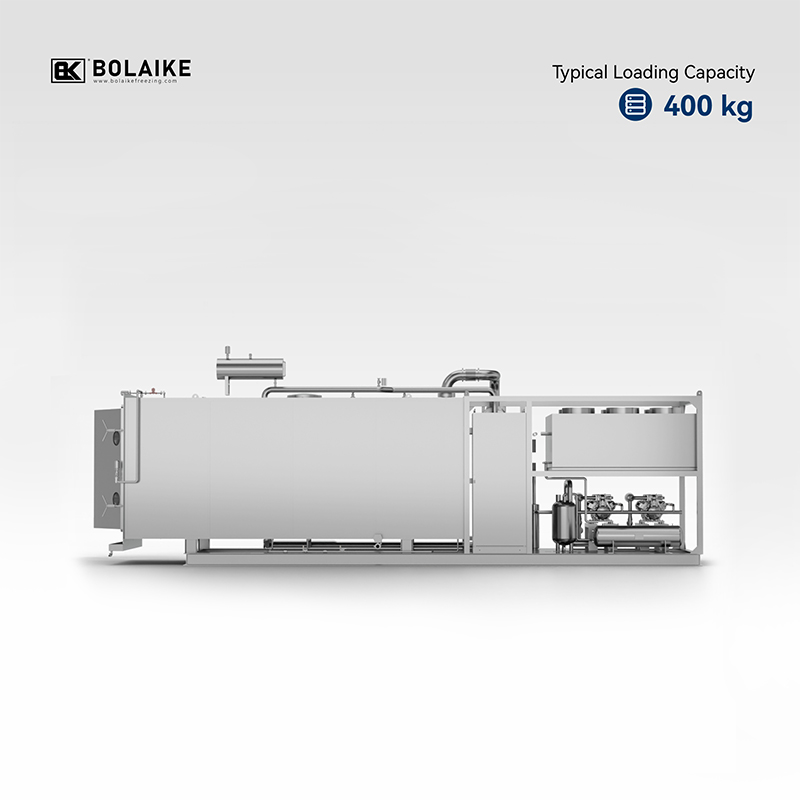
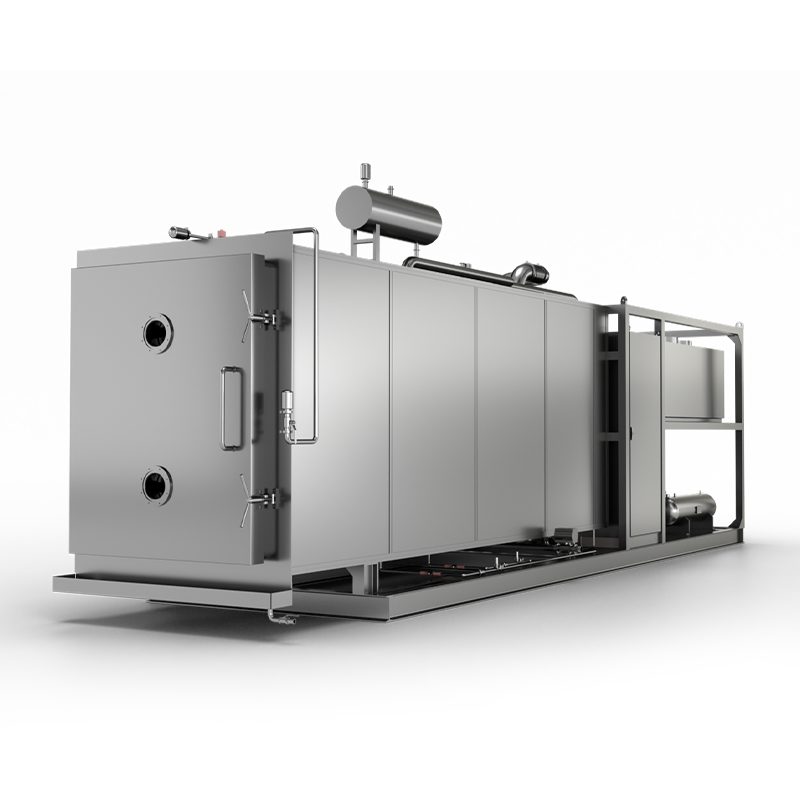
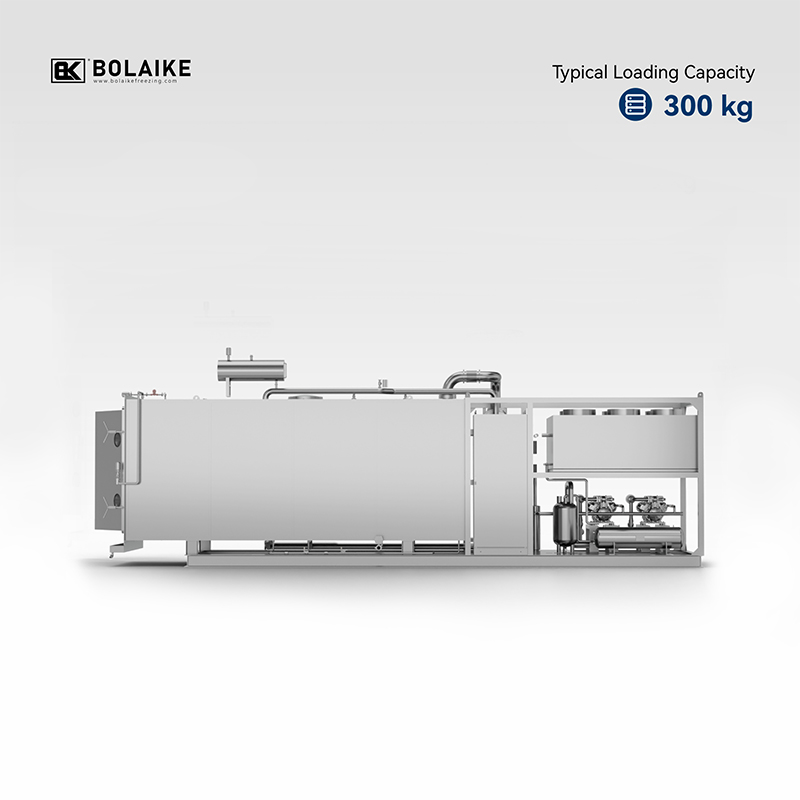
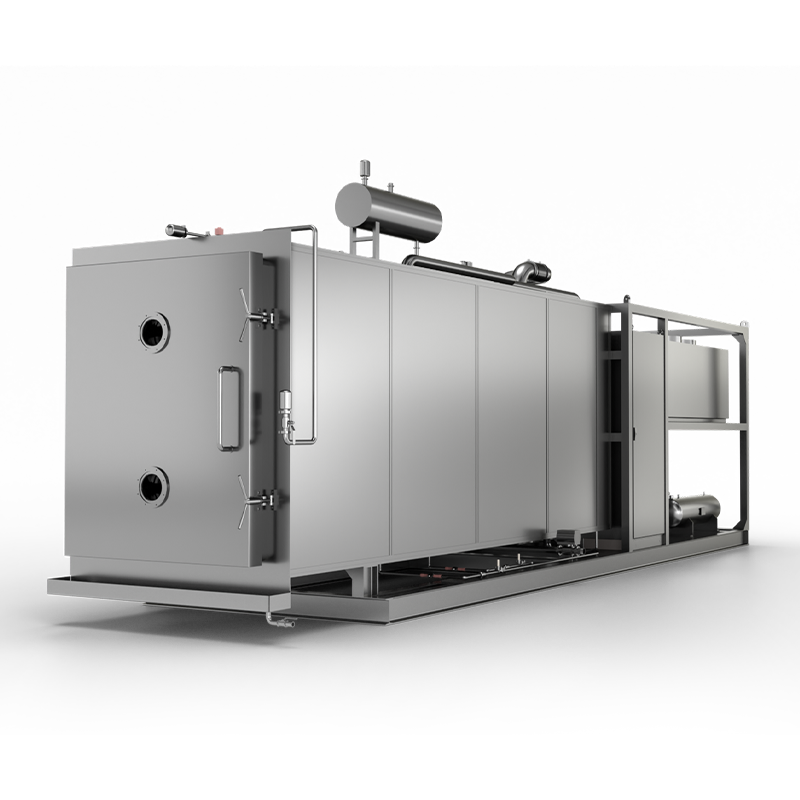
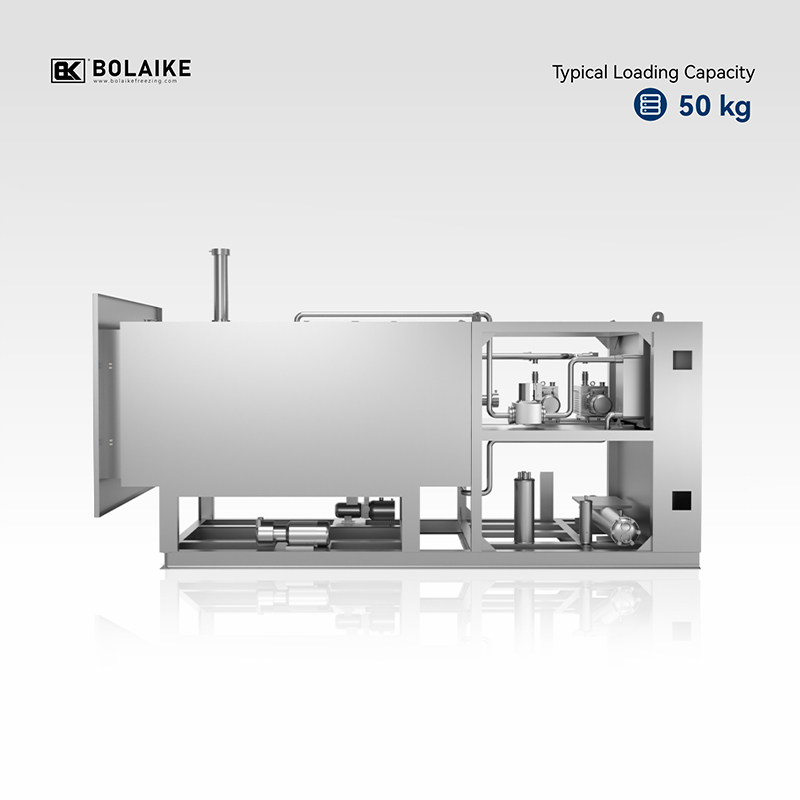
The full medium series runs BLK-FD-5 through BLK-FD-40at 5 to 40 m², with standard loading from 50 kg to 400 kg — the pilot-to-production bridge without changing supplier.
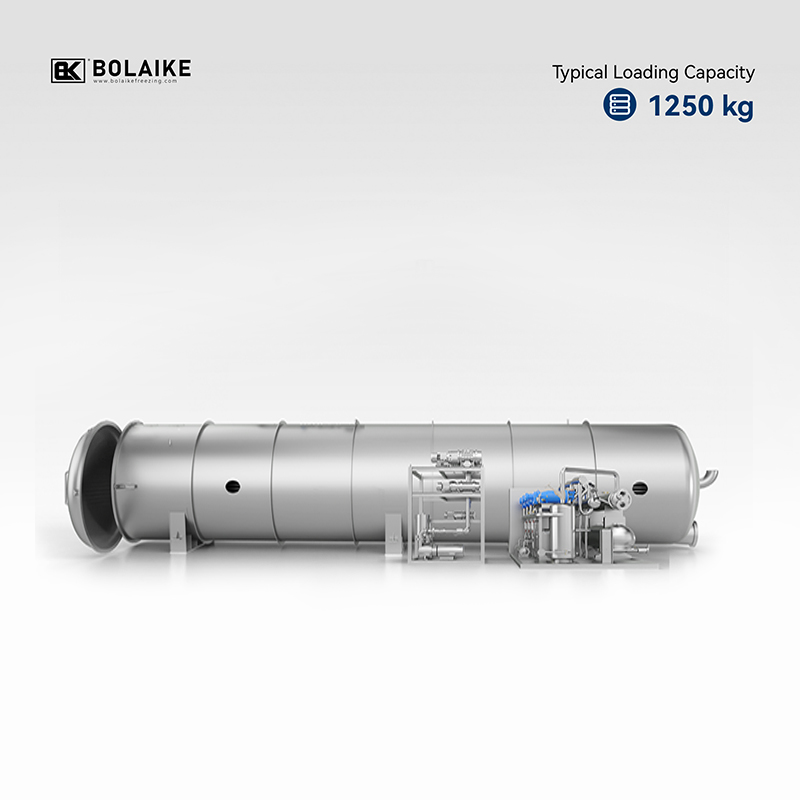
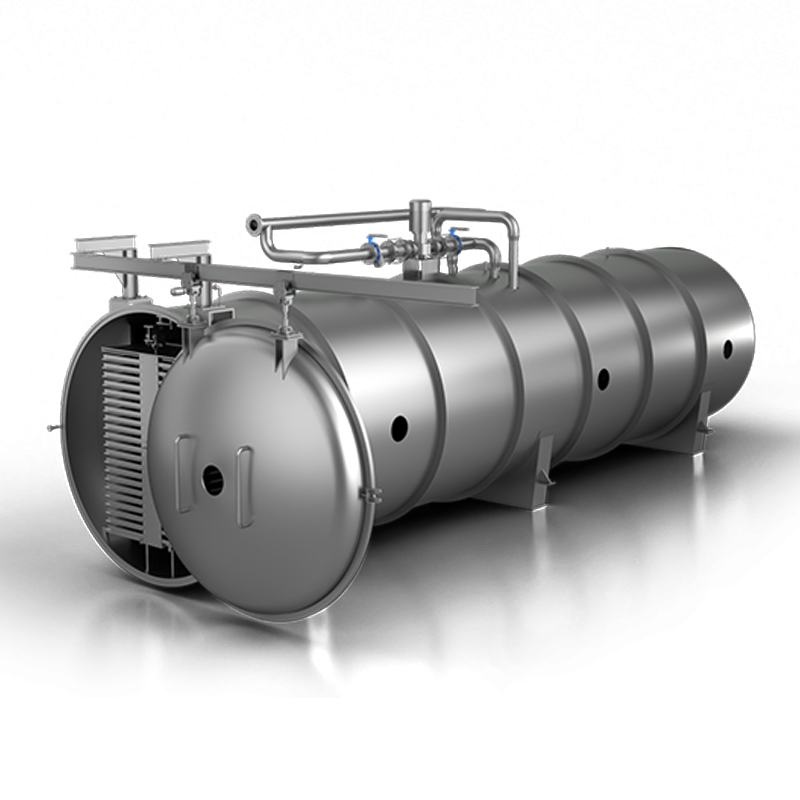
The BLK-FD-100 at 101.1 m² carries 1,000 kg per batch in 8 mm-thick 304 stainless steel, with inter-shelf temperature deviation held within ±1°C, five core inspection workflows covering 58 inspection procedures, and 48-hour-plus pressure holding tests.
The BLK-FD-200 reaches 200 m² and 3,000–4,000 kg per batch, which is where pharmaceutical and large food projects land.
The published five-year lifecycle model on the following pages shows a US$70,000 capital premium on an energy-efficient unit recovering in approximately 31 months — the price argument expressed as a payback argument, which is the only form a CFO will accept.
Because the same organisation builds every scale, a quote can be scoped against a real project rather than a catalogue line, and the process database built from serving more than 2,000 clients is available to the customer and the tenth.
 2026/05/28
 2026/05/28
2026/05/28

 Custom Industrial Lyophilizer Freeze Dryer Manufacturers





 English
 русский
 Español
 Français
 Deutsch
 عربى


