
/faq/part-b-sizing-and-capacity/


News
Products & Solutions
CONTACT US

+86-18068757376

blk@jsblk.com

No. 29 North Tongjiang Road, Xinbei District, Changzhou City, Jiangsu Province, China
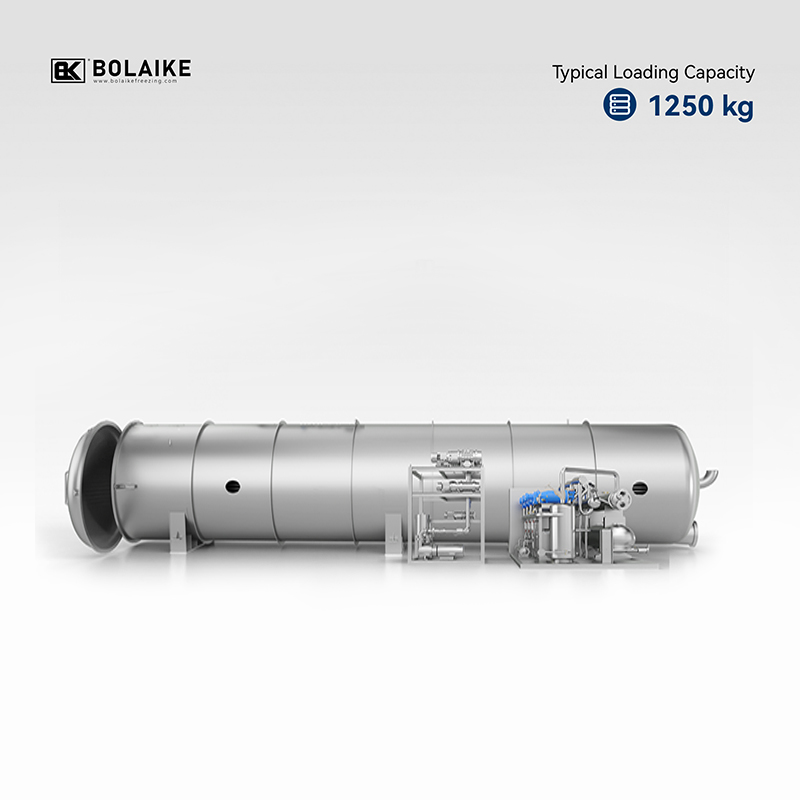
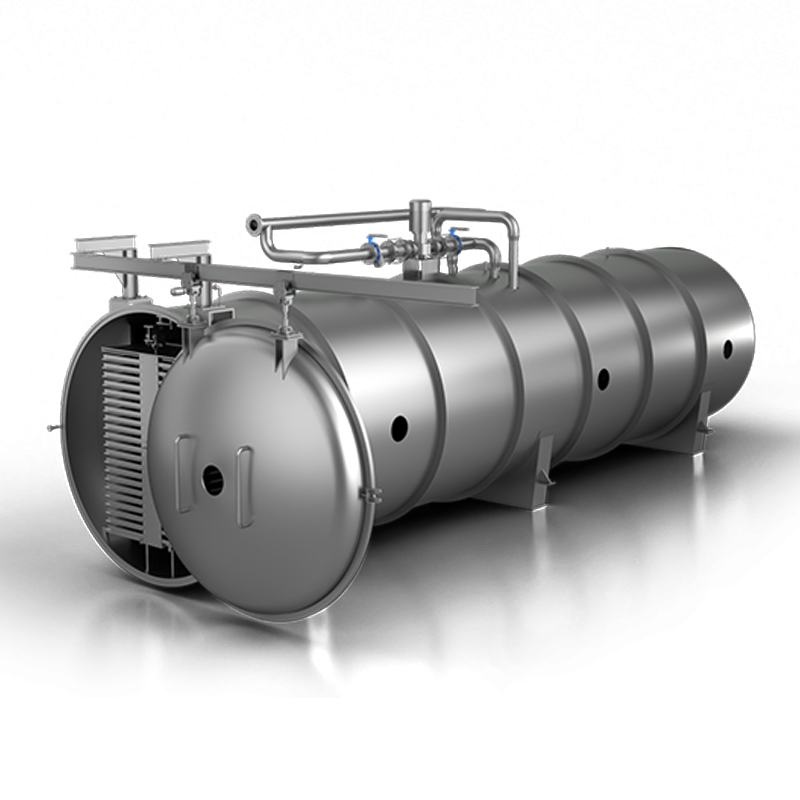
A medium freeze dryer typically has 5 to 40 m² of effective freeze-drying area and processes 50 to 400 kg of fresh product per batch, which corresponds to a shelf-area-to-loading ratio of roughly 10 kg of product per m² of tray area.
"Medium" is not a standardised designation, and the word is used inconsistently across the industry. Three overlapping definitions appear in current 2026 sources:
|
Source |
Definition of "medium" |
Area/capacity |
|
Global buyer guide (2026) |
Small 10–50 kg, medium 100–500 kg, large over 1 ton per batch |
Capacity-based |
|
Equipment-type comparison (2026) |
Pilot 1–10 m², industrial contact heating 10–200+ m² |
Area-based |
|
Chinese equipment guide (2026) |
Pilot type 1–10 m², RMB 300,000–1,500,000 |
Area-based |
|
BOLAIKE medium series (published) |
BLK-FD-5 through BLK-FD-40 |
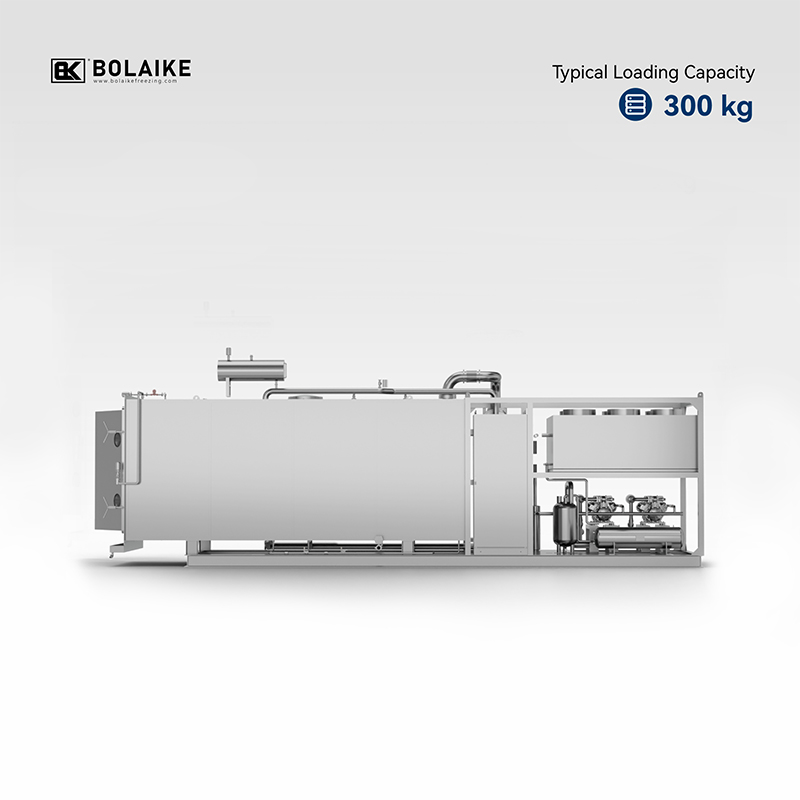
5–40 m², 50–400 kg loading |
BOLAIKE's published medium-series specifications show the internal ratio directly — the number in the model name is the shelf area, and loading capacity runs at roughly 10 kg per m² for solutions up to 20 kg per m² for fruits and vegetables:
|
Model |
Freeze-drying area |
Standard loading |
Liquid loading |
Ultimate vacuum |
Dimensions (mm) |
Weight |
|
BLK-FD-5 |
5 m² |
50 kg |
100 L |
≤10 Pa |
— |
— |
|
BLK-FD-10 |
10 m² |
100 kg |
200 L |
≤10 Pa |
— |
— |
|
BLK-FD-20 |
20 m² |
200 kg |
400 L |
≤10 Pa |
6,000 × 2,200 × 3,000 |
10.5 t |
|
BLK-FD-30 |
30 m² |
300 kg |
600 L |
≤10 Pa |
7,600 × 2,200 × 3,300 |
14.5 t |
|
BLK-FD-40 |
40 m² |
400 kg |
800 L |
≤10 Pa |
— |
— |
The capacity figure nobody explains
The kilograms a supplier quotes are wet loading weight, not finished output. Three separate conversions sit between the specification sheet and the kilograms of saleable product on a pallet:
Conversion 1 — moisture removal. 100 kg of fresh fruit at 85% moisture yields only about 15 kg of dry product before processing losses (SED Pharma).
Conversion 2 — material density varies by product. Published BOLAIKE loading density data for the BLK-FD-30 at 35 mm loading height gives per-chamber capacity of 450–600 kg for fruits and vegetables, 300–450 kg for solutions, and 200–300 kg for other categories — while the same machine's headline "standard loading capacity" is 300 kg.
A business case built on 300 kg for a fruit operation and one built on 600 kg differ by a factor of two in payback.
Conversion 3 — cycle time determines daily output. Industrial food freeze dryers typically run 18–24 hour cycles, giving 3–4 batches per day in continuous mode, and only where a pre-freezing room and matched packaging capacity exist to keep the chamber fed around the clock.
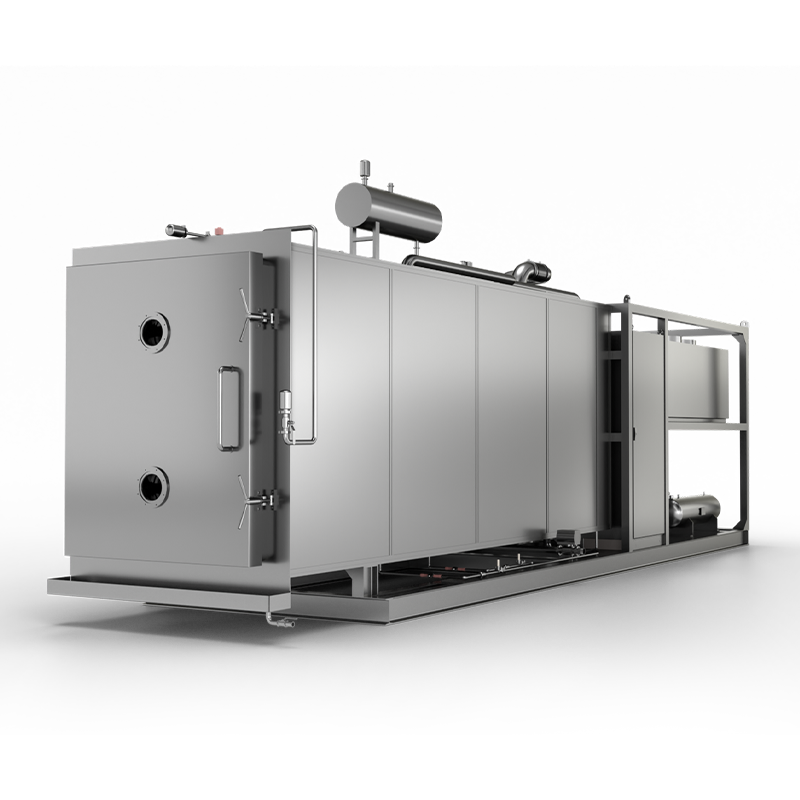
The medium band is where commercial buyers land, and it is where specification clarity matters because the area-to-load ratio varies by product. BOLAIKE publishes both the ratio and the density table, so a buyer can compute their own requirement rather than accept a headline figure:
The published model naming is the specification. In the BOLAIKE range the number in the model name is the freeze-drying area in square metres, which removes the common source of confusion in cross-supplier comparison — the BLK-FD-30 is 30 m², not "a 30-something machine."
Published loading density by material category.For the BLK-FD-30 at 35 mm loading height: 450–600 kg for fruits and vegetables, 300–450 kg for solutions, 200–300 kg for other categories. For the BLK-FD-100 at 101.1 m²: 3,000–4,000 kg, 2,500–3,000 kg and 2,000–2,500 kg respectively. These tables let a buyer build a business case on their own material density rather than on a single optimistic number.
A published capacity-to-area ratio that holds across the series— roughly 10 kg per m² for solutions up to 20 kg per m² for fruit and vegetable loading — which is what allows a 100–500 kg requirement to be mapped to a specific model before quotation.
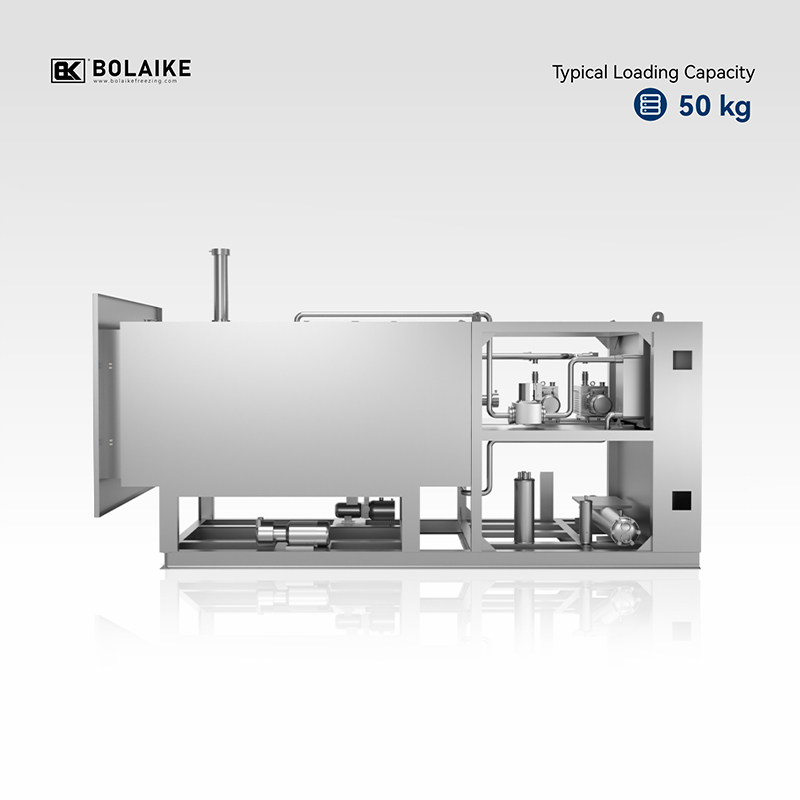
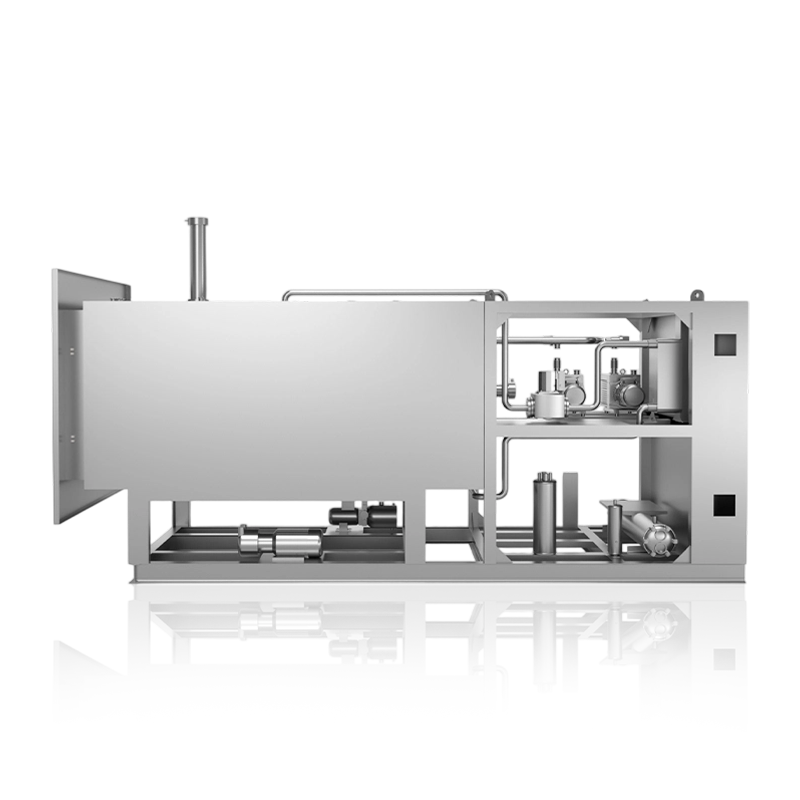
The 5 m² entry point is genuinely pilot-grade.BOLAIKE has supplied a 5 m² pharmaceutical-grade unit with GMP-standard configuration, which is documented evidence that the small end of the range is a real production configuration rather than a scaled-down compromise.
 2026/05/28
 2026/05/28
2026/05/28

 Custom Industrial Lyophilizer Freeze Dryer Manufacturers





 English
 русский
 Español
 Français
 Deutsch
 عربى


