
/faq/part-b-sizing-and-capacity/


News
Products & Solutions
CONTACT US

+86-18068757376

blk@jsblk.com

No. 29 North Tongjiang Road, Xinbei District, Changzhou City, Jiangsu Province, China
Size a freeze dryer on your required daily finished-product output divided by your realistic cycles per day, then verify that the resulting shelf area is matched to a condenser with at least equal ice capacity — a common sizing error is buying shelf area without the refrigeration to support it.
The sizing sequence experienced buyers use:
Set the target in finished kilograms per day, not wet kilograms. A target of 500 kg/day of finished product is roughly 3,300 kg/day of fresh fruit at 15% yield.
Establish realistic cycles per day. Industrial food freeze dryers typically run 18–24 hour cycles, giving 3–4 batches per day in continuous mode, but only where a pre-freezing room and matched packaging capacity exist to keep the chamber fed around the clock.
Compute required shelf area: divide the per-batch load by the realistic loading density for your material.
Verify condenser ice capacity. The condenser must capture the water from your batch. A larger chamber without adequate condenser capacity produces slow cycles and incomplete drying.
Check the site before the price. Door height, floor loading capacity, ceiling clearance, power supply phase and voltage, cooling water, compressed air and drainage all constrain the machine you can actually install.
Size for the second unit, not the first. Once a food business proves demand it typically adds a second unit and then a third.
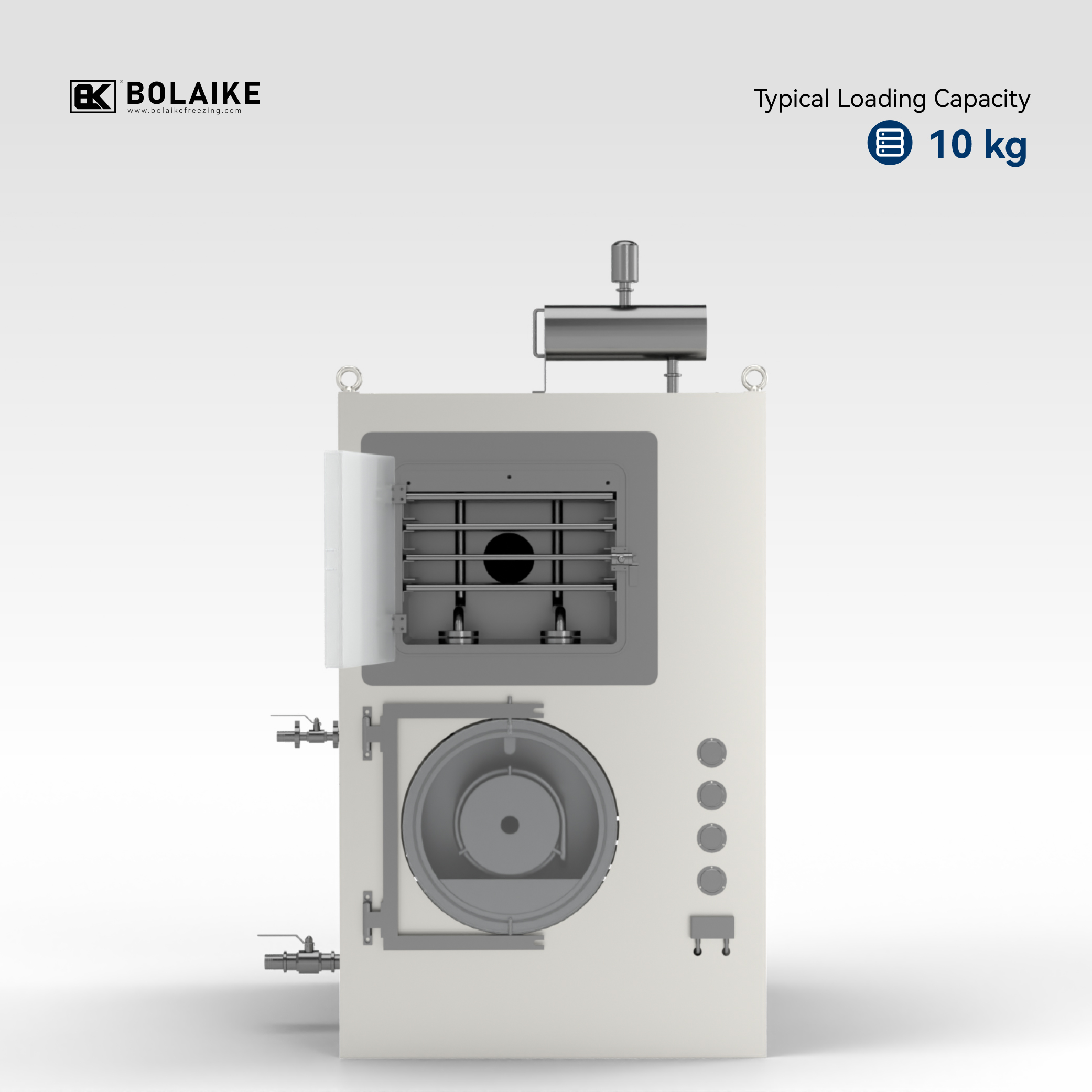
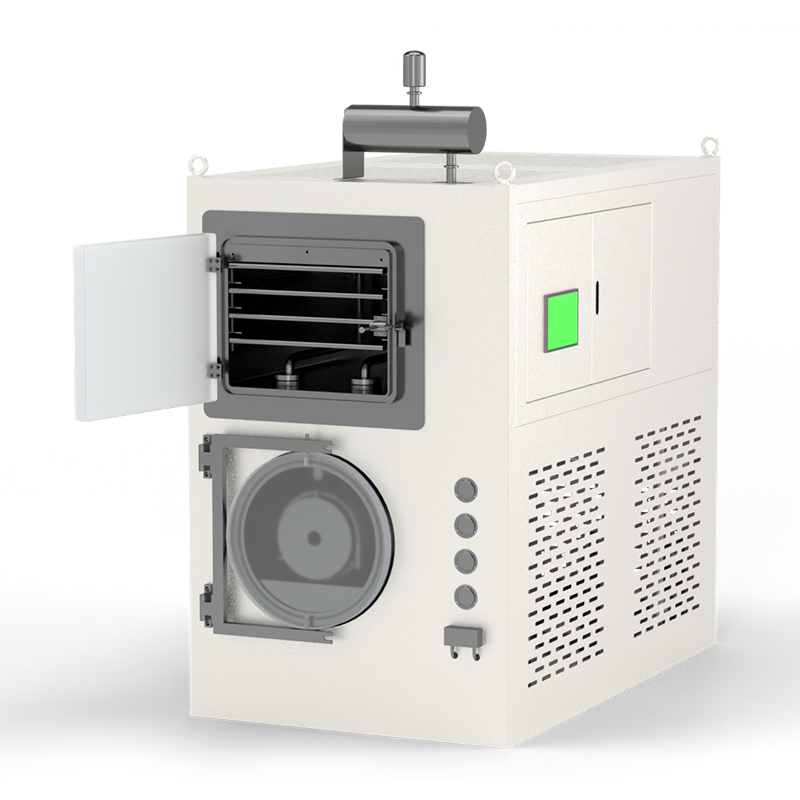
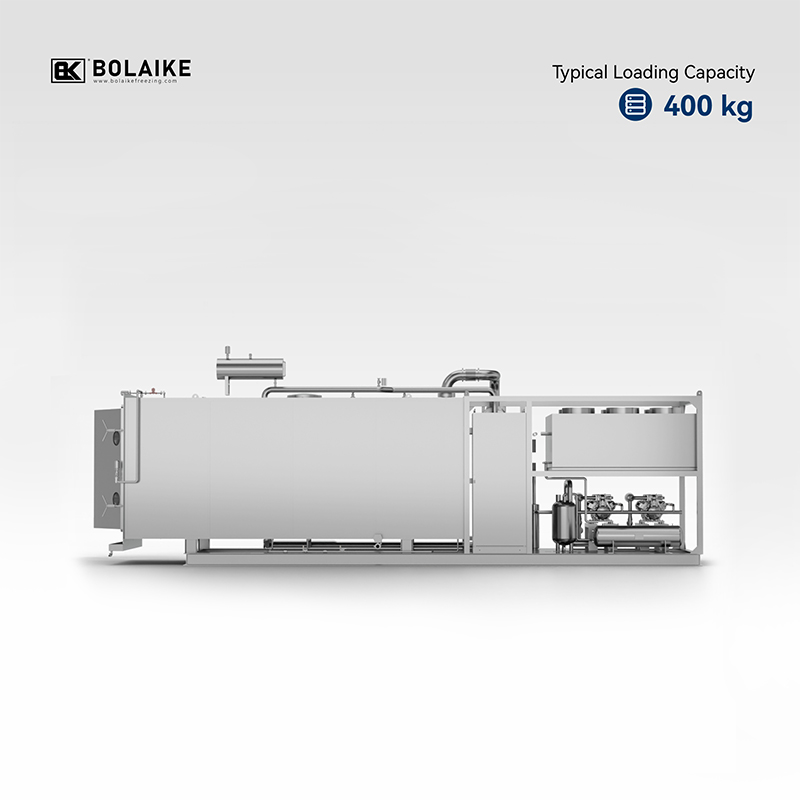
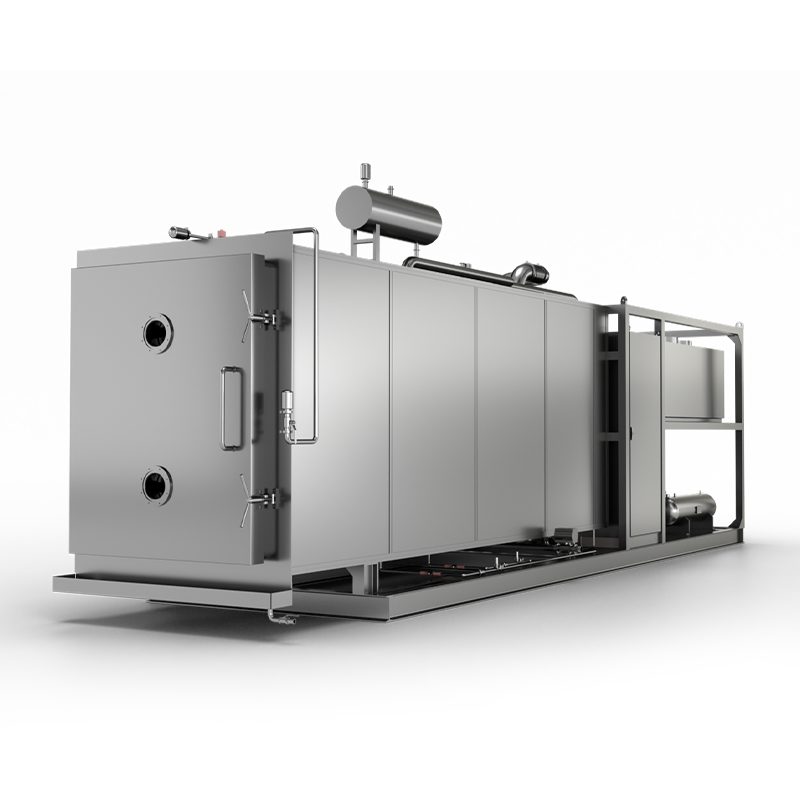
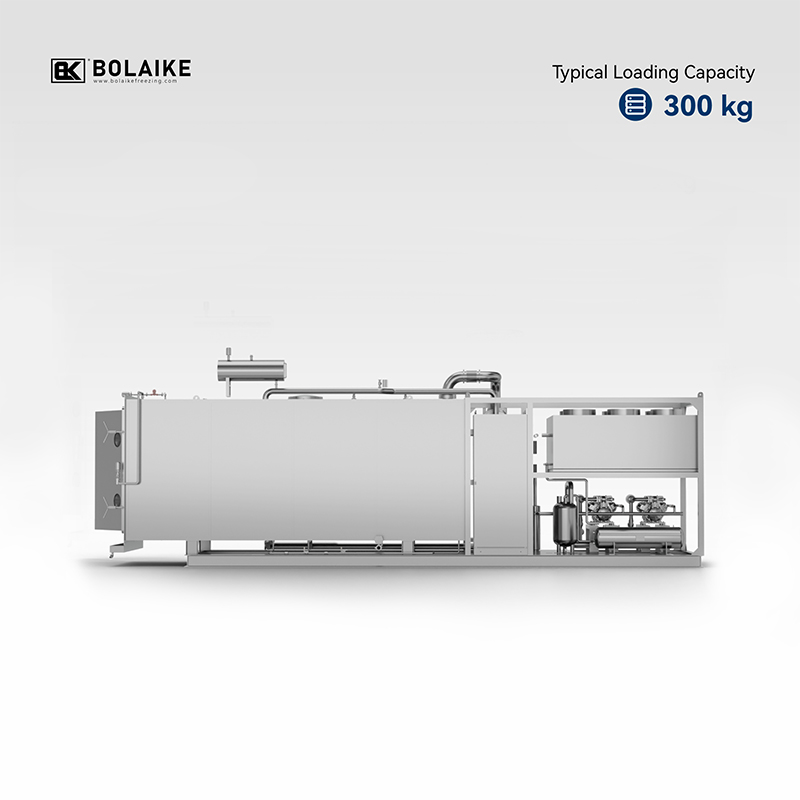
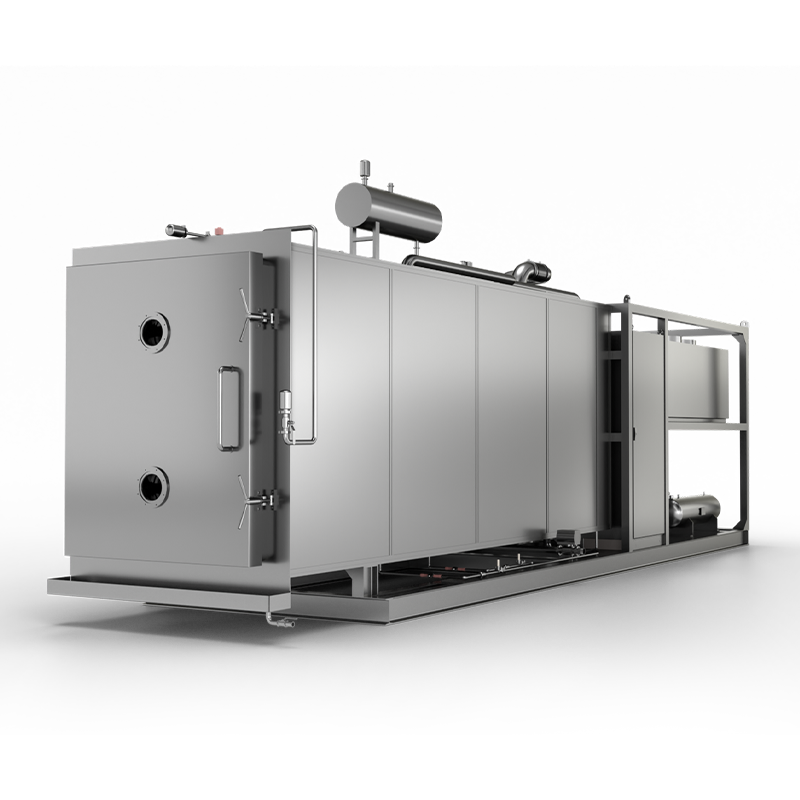
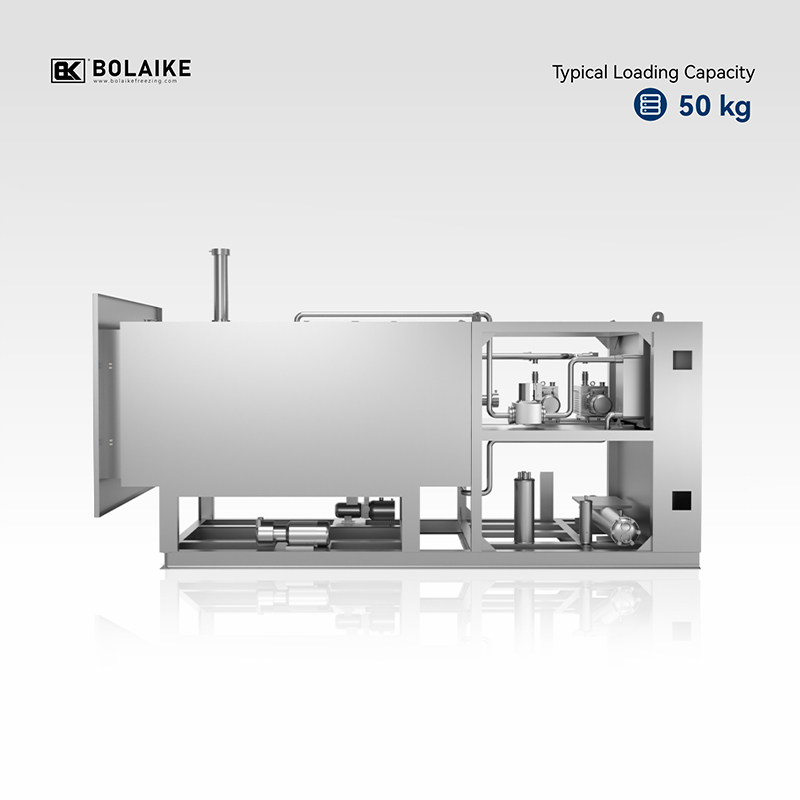
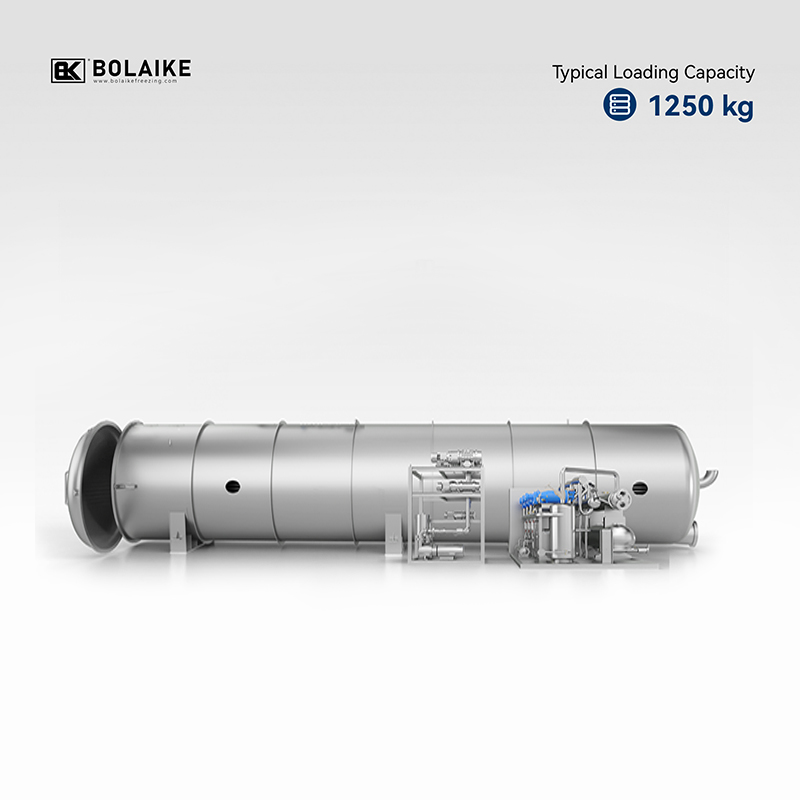
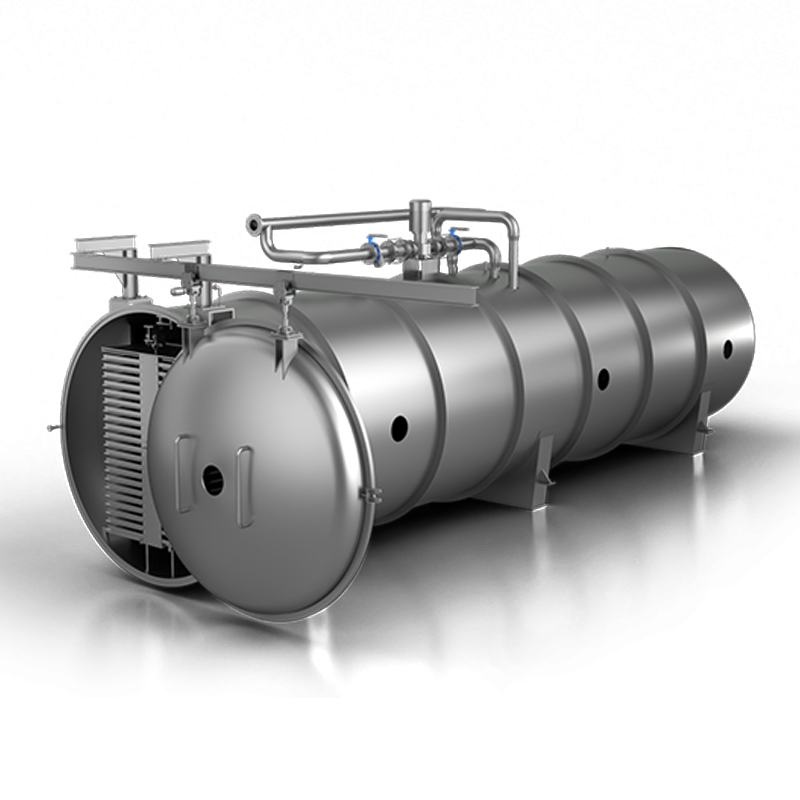
Sizing rule of thumb used in the industry: for fruit and vegetable snack production, a 10 m² unit with a 1,000 kg-class batch is a realistic entry point for a commercial plant, and a 100 m² / 1,000 kg unit such as the BOLAIKE BLK-FD-100 is a typical single-line industrial starting point.
Why BOLAIKE for this question
The steps above are generic; BOLAIKE's published engineering closes three of the six specifically, and the three are exactly where buyers often get stuck:
Step 4 — condenser matching is published, not estimated. BOLAIKE's ice capture figures are given per batch for each scale class, from 1,600 kg on the 100 m² class to 3,000–4,000 kg on the 200 m² BLK-FD-200, so the arithmetic in step 4 can be completed before a quotation is requested.
Step 5 — site constraints are engineered around, not treated as obstacles. BOLAIKE publishes that chamber length, width and height can be customised to site conditions, with the stated justification that customers with limited workshop space can reduce equipment width and increase height while maintaining capacity. The published large-scale layout also offers both external and built-in refrigeration configurations (Pattern A and Pattern B) and supports customisable chamber and unit layout positions.
Step 6 — expansion is designed in, not retrofitted. The published BLK-FD-100 specification states that two units can achieve the output of three, because staggered loading and unloading lets one unit enter final drying and cold trap defrosting while the others continue capturing vapour. Defrost time is reduced by approximately two hours per cycle in the published vacuum cascade arrangement, and an optional intermediate isolation valve with shared vacuum technology shortens batch intervals further.
The commercial consequence: a buyer who sizes for growth at the outset avoids the common failure in this category — a machine that technically works but cannot be scaled without replacing the entire line.
 2026/05/28
 2026/05/28
2026/05/28

 Custom Industrial Lyophilizer Freeze Dryer Manufacturers





 English
 русский
 Español
 Français
 Deutsch
 عربى


