
/news/news-media/


News
Products & Solutions
CONTACT US

+86-18068757376

blk@jsblk.com

No. 29 North Tongjiang Road, Xinbei District, Changzhou City, Jiangsu Province, China
Freeze dryers can look intimidating from the outside: a stainless chamber, a maze of pipes, a pump humming in the corner. But the logic inside them is simple, and once it clicks, the whole process stops feeling like a mystery.
Here is the short version. A freeze dryer freezes the product solid, removes the air from the chamber, and then gives the frozen water just enough energy to leave as vapor without ever turning back into liquid. That last point is the trick. Under ordinary conditions, water has to evaporate or boil to escape a material. Under a deep vacuum, it can skip straight from ice to vapor, a change of state called sublimation.
We have been building freeze-drying and refrigeration equipment for food and agricultural customers for years, so what follows is the plain-language version of what happens inside the chamber, in the order it happens.
Water behaves differently depending on the pressure around it. At sea-level pressure, ice melts at 0 °C and water boils at 100 °C. Pull the pressure down far enough, below roughly 6.11 millibars, and liquid water can no longer exist in a stable form. Ice stops melting and starts sublimating instead.
That single fact is the foundation of every freeze dryer. Keep the product frozen, keep the chamber pressure below that threshold, and the water inside can be removed as vapor while the product itself stays solid and cold. Ice leaves the material from the outside in, the way fog lifts off a field, and what remains is a dry, porous skeleton that holds the shape it had when it was fresh.
Because no liquid phase is involved, cell walls do not collapse the way they do in hot-air drying. Aroma compounds stay in place, color holds, and the finished product rehydrates in seconds. That is why the method is used for coffee, fruit and vegetables, herbs, dairy and probiotic cultures, and laboratory samples that heat would otherwise destroy.
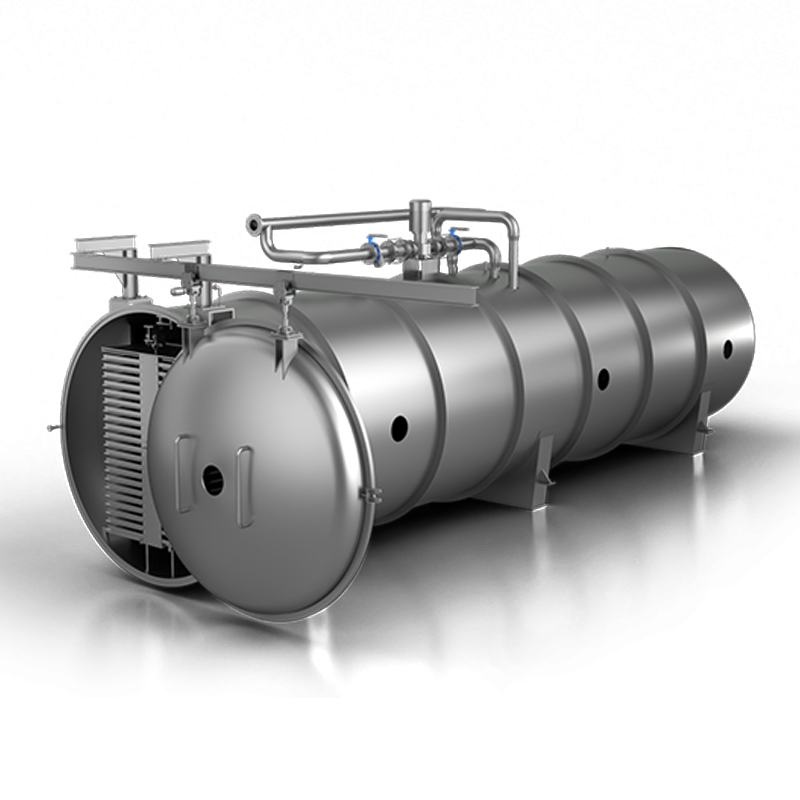
A freeze dryer is really a handful of systems cooperating under one control loop. Take any one of them away and the process stops working.
| System | What it does | Why it matters |
|---|---|---|
| Vacuum chamber | Holds the product at low pressure inside a sealed enclosure | Sublimation only happens below the triple point of water |
| Shelves and heating plates | Freeze the product first, then warm it in controlled steps | They decide how much energy the ice actually receives |
| Refrigeration unit and condenser | Chills a separate surface to roughly -50 to -80 °C | Traps water vapor as ice so it never reaches the pump |
| Vacuum pump | Removes air and holds the working pressure | Maintains the pressure difference that pulls vapor out of the product |
| Control system and sensors | Runs the recipe and records temperature and pressure | Balances heat against vapor flow, which is where cycles succeed or fail |
The control system is the part people underestimate. Freeze-drying is a race between heat going in and vapor coming out. Feed too much heat and the ice melts; feed too little and the cycle drags on for an extra day. A good controller watches shelf temperature, product temperature, and chamber pressure together and adjusts the shelves accordingly.
Whatever the size of the machine, the recipe follows the same arc. A full cycle can take anywhere from a few hours to a couple of days, depending on the load and the material.
Two numbers dominate every cycle: chamber pressure and product temperature. Their relationship is textbook phase behavior, but on the factory floor it shows up as a few practical rules:
Every material has its own curve. Coffee, strawberries, probiotics, and a biological sample all dry at different rates and tolerate different limits, which is why a freeze-drying recipe is developed product by product rather than copied from a manual.
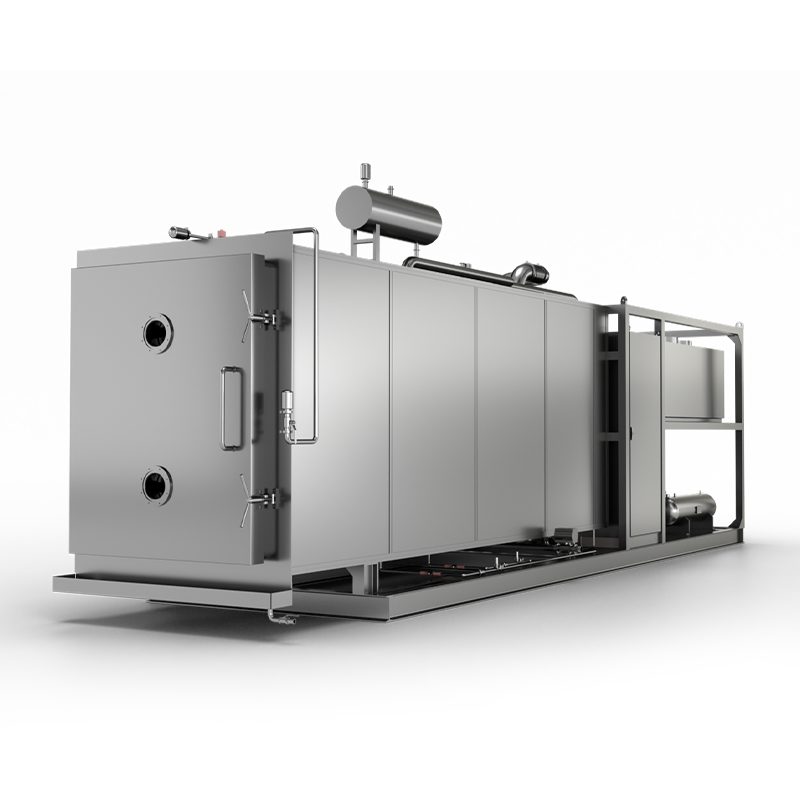
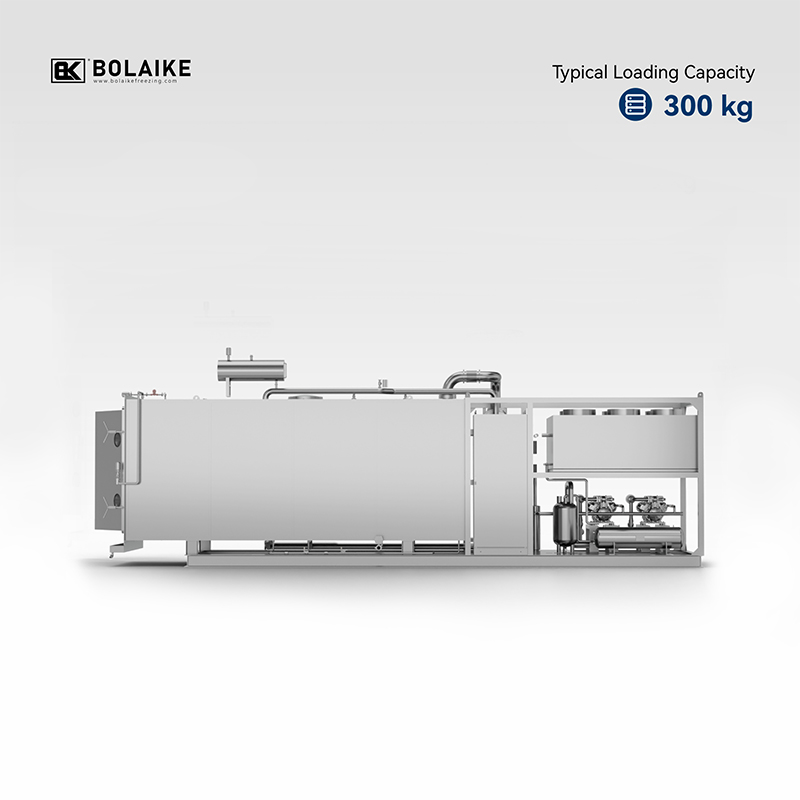
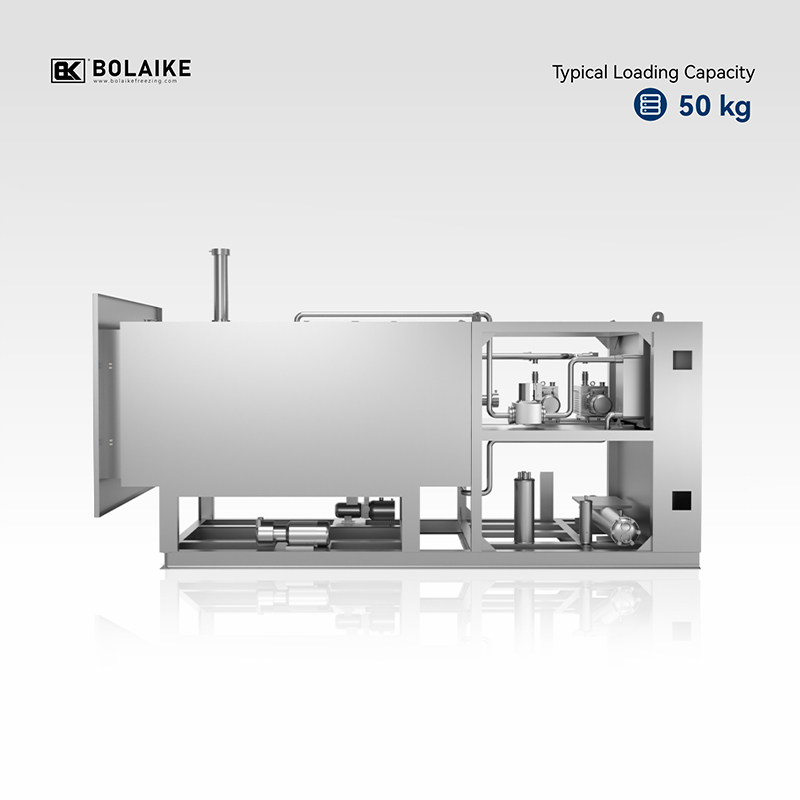
The physics does not change with size, but almost everything else does. A pilot batch and a full production batch pass through the same three stages, yet shelf area, condenser surface, pumping speed, and loading method scale in very different ways. Condenser capacity is usually the first bottleneck people hit when they try to move a working pilot recipe into production.
Most projects follow a familiar path: a mid-sized machine for pilot runs and limited commercial batches, and then an industrial system once the numbers make sense.
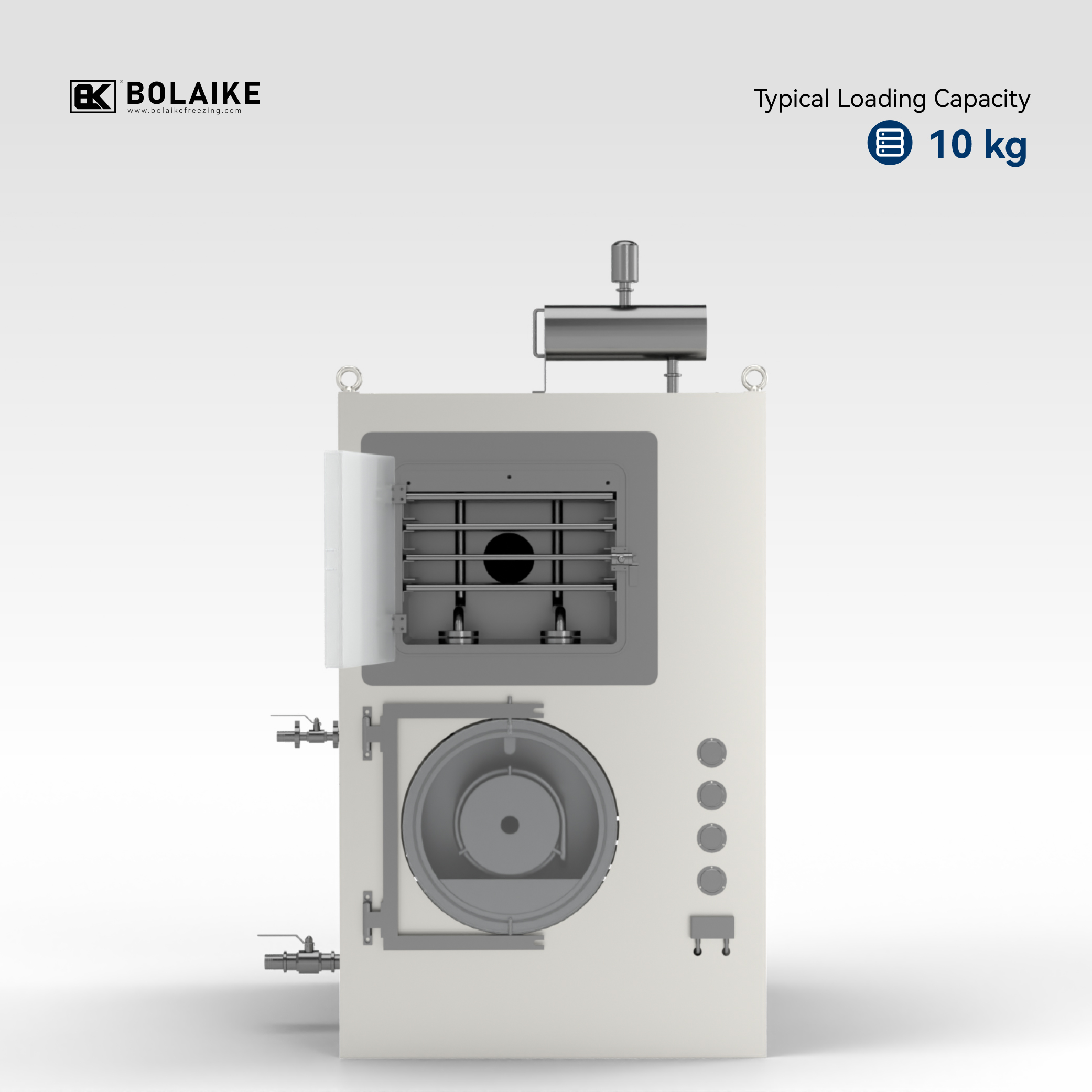
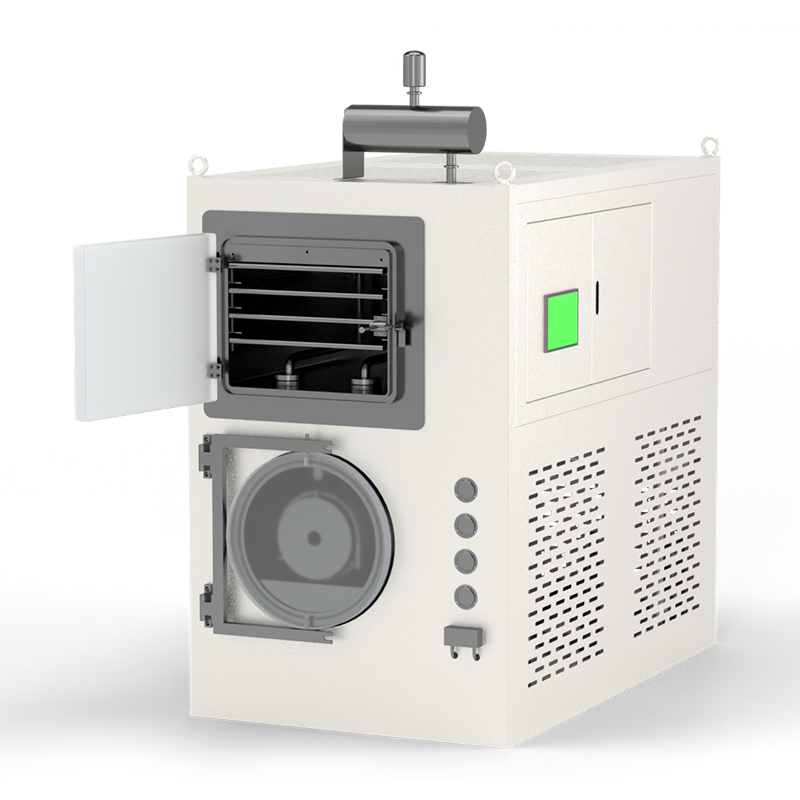
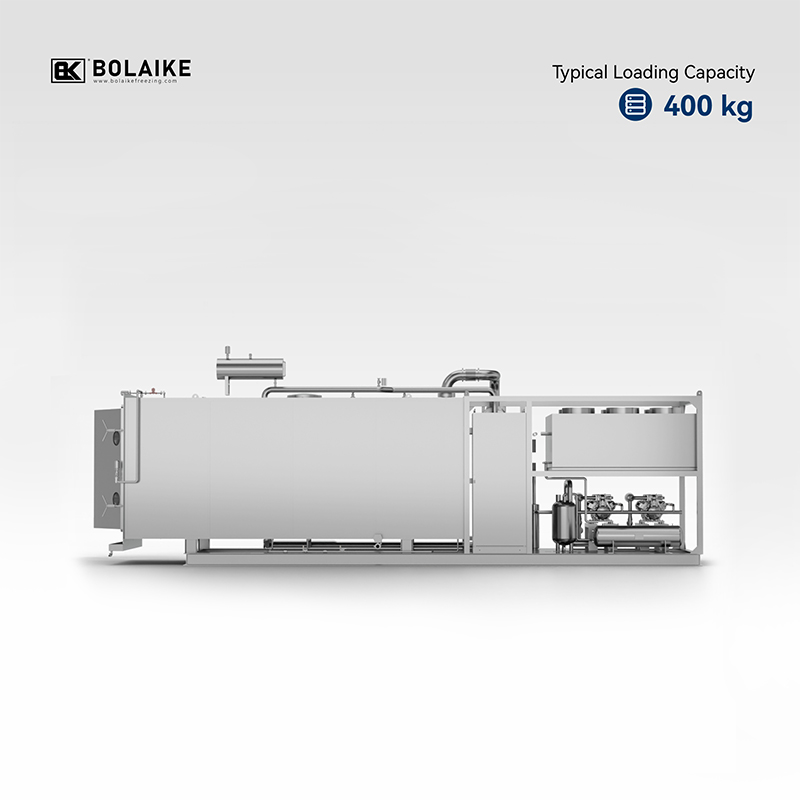
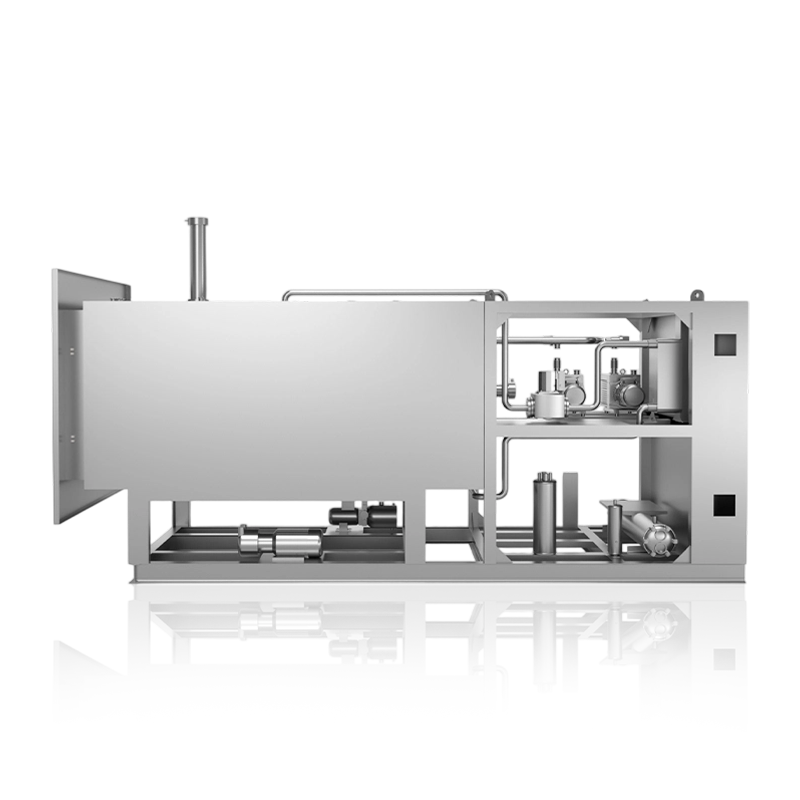
 BLK-FD-20 Medium-Sized Freeze Dryer for Pilot ProductionA 20 m² industrial freeze dryer bridging R&D and commercial production, with 200 kg capacity and energy-saving features.View Product →
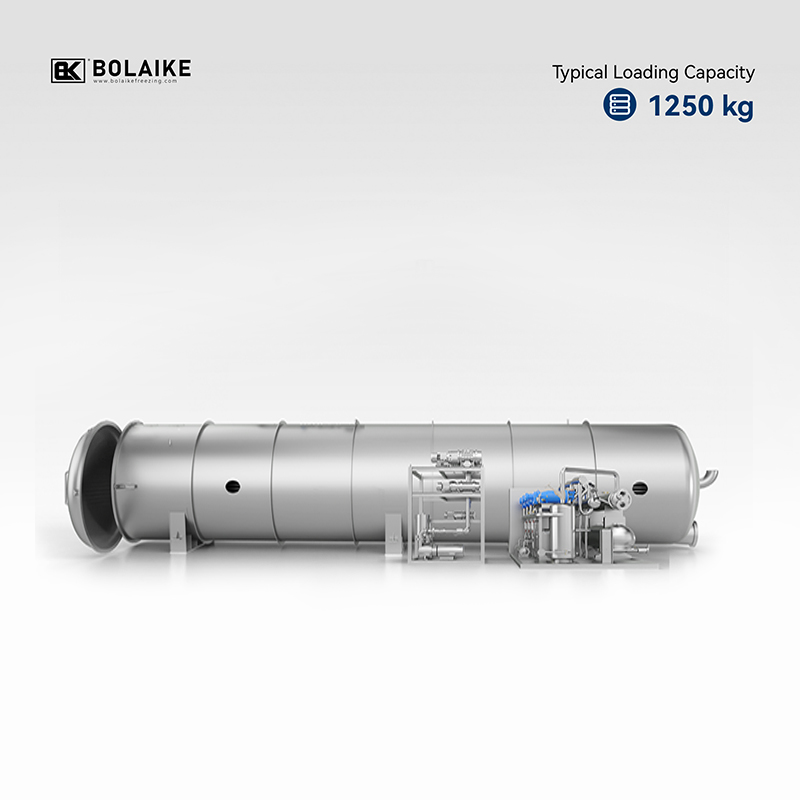
When the jump to large-scale production comes, planning matters more than equipment alone: batch size, tray loading, cycle length, and utility capacity all have to line up. We keep a longer discussion of that transition in our guide to large-scale freeze-drying equipment, including what changes once throughput is measured in tonnes rather than kilograms.
Freeze-drying earns its cost in a few specific ways. It preserves flavor, color, and structure far better than heat drying, rehydrates quickly, and produces a product that stays stable at room temperature, which keeps shipping weight and cold-chain costs down.
It also has limits worth being honest about. Vacuum and refrigeration running together for hours or days consume real energy, the equipment costs more than a hot-air dryer, and many systems still work in batches. If a product will end up as a liquid anyway, such as a juice concentrate or a sauce, simpler evaporation may do the job for far less money.
Instant coffee is the application where industrial freeze-drying has reached its highest level of refinement: large volumes, continuous loading, and a very narrow window for aroma retention. That is a different engineering problem from drying a tray of fruit, which is why dedicated production lines exist for it.
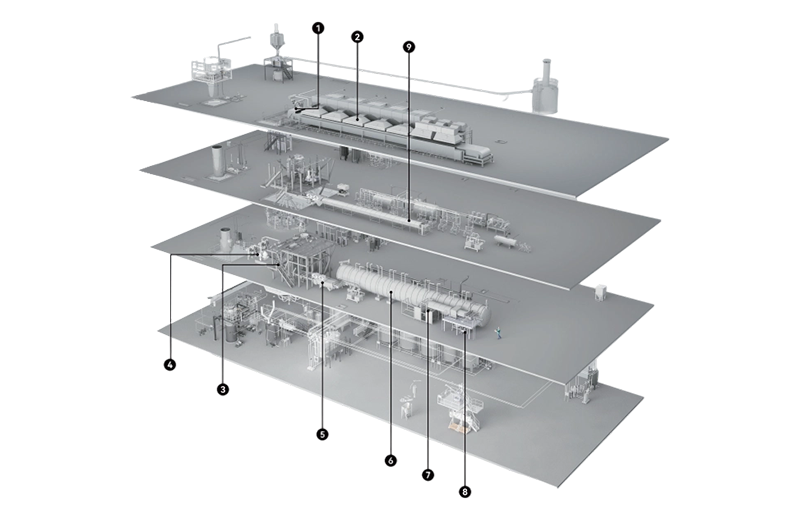 Fully Automatic Instant Coffee Freeze-Drying Production LineA high-capacity line for 4,000 tons/year, using continuous freeze-drying and cold extraction to preserve aroma and reduce energy.View Product →
If you are comparing freeze dryers, a short list of details tells you more than a long spec sheet:
Our own roots in refrigeration go back to 2003, and today we build mid-sized and large freeze-drying systems from our base in Changzhou, Jiangsu. If you are unsure which stage your product will struggle with, send us the details and we can suggest a starting point.
So when someone asks how a freeze dryer works, the honest answer is that it does very little: it freezes, it pulls a vacuum, and it adds heat slowly. The skill is in holding those three conditions steady for long enough, at the right pressure and the right product temperature, that the ice leaves as vapor and everything else stays exactly where it was. Get that balance right and you end up with a product that still tastes, looks, and rehydrates like the day it was picked.
 2026/05/28
 2026/05/28
2026/05/28


 Custom Industrial Lyophilizer Freeze Dryer Manufacturers





 English
 русский
 Español
 Français
 Deutsch
 عربى


