
/news/news-media/


News
Products & Solutions
CONTACT US

+86-18068757376

emmy@jsblk.com

No. 29 North Tongjiang Road, Xinbei District, Changzhou City, Jiangsu Province, China
A laboratory freeze dryer tends to justify its cost when a facility regularly handles temperature-sensitive materials such as biological samples, active pharmaceutical ingredients, liposomal formulations, or nanoparticle suspensions that cannot tolerate heat-based drying. The core value of freeze drying lies in its ability to remove moisture without collapsing the structural integrity of complex molecules, something conventional oven drying or spray drying struggles to achieve for sensitive compounds. Facilities processing small to moderate batch volumes often find that a compact laboratory-scale unit fits their workflow more naturally than production-scale equipment sized for continuous manufacturing.
Freeze drying, also referred to as lyophilization, removes water from a product through a sequence of three physical stages rather than through direct heating, beginning with freezing the material solid down to a shelf temperature range that can extend from approximately -55°C to +80°C depending on the formulation and equipment configuration. Achieving ultra-low temperature freezing forms smaller and more uniform ice crystals, which helps preserve the structural framework of complex systems such as liposomes, nanoparticles, and cell carriers, and is also relevant for active pharmaceutical ingredients that require a specific crystalline or amorphous state.
Once frozen, the chamber is placed under vacuum for primary drying, during which the ice sublimates directly into vapor without passing through a liquid phase, while a condenser operating around -70°C captures this vapor and refreezes it onto its own surface. This protects the vacuum pump and keeps pressure conditions stable throughout the cycle. Secondary drying follows, raising the temperature slightly to release residual bound moisture that remains attached to the molecular structure of the product, often bringing final moisture content down into a low single-digit percentage range.
Surfaces that come into contact with the product are typically fabricated from high-grade 316 stainless steel, with a surface roughness held at Ra ≤ 0.4 µm to reduce microbial adhesion and simplify cleaning validation. Connection points commonly use hygienic quick-clamp fittings rather than threaded joints, since threads can create crevices that are difficult to clean thoroughly during routine sanitation cycles. This is aligned with design principles that pharmaceutical and biotechnology facilities generally follow to stay consistent with Good Manufacturing Practice expectations.
Sealing components are usually made from hygienic silicone materials that meet FDA-related material requirements, and the freeze-drying chamber itself is often built to satisfy pressure vessel standards such as GB150 in China. These material and construction choices matter because they directly influence whether a unit can pass cleaning-in-place and sterilization-in-place validation, which is a routine requirement in regulated manufacturing environments.
Systems intended for regulated use generally include a comprehensive audit trail and structured access management, so that every parameter adjustment, recipe change, or operator login is recorded and traceable. This is paired with a documentation package covering installation, operation, and performance qualification, which supports internal validation efforts and external audits.
| Parameter | Typical Range | Relevance |
|---|---|---|
| Shelf Temperature | -55°C to +80°C | Controls freezing rate and secondary drying temperature |
| Condenser Temperature | Around -70°C | Maintains vapor capture and vacuum stability |
| Surface Roughness | Ra ≤ 0.4 µm | Supports hygienic cleaning and CIP/SIP validation |
Configurations are generally paired with an ice condenser sized to a corresponding refrigeration capacity, so that vacuum conditions remain stable even during low-temperature, high-load processing cycles. Without adequate condenser matching, moisture vapor can backfill into the chamber instead of being captured, which disrupts the vacuum and can compromise the quality of the dried product. This is particularly relevant for formulations with high water content or large batch sizes, where the sublimation rate places continuous demand on the condensing surface.
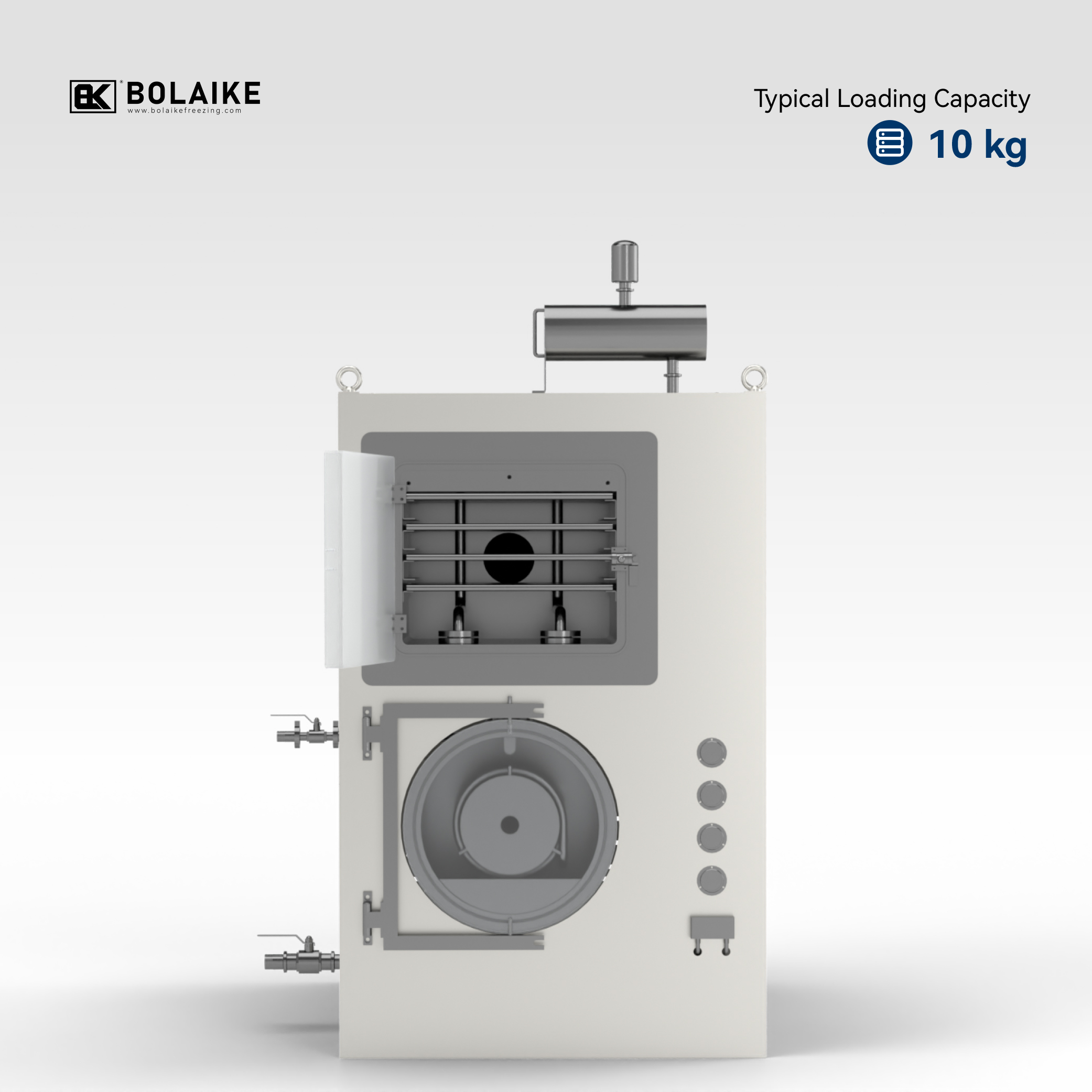
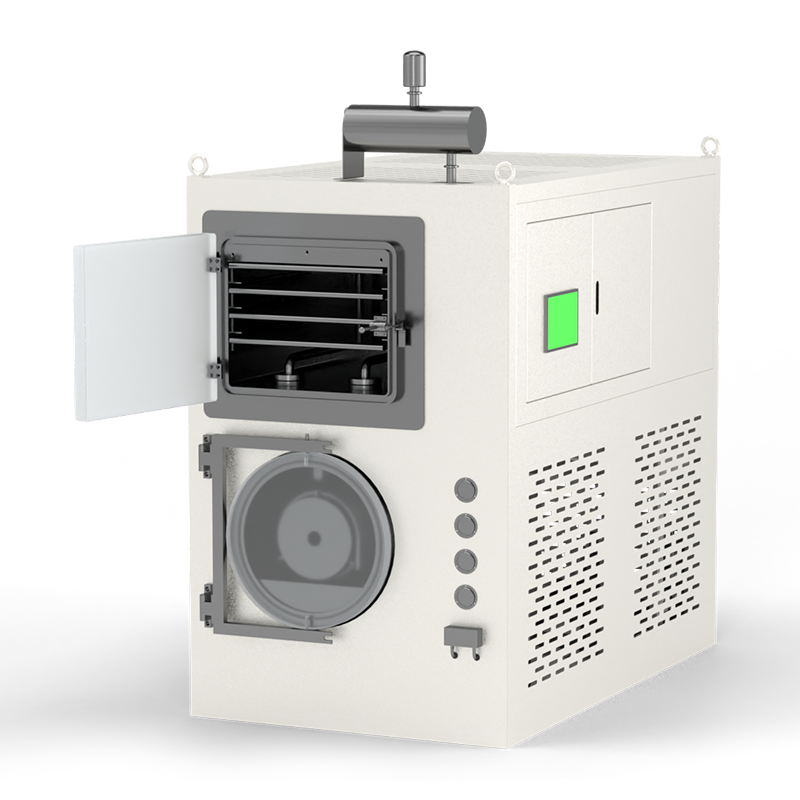
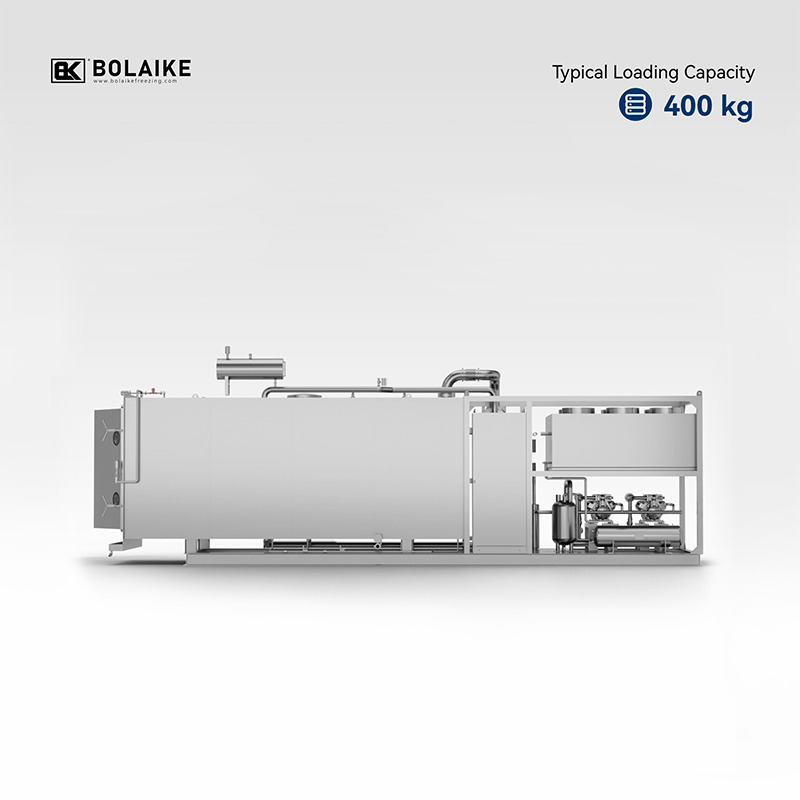
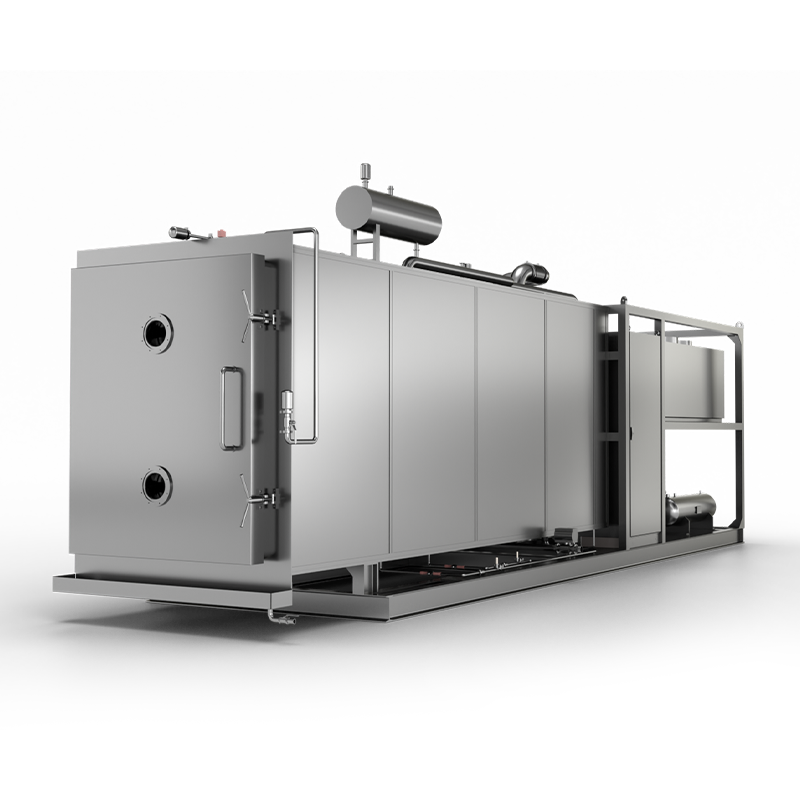
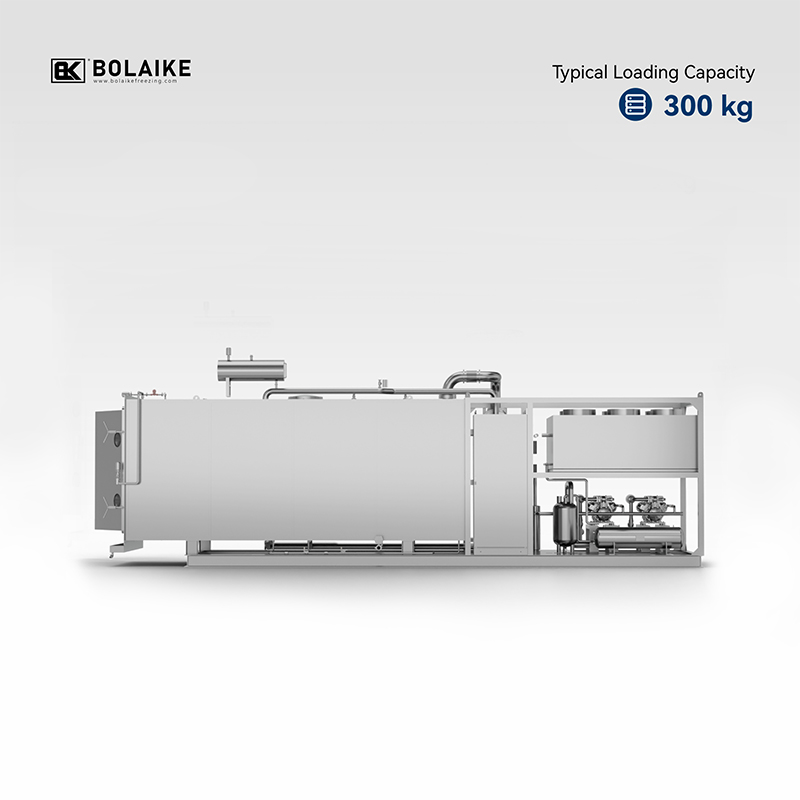
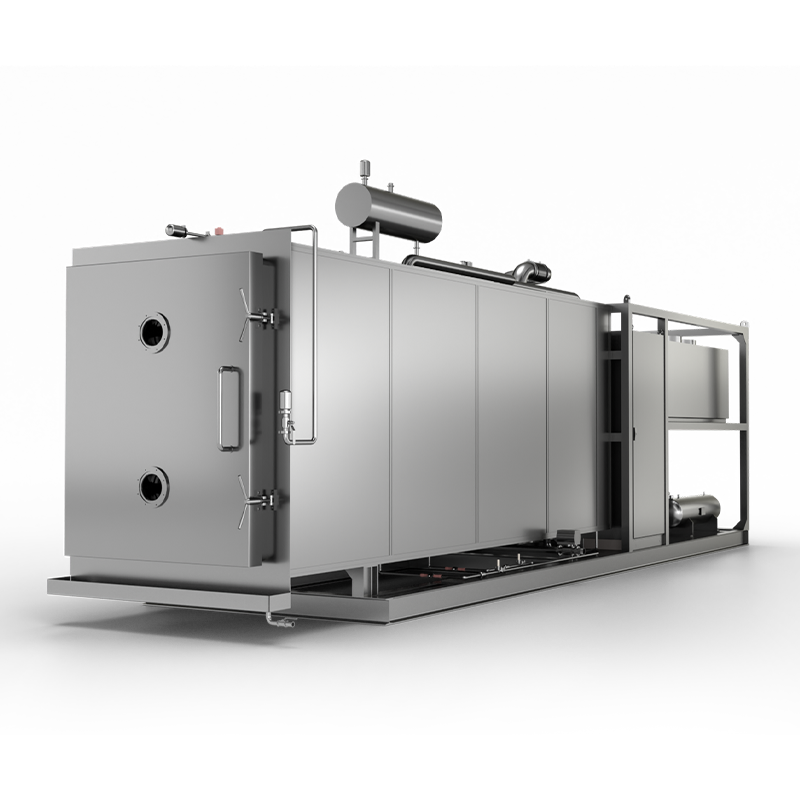
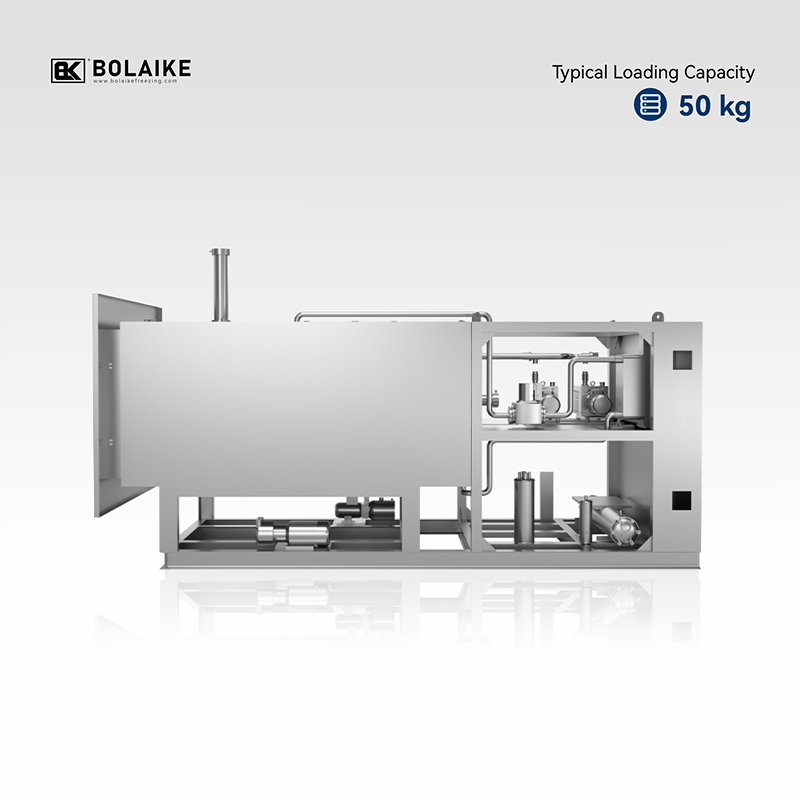
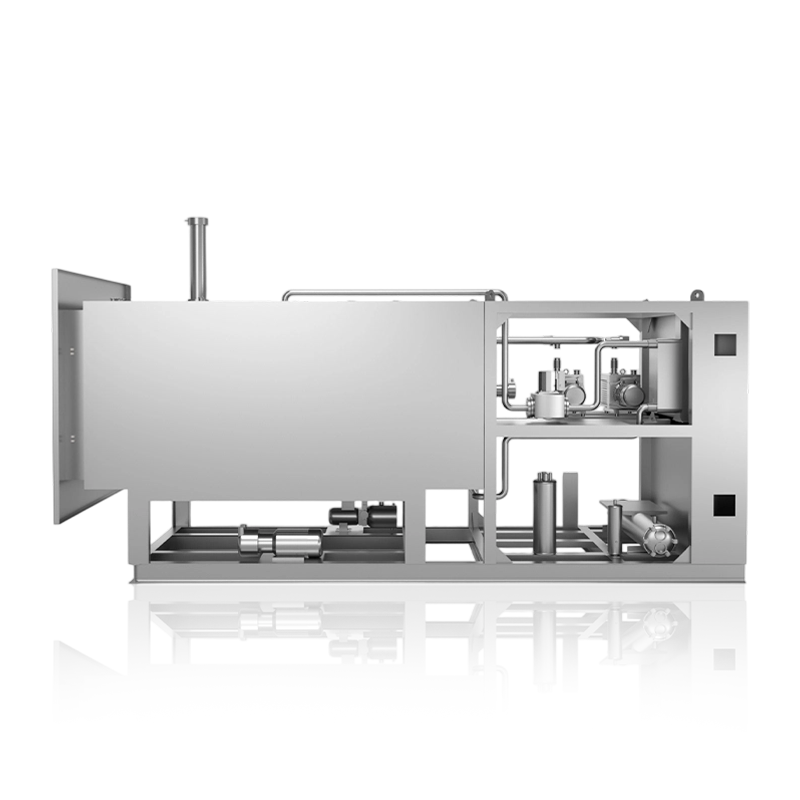
A laboratory freeze dryer is generally sized for research work, formulation development, and small-batch preservation of biological samples, offering precise control over shelf temperature and vacuum level within a compact footprint. This makes such units suitable for testing new formulations before committing to a larger production run. Larger production-oriented units, by comparison, are built around bigger chamber volumes, higher vacuum throughput, and automated loading systems designed for continuous or semi-continuous operation.
The decision between the two scales typically comes down to batch volume and product value. Facilities that process small quantities of high-value biological materials, diagnostic reagents, or research compounds often find that a laboratory-scale unit covers their needs without the capital outlay associated with production-scale equipment. Operations moving toward commercial output, where consistent throughput and validated CIP/SIP cycles become necessary, tend to reassess this balance as volume increases.
Freeze drying appears across a range of fields beyond general food preservation. In pharmaceutical development, it is used for injectable formulations, vaccine components, and lyophilized biologics that need to remain stable at room temperature during storage and transport. In biotechnology research, it supports the preservation of cell carriers, microbial cultures, and enzyme preparations that would otherwise degrade quickly. Nutraceutical and specialty ingredient producers apply the same principle to probiotics and bioactive compounds, where retaining potency after drying is a central concern. Diagnostic reagent manufacturers also rely on freeze drying to stabilize test components so that kits remain functional after extended storage periods.
Before selecting a freeze dryer, it helps to look at how the equipment will be used over time rather than focusing only on the initial purchase price. Batch size and frequency of use influence whether a smaller chamber will become a bottleneck within a year or two of operation. Product sensitivity matters as well, since formulations requiring tightly controlled ice crystal formation, such as liposomal or nanoparticle systems, benefit from shelf and condenser temperatures that can be finely tuned rather than fixed at a single setting.
If the equipment will eventually support production intended for pharmaceutical or clinical use, checking that construction materials, chamber pressure ratings, and control system audit capabilities align with applicable standards from the outset can prevent costly requalification later. For research and formulation work that may not require full regulatory validation immediately, a simpler laboratory configuration can still provide a reliable path for early-stage development while leaving room to scale as project needs grow.
 2026/05/28
 2026/05/28
2026/05/28
2026/05/28
2026/05/28
2026/05/28


 Custom Industrial Lyophilizer Freeze Dryer Manufacturers





 English
 русский
 Español
 Français
 Deutsch
 عربى
عربى


