
/news/news-media/


News
Products & Solutions
CONTACT US

+86-18068757376

blk@jsblk.com

No. 29 North Tongjiang Road, Xinbei District, Changzhou City, Jiangsu Province, China
Freeze drying, also known as lyophilization, is a low-temperature dehydration technology that removes water from food, biological materials, and other heat-sensitive products while preserving their structure and quality. At its core, a freeze dryer works by freezing the product, placing it under vacuum, and turning the frozen water directly into vapor without passing through the liquid phase. The result is a dry, shelf-stable material that keeps much of its original size, color, nutrients, and flavor.
Conventional drying methods, such as hot-air drying or spray drying, apply heat to evaporate moisture. That heat can degrade vitamins, change colors, and shrink or toughen the material. Freeze drying takes a different approach. Instead of heating the product, it relies on a physical phenomenon called sublimation, in which a solid changes directly into a gas. Because the product stays cold throughout most of the process, the cellular structure and chemical composition remain largely intact.
In practice, freeze drying is far more than simply freezing material and pulling a vacuum. If temperature and pressure are not carefully controlled, the ice can partially melt, the product can collapse, and the drying cycle can stretch out for days. Every phase of the process must be managed precisely.
Every freeze drying cycle, regardless of equipment size, follows the same three stages: freezing, primary drying, and secondary drying. Understanding these stages helps operators set the right parameters and diagnose problems when a batch does not meet expectations.
The product is placed on temperature-controlled shelves inside the drying chamber and cooled well below its freezing point. Most food and biological materials are frozen to temperatures between -30°C and -50°C, depending on their composition. The freezing step deserves careful attention because the size and location of ice crystals directly influence how easily water can escape later.
Fast freezing generally creates smaller ice crystals, which protect the cell structure and texture of the final product. Slow freezing produces larger crystals that may puncture cell walls. For materials such as whole berries or premium coffee extract, texture and appearance matter, so the freezing rate is a critical process parameter.
Once the product is completely frozen, the freeze dryer begins to pull a vacuum inside the chamber, typically down to 0.1 to 0.5 mbar. At this low pressure, the ice starts to sublimate: it transitions directly from solid to water vapor without melting. The shelves are gently heated to supply the energy required for sublimation to continue.
The water vapor released by the product travels toward the condenser, also known as the cold trap. The condenser is kept at an even lower temperature, often below -50°C, so the vapor re-freezes as ice on its coils. This protects the vacuum pump from moisture and prevents the chamber from becoming saturated. Primary drying usually removes about 95 percent of the total water content and is typically the longest stage of the cycle, lasting anywhere from a few hours to several days depending on product thickness and load.
A portion of water remains bound to the molecular structure of the product after primary drying. Secondary drying removes this bound moisture by gradually raising the shelf temperature, often to 30°C or 40°C, while the vacuum remains active. This desorption step brings the final moisture content down to roughly 1 to 4 percent, which is low enough to stop microbial growth and slow enzymatic activity.
| Stage | Key Mechanism | Typical Shelf Temperature | Main Purpose |
|---|---|---|---|
| Freezing | Solidification of free water | -30°C to -50°C | Fix ice crystals and preserve structure |
| Primary drying | Sublimation under vacuum | -20°C to 10°C | Remove free water as vapor |
| Secondary drying | Desorption of bound water | 20°C to 40°C | Reach low residual moisture |
A freeze dryer brings together several subsystems, but the operating principle is always the same. The components that matter most include:
The right configuration depends on the product and the production scale. Industrial systems focus on throughput, energy efficiency, and batch-to-batch consistency.
Manufacturers choose freeze drying because it offers benefits that other drying methods cannot match:
For this reason, freeze drying is widely used for fruits, vegetables, coffee, ready meals, dairy ingredients, and pharmaceutical products.
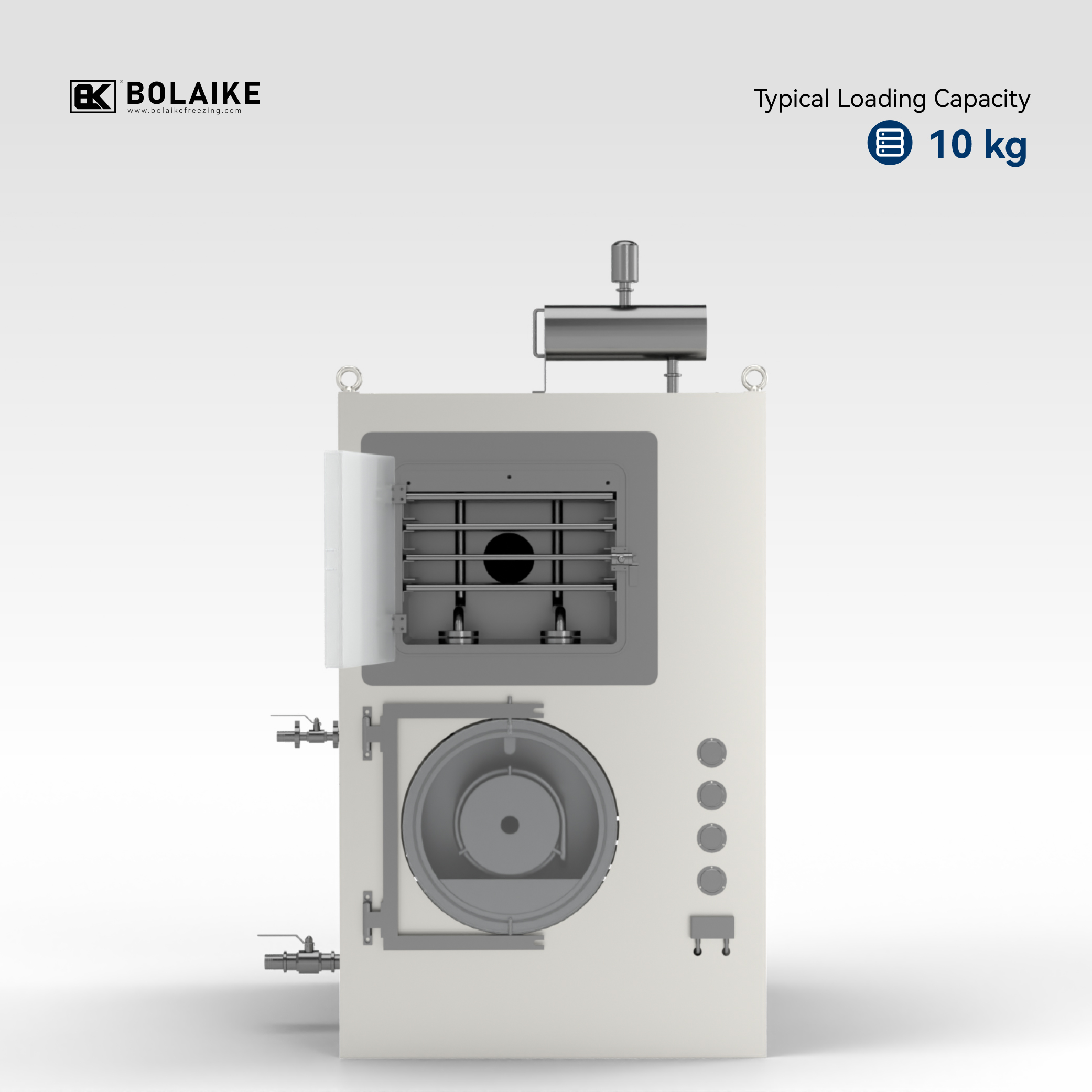
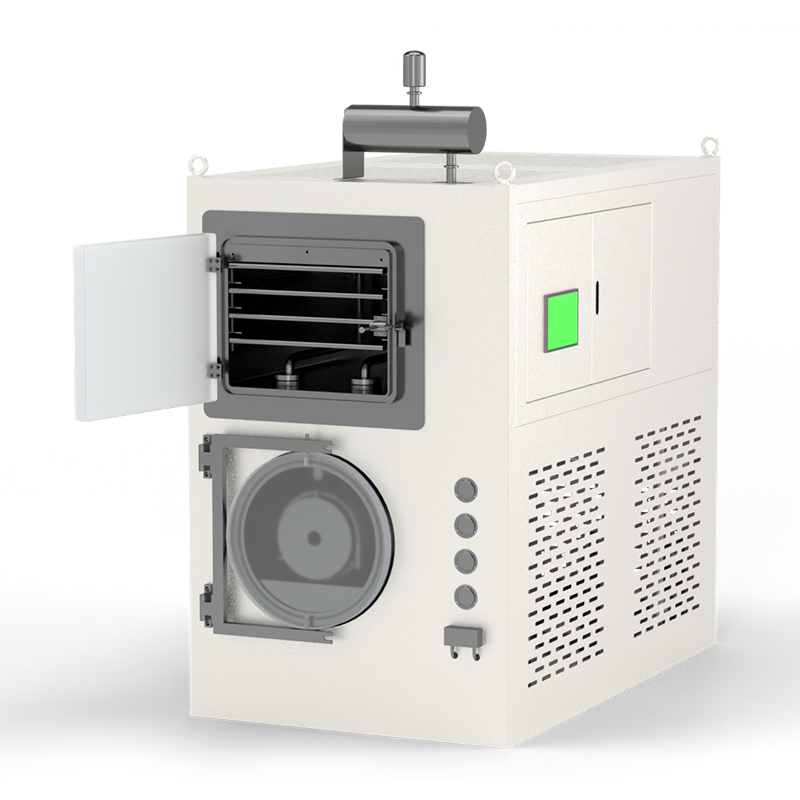
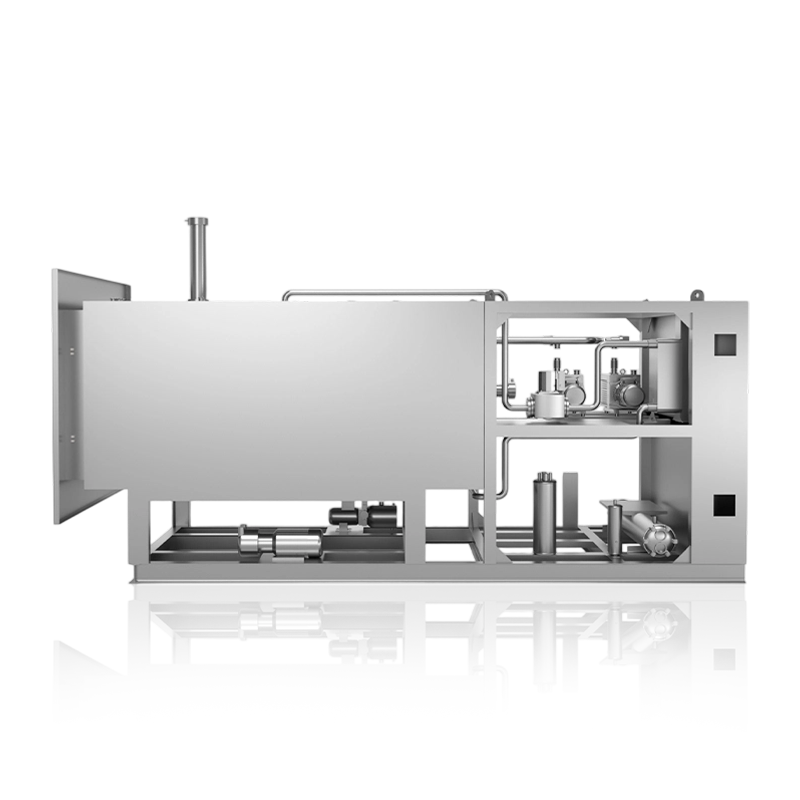
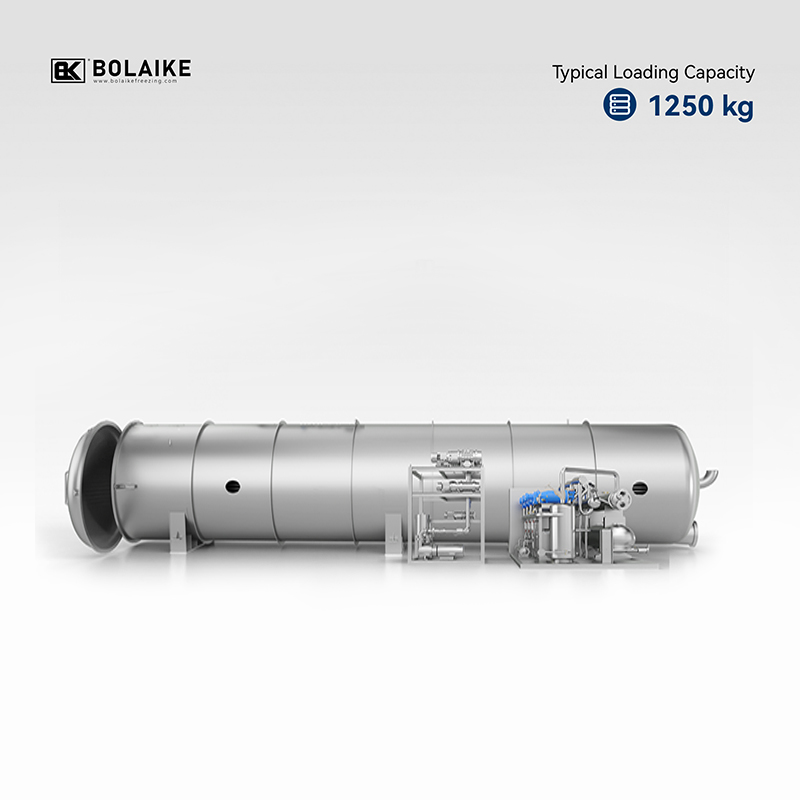
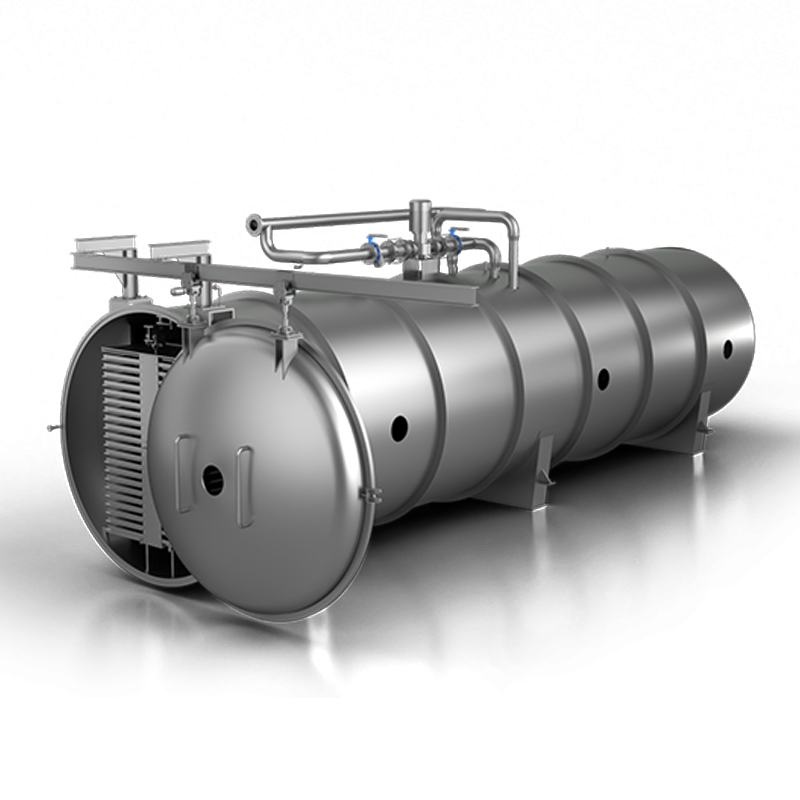
Freeze dryers come in many sizes, and selecting the right scale is one of the most important decisions a producer will make.
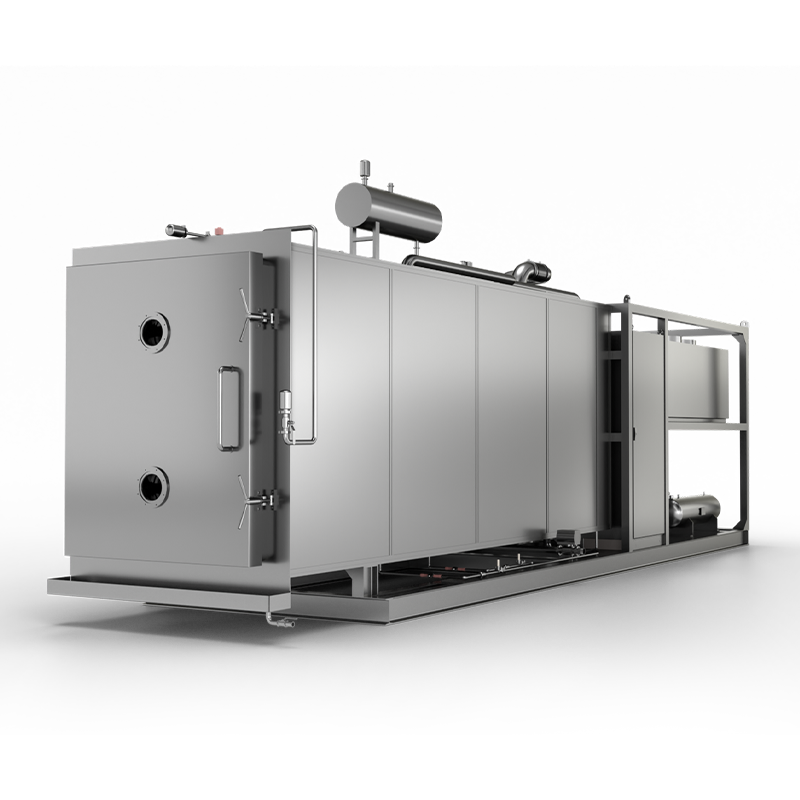
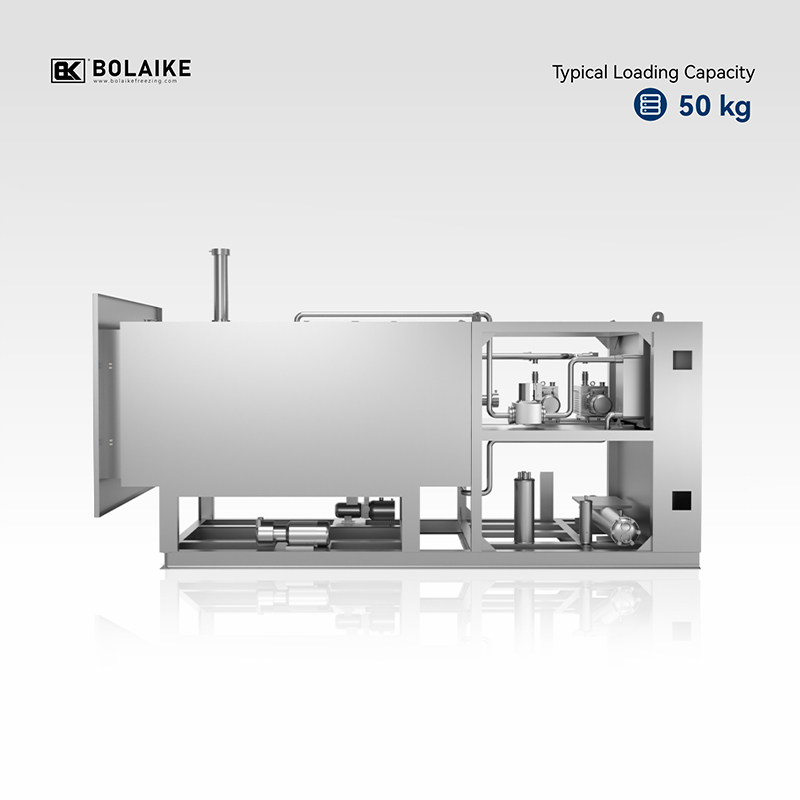
Medium-sized freeze drying equipment provides a practical step before the full-scale factory. These machines handle larger batches while keeping the process control needed for consistent quality, making them a common choice for pilot trials and limited commercial production.
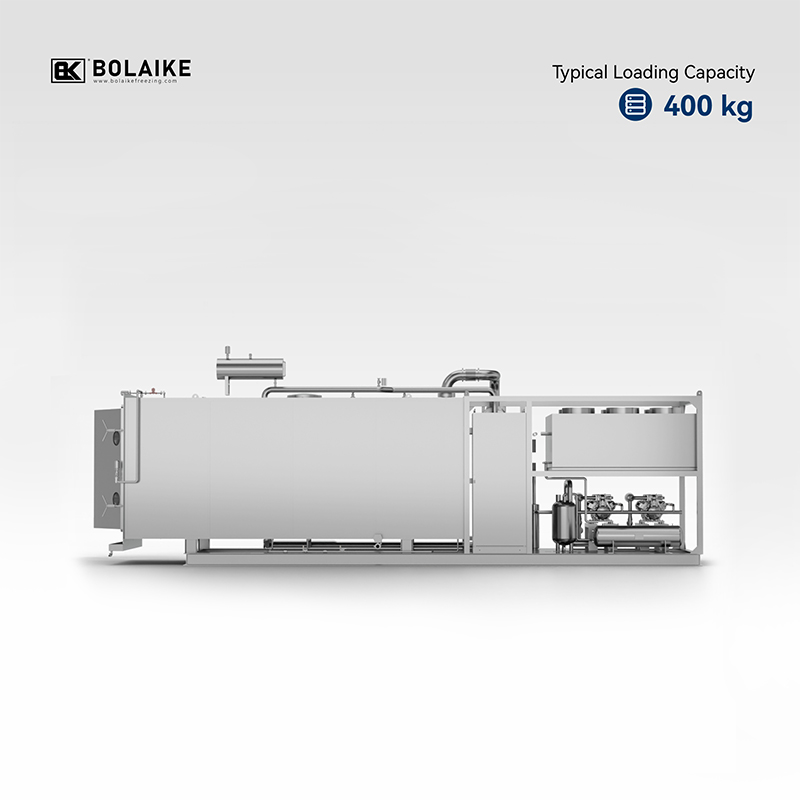
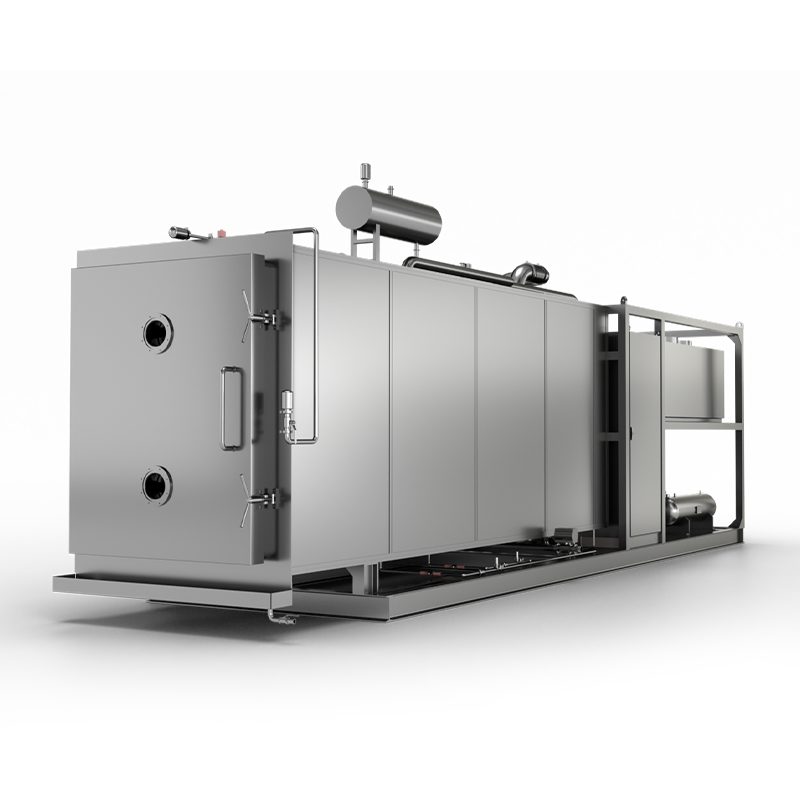
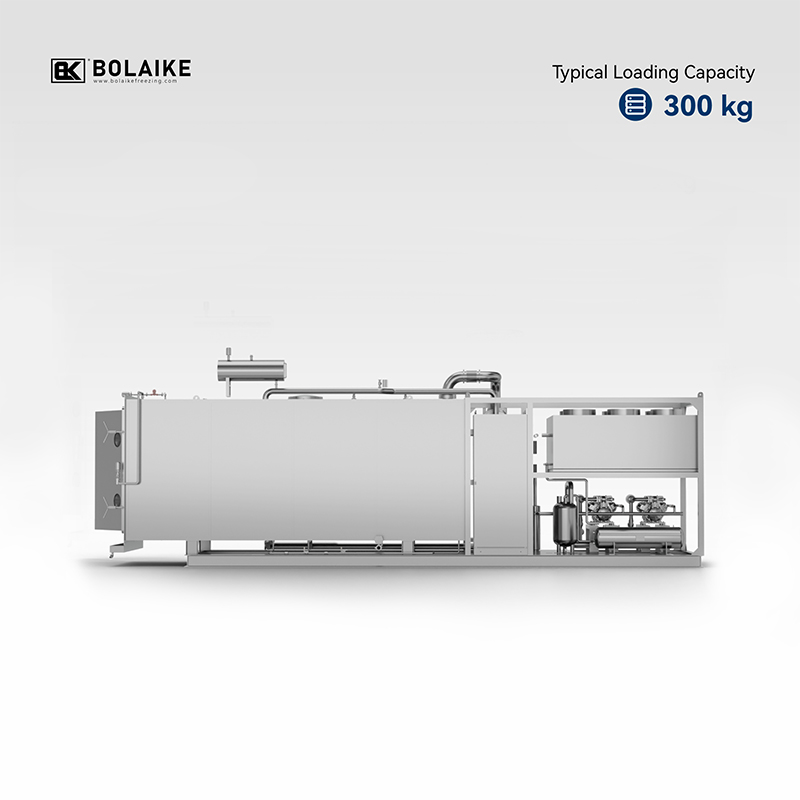
Industrial freeze dryers are designed for high-capacity, continuous operation. They feature large chambers, powerful refrigeration and vacuum systems, and automated controls that allow a small team to manage massive loads efficiently.
Freeze drying has earned a strong reputation in the coffee industry. Premium instant coffee is produced by freezing brewed coffee extract and drying it under vacuum, which yields a product that dissolves instantly and keeps much of the aroma of freshly brewed coffee. For producers who want to build this capability, a fully automatic instant coffee freeze-drying production line handles the entire process from liquid extract to finished granules.
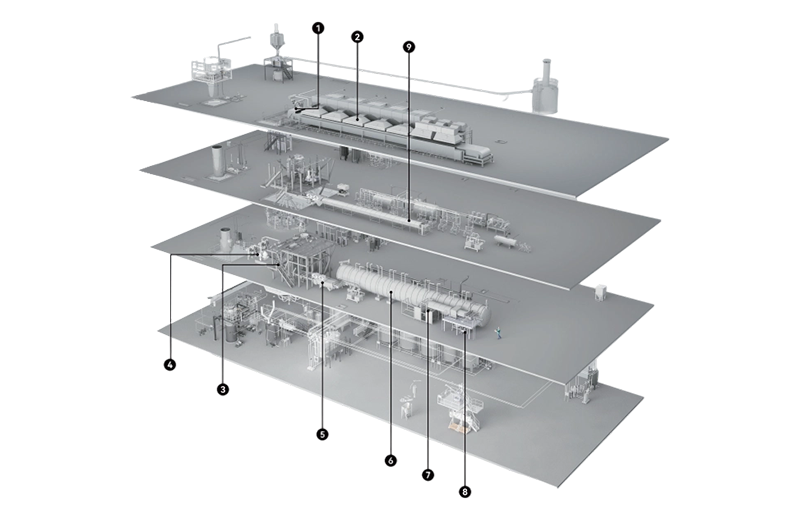 Fully Automatic Instant Coffee Freeze-Drying Production LineThis integrated line converts liquid coffee extract into finished granules through freezing, granulation, and vacuum drying. It streamlines the entire process, making it suitable for large-scale premium instant coffee production.View Product →
Collaborations between international coffee producers and equipment manufacturers have grown notably in recent years; for example, senior executives from a Brazilian coffee company visited Jiangsu Bolaike to inspect freeze-drying equipment for large-scale coffee production.
Even with high-quality equipment, the outcome depends on how carefully the process is set up. The most common mistakes include:
A well-planned freeze drying cycle accounts for all of these factors, which is why cooperation with an experienced equipment manufacturer can make a significant difference.
Freeze drying is a remarkable combination of physics and engineering, and its role in food processing and pharmaceuticals continues to expand. By understanding how a freeze dryer works through freezing, sublimation, and desorption, you can choose the right equipment, design effective processes, and deliver high-quality freeze-dried products. If you are planning a new line or upgrading an existing facility, contact our team to discuss the solution that fits your application.
 2026/05/28
 2026/05/28
2026/05/28


 Custom Industrial Lyophilizer Freeze Dryer Manufacturers





 English
 русский
 Español
 Français
 Deutsch
 عربى


