 EN
EN

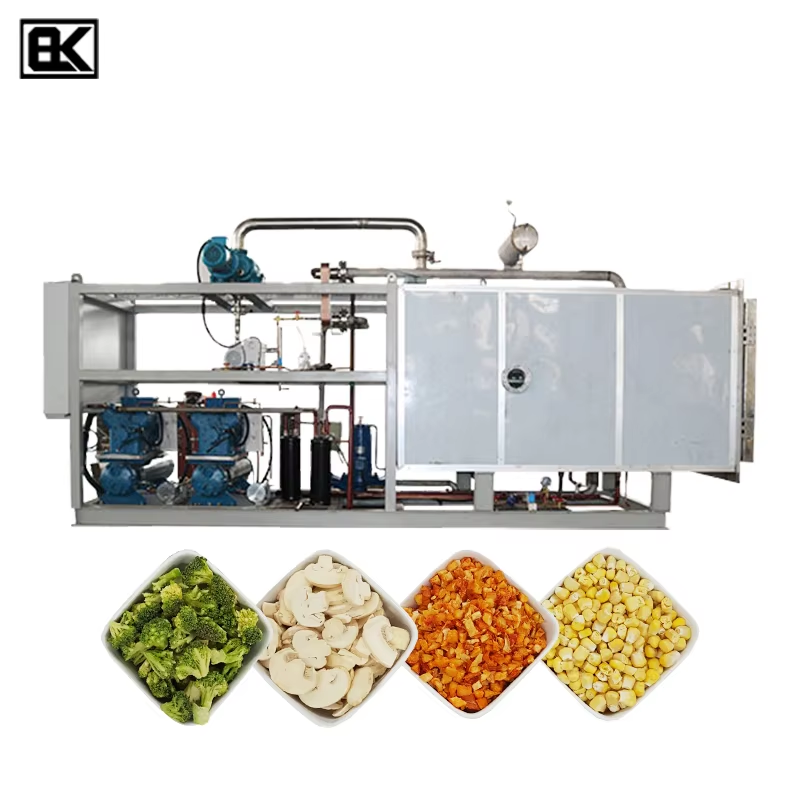
Freeze dried fruit has gained popularity due to its very strong flavor, crunchy texture and high shelf life without the need to add sugar or preservatives. As opposed to the conventional drying techniques which involve heat to preserve the food and risk shrinking or hardening the fruits, freeze drying retains the original shape, color and as many as 97 % of the nutrients in the fruit. When you possess the correct equipment, then the process is simple. We produce both household and laboratory freeze dryers and industrial freeze dryers at Jiangsu Bolaike Refrigeration Science and Technology Development Co., Ltd. The following is a step-by-step procedure of freeze drying fruit using a machine.
1. Preparing the Fruit for Freeze Drying
Correct preparation will guarantee uniformity. Use fresh, ripe fruit-over- ripe fruit may get mushy, and underripe fruit may be tasteless. Always wash fruit to get off dirt and pesticides. In cases where the skin of the fruit is likely to become hard (kiwi, grapes, cherries), peeling or even piercing the skin can help the fruit to lose its moisture. Cut fruit into uniform pieces, usually 6-12 mm thick. The same size will guarantee that all trays dry evenly. Berries may be left intact with pricking with a needle. Lay the pieces on the dryer trays in a single layer with small spacing between pieces to allow circulation of air. Do not overcrowd as it increases time to dry. When there is an easy brownish process of fruits (apples, bananas, pears) a short dip in lemon juice or ascorbic acid solution can help maintain the color.
2. Freeze Dryer: Vacuum Stages and Freezing
After loading the fruit, close the chamber door and turn on the machine. In modern freeze dryers, the whole process is automated, yet knowing the steps will aid in troubleshooting. The refrigeration system then, first, freezes the fruit at -40°C or below, converting all the moisture to solid ice. This will usually take a duration of 1-4 hours depending on the water quantity in the fruit and the quantity of the fruit. The vacuum pump is then turned on and the chamber pressure reduces to almost vacuum (lower than 100 Pa). The shelves then use a little heat, which evaporates the ice (turns directly into vapor without melting). The vapor is evaporated and condensed on the coils of the condenser. This is the main drying process that eliminates 90-95 percent of the water and it takes 12-24 hours on average to most fruits. The machines of Jiangsu Bolaike have programmable logic controllers (PLCs) which automatically control temperature and pressure and change cycle parameters to achieve the best results.
3. Determining When FreezeDried Fruit Is Done
Being able to know when the process is finished will stop over drying (which may make fruit too brittle) or under drying (leaves them moist and thus they may spoil). The sensors fitted in most freeze dryers automatically stop the cycle once the rate of increase in pressure suggests that all the water is being released. To verify this by hand, do the following simple test: take a piece of fruit and heat it to room temperature then take away the piece of fruit. It must be thoroughly dry, crisp and bend clean. Cold spots and flexibility should not be present. Compare the weight of dried and wet fruit; where fruits have been dried, the weight of the dried fruit will usually have reduced by 80-90 percent of the original weight. The best moisture content is 1-4% as it is suitable during long term storage. The industrial and laboratory freeze dryers made by Jiangsu Bolaike have data logging of the end moisture content to ensure quality.
4. Storing and Using FreezeDried Fruit
Quality storage is necessary to preserve quality. Freeze-dried fruit is highly hygroscopic - it will take in moisture in the air and be chewy or spoiled. Once the cycle is completed, take out the fruit and package it as soon as possible. Store in airtight containers, Mylar bags with oxygen absorbers or use vacuum sealed jars. To keep long term (up to 25 years), keep store sealed packages in a cool, dark and dry location. When opened, eat in a few weeks or close tightly. Freeze dried fruits may be consumed directly as a crispy snack, made into a fine powder to be used in smoothies and baking, rehydrated by soaking in water or juice (5-10 minutes) to be used in pies and compotes or simply added plain to cereals, yogurt and trail mixes. Freeze dried fruit restores almost to its original consistency and flavor, unlike the dehydrated fruit.
Conclusion
Freezing drying fruit entails four processes that include preparing homogeneous pieces, loading the trays, operating the freeze dryer in freezing and vacuum processes and establishing doneness. The outcome is light and nutrient rich fruit that can be kept decades without refrigeration. Jiangsu Bolaike has more than 20 years of experience, ISO9001 and CE certifications and 56+ national patents to produce household, laboratory and industrial freeze dryers of fruit and many other products. Get in touch with us now, and we have the right freeze dryer to suit your needs, or, we can arrange a factory tour of Changzhou, China.